 Send
Send Share
Share
 Details

 Download
 Similars
 Diaporama
 Stats
StatsFilms of photograph showing scenes of Longjing and Myung-dong1


 Read More
Hand Made Oil Reproduction
Hand-painted oil on canvas in your size and frame, made to order by our artists. ( Switch to Print Switch to Digital Image)




































Pick from our preset sizes that match the artwork's original proportions.

You may enter your own dimensions to fit a specific frame or space. If your selected size does not match the original image's proportions, we will either crop the artwork or extend the painting with additional hand-painted elements. A digital mockup will be sent for your approval before production begins.
Please note that the on-screen preview does not reflect the actual cropping or extension. Only the mockup will accurately show the final composition.
While custom sizes are available, we recommend selecting a dimension from the predefined list to preserve the original proportions.
After order, ArtsDot.com team will email client for instructions and provide a mockup preview
Worldwide Delivery () in 3/4 weeks instead of standard 5 weeks. (9 September). No compromise on quality.

Free Worldwide Express Shipping

High-Quality Linen Canvas

Full Shipping Insurance

Customs Tax Refund Guarantee

True Color Matching Guarantee

100-Day Return Policy (Defects Only)

100% Money-Back Guarantee

Bulk Discount Offer
 Glass option is only available in size under 110 CM

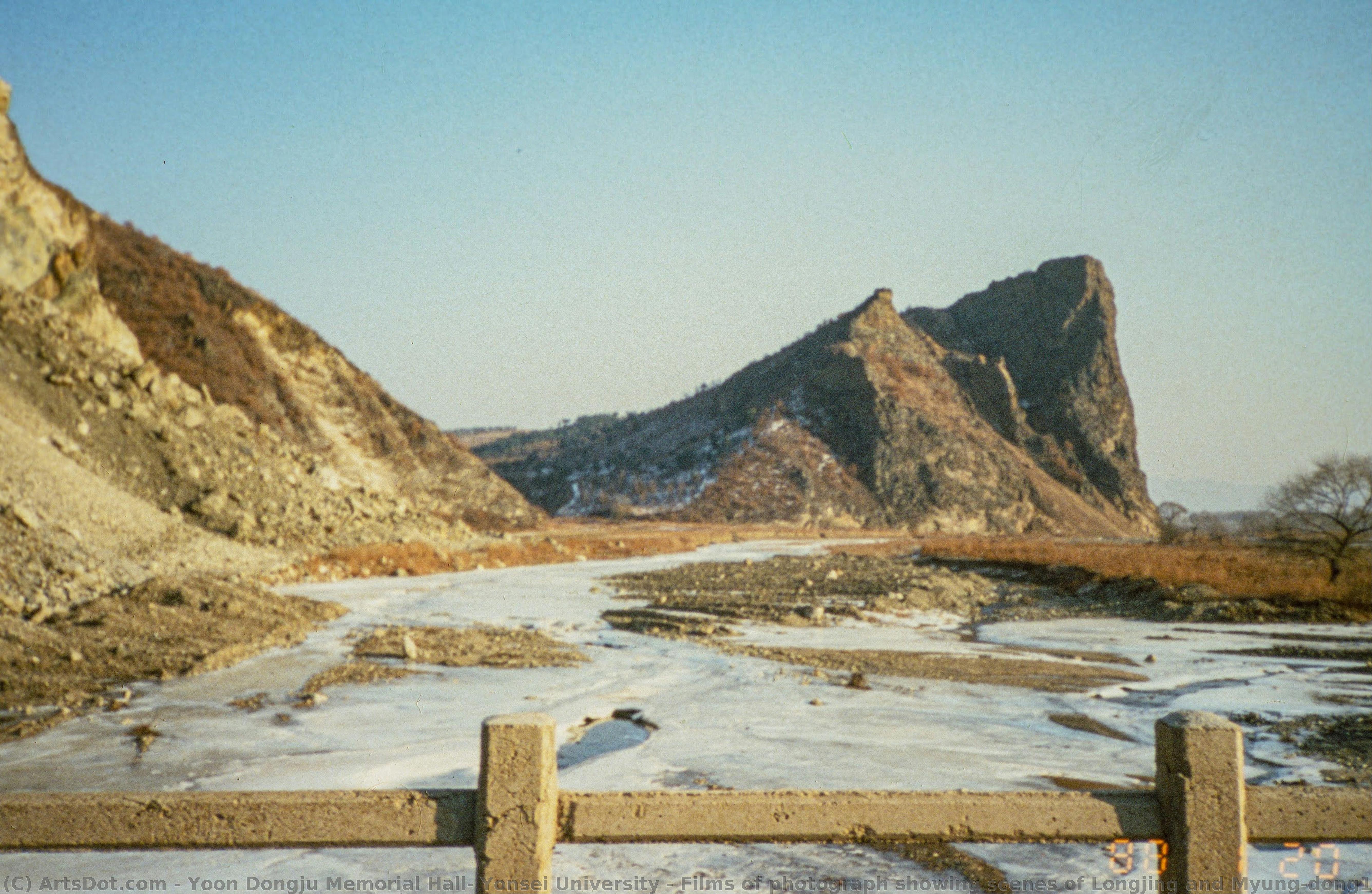
Films of photograph showing scenes of Longjing and Myung-dong1
Reproduction Medium
Reproduction Size
-


Total Price
$ 263
A Window into Memory: The Poetic Landscape of Yoon Dongju
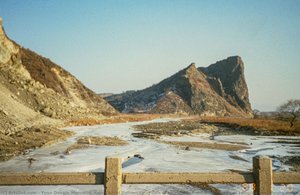
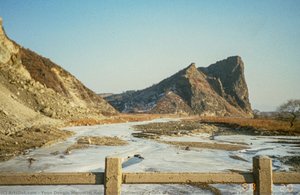
In the quiet intersection of photography and memory, "Films of photograph showing scenes of Longjing and Myung-dong1" emerges as a profound meditation on place and presence. Created in 1988, this evocative work transcends the boundaries of a mere visual record, functioning instead as a window into a lost or perhaps rediscovered era. The composition presents a breathtaking mountainous landscape, where the rugged peaks are crowned with a delicate layer of snow, lending an ethereal, almost dreamlike quality to the terrain. A river winds through the heart of the scene, its movement providing a rhythmic pulse to the stillness of the mountains. This interplay between the permanence of stone and the fluidity of water creates a sense of eternal motion, inviting the viewer to lose themselves in the vastness of the natural world.
The technical execution of this piece relies on the stark, emotive power of black and white tones. By stripping away the distraction of color, the work focuses the eye on texture, light, and shadow. The subtle gradations of grey capture the soft luminescence of snow against the dark, heavy silhouettes of the mountains, while the reflective surface of the river catches the light in a way that feels both crisp and nostalgic. This monochromatic approach lends the piece a timelessness, making it feel less like a snapshot from 1988 and more like an ancestral memory surfacing from the depths of history.
The Human Element and Historical Resonance
What elevates this work from a landscape study to a narrative masterpiece is the inclusion of two figures standing near the water's edge. These individuals, though small in the grand scale of the mountains, serve as the emotional anchor of the composition. Their presence introduces a sense of scale and a poignant human connection to the environment; they are witnesses to the majesty of the earth, caught in a moment of quiet contemplation. This juxtaposition between the monumental landscape and the transient human figure evokes a deep sense of mono no aware—the pathos of things—reminding us of our fleeting place within the enduring cycles of nature.
The historical context of this piece is inextricably linked to the legacy of the Yoon Dongju Memorial Hall. While the work itself captures a specific geographic and temporal moment, it carries the weight of the cultural identity preserved by the Hall at Yonsei University. The names "Longjing" and "Myung-dong" evoke specific geographies that hold deep significance in the Korean consciousness, suggesting themes of displacement, longing, and the preservation of heritage. For the collector, owning a reproduction of this work is not merely about acquiring a beautiful landscape; it is about embracing a piece of a larger story of resilience and the enduring power of the poetic spirit.
An Inspiration for Sophisticated Interiors
For interior designers and art enthusiasts, this piece offers a versatile yet commanding presence. Its monochromatic palette makes it an ideal centerpiece for modern, minimalist, or even classical decor, where it can serve as a focal point that adds depth and intellectual weight to a room. The serene subject matter provides a sense of tranquility, making it particularly suitable for spaces designed for reflection, such as libraries, studies, or quiet sitting rooms. When placed in a well-lit environment, the subtle textures of the snow and stone come alive, offering a sophisticated layer of visual interest that complements both neutral tones and bold architectural statements.
Choosing a high-quality reproduction of this work allows for the infusion of profound historical narrative into a contemporary living space. It is an invitation to pause, to look beyond the surface, and to engage with a landscape that speaks of both the grandeur of nature and the intimacy of the human experience. Whether as a tribute to Korean history or as a celebration of fine photographic art, this piece remains a timeless treasure for any curated collection.
Related Artworks
Artist Biography
A Legacy Etched in Remembrance: The Yoon Dongju Memorial Hall
The Yoon Dongju Memorial Hall, nestled within the grounds of Yonsei University, stands as more than a repository of artifacts; it is a poignant testament to a life tragically cut short and a spirit that continues to inspire generations. While not an artist in the traditional sense of painter or sculptor, the Hall itself embodies the artistic power of memory, preservation, and the enduring impact of poetry. It serves as a vital center for understanding the work and life of Yoon Dongju (1917-1943), one of Korea’s most beloved poets, whose verses captured the anxieties and hopes of a nation under Japanese colonial rule. The Hall's existence is itself an act of artistic defiance against forgetting, a deliberate curation of a cultural identity threatened by oppression.The Poet’s Journey: Life and Context
Yoon Dongju was born in Bukcheong, Hamgyong Province, Korea (now North Korea) during a period of immense political and social upheaval. His early life was marked by the hardships of colonial occupation, a reality that deeply informed his poetic sensibility. He received his education at Paekyang Elementary School and later transferred to Yonhi College (the precursor to Yonsei University), where he studied English Literature. It was during these formative years that Yoon began to grapple with themes of national identity, personal suffering, and the search for meaning in a world seemingly devoid of hope. His poetry, initially influenced by modernist trends, quickly developed a unique voice characterized by its introspective nature, subtle symbolism, and melancholic tone. He wasn’t merely documenting his experiences; he was transforming them into universal expressions of human longing and resistance. The weight of colonial oppression is palpable in much of his work, though often veiled through natural imagery and personal reflections – a strategic choice that allowed him to circumvent censorship while still conveying powerful messages of dissent.Preserving the Echoes: The Hall’s Collection
The Yoon Dongju Memorial Hall was established to safeguard and promote the poet's legacy. Its collection is remarkably comprehensive, encompassing original manuscripts of his poems – often bearing handwritten annotations and revisions – personal letters offering glimpses into his inner life and relationships, photographs documenting his time at Yonhi College, and various publications featuring his work. The Hall’s most prized possessions are undoubtedly the notebooks containing drafts of his iconic poems, such as “Preface,” “New Year's Day,” and “Self-Portrait.” These fragile documents offer invaluable insights into Yoon’s creative process, revealing the evolution of his thought and the meticulous care he took with each line. Beyond these primary sources, the Hall also houses a collection of materials related to the historical context of Yoon’s life, including books, newspapers, and photographs that illuminate the social and political landscape of colonial Korea. The deliberate arrangement of these artifacts is designed not simply to display them but to create an immersive experience for visitors, allowing them to connect with Yoon on a deeply personal level.A Symbol of Resistance: Historical Significance
Yoon Dongju’s life took a tragic turn in 1943 when he was arrested by the Japanese colonial police and imprisoned on charges of participating in the independence movement. He endured brutal torture but refused to betray his principles, ultimately dying in Fukuoka Prison just months before Korea's liberation from Japanese rule. His death transformed him into a symbol of resistance against oppression and a martyr for Korean independence. The establishment of the Yoon Dongju Memorial Hall in 1986 was a significant act of cultural reclamation, asserting the importance of remembering his contributions to Korean literature and national identity.- The Hall serves as an educational resource
- It promotes critical thinking about colonialism and its impact.
- It fosters appreciation for Yoon Dongju’s poetic achievements.
Related Articles

Dark Masterpieces: 10 Iconic Paintings Dominated by Black Tones |
Explore 10 iconic paintings dominated by black tones, from Rembrandt’s chiaroscuro to Goya's dark expressions. Discover the stories behind these masterpieces & find museum-quality art reproductions for your home at .

White on Canvas: 10 Masterpieces & Timeless Elegance for Your Home Decor
Explore 10 iconic white paintings by Monet, Whistler & Rothko! Discover the stories behind these serene masterpieces and their impact on art history. Find museum-quality reproductions for your home decor at .

Chromatic Absence: Exploring the Aesthetic Power of Black & White Art
Explore the captivating world of monochrome art! Discover its rich history, influential artists like Malevich & Klein, and profound emotional impact. Expert insights for collectors & design enthusiasts.

Monochrome Visions: Exploring the Aesthetic & Historical Significance of Black & White Photography
Explore the rich history & artistic power of black and white photography. From early techniques to iconic masters like Ansel Adams, discover why monochrome continues to captivate art lovers today. Expert insights for collectors.

The Subtleties of Shade: Exploring Black, White & Gray Abstraction in Modern Interior Design
Explore the power of black, white & gray abstraction in modern interior design. Discover how minimalist art impacts spatial perception & creates sophisticated hotel spaces. Expert insights for designers.