 Preview
 Send
Send Share
Share
 Details

 Download
 Similars
 X-Ray
X-Ray Diaporama
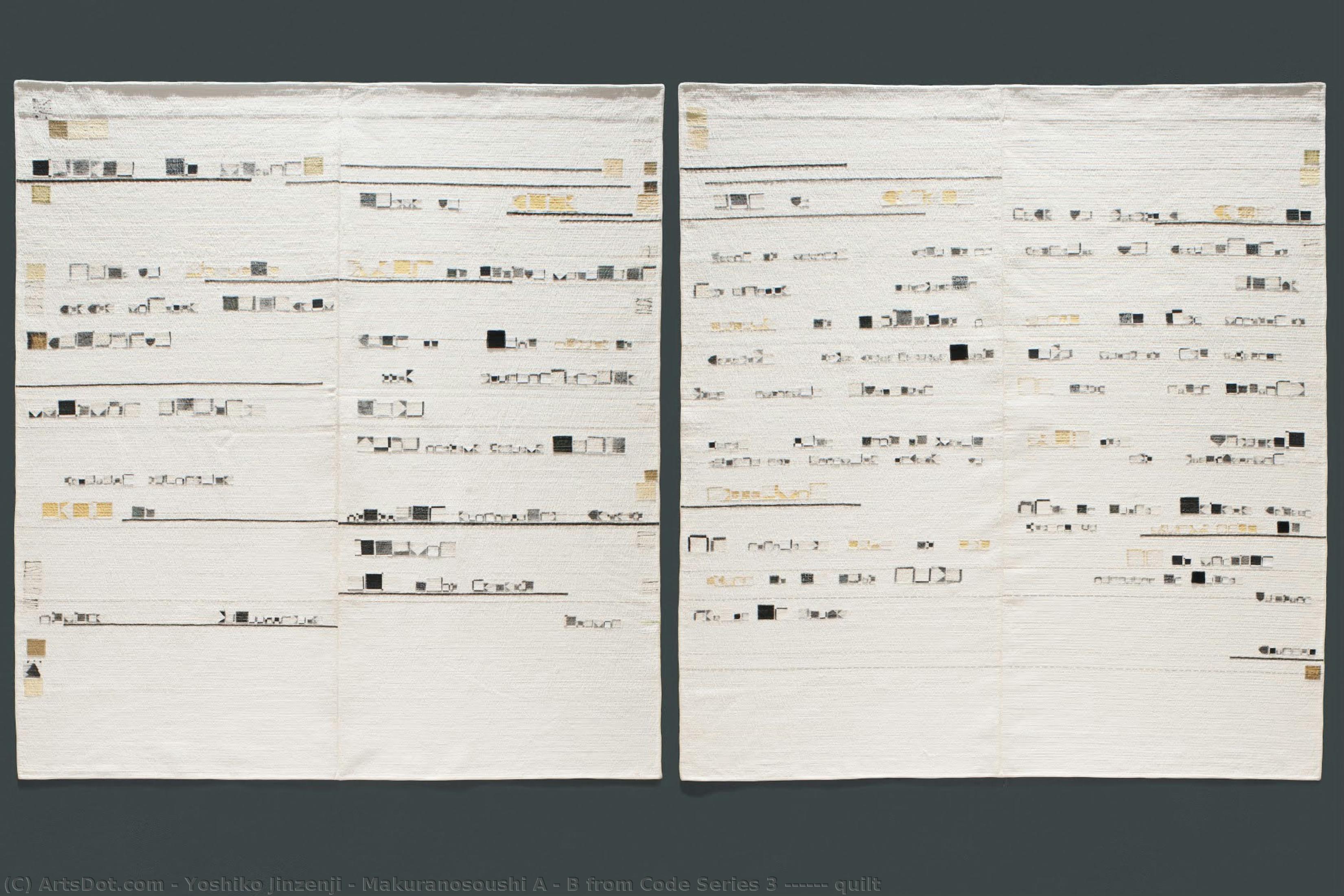
Makuranosoushi A & B from Code Series 3 (枕草子), quilt
 236.0 x 202.0 cm
 Read More
Giclée / Art Print
Museum-quality giclée or canvas print with fast production and flexible finish options. ( Buy Hand Made Painting Buy Image)




































Pick from our preset sizes that match the artwork's original proportions.

You may enter your own dimensions to fit a specific frame or space. If your selected size does not match the original image's proportions, we will either crop the artwork or extend the image with a mirrored or solid-fill edge. A digital mockup will be sent for your approval before production begins.
Please note that the on-screen preview does not reflect the actual cropping or extension. Only the mockup will accurately show the final composition.
While custom sizes are available, we recommend selecting a dimension from the predefined list to preserve the original proportions.
Worldwide Delivery () in 2 weeks instead of standard 4/5 weeks. (28 August)

Free Worldwide Express Shipping

High-Quality Linen Canvas

Full Shipping Insurance

Customs Tax Refund Guarantee

True Color Matching Guarantee

60-Day Return Policy (Defects Only)

100% Money-Back Guarantee

Bulk Discount Offer
 Glass option is only available in size under 110 CM

Makuranosoushi A & B from Code Series 3 (枕草子), quilt
Giclée / Art Print
Reproduction Size
-


Total Price
$ 63
Related Artworks






Artist Biography
A Life Woven in White: The Textile Art of Yoshiko Jinzenji
Yoshiko Jinzenji, born in Kyoto, Japan, in 1946, is a name synonymous with minimalist elegance and the profound exploration of natural dyes within the world of textile art. Her journey began not as a foregone conclusion but as an act of pioneering spirit—one of the first Japanese women to pursue artistic studies abroad in the United States during the 1960s. This early exposure to diverse perspectives would prove foundational, shaping her later embrace of both traditional Japanese aesthetics and innovative techniques. While many artists find their voice through bold declarations, Jinzenji’s emerged from a quiet dedication to subtlety, a pursuit that ultimately led her to redefine the possibilities within quilting.From Kyoto Roots to Bali's Natural Embrace
Returning to Japan after her time in America, Jinzenji established herself as a quilt artist during the 1970s, a period when quilting was still largely considered a domestic craft rather than a fine art form. Her early work demonstrated a growing fascination with texture and pattern, but it wasn’t until the 1980s that her artistic vision truly began to coalesce. A pivotal move to Bali, Indonesia, marked a turning point in her career. Immersed in the island's rich natural environment, she embarked on an ambitious quest: to master the art of natural dyeing. This wasn’t merely about achieving specific colors; it was about forging a deeper connection with the materials themselves and understanding their inherent properties. She famously pioneered bamboo dyeing—a technique that would become her signature, allowing her to create quilts imbued with the soft, nuanced tones derived directly from nature. The experience in Bali wasn't just technical; it fostered a philosophy of working *with* the environment rather than imposing upon it.The Art of Subtraction: Minimalism and Japanese Heritage
Jinzenji’s work is immediately recognizable for its minimalist style—a deliberate reduction to essential forms, colors, and textures. This aesthetic isn't simply about emptiness; it’s a carefully considered approach that draws upon the principles of *wabi-sabi*, the Japanese philosophy celebrating imperfection and transience. Her quilts often feature predominantly white or off-white palettes, punctuated by subtle variations in tone achieved through her natural dyeing processes. This restraint allows the viewer to focus on the intricate details—the meticulous stitching, the delicate interplay of light and shadow, the inherent beauty of the fabric itself. She has described her process as “engineering” quilts, a term that speaks to the precision and thoughtfulness behind each creation. Her work is deeply rooted in Japanese tradition, referencing classical motifs and literary themes, but always filtered through a contemporary lens. The "Makuranosoushi A & B from Code Series 3 (枕草子)" series exemplifies this beautifully—a modern interpretation of *The Pillow Book*, Sei Shōnagon’s renowned collection of observations and reflections.Legacy and Influence: Beyond the Quilt
Over a career spanning four decades, Yoshiko Jinzenji has exhibited her work internationally, receiving numerous awards and accolades along the way. She is not only an accomplished artist but also a prolific writer, having authored several books on quilting and textile art that have inspired generations of artists. Her pieces are held in prestigious museum collections worldwide, including the Victoria and Albert Museum in London, the Spencer Museum of Art at the University of Kansas, and the International Quilt Study Center & Museum in Nebraska—a testament to her lasting impact on the field. More recently, Jinzenji has transitioned from quilt making to focus on cooking, demonstrating a continued commitment to creative expression through different mediums. This shift isn’t surprising; both quilting and cooking require patience, precision, and a deep understanding of materials and processes. Her legacy extends beyond the quilts themselves—it's about a philosophy of mindful creation, a reverence for nature, and an unwavering dedication to artistic innovation. She has shown that true artistry lies not in extravagance but in the power of subtraction, revealing beauty through simplicity and quiet contemplation.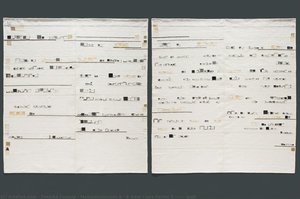
yoshiko jinzenji
1946 - , Japan
Quick Facts
- Artistic Movement Or Style: Minimalist textile art
- Date Of Birth: 1946
- Full Name: Yoshiko Jinzenji
- Nationality: Japanese
- Notable Artworks: ['Makuranosoushi A & B from Code Series 3']
- Place Of Birth: Kyoto, Japan