 Preview
 Send
Send Share
Share
 Details

 Download
 Similars
 X-Ray
X-Ray Diaporama
 Stats
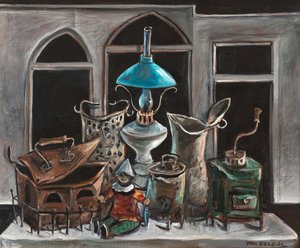
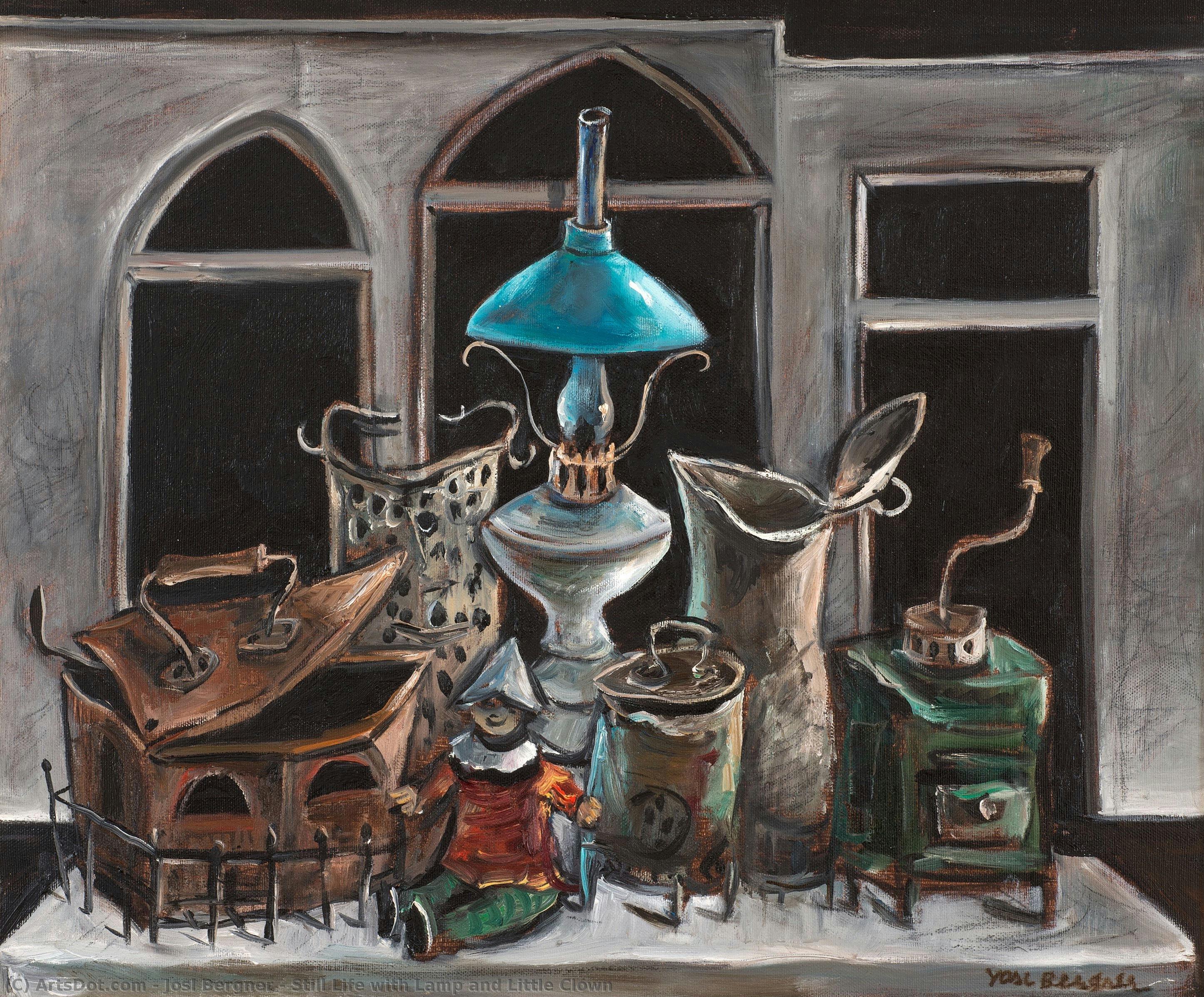
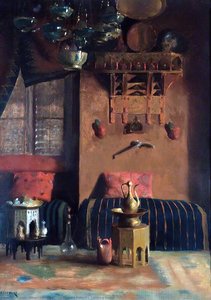
StatsStill Life with Lamp and Little Clown

 Read More
Giclée / Art Print
Museum-quality giclée or canvas print with fast production and flexible finish options. ( Buy Hand Made Painting Switch to Digital Image)




































Pick from our preset sizes that match the artwork's original proportions.

You may enter your own dimensions to fit a specific frame or space. If your selected size does not match the original image's proportions, we will either crop the artwork or extend the image with a mirrored or solid-fill edge. A digital mockup will be sent for your approval before production begins.
Please note that the on-screen preview does not reflect the actual cropping or extension. Only the mockup will accurately show the final composition.
While custom sizes are available, we recommend selecting a dimension from the predefined list to preserve the original proportions.
Worldwide Delivery () in 2 weeks instead of standard 4/5 weeks. (9 September)

Free Worldwide Express Shipping

High-Quality Linen Canvas

Full Shipping Insurance

Customs Tax Refund Guarantee

True Color Matching Guarantee

100-Day Return Policy (Defects Only)

100% Money-Back Guarantee

Bulk Discount Offer
 Glass option is only available in size under 110 CM

Still Life with Lamp and Little Clown
Giclée / Art Print
Reproduction Size
-


Total Price
$ 63
Related Artworks





Artist Biography
A Life Marked by Displacement: The Journey of Yosl Bergner
Yosl Bergner, born in Vienna in 1920 and passing away in Tel Aviv in 2017, was an artist whose life and work were profoundly shaped by the tumultuous currents of the 20th century. His story is one of continual relocation – from the cultural heart of Austria to the vibrant, yet uncertain, landscape of Australia, and finally finding a home in Israel. This journey wasn’t merely geographical; it was a deeply emotional and intellectual odyssey that permeated every brushstroke and symbolic gesture within his allegorical paintings. Born into a family that cherished artistic expression—his father, Melech Ravitch, a celebrated Yiddish translator of Kafka, and his mother, a singer—Bergner inherited a sensibility attuned to the power of storytelling and the weight of cultural heritage. The early influence of an artist uncle further nurtured this inclination. However, the looming shadow of anti-Semitism forced the family to confront a harsh reality, leading them to seek refuge in Australia in 1937. This move was inextricably linked to the intriguing, ultimately unrealized, Kimberley Plan—a scheme to establish a Jewish homeland in Western Australia, highlighting the desperate search for security and belonging that defined the era.Formative Years and Artistic Awakening
Melbourne became Bergner’s sanctuary during his formative years. He enrolled at the National Gallery School, laying the foundation for his artistic training, though World War II interrupted his studies. His service in the Australian Army for four and a half years undoubtedly left an indelible mark, exposing him to the harsh realities of conflict and displacement—themes that would later dominate his oeuvre. Post-war, he resumed his education at the Art School, immersing himself in the burgeoning modern art scene. This period proved pivotal, as Bergner forged close relationships with a constellation of influential Australian artists: Sidney Nolan, Albert Tucker, John Perceval, and Arthur Boyd. The camaraderie fostered by friendships like that with Adrian Lawlor and his wife created an environment ripe for experimentation and social commentary. It was in Melbourne that Bergner began to move beyond traditional landscape painting, driven by a desire to depict the lives of working families and explore the complexities of human experience. He encouraged his peers to embrace similar themes, significantly influencing the trajectory of modern Australian art.The Language of Objects: Symbolism and Allegory
Yosl Bergner is best known for his distinctive allegorical paintings—works that employ everyday kitchen implements as potent symbols of a fractured world. Squashed pots, cracked jugs, battered oil lamps, and discarded remnants aren’t merely still life subjects; they are imbued with human qualities, becoming vessels for expressing the trauma of war, the weight of secrets, and the enduring darkness within the human condition. This anthropomorphism is central to Bergner's artistic language, allowing him to convey profound emotional depth through seemingly mundane objects. The kitchen grader, in particular, emerged as a recurring motif—a poignant reminder of his childhood deprivation, representing not only the absence of toys but also broader themes of hardship and resilience. His art doesn’t shy away from sadness; rather, it embraces the full spectrum of human emotion, acknowledging both joy and sorrow as integral parts of life's tapestry. He masterfully combined these elements to create works that resonate with a universal sense of loss, hope, and the enduring power of the human spirit.Recognition, Legacy, and Continued Creativity
Bergner’s artistic contributions were widely recognized throughout his career. He was honored as a co-recipient of the prestigious Dizengoff Prize for Painting in 1956 and, in 1980, received Israel's highest cultural honor—the Israel Prize—shared with Anna Ticho and Pinchas Litvinovsky. His works are now held in esteemed collections worldwide, including the Israel Museum and the Albertina Museum in Vienna, testament to their enduring artistic merit and historical significance. In 1948, Bergner immigrated to Israel with his wife, Audrey, a fellow painter, initially settling in Safed before relocating to Tel Aviv in 1957. This move marked a new chapter in his artistic journey, as he began to incorporate Israeli motifs into his work, while simultaneously refining and evolving his signature style. Even in his later years, Bergner remained remarkably prolific, continuing to explore themes of identity, displacement, and the human condition with unwavering dedication. He often described himself not as an “artist” but as a “professional,” emphasizing his commitment to craft and his lifelong pursuit of artistic expression. His legacy endures as that of a master storyteller who transformed ordinary objects into powerful symbols of universal truths, leaving behind a body of work that continues to captivate and challenge audiences today. His influence extends beyond painting, encompassing stage design for Yiddish and Hebrew theaters—particularly collaborations with Nissim Aloni—and numerous book illustrations, demonstrating the breadth of his creative vision.
Yosl Bergner
1920 - 2017 , Austria
Quick Facts
- Artistic Movement Or Style: Allegorical painting
- Artists Or Movements Influenced By This Artist:
- Sidney Nolan
- Albert Tucker
- Modern Australian art
- Artists Who Influenced This Artist:
- Moshe (uncle)
- Adrian Lawlor
- Date Of Birth: October 13, 1920
- Date Of Death: January 18, 2017
- Full Name: Yosl Bergner
- Nationality: Austrian; Polish
- Notable Artworks:
- Still Life with Lamp...
- Impact of war works
- Place Of Birth: Vienna, Austria