

 Preview
 Send
Send Share
Share
 Details

 Download
 Similars
 X-Ray
X-Ray Diaporama
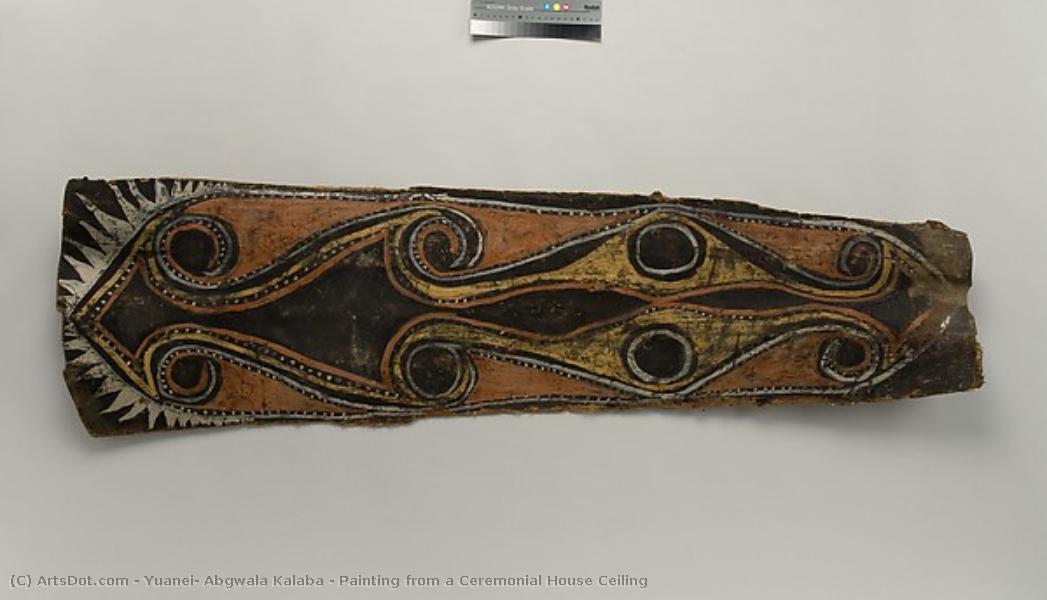
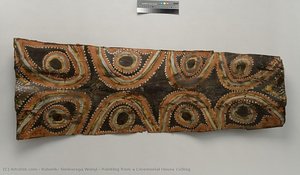
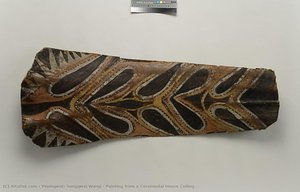
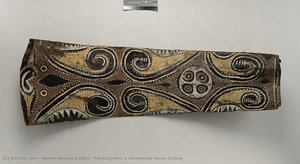
Painting from a Ceremonial House Ceiling


 Read More
Purchase a high-resolution, enhanced digital image, far superior to the online preview.
Each file is meticulously prepared by our in-house specialists using advanced tools and expert manual retouching. We ensure every image has exceptional clarity, precise color accuracy, and fine detail.
The final file is delivered via email within 72 hours, optimized for immediate use in professional, editorial, and print environments. This is the same quality trusted by top-tier design studios, publishers, and galleries.
Digital Image
Download a high-resolution file for personal display, printing, and creative projects. ( Buy Print Buy Hand Made Painting)
Included in Every Digital Image Order
Expert Digital Delivery, Guaranteed
When you choose ArtsDot.com, you're not just getting an image - you're receiving a professionally enhanced digital artwork, crafted with precision and backed by a satisfaction guarantee. Here's everything that comes with your order, automatically:

Fast Email Delivery
Your high-resolution digital image file will be emailed to you within 72 hours of ordering - ready for immediate use.

AI-Enhanced Digital File
Your artwork is professionally optimized using advanced AI tools and manual editing, ensuring maximum detail, clarity, and color accuracy.

Free Lifetime Re-Delivery
Accidentally deleted or lost your file? No worries - we'll resend it to you anytime, free of charge.

No Import Fees - Ever
Enjoy your artwork instantly with zero customs, duties, or delivery fees - digital downloads are always tax-free.

Color Accuracy Guarantee
We ensure your digital image reflects the original colors as closely as possible using professional tools and color management.

60-Day Satisfaction Guarantee
If you're not satisfied with your digital image, we'll revise it or refund 100% within 60 days - no questions asked.

100% Money-Back Guarantee
Not satisfied? Get a full refund within 60 days of receiving your digital file - no questions asked.

Bulk Order Discounts
Buy 3 images, save 10% - Buy 5, save 15% - Buy 10+, save 20%. Great for creative projects, galleries, and agencies.
Collectible Description
Related Artworks
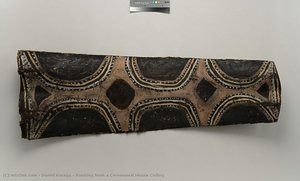
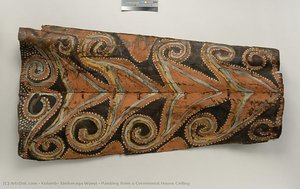
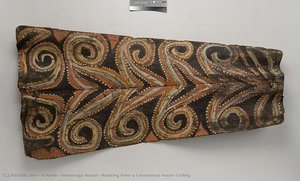
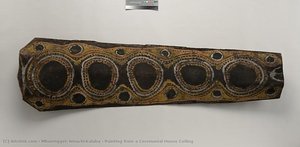
Artist Biography
Pablo Picasso: A Revolutionary Vision
Pablo Diego José Francisco de Paula Juan Nepomuceno María de los Remedios Cipriano de la Santísima Trinidad Ruiz y Picasso, simply known as Pablo Picasso, remains one of the most transformative figures in the history of art. Born in Málaga, Spain, on October 25, 1881, his life was a relentless exploration of form, color, and emotion—a journey that fundamentally reshaped the landscape of modern painting and sculpture. From his early training under his father, José Ruiz y Blasco, a professional painter and drawing teacher, to his groundbreaking innovations in Cubism and beyond, Picasso’s career spanned over seven decades, leaving an indelible mark on artistic expression worldwide.
Picasso's formative years were deeply influenced by the vibrant culture of Málaga, a city steeped in tradition and art. His mother, María Picasso y López, was a seamstress who instilled in him a love for drawing from a young age. He displayed prodigious talent early on, mastering realistic portraiture and still life with remarkable speed. However, it wasn't until his move to Barcelona in 1897 to study at the Llotja School of Fine Arts that he began to experiment with more expressive styles, absorbing the works of Spanish masters like El Greco and Velázquez. This period laid the groundwork for his later explorations of emotion and distortion.
- Early Years (1881-1904): Marked by a shift from realism to darker themes – the “Blue Period” (1901-1904) reflected poverty, loneliness, and despair, while the “Rose Period” (1904-1906) introduced brighter colors and subjects of circus performers and harlequins.
- Cubism (1907-1918): Picasso’s collaboration with Georges Braque led to the development of Cubism, a revolutionary approach that fragmented objects into geometric forms and presented multiple viewpoints simultaneously. Analytic Cubism (1912) focused on dissecting subjects into their basic components, while Synthetic Cubism (1917-1919) incorporated collage elements.
- Surrealist Influences (1920s): Inspired by the works of Paul Cézanne and African art, Picasso explored themes of mythology, eroticism, and dreamlike imagery during this period.
The Development of Style and Technique
Picasso’s artistic style was never static; it evolved dramatically throughout his career, reflecting his changing interests, experiences, and influences. Initially trained in academic realism, he quickly moved beyond traditional representation, experimenting with distortion, abstraction, and multiple perspectives. His early works demonstrate a remarkable command of draftsmanship, but they are increasingly characterized by emotional intensity and expressive brushwork.
The transition to Cubism marked a pivotal moment in Picasso’s artistic development. He abandoned the illusion of depth and perspective, instead presenting objects from various viewpoints simultaneously on a single plane. This radical departure challenged conventional notions of representation and paved the way for new forms of visual expression. His use of color also evolved over time, shifting from somber blues and browns to vibrant reds, yellows, and greens.
Picasso’s technical skills were exceptional, encompassing painting, sculpture, printmaking, ceramics, stage design, and writing. He mastered a wide range of techniques, including oil paint, watercolor, pastels, charcoal, etching, lithography, and collage. His ability to seamlessly integrate these diverse media into his artistic practice further expanded the possibilities of visual communication.
Major Works and Historical Significance
Picasso’s oeuvre is vast and extraordinarily varied, encompassing over 13,000 paintings, prints, drawings, sculptures, ceramics, theater sets, and costumes. Some of his most celebrated works include:
- Les Demoiselles d'Avignon (1907): A groundbreaking painting that is considered a foundational work of Cubism.
- Guernica (1937): A powerful anti-war statement depicting the bombing of Guernica during the Spanish Civil War.
- The Weeping Woman (1937): A poignant portrait reflecting the suffering caused by war and violence.
- Three Musicians (1921): An example of Picasso’s later Cubist style, characterized by fragmented forms and bold colors.
Picasso's work has had a profound impact on 20th-century art, influencing generations of artists across diverse media. His innovations in Cubism revolutionized painting, while his exploration of themes such as war, poverty, and identity continues to resonate with audiences today. He was awarded the Nobel Prize in Literature in 1957, recognizing his contribution to the world of art.
Legacy and Later Years
Despite suffering a debilitating stroke in 1948, Picasso continued to work prolifically until his death on April 8, 1973, at the age of 91. He remained an active participant in the international art world, exhibiting his work around the globe and mentoring young artists. His later works often reflected a return to more traditional forms, but they were always imbued with his distinctive style and vision.
Picasso’s legacy extends far beyond his artistic achievements. He was a complex and enigmatic figure—a passionate artist, a shrewd businessman, and a devoted family man. His life and work continue to fascinate and inspire, cementing his place as one of the most important artists of all time.
yuanei, abgwala kalaba
1973 - , Papua New Guinea
Quick Facts
- Artistic Movement Or Style:
- Cubism
- Surrealism
- Neoclassicism
- Expressionism
- Artists Or Movements Influenced By This Artist:
- Modern art
- Contemporary art
- Artists Who Influenced This Artist:
- Cézanne
- El Greco
- African art
- Date Of Birth: 25 October 1881
- Date Of Death: 8 April 1973
- Full Name: Pablo Diego José Francisco de Paula Juan Nepomuceno María de los Remedios Cipriano de la Santísima Trinidad Ruiz y Picasso
- Nationality: Spanish
- Notable Artworks:
- Guernica
- Les Demoiselles d'Avignon
- The Weeping Woman
- Place Of Birth: Málaga, Spain

