 Preview
 Send
Send Share
Share
 Details

 Download
 Similars
 X-Ray
X-Ray Diaporama
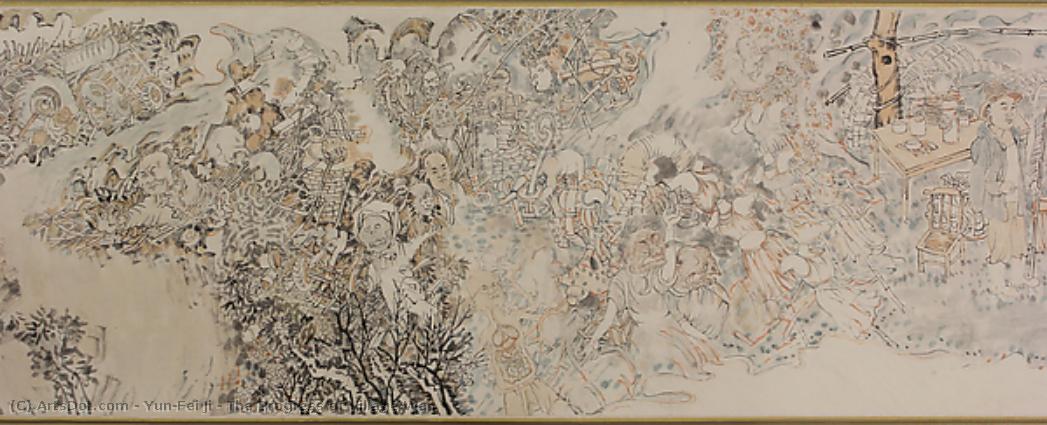
The Progress of Village Wen
 2016
2016 48.0 x 340.0 cm
 Read More
Giclée / Art Print
Museum-quality giclée or canvas print with fast production and flexible finish options. ( Buy Hand Made Painting Buy Image)




































Pick from our preset sizes that match the artwork's original proportions.

You may enter your own dimensions to fit a specific frame or space. If your selected size does not match the original image's proportions, we will either crop the artwork or extend the image with a mirrored or solid-fill edge. A digital mockup will be sent for your approval before production begins.
Please note that the on-screen preview does not reflect the actual cropping or extension. Only the mockup will accurately show the final composition.
While custom sizes are available, we recommend selecting a dimension from the predefined list to preserve the original proportions.
Worldwide Delivery () in 2 weeks instead of standard 4/5 weeks. (22 August)

Free Worldwide Express Shipping

High-Quality Linen Canvas

Full Shipping Insurance

Customs Tax Refund Guarantee

True Color Matching Guarantee

60-Day Return Policy (Defects Only)

100% Money-Back Guarantee

Bulk Discount Offer
 Glass option is only available in size under 110 CM

The Progress of Village Wen
Giclée / Art Print
Reproduction Size
-


Total Price
$ 63
Collectible Description
Related Artworks








Artist Biography
Early Life and Career
Yun-Fei Ji (季云飞; born 1963) is a Chinese-American painter whose artistic vision synthesizes the grandeur of classical scroll painting with the urgent concerns of contemporary social commentary. Born in Beijing during the tumultuous Cultural Revolution (1966–76), Ji’s formative years were marked by his mother's imprisonment in a labor camp—a stark reminder of the ideological fervor that gripped China at the time. This experience instilled in him a profound appreciation for resilience and an unwavering commitment to confronting uncomfortable truths through art. Following CAFA, he honed his skills with military officer who created illustrations for the People’s Liberation Army, absorbing foundational techniques rooted in traditional Chinese painting. He pursued further studies at the University of Arkansas, earning an MFA in 1989, where he encountered the expressive dynamism of German Expressionists and Philip Guston—influences that would profoundly shape his artistic style. Moving to New York City in 1990, Ji embarked on a career characterized by meticulous observation and intellectual engagement, establishing himself as a prominent voice within the international art scene.Artistic Style and Influences
Ji’s distinctive aesthetic draws heavily from the traditions of Tang, Song and Yuan dynasty scroll painting—a deliberate rejection of Western idealism in favor of embracing the layered symbolism and evocative textures of Chinese artistic heritage. He employs meticulous brushwork, mineral pigments and xuan paper to create images that convey both visual beauty and conceptual depth. Recurring motifs include ghosts, skeletons and stylized figures—references to folklore and ancestral memory—reflecting Ji’s fascination with the supernatural and his exploration of cultural narratives. Like many artists of his generation, he was deeply impacted by Mao Zedong's Cultural Revolution, which instilled in him a critical perspective on political ideology and its consequences. Furthermore, Ji’s artistic sensibilities were shaped by encounters with Western masters such as Guston and Picasso—artists who championed expressive abstraction and challenged conventional notions of representation.Major Themes and Concerns
Ji's artwork consistently grapples with pressing social and ecological issues—particularly the displacement caused by infrastructure projects like the Three Gorges Dam and the broader consequences of globalization. He utilizes caricature and grotesque imagery to expose hypocrisy and critique power structures, mirroring the stylistic innovations of George Grosz and James Ensor. His paintings are imbued with a palpable sense of unease and disorientation, reflecting Kafkaesque worlds that confront viewers with unsettling realities. Ji’s artistic explorations delve into themes of memory, loss, resilience and resistance—often expressed through symbolic allusion and meticulous detail.Notable Exhibitions and Recognition
Ji's work has garnered international acclaim and been showcased in prestigious institutions worldwide. He achieved recognition as Artist-in-Residence at Yale University (2006–2007), securing the American Academy in Rome Prize, and participated in major biennials including Lyon Biennale (2011) and Sydney Biennale (2012). His solo exhibitions include shows at UCCA Center for Contemporary Art (Beijing), Wellin Museum of Art (Buffalo), Cleveland Museum of Art, Kalamazoo Institute Arts and James Cohan Gallery. Critically lauded by Lilly Wei of ARTnews, Ji’s oeuvre has been featured in surveys examining the impact of China's rapid modernization on its cultural landscape—most notably “Displacement: The Three Gorges Dam and Contemporary Chinese Art” (Smart Museum of Art) and “Show and Tell: Stories in Chinese Paintings” (Metropolitan Museum of Art).Legacy and Significance
Yun-Fei Ji stands as a pivotal figure in contemporary Chinese art—a painter who successfully bridged the gap between tradition and innovation. His unwavering commitment to exploring complex social and ecological dilemmas through the lens of classical scroll painting has cemented his place among the most influential artists of his generation. By confronting uncomfortable truths with stylistic boldness and intellectual rigor, Ji’s work serves as a powerful reminder that art can illuminate the anxieties and aspirations of our time—and that even amidst displacement and environmental degradation, narratives of resilience and resistance deserve to be preserved.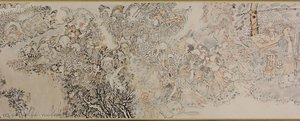
Yun-Fei Ji
1963 - , China
Quick Facts
- Artistic Movement Or Style: Scroll painting; Contemporary art
- Artists Or Movements Influenced By This Artist: ['Classical Chinese Painting']
- Artists Who Influenced This Artist:
- Philip Guston
- George Grosz
- Date Of Birth: 1963
- Full Name: Yun-Fei Ji
- Nationality: Chinese-American
- Notable Artworks:
- Village Wen’s Progress
- After the First Seventh Day
- The Three Gorges Dam Migration
- Water Rising
- Place Of Birth: Beijing, China