 Preview
 Send
Send Share
Share
 Details

 Download
 Similars
 X-Ray
X-Ray Diaporama
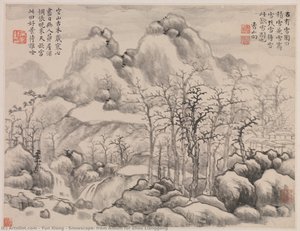
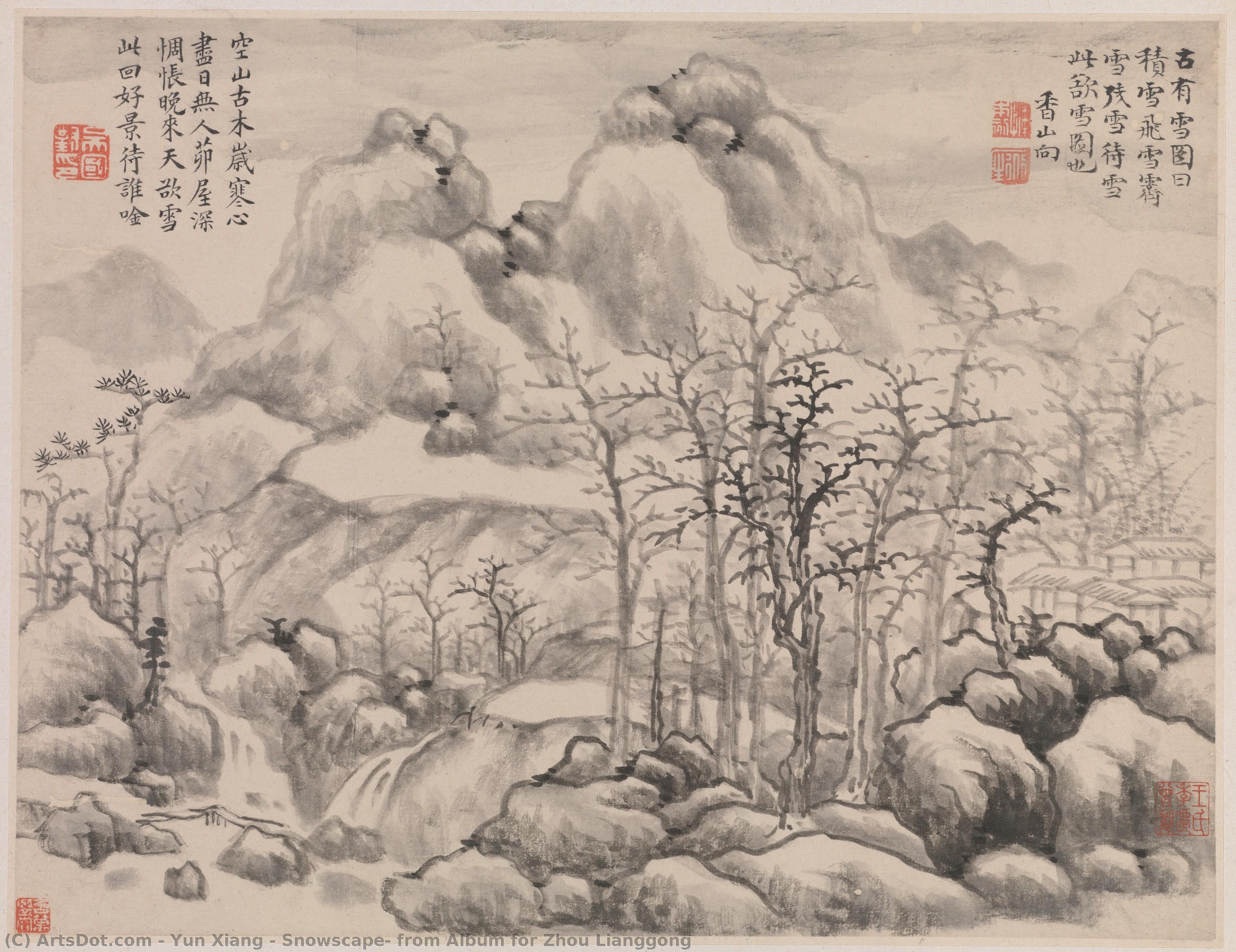
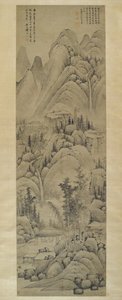
Snowscape, from Album for Zhou Lianggong
 1645
1645 25.0 x 33.0 cm
 Read More
Giclée / Art Print
Museum-quality giclée or canvas print with fast production and flexible finish options. ( Buy Hand Made Painting Buy Image)




































Pick from our preset sizes that match the artwork's original proportions.

You may enter your own dimensions to fit a specific frame or space. If your selected size does not match the original image's proportions, we will either crop the artwork or extend the image with a mirrored or solid-fill edge. A digital mockup will be sent for your approval before production begins.
Please note that the on-screen preview does not reflect the actual cropping or extension. Only the mockup will accurately show the final composition.
While custom sizes are available, we recommend selecting a dimension from the predefined list to preserve the original proportions.
Worldwide Delivery () in 2 weeks instead of standard 4/5 weeks. (24 August)

Free Worldwide Express Shipping

High-Quality Linen Canvas

Full Shipping Insurance

Customs Tax Refund Guarantee

True Color Matching Guarantee

60-Day Return Policy (Defects Only)

100% Money-Back Guarantee

Bulk Discount Offer
 Glass option is only available in size under 110 CM

Snowscape, from Album for Zhou Lianggong
Giclée / Art Print
Reproduction Size
-


Total Price
$ 63
Collectible Description
Related Artworks









Artist Biography
Luis de Morales: The Soul of Spain
Born around 1509 in Badajoz, a border town nestled between Spain and Portugal, Luis de Morales stands as a singular figure in the history of Spanish art – a master of emotional intensity and deeply personal religious painting. Often referred to as “El Divino” (The Divine), his work resonated profoundly with the Spanish populace, capturing their faith and anxieties with an unparalleled directness. Unlike many of his contemporaries who sought patronage within the opulent courts of Seville or Madrid, Morales remained rooted in Badajoz throughout his life, forging a distinctive artistic identity shaped by its unique cultural landscape and spiritual traditions.
While the precise details of his early training remain somewhat elusive, it’s believed that Morales received instruction from Hernando Sturmio, a Flemish painter who had established himself in Badajoz, and possibly also from Pedro de Campaña in Seville. This exposure to both Iberian and Northern European artistic styles undoubtedly influenced his oeuvre, creating a fascinating synthesis of technical skill and deeply felt emotion. His early works demonstrate clear echoes of the meticulous detail and atmospheric perspective characteristic of Flemish painting, particularly the work of David Vinckboons, alongside elements reminiscent of Lombard Leonardesque painters – a testament to his broad artistic influences.
The Palette of Passion: Style and Technique
Morales’s distinctive style is immediately recognizable by its intense emotionalism and masterful use of color. He eschewed the idealized beauty often favored in Renaissance art, instead opting for a raw, almost brutal honesty in depicting human suffering and spiritual yearning. His figures are rarely posed formally; rather, they are caught in moments of profound grief, quiet contemplation, or fervent prayer. This approach was revolutionary for its time, prioritizing psychological depth over superficial elegance.
He primarily worked on wooden panels, a medium that allowed him to achieve remarkable detail and luminosity. His technique involved layering thin glazes of paint – a hallmark of Flemish painting – creating a shimmering effect that imbued his scenes with an ethereal quality. The use of muted earth tones—ochres, browns, and grays—contrasted dramatically with vibrant reds and blues, particularly in depictions of the Passion of Christ. This careful orchestration of color served not merely to represent reality but to evoke specific emotions and spiritual states.
The Stories of His Life: Major Works
Morales’s most celebrated works are undoubtedly his series depicting scenes from the *Life of Christ*, painted for the Church of Arroyo del Puerco between 1563 and 1568. These panels, now housed in the Museo de la Ciudad in Badajoz, offer a profound meditation on the suffering and sacrifice at the heart of Christian faith. The *Ecce Homo* (Behold Man) is perhaps his most iconic work, capturing the moment when Christ reveals his wounds to Pilate with heartbreaking realism. Similarly, his *Pietà* (c. 1560-70), depicting Mary cradling the dead body of Jesus, is a powerful expression of maternal grief and spiritual devotion.
His work for El Escorial, though ultimately rejected by King Philip II due to its perceived lack of grandeur, demonstrates his ambition and technical prowess. The *Christ Carrying the Cross* panel, now residing in the Church of San Jerónimo in Madrid, showcases his ability to convey both physical agony and spiritual fortitude.
A Legacy Rooted in Badajoz
Despite being summoned to the royal court, Morales remained firmly rooted in Badajoz throughout his life. This isolation fostered a unique artistic identity, deeply connected to the region’s religious traditions and its turbulent history. His work reflects not only the universal themes of faith and suffering but also the specific anxieties and aspirations of the Spanish people during the 16th century.
Luis de Morales's enduring appeal lies in his ability to connect with viewers on a profoundly emotional level. He was, without doubt, the greatest native Mannerist painter of Spain, and his legacy continues to inspire artists and art lovers alike. His paintings are not merely representations of biblical stories; they are windows into the soul—a testament to the power of faith, suffering, and the enduring spirit of humanity.
yun hsiang
1586 - 1655 , China
Quick Facts
- Artistic Movement Or Style: Mannerism
- Artists Or Movements Influenced By This Artist:
- Flemish art
- Lombard Leonardesque painters
- Artists Who Influenced This Artist:
- Hernando Sturmio
- Pedro de Campaña
- Date Of Birth: c. 1509, Badajoz, Spain
- Date Of Death: May 9, 1586, Badajoz
- Full Name: Luis de Morales
- Nationality: Spanish
- Notable Artworks:
- Christ Carrying the Cross
- Ecce Homo
- Pietà
- Life of Christ (panels)
- Place Of Birth: Badajoz, Spain