 Preview
 Send
Send Share
Share
 Details

 Download
 Similars
 X-Ray
X-Ray Diaporama
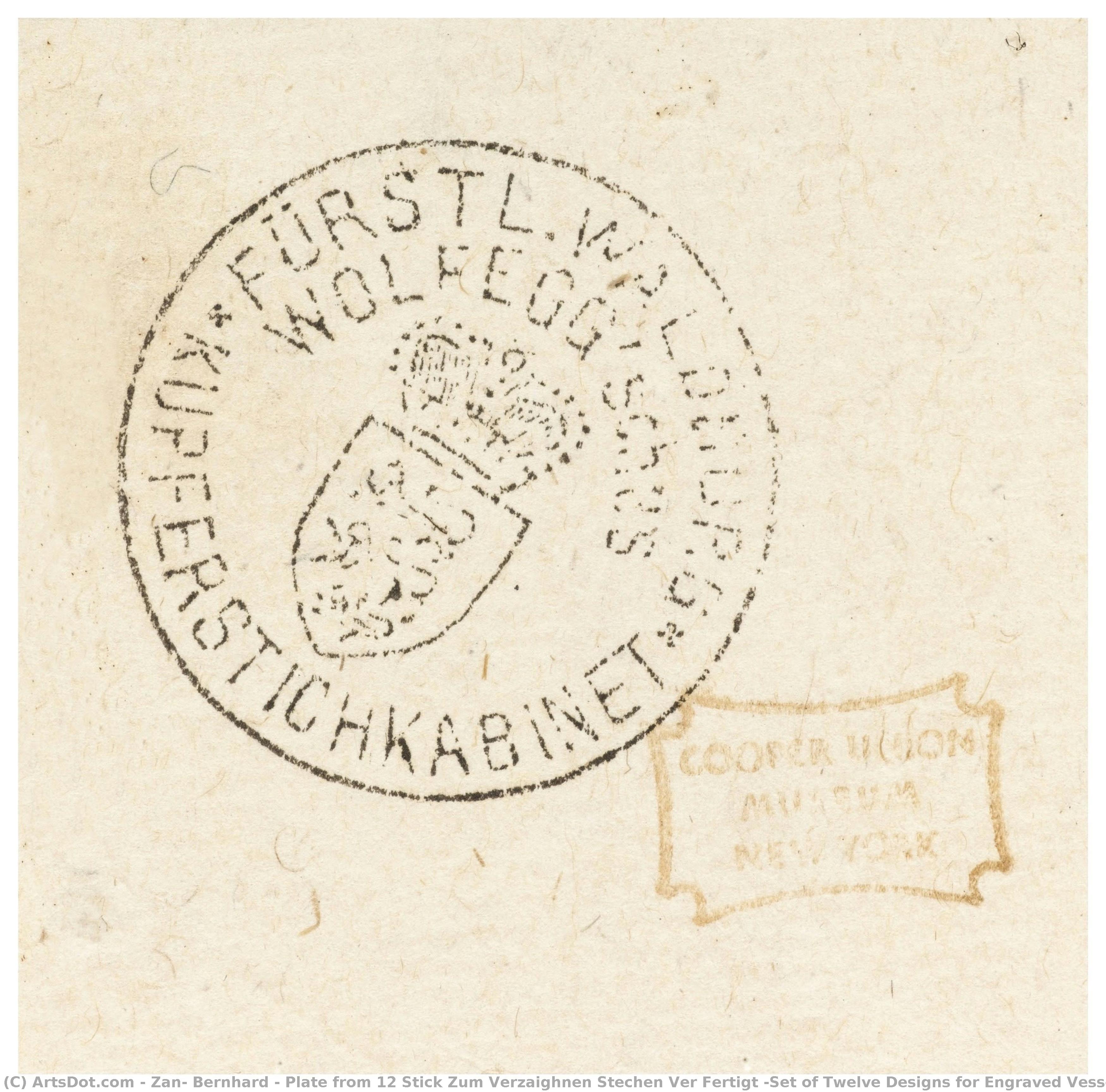
Plate from 12 Stick Zum Verzaighnen Stechen Ver Fertigt (Set of Twelve Designs for Engraved Vessels)

 Read More
Hand Made Oil Reproduction
Hand-painted oil on canvas in your size and frame, made to order by our artists. ( Buy Print Buy Image)




































Pick from our preset sizes that match the artwork's original proportions.

You may enter your own dimensions to fit a specific frame or space. If your selected size does not match the original image's proportions, we will either crop the artwork or extend the painting with additional hand-painted elements. A digital mockup will be sent for your approval before production begins.
Please note that the on-screen preview does not reflect the actual cropping or extension. Only the mockup will accurately show the final composition.
While custom sizes are available, we recommend selecting a dimension from the predefined list to preserve the original proportions.
After order, ArtsDot.com team will email client for instructions and provide a mockup preview
Worldwide Delivery () in 3/4 weeks instead of standard 5 weeks. (1 September). No compromise on quality.

Free Worldwide Express Shipping

High-Quality Linen Canvas

Full Shipping Insurance

Customs Tax Refund Guarantee

True Color Matching Guarantee

60-Day Return Policy (Defects Only)

100% Money-Back Guarantee

Bulk Discount Offer
 Glass option is only available in size under 110 CM

Plate from 12 Stick Zum Verzaighnen Stechen Ver Fertigt (Set of Twelve Designs for Engraved Vessels)
Reproduction Medium
Reproduction Size
-


Total Price
$ 263
Related Artworks





Artist Biography
The Sculptor of Vegetal Ornament
In the vibrant, industrious atmosphere of late sixteenth-century Nuremberg, a period where the precision of craftsmanship met the burgeoning creativity of the Renaissance, Bernhard Zan emerged as a master of delicate complexity. While many artists of his era sought glory through grand mythological narratives or solemn portraiture, Zan found his calling in the intricate, winding rhythms of nature. He was not merely an engraver but a designer of worlds, a creator who could translate the organic chaos of flora into structured, breathtaking patterns for the most exquisite metalwork. His legacy is etched into the very fabric of decorative arts, representing a pivotal moment when the goldsmith’s workshop became a stage for profound artistic innovation.
Though much of the personal history surrounding Zan remains shrouded in the mists of time, the traces of his journey reveal a life deeply connected to the guild traditions of Germany. Born around 1580, likely in the town of Herrenberg, Zan traveled to Nuremberg as a journeyman, a period that would prove transformative for his artistic development. It was within this legendary center of European craftsmanship that he absorbed the meticulous techniques of intaglio printing and the sophisticated aesthetic of the German Renaissance. This era of wandering and learning allowed him to refine a style characterized by an almost obsessive attention to detail, where every stem, leaf, and petal was rendered with a scientific precision that nonetheless felt vibrantly alive.
A Botanical Revelation in Print
The true magnitude of Zan’s genius is most vividly realized in his magnum opus: the extraordinary series of forty goldsmith’s designs. Published first in 1581 and later reprinted in 1584 by Stephan Hermann, these engravings served as a revolutionary blueprint for artisans across Europe. Unlike the static patterns of previous generations, Zan’s work introduced a dynamic, sculptural quality to two-dimensional surfaces. He pioneered a style of vegetal scrollwork that seemed to breathe upon the page, utilizing swirling vines and cascading blooms to create a sense of continuous, rhythmic movement.
To examine one of his plates is to enter a miniature forest of exquisite design. His compositions often featured:
- Intricate Scrollwork: A complex network of undulating stems that guide the eye through a labyrinth of organic beauty.
- Botanical Realism: The inclusion of diverse elements such as calyxes, leaves, and fruits, which provided a sense of abundance and natural vitality.
- Structural Elegance: Designs that were not merely decorative but functioned as practical templates for the engraving of precious metals, vessels, and ornaments.
This mastery of form allowed his work to transcend the boundaries of paper. His designs were intended to be translated into gold, silver, and enamel, influencing the very aesthetic of luxury goods during the transition from the Renaissance to the Baroque. Through these prints, Zan’s vision reached far beyond the borders of Nuremberg, providing a shared visual language for the most skilled metalworkers of his time.
Legacy and Historical Significance
The historical significance of Bernhard Zan lies in his ability to elevate decorative ornament to the level of high art. By focusing on the "vegetal" rather than the "narrative," he helped establish a new vocabulary for the decorative arts, one that prioritized texture, rhythm, and organic harmony. His work bridged the gap between the functional requirements of the goldsmith and the expressive potential of the engraver, ensuring that even the most utilitarian objects could possess a soul of profound beauty.
Today, the echoes of Zan’s artistry can be found in the permanent collections of the world's most prestigious institutions, including The Metropolitan Museum of Art and the British Museum. These preserved fragments of his vision serve as a testament to a man who saw the infinite complexity of the natural world reflected in the smallest curve of a vine. As we look upon his intricate patterns, we do not merely see old designs; we witness the enduring triumph of a craftsman who turned the ephemeral beauty of nature into an eternal, golden legacy.
zan, bernhard
Germany
Quick Facts
- Artistic Movement Or Style: Renaissance goldsmith
- Full Name: Bernhard Zan
- Nationality: German
- Notable Artworks: ['Square Panel with Vegetal Scrollwork']
- Place Of Birth: Nuremberg, Germany