

 Preview
 Send
Send Share
Share
 Details

 Download
 Similars
 X-Ray
X-Ray Diaporama
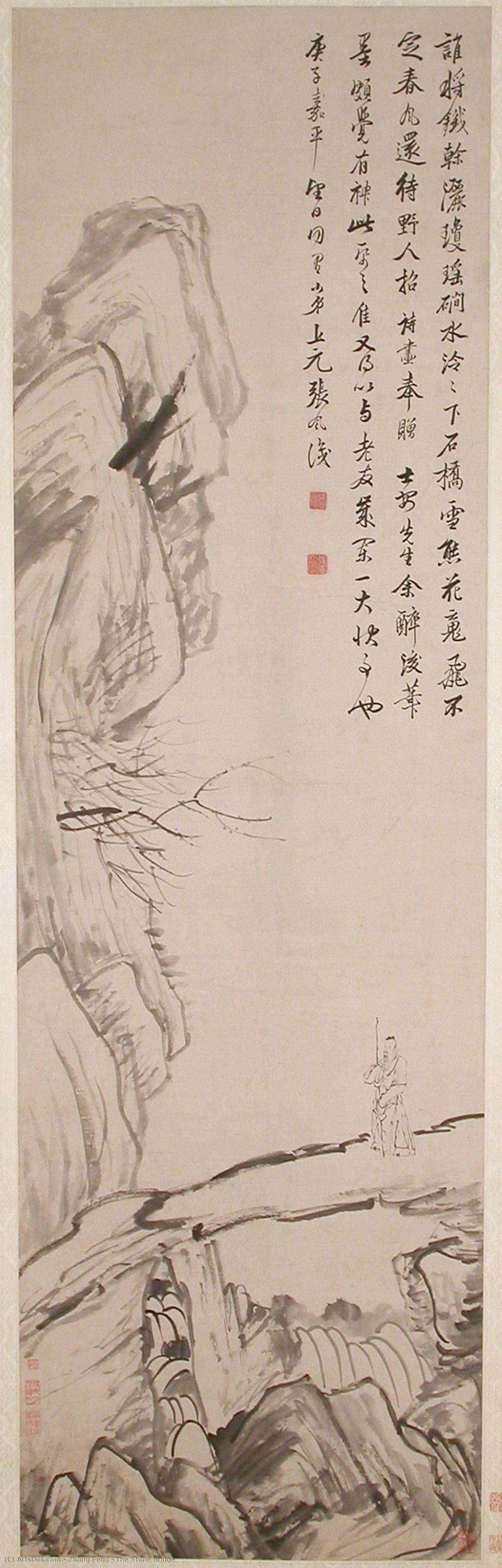
The Stone Bridge
 1661
1661 154.0 x 47.0 cm
 Read More
Purchase a high-resolution, enhanced digital image, far superior to the online preview.
Each file is meticulously prepared by our in-house specialists using advanced tools and expert manual retouching. We ensure every image has exceptional clarity, precise color accuracy, and fine detail.
The final file is delivered via email within 72 hours, optimized for immediate use in professional, editorial, and print environments. This is the same quality trusted by top-tier design studios, publishers, and galleries.
Digital Image
Download a high-resolution file for personal display, printing, and creative projects. ( Buy Print Buy Hand Made Painting)
Included in Every Digital Image Order
Expert Digital Delivery, Guaranteed
When you choose ArtsDot.com, you're not just getting an image - you're receiving a professionally enhanced digital artwork, crafted with precision and backed by a satisfaction guarantee. Here's everything that comes with your order, automatically:

Fast Email Delivery
Your high-resolution digital image file will be emailed to you within 72 hours of ordering - ready for immediate use.

AI-Enhanced Digital File
Your artwork is professionally optimized using advanced AI tools and manual editing, ensuring maximum detail, clarity, and color accuracy.

Free Lifetime Re-Delivery
Accidentally deleted or lost your file? No worries - we'll resend it to you anytime, free of charge.

No Import Fees - Ever
Enjoy your artwork instantly with zero customs, duties, or delivery fees - digital downloads are always tax-free.

Color Accuracy Guarantee
We ensure your digital image reflects the original colors as closely as possible using professional tools and color management.

60-Day Satisfaction Guarantee
If you're not satisfied with your digital image, we'll revise it or refund 100% within 60 days - no questions asked.

100% Money-Back Guarantee
Not satisfied? Get a full refund within 60 days of receiving your digital file - no questions asked.

Bulk Order Discounts
Buy 3 images, save 10% - Buy 5, save 15% - Buy 10+, save 20%. Great for creative projects, galleries, and agencies.
Collectible Description
Related Artworks









Artist Biography
A Brushstroke Across the Ming-Qing Transition: The Life and Art of Zhang Feng
Zhang Feng, a name resonating softly across the tumultuous landscape of 17th-century China, stands as a compelling figure bridging the waning years of the Ming dynasty and the nascent Qing. Active primarily between roughly 1628 and 1662, his life coincided with a period of profound upheaval – rebellion, invasion, and ultimately, dynastic shift. While biographical details remain fragmented, piecing together the available evidence reveals an artist deeply embedded in the literati tradition yet responding to the anxieties and transformations of his time. He wasn’t merely a recorder of events but a sensitive interpreter of them, translating personal experience into evocative landscapes and poignant figure paintings. Born during the late Ming, Zhang Feng likely hailed from a scholarly family, affording him access to education and an appreciation for calligraphy and poetry – essential components of the cultivated artist's repertoire. The precise location of his birth remains unknown, but stylistic affinities suggest connections to artistic circles in Jiangsu province, a region renowned for its vibrant painting schools. His early training undoubtedly focused on mastering traditional techniques, absorbing the lessons of earlier masters like Wen Zhengming and Tang Yin, whose influence is visible in his delicate brushwork and refined compositions. However, Zhang Feng’s art quickly moved beyond mere imitation, developing a distinctive voice characterized by a subtle emotional depth and an increasingly personal approach to landscape.The Weight of a Changing World: Themes and Influences
Zhang Feng's artistic output is dominated by two primary themes: landscapes imbued with philosophical contemplation and depictions of historical or literary subjects, often carrying allegorical weight. The political instability of the era profoundly shaped his work. The fall of Beijing to Manchu forces in 1644 cast a long shadow over Chinese society, and Zhang Feng’s landscapes frequently evoke a sense of melancholy and transience. His mountains are not simply picturesque backdrops but often serve as metaphors for resilience amidst adversity or reflections on the fragility of human endeavors. The use of muted colors, sparse compositions, and dramatic atmospheric effects contribute to this overall mood of quiet introspection. He wasn’t overtly political in his imagery, avoiding direct depictions of warfare or rebellion; instead, he channeled his anxieties into more subtle forms of expression. The influence of the Yuan dynasty painter Zhao Mengfu is particularly noticeable in Zhang Feng's calligraphy and his emphasis on achieving a harmonious balance between painting, poetry, and inscription. This holistic approach, characteristic of literati painting, elevated art beyond mere visual representation to become a vehicle for expressing personal values and philosophical insights. Furthermore, the growing popularity of collecting antiquities during the late Ming likely influenced Zhang Feng’s interest in historical subjects, providing him with narratives that resonated with contemporary concerns about loyalty, loss, and the cyclical nature of history.A Distinctive Style: Technique and Composition
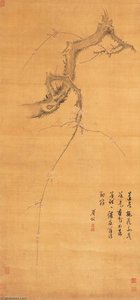
Zhang Feng's technical mastery is evident in his precise brushwork and subtle use of ink washes. He favored a restrained palette, often employing shades of black, gray, and ochre to create atmospheric effects and convey a sense of depth. His landscapes are characterized by a delicate balance between detail and abstraction; while he meticulously rendered individual trees and rocks, he also used broad washes to suggest vast distances and evoke the grandeur of nature.- His brushwork is notable for its fluidity and control
- He skillfully employed dry brush techniques to create textures and convey a sense of age and weathering.
- The use of blank space, or negative space, is also crucial to his compositions, creating a sense of openness and allowing the viewer’s eye to wander freely.
Legacy and Historical Significance
Despite the relative scarcity of surviving works, Zhang Feng occupies an important position in the history of Chinese art. He represents a transitional figure – one who inherited the traditions of the late Ming but also responded to the challenges and uncertainties of the early Qing. His landscapes, with their subtle emotional depth and philosophical contemplation, offer a poignant reflection on the anxieties of his time. While he didn’t actively participate in the political debates surrounding the dynastic shift, his art speaks volumes about the psychological impact of upheaval and loss. His work served as a conduit for expressing personal values and maintaining cultural continuity during a period of profound change. Although not widely known outside specialist circles until relatively recently, Zhang Feng’s paintings are increasingly recognized for their artistic merit and historical significance. His ability to blend traditional techniques with a distinctive personal voice makes him a compelling figure in the study of 17th-century Chinese art. He stands as a testament to the enduring power of art to transcend political boundaries and offer solace and meaning in times of turmoil, leaving behind a legacy that continues to resonate with viewers today.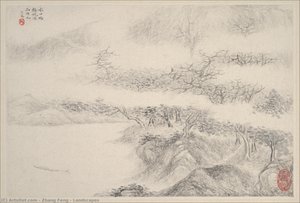
Quick Facts
- Artistic Movement Or Style: Late Ming Dynasty Painting
- Date Of Birth: Ca. 1628
- Date Of Death: 1662
- Full Name: Zhang Feng
- Nationality: Chinese

