

 Preview
 Send
Send Share
Share
 Details

 Download
 Similars
 X-Ray
X-Ray Diaporama
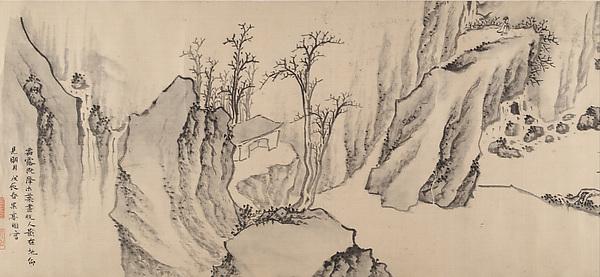
明 張瑞圖 後赤壁賦圖 卷 Second Ode on the Red Cliff
 1628
1628 31.0 x 1043.0 cm
 Read More
Purchase a high-resolution, enhanced digital image, far superior to the online preview.
Each file is meticulously prepared by our in-house specialists using advanced tools and expert manual retouching. We ensure every image has exceptional clarity, precise color accuracy, and fine detail.
The final file is delivered via email within 72 hours, optimized for immediate use in professional, editorial, and print environments. This is the same quality trusted by top-tier design studios, publishers, and galleries.
Digital Image
Download a high-resolution file for personal display, printing, and creative projects. ( Buy Print Buy Hand Made Painting)
Included in Every Digital Image Order
Expert Digital Delivery, Guaranteed
When you choose ArtsDot.com, you're not just getting an image - you're receiving a professionally enhanced digital artwork, crafted with precision and backed by a satisfaction guarantee. Here's everything that comes with your order, automatically:

Fast Email Delivery
Your high-resolution digital image file will be emailed to you within 72 hours of ordering - ready for immediate use.

AI-Enhanced Digital File
Your artwork is professionally optimized using advanced AI tools and manual editing, ensuring maximum detail, clarity, and color accuracy.

Free Lifetime Re-Delivery
Accidentally deleted or lost your file? No worries - we'll resend it to you anytime, free of charge.

No Import Fees - Ever
Enjoy your artwork instantly with zero customs, duties, or delivery fees - digital downloads are always tax-free.

Color Accuracy Guarantee
We ensure your digital image reflects the original colors as closely as possible using professional tools and color management.

60-Day Satisfaction Guarantee
If you're not satisfied with your digital image, we'll revise it or refund 100% within 60 days - no questions asked.

100% Money-Back Guarantee
Not satisfied? Get a full refund within 60 days of receiving your digital file - no questions asked.

Bulk Order Discounts
Buy 3 images, save 10% - Buy 5, save 15% - Buy 10+, save 20%. Great for creative projects, galleries, and agencies.
Related Artworks









Artist Biography
A Life Etched in Ink: The Calligraphy of Zhang Ruitu
Zhang Ruitu (1570-1641) stands as a pivotal figure in the late Ming dynasty, not for grand political maneuvers or battlefield victories, but for the exquisite grace and profound emotional depth he brought to Chinese calligraphy. Born in Jinjiang, Fujian province, Zhang’s life unfolded against a backdrop of dynastic shifts and personal trials, experiences that subtly infused his art with a poignant sensibility. He entered imperial service in 1607, navigating the complex currents of courtly life, but his true passion lay in the mastery of brush and ink. While achieving high rank – eventually reaching the grand secretariat – Zhang’s career was marked by political upheaval. A temporary fall from favor during the decline of Wei Zhongxian's power saw him stripped of his position, though he later regained some standing through financial restitution. This period of adversity seems to have deepened his commitment to artistic expression as a refuge and a means of self-cultivation. He ultimately retreated to his native Fujian in his later years, dedicating himself fully to painting and calligraphy until his death in 1641.The Art of Cursive Script: A Rejection of Convention
Zhang Ruitu’s artistic legacy rests primarily on his mastery of cursive script – *caoshu* – a style known for its fluidity, abstraction, and expressive power. He didn't simply replicate existing models; instead, he embarked on a deliberate path to forge his own unique voice within this venerable tradition. While deeply respectful of the Northern Song monumental landscape style, Zhang consciously moved away from Dong Qichang’s emphasis on dynamic brushwork and calligraphic abstraction. His work reveals a lyrical interpretation, prioritizing emotional resonance over sheer technical display. He favored satin as his support material rather than paper, contributing to the unique texture and luminosity found in his pieces. His calligraphy wasn't merely about beautiful forms; it was an embodiment of inner feeling, a visual manifestation of poetic thought. The works he created often featured poems by renowned Tang dynasty masters like Du Fu and Meng Haoran, imbuing his art with layers of literary allusion and historical depth.Major Works and Artistic Characteristics
Among Zhang Ruitu’s most celebrated pieces are ‘Han Capital,’ a stunning 1622 cursive scroll that exemplifies his dynamic style and historical awareness, and ‘Red Cliff’, another masterpiece showcasing his ability to capture the essence of classical poetry through elegant brushwork. ‘Calligraphy in Running Script’ demonstrates his technical prowess with traditional Chinese techniques. His compositions often feature a linear arrangement, emphasizing the flow and rhythm of the characters. A key characteristic is his use of the *shuibanjing* technique – a method involving careful control of ink wash to create subtle gradations and atmospheric effects. Beyond these specific works, Zhang’s ‘Poem in Cursive Script’ scrolls are particularly noteworthy for their symbolic beauty and rarity within the Ming Dynasty context. His signature style is easily recognizable through his powerful regular script inscriptions accompanying his cursive compositions.Influences and Legacy
Zhang Ruitu's artistic development was shaped by a deep engagement with classical Chinese literature and painting traditions. He drew inspiration from the Northern Song monumental landscape style, adapting its principles to suit his own aesthetic sensibilities. His work also reflects an understanding of earlier calligraphers, but he never simply imitated them; instead, he synthesized these influences into something distinctly his own. His rejection of Dong Qichang’s more abstract approach and his focus on lyrical expression set him apart from many of his contemporaries. Zhang Ruitu's influence extended beyond his immediate circle, inspiring later generations of calligraphers to explore the expressive potential of cursive script. Today, he is remembered as a master of his craft, whose works embody the elegance, depth, and emotional power of Chinese calligraphy at its finest.Historical Significance
Zhang Ruitu’s work provides valuable insight into the cultural climate of the late Ming dynasty – a period marked by political instability and social upheaval. His art reflects a yearning for tranquility and spiritual renewal amidst these turbulent times. His ability to seamlessly blend poetry, history, and calligraphy speaks to the broader intellectual currents of his era. The fact that he was able to navigate the complexities of courtly life while maintaining his artistic integrity is testament to his resilience and dedication. Zhang Ruitu’s legacy extends beyond the realm of art; it offers a glimpse into the soul of a scholar-official grappling with the challenges of a changing world, finding solace and meaning in the timeless beauty of ink and brush. His pieces are now held in prestigious collections like The Metropolitan Museum of Art and the Asian Art Museum, ensuring his enduring place in the history of Chinese art. His work continues to captivate audiences today, offering a profound meditation on the power of calligraphy as a form of self-expression and cultural preservation.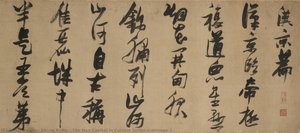
zhang ruitu
1570 - 1641
Quick Facts
- Artistic Movement Or Style: Ming Dynasty
- Artists Or Movements Influenced By This Artist: ['Northern Song']
- Artists Who Influenced This Artist: ['Dong Qichang']
- Date Of Death: 1641
- Full Name: Zhang Rui Tu
- Nationality: Chinese
- Notable Artworks:
- Han Capital
- Red Cliff
- Place Of Birth: Jinjiang, Fujian

