 Preview
 Send
Send Share
Share
 Details

 Download
 Similars
 X-Ray
X-Ray Diaporama
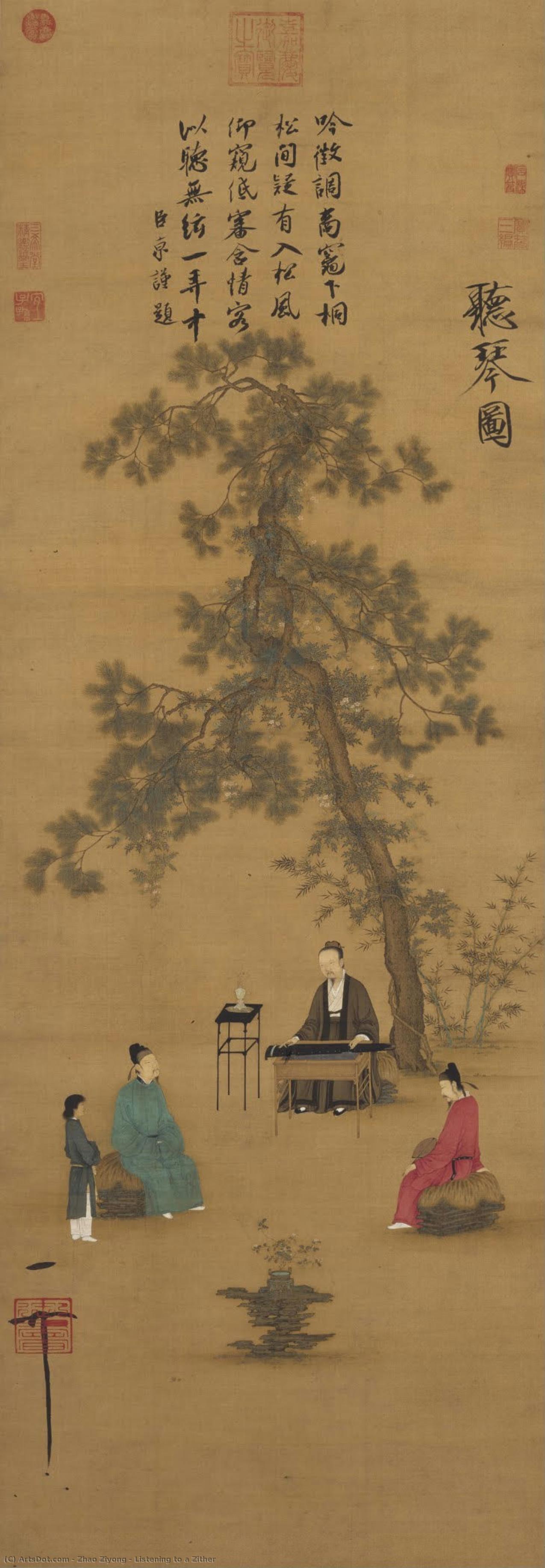
Listening to a Zither
 Read More
Giclée / Art Print
Museum-quality giclée or canvas print with fast production and flexible finish options. ( Buy Hand Made Painting Buy Image)




































Pick from our preset sizes that match the artwork's original proportions.

You may enter your own dimensions to fit a specific frame or space. If your selected size does not match the original image's proportions, we will either crop the artwork or extend the image with a mirrored or solid-fill edge. A digital mockup will be sent for your approval before production begins.
Please note that the on-screen preview does not reflect the actual cropping or extension. Only the mockup will accurately show the final composition.
While custom sizes are available, we recommend selecting a dimension from the predefined list to preserve the original proportions.
Worldwide Delivery () in 2 weeks instead of standard 4/5 weeks. (25 August)

Free Worldwide Express Shipping

High-Quality Linen Canvas

Full Shipping Insurance

Customs Tax Refund Guarantee

True Color Matching Guarantee

60-Day Return Policy (Defects Only)

100% Money-Back Guarantee

Bulk Discount Offer
 Glass option is only available in size under 110 CM

Listening to a Zither
Giclée / Art Print
Reproduction Size
-


Total Price
$ 63
Collectible Description
Related Artworks



Artist Biography
Zhao Ziyong: A Master of Cantonese Brush and Confucian Echoes
Zhao Ziyong (1786-1847) stands as a singular figure in Chinese art, a master whose unique blend of calligraphy, landscape painting, and Confucian scholarship created a distinctive artistic voice. Born in Hong Kong or Macau – locations steeped in the rich traditions of Cantonese language and culture – his life was inextricably linked to the evolving literary landscape of China during a period of significant social and political upheaval. Unlike many of his contemporaries who focused primarily on formal brushwork and traditional subjects, Ziyong’s work is characterized by an intellectual depth and linguistic precision that set him apart, particularly through his innovative use of written Cantonese within his artistic creations. Ziyong's early life was shaped by the legacy of his father, Wang Lang, a prominent official during the Three Kingdoms period. This lineage imbued him with a sense of responsibility and a deep appreciation for Confucian ideals. He later inherited the title and marquisate of Marquis of Lanling from his father, solidifying his position within the court. However, Ziyong’s true calling lay not in political maneuvering but in artistic expression. He served as a scholar and official under the Cao Wei state, demonstrating an ability to navigate complex social structures while simultaneously pursuing his artistic passions. Notably, he was also deeply involved in compiling the Kongzi Jiayu – a collection of Confucian sayings that were absent from the Analects, offering a unique perspective on the teachings of Confucius. This dual role as scholar and artist reflects a core aspect of Ziyong’s identity: a commitment to both intellectual rigor and artistic innovation.The Language of Art: Cantonese Calligraphy and Symbolic Landscapes
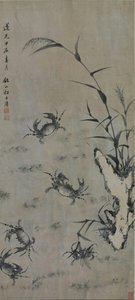
Ziyong's most distinctive contribution to Chinese art lies in his masterful integration of written Cantonese into his paintings. Recognizing the unique linguistic richness and expressive potential of this dialect, he developed new characters for words that were absent from standard Mandarin, effectively expanding the visual vocabulary of Chinese calligraphy. This wasn’t merely a decorative flourish; it was a deliberate attempt to capture the nuances of Cantonese speech and imbue his artwork with a sense of place and cultural identity. His landscapes, often depicting coastal scenes like crabs on sand with reeds – a particularly evocative piece showcasing the interplay of nature and human activity – are rendered in a style deeply rooted in traditional Chinese ink wash painting (shui hua). Yet, they possess an unusual immediacy and emotional resonance, achieved through his careful selection of imagery and his subtle use of color. The symbolism within Ziyong’s works is equally compelling. He frequently employed elements from Confucian philosophy – bamboo representing resilience, rocks symbolizing stability, and water embodying fluidity – to convey deeper meanings about human nature and the relationship between humanity and the natural world. His paintings are not simply representations of scenery; they are carefully constructed allegories designed to evoke contemplation and inspire moral reflection. The inclusion of titles inscribed in his own elegant calligraphy further enhances this symbolic dimension, inviting viewers to engage with the artwork on a more intellectual level.A Confucian Scholar’s Legacy: Influence and Artistic Style
Ziyong's artistic style evolved over time, influenced by various factors including his scholarly pursuits and his exposure to different artistic traditions. He drew inspiration from both Northern Song landscape painting – known for its atmospheric effects and subtle brushwork – and the more formal styles of court painting prevalent during the Yuan dynasty. However, he never fully embraced any single stylistic convention, instead forging a unique synthesis that reflected his own intellectual sensibilities. His paintings are characterized by their meticulous attention to detail, their balanced compositions, and their understated elegance. Furthermore, Ziyong’s influence extended beyond the realm of art. As a Confucian scholar, he played a significant role in promoting the teachings of Confucius during a period when traditional values were under threat from foreign influences and social unrest. His compilation of the Kongzi Jiayu was a valuable contribution to scholarship, ensuring that the wisdom of Confucius would be preserved for future generations. His daughter, Wang Yuanji, married Sima Zhao, the first emperor of the Jin dynasty, cementing his family’s place in Chinese history.Notable Works and Historical Significance
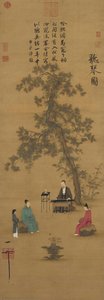
Among Ziyong's most celebrated works is “Listening to a Zither,” a captivating depiction of officials enjoying a musical performance. This painting exemplifies his mastery of both calligraphy and landscape painting, seamlessly blending technical skill with symbolic meaning. Other notable pieces include depictions of bamboo, orchids, and rocks – each imbued with layers of philosophical significance. His work has been featured in numerous exhibitions, including those at the Mia (Museum of International Art) and other prominent institutions worldwide. Zhao Ziyong’s legacy as an artist and scholar is profound. He represents a rare confluence of artistic talent, intellectual curiosity, and cultural awareness. His innovative use of written Cantonese, his masterful brushwork, and his deep engagement with Confucian philosophy have left an enduring mark on Chinese art and culture, solidifying his place as one of the most distinctive and influential figures of the late 18th and early 19th centuries. His work continues to be studied and admired for its beauty, complexity, and profound insights into the human condition.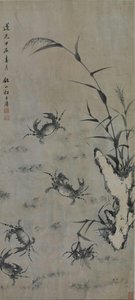
zhao ziyong
China
Quick Facts
- Artistic Movement Or Style: Calligraphy & Landscapes
- Date Of Death: 1846
- Full Name: Zhao Ziyong
- Nationality: Chinese
- Notable Artworks:
- Crabs on Sand
- Listening to a Zither
- Place Of Birth: Hong Kong/Macau