 Preview
 Send
Send Share
Share
 Details

 Download
 Similars
 X-Ray
X-Ray Diaporama
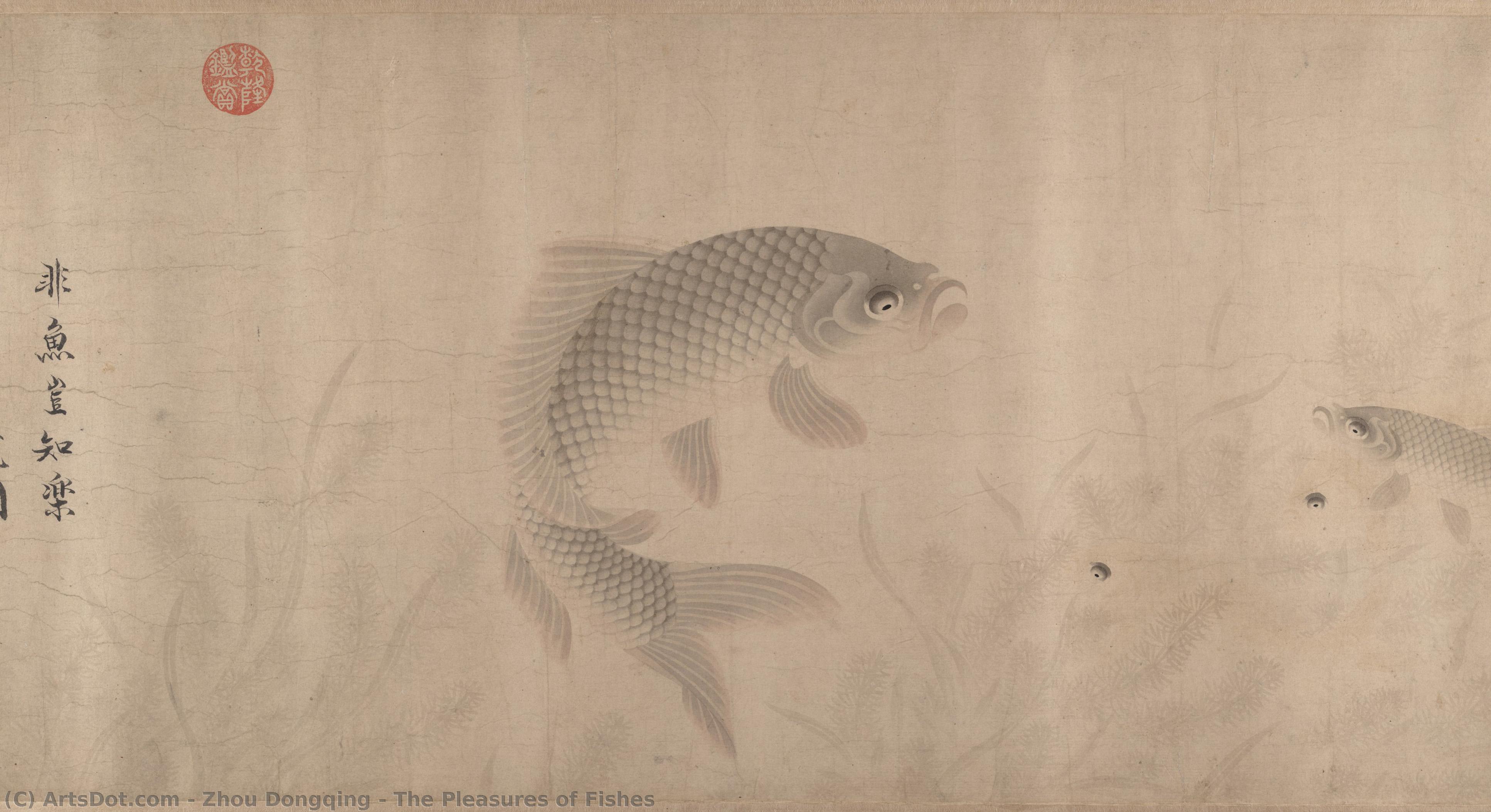
The Pleasures of Fishes
 1291
1291 31.0 x 594.0 cm
 Read More
Hand Made Oil Reproduction
Hand-painted oil on canvas in your size and frame, made to order by our artists. ( Buy Print Buy Image)




































Pick from our preset sizes that match the artwork's original proportions.

You may enter your own dimensions to fit a specific frame or space. If your selected size does not match the original image's proportions, we will either crop the artwork or extend the painting with additional hand-painted elements. A digital mockup will be sent for your approval before production begins.
Please note that the on-screen preview does not reflect the actual cropping or extension. Only the mockup will accurately show the final composition.
While custom sizes are available, we recommend selecting a dimension from the predefined list to preserve the original proportions.
After order, ArtsDot.com team will email client for instructions and provide a mockup preview
Worldwide Delivery () in 3/4 weeks instead of standard 5 weeks. (30 August). No compromise on quality.

Free Worldwide Express Shipping

High-Quality Linen Canvas

Full Shipping Insurance

Customs Tax Refund Guarantee

True Color Matching Guarantee

60-Day Return Policy (Defects Only)

100% Money-Back Guarantee

Bulk Discount Offer
 Glass option is only available in size under 110 CM

The Pleasures of Fishes
Reproduction Medium
Reproduction Size
-


Total Price
$ 263
Related Artworks






Artist Biography
A Painter Embodied in Daoist Harmony
In the quiet annals of the Yuan dynasty, few names evoke the serene intersection of philosophy and brushwork as poignantly as Zhou Dongqing. Born in the Jiangxi Province of China, Zhou’s life was deeply rooted in a landscape where the spiritual and the natural were inseparable. While historical records offer only glimpses of his personal journey, his artistic legacy remains a luminous testament to the enduring spirit of Chinese ink painting. His existence was closely intertwined with the cultural fabric of his era, most notably through his friendship with the celebrated Song loyalist and poet Wen Tianxiang. This connection to a figure of such profound moral and literary significance suggests that Zhou’s art was not merely an aesthetic pursuit, but a meditative practice deeply embedded in the scholarly and spiritual traditions of his homeland.
The essence of Zhou Dongqing’s work is inextricably linked to Daoist principles, particularly the concept of finding cosmic harmony within the smallest details of the natural world. Growing up near Linjiang, not far from the sacred Daoist center at Mount Longhu, it is highly probable that the whispers of the mountains and the flow of the rivers shaped his early consciousness. This spiritual orientation—emphasizing a seamless unity between humanity and the universe—finds its most exquisite expression in his mastery of aquatic life. His paintings do not simply depict animals; they attempt to capture the very soul of existence, inviting the viewer to transcend the boundaries of the self and experience the uninhibited joy of nature.
The Poetics of Water and Ink
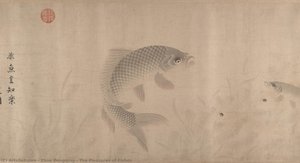
Nowhere is Zhou’s artistic vision more profoundly realized than in his masterpiece, “The Pleasures of Fishes.” Created around 1291, this handscroll serves as a visual dialogue with the ancient Daoist classic, the Zhuangzi. The painting draws direct inspiration from the famous parable of the minnows, where the philosopher observes the effortless freedom of fish darting through a river. Through his brush, Zhou translates this philosophical inquiry into a breathtaking panorama of life. He moves beyond mere representation to explore the profound question posed in his own inscription: “Not being fish, how do we know their happiness?” In doing so, he transforms the act of painting into an attempt to probe the subtleties of the ordinary and describe the truly indescribable.
Technically, Zhou Dongqing was a master of the ink wash technique, utilizing the subtle gradations of grey and black to breathe life into his subjects. His approach was characterized by a delicate balance of precision and fluidity. He employed a method known as hua qiang, layering washes of ink to create a textured, atmospheric surface that mimics the shimmering scales of a fish or the gentle ripples of a pond. Unlike many of his contemporaries who favored the grandeur of silk, Zhou often worked on paper, utilizing muted colors and flat patterns of pale ink wash to evoke a mood of detachment and quiet withdrawal. This stylistic choice reinforces the contemplative nature of his work, stripping away the unnecessary to focus on the pure, rhythmic movement of life beneath the water's surface.
Legacy of the Silent Observer
The historical significance of Zhou Dongqing lies in his ability to capture a specific moment of cultural transition during the Yuan dynasty. As the political landscape of China shifted, artists like Zhou sought refuge in the timeless truths of nature and philosophy. His work represents a bridge between the high literary traditions of the Song era and the introspective, scholar-painter ideals of the Yuan period. By focusing on the "pleasures" of creatures often overlooked, he elevated the mundane to the level of the divine, reminding his audience that profound wisdom can be found in the simplest movements of a minnow.
Today, Zhou’s contributions are preserved in prestigious institutions such as the Metropolitan Museum of Art, where his work continues to inspire awe. His legacy is not found in grand historical conquests, but in the enduring power of a single, well-placed brushstroke that captures the essence of joy. Through his dedication to the Daoist ideal of harmony, Zhou Dongqing remains a vital figure in the history of Chinese art, teaching us that even when we cannot truly know the happiness of another species, we can certainly find our own peace by attempting to witness it.
zhou dongqing
China
Quick Facts
- Artistic Movement Or Style: Daoist influenced art
- Artists Or Movements Influenced By This Artist: ['Chinese landscape art']
- Artists Who Influenced This Artist: ['Wen Tianxiang']
- Full Name: Zhou Dongqing
- Nationality: Chinese
- Notable Artworks: ['The Pleasures of Fishes']
- Place Of Birth: Jiangxi Province, China