 Preview
 Send
Send Share
Share
 Details

 Download
 Similars
 X-Ray
X-Ray Diaporama
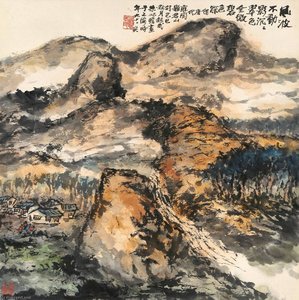
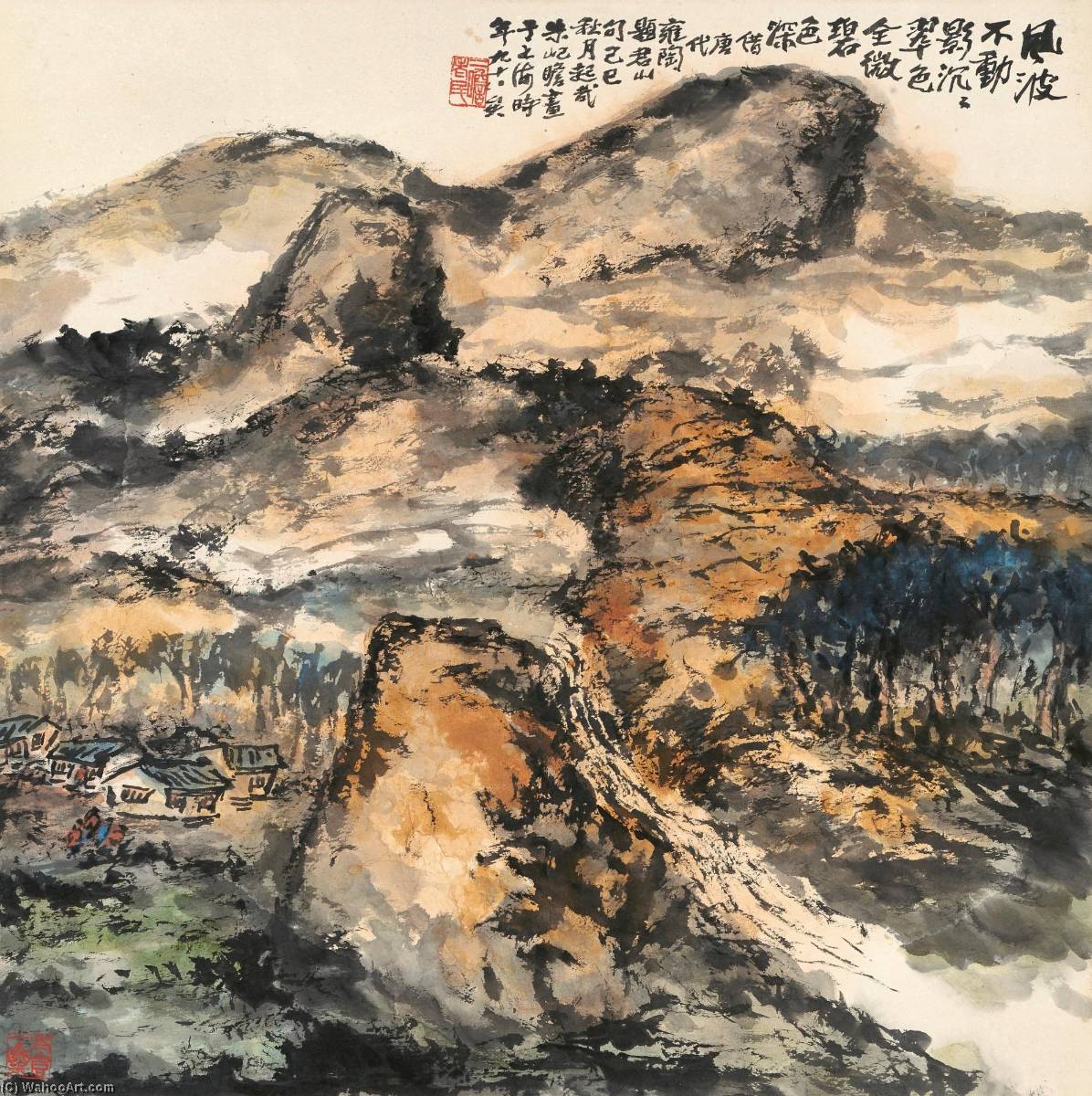
Secluded Village in Mountains
 69.0 x 69.0 cm
 Read More
Giclée / Art Print
Museum-quality giclée or canvas print with fast production and flexible finish options. ( Buy Hand Made Painting Buy Image)




































Pick from our preset sizes that match the artwork's original proportions.

You may enter your own dimensions to fit a specific frame or space. If your selected size does not match the original image's proportions, we will either crop the artwork or extend the image with a mirrored or solid-fill edge. A digital mockup will be sent for your approval before production begins.
Please note that the on-screen preview does not reflect the actual cropping or extension. Only the mockup will accurately show the final composition.
While custom sizes are available, we recommend selecting a dimension from the predefined list to preserve the original proportions.
Worldwide Delivery () in 2 weeks instead of standard 4/5 weeks. (3 September)

Free Worldwide Express Shipping

High-Quality Linen Canvas

Full Shipping Insurance

Customs Tax Refund Guarantee

True Color Matching Guarantee

60-Day Return Policy (Defects Only)

100% Money-Back Guarantee

Bulk Discount Offer
 Glass option is only available in size under 110 CM

Secluded Village in Mountains
Giclée / Art Print
Reproduction Size
-


Total Price
$ 63
Related Artworks









Artist Biography
Zhu Qizhan: Bridging East and West in a Turbulent Era
Zhu Qizhan stands as a pivotal figure in twentieth-century Chinese art—a testament to artistic innovation born from profound cultural engagement. He was not merely an artist; he was a conduit between the venerable traditions of Chinese calligraphy and painting and the burgeoning dynamism of Western Impressionism and Expressionism, forging a distinctive style that continues to captivate scholars and collectors alike. His legacy resides not only in his stunning landscapes and still lifes but also in his unwavering commitment to preserving and revitalizing Chinese artistic heritage during a period of immense historical upheaval.
Born on May 27, 1892, into a wealthy merchant family in Taicang, Jiangsu province, Zhu’s formative years were steeped in the aesthetic values of classical Chinese culture. His family possessed an impressive collection of ancient paintings, and from the age of eight, he began the rigorous process of copying masterworks, instilling in him a deep reverence for tradition. This early education, which encompassed both Confucian scholarship and artistic pursuits, provided the intellectual foundation necessary to later synthesize disparate global influences into a singular, cohesive vision.
A Journey Through Light and Line
The trajectory of Zhu Qizhan’s career was marked by a remarkable ability to absorb foreign techniques without losing his cultural soul. In 1912, he enrolled at the Shanghai Fine Arts College, where he began to explore Western painting techniques under the guidance of Fujishima Takeji. This exposure to European sensibilities profoundly influenced his approach to color and light, marking a departure from the more monochromatic palettes favored by many of his contemporaries. His subsequent travels to Japan played an equally transformative role; studying at the Kawabata Art School in Tokyo, he encountered the expressive power of Vincent van Gogh and Paul Cézanne.
These encounters with Western Post-Impressionism and Expressionism introduced a new vitality to his brushwork. He began to experiment with how light could interact with form, yet he remained anchored by the calligraphic strength of Chinese ink traditions. This fusion became his hallmark: the ability to utilize the vibrant color concepts of the West while maintaining the rhythmic, vigorous brushstrokes characteristic of traditional Chinese painting. As he matured, particularly from the 1950s onward, he pivoted back toward a focused dedication to Chinese painting, specializing in the majesty of mountains, the fluidity of water, and the delicate beauty of flora.
Legacy and Artistic Mastery
Zhu Qizhan’s technical mastery was most evident in his ability to breathe life into the natural world through specific subjects. He was particularly renowned for his depictions of:
- Orchids and Bamboo: Rendered with a rhythmic precision that honored classical literati traditions.
- Rocks and Stones: Captured with a structural weight and texture that reflected his study of Cézanne.
- Landscapes: Vast, imposing compositions that utilized plein air sketching techniques to capture the true essence of the Chinese terrain.
Beyond the canvas, his influence was institutional and profound. He served in numerous prestigious capacities, including as a painter at the Shanghai Academy of Chinese Painting and as an advisor to the Xiling Seal Art Society. His life spanned over a century, witnessing the transformation of China from the Qing dynasty through the modern era. Even in his nineties, he continued to travel internationally, bringing the beauty of Chinese ink painting to audiences in San Francisco and New York. Today, the Zhu Qizhan Museum of Art in Shanghai stands as a monument to a man who successfully bridged two worlds, ensuring that the ancient spirit of Chinese art could dance with the modern pulse of the global avant-garde.

Quick Facts
- Artistic Movement Or Style: Post-Impressionist China
- Artists Or Movements Influenced By This Artist: ['Qi Baishi']
- Artists Who Influenced This Artist: ['Fujishima Takeji']
- Date Of Death: April 20, 1996
- Full Name: Zhu Qizhan
- Nationality: Chinese
- Notable Artworks:
- Green Cliffs
- Secluded Village in Mountains
- Place Of Birth: Taicang, Jiangsu province, China