

 Preview
 Send
Send Share
Share
 Details

 Download
 Similars
 X-Ray
X-Ray Diaporama
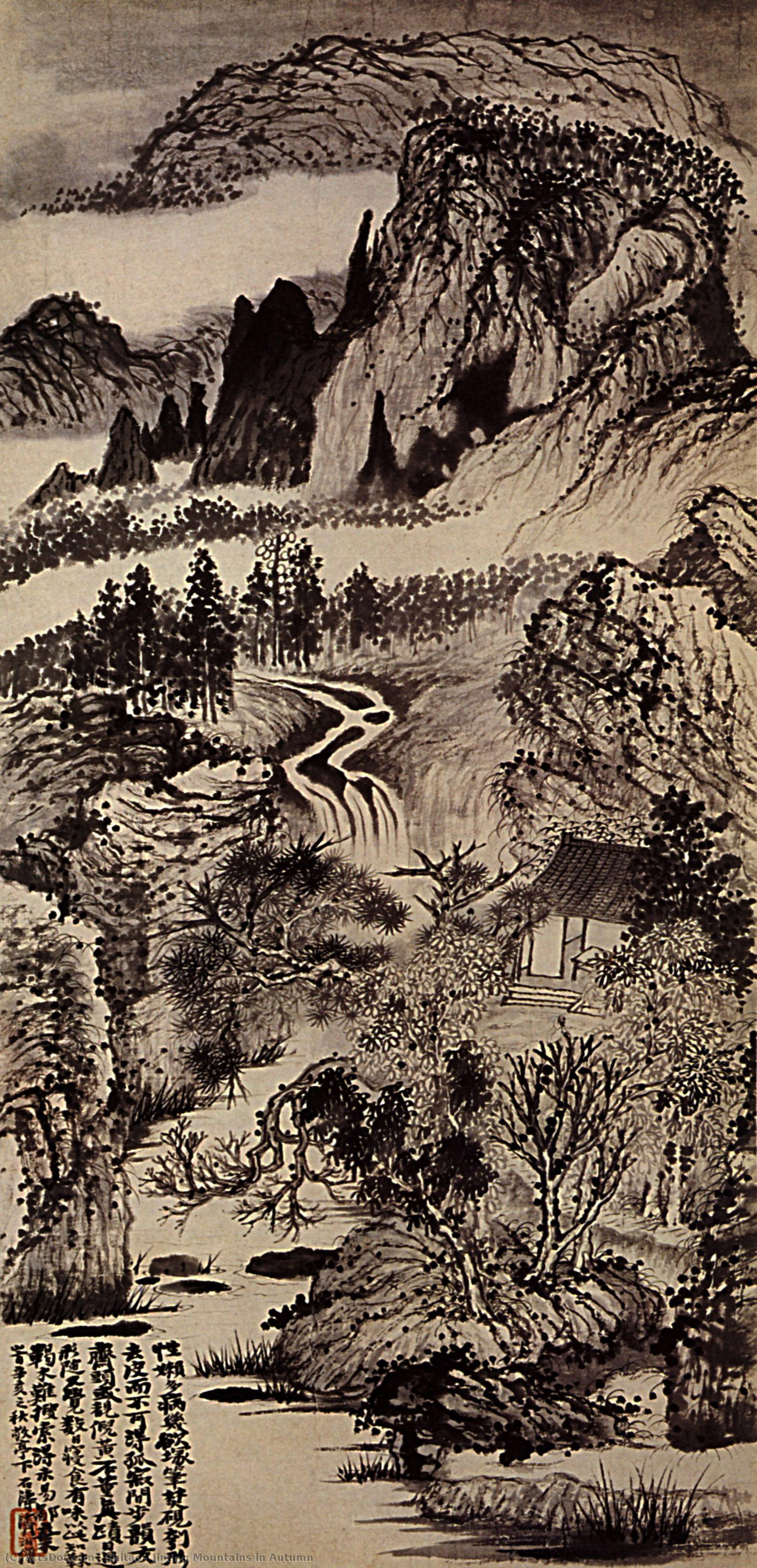
Jinting Mountains in Autumn
 1671
1671 86.0 x 42.0 cm
 Read More
Purchase a high-resolution, enhanced digital image, far superior to the online preview.
Each file is meticulously prepared by our in-house specialists using advanced tools and expert manual retouching. We ensure every image has exceptional clarity, precise color accuracy, and fine detail.
The final file is delivered via email within 72 hours, optimized for immediate use in professional, editorial, and print environments. This is the same quality trusted by top-tier design studios, publishers, and galleries.
Digital Image
Download a high-resolution file for personal display, printing, and creative projects. ( Buy Print Buy Hand Made Painting)
Included in Every Digital Image Order
Expert Digital Delivery, Guaranteed
When you choose ArtsDot.com, you're not just getting an image - you're receiving a professionally enhanced digital artwork, crafted with precision and backed by a satisfaction guarantee. Here's everything that comes with your order, automatically:

Fast Email Delivery
Your high-resolution digital image file will be emailed to you within 72 hours of ordering - ready for immediate use.

AI-Enhanced Digital File
Your artwork is professionally optimized using advanced AI tools and manual editing, ensuring maximum detail, clarity, and color accuracy.

Free Lifetime Re-Delivery
Accidentally deleted or lost your file? No worries - we'll resend it to you anytime, free of charge.

No Import Fees - Ever
Enjoy your artwork instantly with zero customs, duties, or delivery fees - digital downloads are always tax-free.

Color Accuracy Guarantee
We ensure your digital image reflects the original colors as closely as possible using professional tools and color management.

60-Day Satisfaction Guarantee
If you're not satisfied with your digital image, we'll revise it or refund 100% within 60 days - no questions asked.

100% Money-Back Guarantee
Not satisfied? Get a full refund within 60 days of receiving your digital file - no questions asked.

Bulk Order Discounts
Buy 3 images, save 10% - Buy 5, save 15% - Buy 10+, save 20%. Great for creative projects, galleries, and agencies.
Related Artworks









Artist Biography
The Rebellious Spirit of Shitao
In the turbulent landscape of the early Qing Dynasty, a period marked by profound political upheaval and the fall of the Ming lineage, there emerged a voice that would forever alter the trajectory of Chinese ink wash painting. Zhu Ruoji, known to history by his monastic name Shitao, was not merely a painter but a survivor of royal descent whose life was defined by a radical departure from tradition. Born in 1642 in Quanzhou County, Guangxi, he belonged to the imperial house descended from the elder brother of the Ming founder, Zhu Yuanzhang. Had history taken a different turn in 1644, his life might have ended in the purges that followed the Manchu invasion; instead, he escaped catastrophe by embracing the life of a Buddhist monk. This transition from a potential political target to a wandering ascetic allowed him to cultivate a profound spiritual depth that would eventually infuse his brushwork with an unparalleled vitality.
As he moved through the monastic centers of Wuchang, Anhui, and later the vibrant cultural hubs of Nanjing and Yangzhou, Shitao’s artistic identity began to coalesce. By 1690, his journey led him to Beijing, where he sought patronage within the monastic system. Yet, even as he navigated the rigid structures of religious and social hierarchies, his heart remained tethered to a revolutionary aesthetic vision. He did not seek to replicate the stale, codified techniques of the past; rather, he sought to capture the qi—the vital life force—of the natural world through a lens of subjective experience.
A Revolution in Ink and Brush
Shitao’s contribution to the art of ink wash painting represents one of the most significant transgressions against established aesthetic norms in Chinese history. While many of his contemporaries remained tethered to the meticulous imitation of ancient masters, Shitao championed a style that emphasized the act of creation itself. His technique was characterized by a bold, almost impressionistic use of brushstrokes and washes that breathed life into the paper. He mastered the art of using negative space, or white space, not merely as an absence of pigment, but as a powerful tool to suggest infinite distance, mist, and the ethereal atmosphere of the mountains.
His approach was deeply rooted in the principles of ink wash painting, a medium that had flourished since the Tang Dynasty. In his hands, the monochrome palette of black ink became a spectrum of emotion and texture. He moved beyond direct imitation to convey the perceived essence of his subjects, often blending elements of Buddhist and Daoist philosophy into his landscapes. This focus on the "single brushstroke" and the spontaneous movement of ink allowed him to create works that felt alive, as if the mountains were still forming under the tip of his brush.
Legacy and Enduring Influence
The significance of Shitao’s work extends far beyond the borders of the Qing Dynasty. He is remembered as a master who broke the shackles of tradition to find a new, authentic way of seeing. His ability to merge personal spiritual journey with technical innovation has left an indelible mark on the history of East Asian art. Today, his masterpieces are preserved in prestigious institutions such as the University of Michigan Museum of Art, where works like his painting poem concerning a Wanli era imperial brush serve as testaments to his profound connection to his heritage and his artistic rebellion.
The enduring legacy of Zhu Ruoji can be summarized through several key pillars of his greatness:
- Innovation of Technique: His use of bold, spontaneous brushstrokes and expressive washes revolutionized the landscape genre.
- Spiritual Depth: The integration of Buddhist monastic life into a subjective, emotive painting style.
- Mastery of Space: A pioneering use of negative space to create depth, atmosphere, and a sense of the infinite.
- Historical Resilience: Transforming a precarious political identity into a celebrated artistic persona that transcended dynastic shifts.
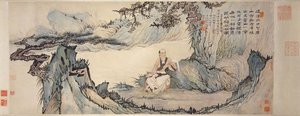
zhu ruoji
1642 - 1707 , China
Quick Facts
- Artistic Movement Or Style: Ink wash painting, Qing dynasty landscape
- Date Of Birth: 1642
- Date Of Death: 1707
- Full Name: Zhu Ruoji (Shitao)
- Nationality: Chinese
- Notable Artworks:
- Painting poem concerning a Wanli era brush
- Landscape painted on the Double Ninth Festival
- Place Of Birth: Quanzhou County, China

