 Preview
 Send
Send Share
Share
 Details

 Download
 Similars
 X-Ray
X-Ray Diaporama
 Stats
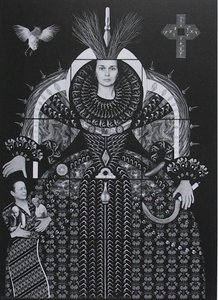
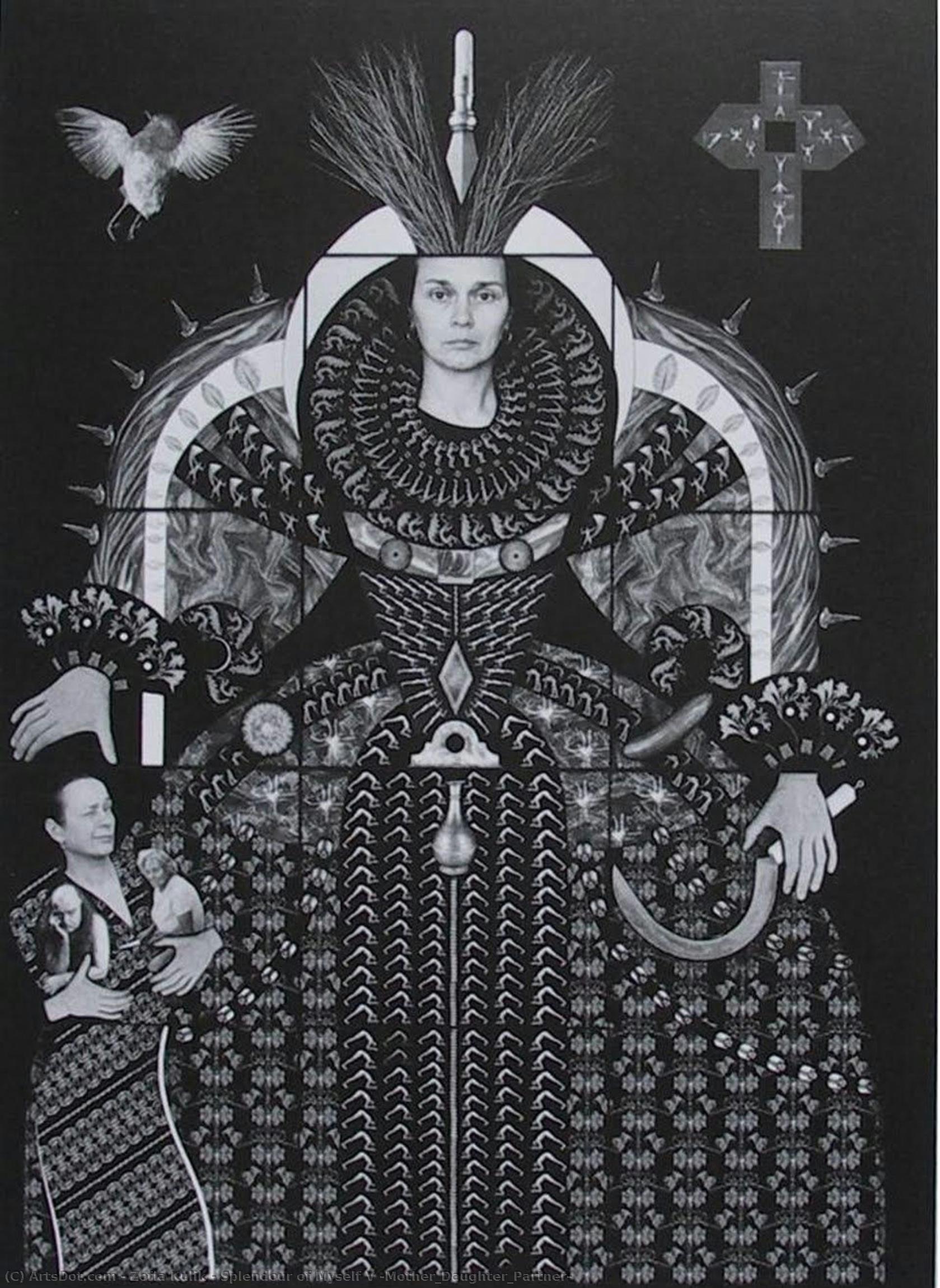
StatsSplendour of Myself V (Mother_Daughter_Partner)
 180.0 x 250.0 cm
 Centre of Contemporary Art Znaki Czasu
 Read More
Giclée / Art Print
Museum-quality giclée or canvas print with fast production and flexible finish options. ( Buy Hand Made Painting Switch to Digital Image)




































Pick from our preset sizes that match the artwork's original proportions.

You may enter your own dimensions to fit a specific frame or space. If your selected size does not match the original image's proportions, we will either crop the artwork or extend the image with a mirrored or solid-fill edge. A digital mockup will be sent for your approval before production begins.
Please note that the on-screen preview does not reflect the actual cropping or extension. Only the mockup will accurately show the final composition.
While custom sizes are available, we recommend selecting a dimension from the predefined list to preserve the original proportions.
Worldwide Delivery () in 2 weeks instead of standard 4/5 weeks. (8 September)

Free Worldwide Express Shipping

High-Quality Linen Canvas

Full Shipping Insurance

Customs Tax Refund Guarantee

True Color Matching Guarantee

100-Day Return Policy (Defects Only)

100% Money-Back Guarantee

Bulk Discount Offer
 Glass option is only available in size under 110 CM

Splendour of Myself V (Mother_Daughter_Partner)
Giclée / Art Print
Reproduction Size
-


Total Price
$ 63
Related Artworks





Artist Biography
The Collaborative Genesis and the Kwiekulik Era
Born in the historic city of Wrocław in 1947, Zofia Kulik emerged from a landscape deeply shaped by the complexities of post-war Poland. Her artistic journey began with formal training at the Academy of Fine Arts in Warsaw, where she honed her skills in sculpture. However, it was her profound collaboration with Przemysław Kwiek between 1971 and 1987 that would fundamentally redefine her creative trajectory. Operating under the shared moniker Kwiekulik, the duo forged an identity that challenged the traditional boundaries of authorship and artistic medium. Their practice was deeply rooted in the radical architectural theories of Oskar Hansen, particularly the notion of open form—a concept that invited participation and allowed for a fluid, evolving relationship between the artwork and its environment. Through performance, photography, and intricate installations, this period served as a laboratory for experimentation, where the lines between art, life, and political resistance were perpetually blurred.A Singular Vision of Power and Identity
As Kulik transitioned into her individual practice, her work underwent a profound evolution, moving toward a more singular, yet equally potent, exploration of identity and authority. Her solo oeuvre is characterized by a masterful command over diverse media, ranging from large-scale sculptures to meticulously layered collages and photographic sequences. In these works, Kulik weaves a complex tapestry where political criticism meets a sharp feminist perspective. She utilizes the repetitive power of imagery to dissect the structures of power, examining how bodies—both male and female—are positioned within social and political hierarchies. Her use of photography is not merely documentary; it is an active tool for reconstruction, where layers of images create a sense of overwhelming density, mirroring the suffocating nature of totalitarianism or the intricate webs of societal control.The Architecture of Memory and Resistance
The historical significance of Zofia Kulik lies in her ability to transform the physical into the ideological. Her installations often function as immersive environments that demand a visceral response from the viewer, forcing an encounter with the weight of history and the persistence of memory. By integrating objects, photography, and performance, she creates a visual language that is both monumental and deeply intimate. Her achievements are marked by a refusal to remain static; her art remains a living, breathing critique of the contemporary condition. Through her enduring legacy, Kulik continues to inspire a generation of artists to use the medium of sculpture and image as a site of profound social interrogation, ensuring that the dialogue between the individual and the state remains at the forefront of the artistic consciousness.
zofia kulik
1947 - , Poland
Quick Facts
- Artistic Movement Or Style: Feminist and political art
- Artists Who Influenced This Artist: ['Oskar Hansen']
- Date Of Birth: 1947
- Full Name: Zofia Kulik
- Nationality: Polish
- Place Of Birth: Wroclaw, Poland