

 Preview
 Send
Send Share
Share
 Details

 Download
 Similars
 X-Ray
X-Ray Diaporama
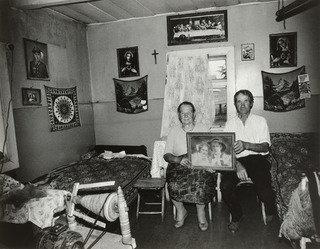
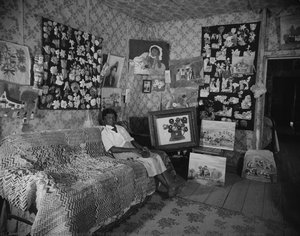
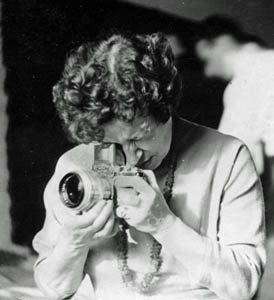
Untitled, from a series of portraits in the Zakopane region, Poland
 1978
1978 25.0 x 31.0 cm
 Read More
Purchase a high-resolution, enhanced digital image, far superior to the online preview.
Each file is meticulously prepared by our in-house specialists using advanced tools and expert manual retouching. We ensure every image has exceptional clarity, precise color accuracy, and fine detail.
The final file is delivered via email within 72 hours, optimized for immediate use in professional, editorial, and print environments. This is the same quality trusted by top-tier design studios, publishers, and galleries.
Digital Image
Download a high-resolution file for personal display, printing, and creative projects. ( Buy Print Buy Hand Made Painting)
Included in Every Digital Image Order
Expert Digital Delivery, Guaranteed
When you choose ArtsDot.com, you're not just getting an image - you're receiving a professionally enhanced digital artwork, crafted with precision and backed by a satisfaction guarantee. Here's everything that comes with your order, automatically:

Fast Email Delivery
Your high-resolution digital image file will be emailed to you within 72 hours of ordering - ready for immediate use.

AI-Enhanced Digital File
Your artwork is professionally optimized using advanced AI tools and manual editing, ensuring maximum detail, clarity, and color accuracy.

Free Lifetime Re-Delivery
Accidentally deleted or lost your file? No worries - we'll resend it to you anytime, free of charge.

No Import Fees - Ever
Enjoy your artwork instantly with zero customs, duties, or delivery fees - digital downloads are always tax-free.

Color Accuracy Guarantee
We ensure your digital image reflects the original colors as closely as possible using professional tools and color management.

60-Day Satisfaction Guarantee
If you're not satisfied with your digital image, we'll revise it or refund 100% within 60 days - no questions asked.

100% Money-Back Guarantee
Not satisfied? Get a full refund within 60 days of receiving your digital file - no questions asked.

Bulk Order Discounts
Buy 3 images, save 10% - Buy 5, save 15% - Buy 10+, save 20%. Great for creative projects, galleries, and agencies.
Related Artworks



Artist Biography
Zofia Rydet: A Quiet Witness of Polish Life
Zofia Rydet stands as a singular, monumental figure in the history of Polish photography, a woman whose lens served as a profound instrument of memory and sociological inquiry. Born in 1911 in Stanisławów, within the borders of Austria-Hungary, her early life was shaped by the shifting tides of Central European history. Before she became a master of the photographic medium, Rydet navigated a variety of roles, from working with the Orbis Polish Travel Office to managing a stationery shop. These early experiences, rooted in observation and the meticulous handling of detail, would later become the silent foundation for her extraordinary ability to perceive the hidden narratives within the mundane.
Her artistic journey did not follow a conventional path of academic training; rather, it was a mid-life blossoming of passion. It was only in 1954, when she joined the Gliwice Photographic Society, that Rydet began to truly hone her technical craft and experiment with the language of light and shadow. This period of dedicated exploration led to her first significant critical triumph in 1961 with the exhibition Mały Człowiek (“Little Man”). Through this series, she sought to strip away the stereotypes of childhood, presenting children not as carefree icons but as complex human beings shaped by the societal pressures and political realities of postwar Poland. This work, later compiled into a book edited by Wojciech Zamecznik, signaled the arrival of an artist with a deep, empathetic gaze.
The Magnum Opus: The Sociological Record
While her early works established her presence in the Polish photographic landscape, it was the commencement of her most ambitious undertaking, the Sociological Record (Zapis Socjologiczny), that would secure her eternal place in art history. Beginning in 1978 at the age of sixty-seven, Rydet embarked on a decades-long odyssey that would consume nearly twenty years of her life. Her mission was nothing less than an attempt to document the very soul of Polish domesticity, capturing the essence of every household she could reach across the country.
The scale of this endeavor is staggering, encompassing over 20,000 photographs taken between 1978 and 1997. Rydet’s approach was characterized by a deliberate rejection of the staged or the artificial. She did not seek to direct her subjects; instead, she knocked on doors, introduced herself, and entered their private sanctuaries as a guest. Using a wide-angle lens and a direct flash, she captured individuals—children, men, women, and the elderly—amidst the cluttered, intimate landscapes of their homes. These images were not merely portraits but complex compositions where the person was inseparable from their belongings, their furniture, and the sacred relics of their daily existence.
In these photographs, the boundaries between the subject and their environment dissolve. The Sociological Record captures a specific, vanishing era of Soviet-influenced Poland, preserving the textures of rural life in regions like Podhale and Upper Silesia, as well as the changing urban interiors. Her technique allowed for a raw, unvarnished truth:
- Directness: A straight-on perspective that forced an encounter between the viewer and the subject.
- Authenticity: The use of natural domestic settings to avoid the artifice of studio portraiture.
- Intimacy: An unflinching look at the personal objects, framed photographs, and religious icons that define a person's identity.
Legacy and Historical Significance
The significance of Zofia Rydet’s work extends far beyond the borders of Poland. Though her primary focus remained the Polish landscape, her project eventually expanded to touch upon the lives of Polish families in France, Germany, Lithuania, and even the United States. Her work serves as a vital historical archive, a visual census of a culture undergoing profound political and social transformations. She did not view herself merely as an artist creating aesthetic objects, but as a documentarian of time itself, once writing that her work might not be "art," but it would remain a "document of the times."
Rydet’s ability to find dignity in the ordinary and grace in the passage of time—as seen in her series Czas przemijania (The Passage of Time)—has earned her international acclaim, including the prestigious EFIAP recognition from the Fédération Internationale de l’Art Photographique. Today, her archives stand as a hauntingly beautiful testament to human resilience and the quiet persistence of domestic life. She passed away in Gliwice on August 24, 1997, leaving behind a legacy that continues to challenge how we perceive the relationship between the individual, their environment, and the inexorable march of history.
Quick Facts
- Artistic Movement Or Style: Documentary Photography
- Date Of Death: August 24, 1997
- Full Name: Zofia Rydet
- Nationality: Polish
- Notable Artworks: ['Untitled, Zakopane']
- Place Of Birth: Stanisławów

