

![Men’s Traditional Costume, Vorokhta Area, Hutsuls [now Ukraine] — Zofia Stryjeńska](/media/artworks/images-full/a9/ef/a9ef1cda79fdc4cec2c7c1df4dbbf669.jpg)
 Preview
 Send
Send Share
Share
 Details

 Download
 Similars
 X-Ray
X-Ray Diaporama
Men’s traditional costume, Vorokhta area, Hutsuls [now Ukraine]


 Read More
Hand Made Oil Reproduction
Hand-painted oil on canvas in your size and frame, made to order by our artists. ( Buy Print Buy Image)




































Pick from our preset sizes that match the artwork's original proportions.

You may enter your own dimensions to fit a specific frame or space. If your selected size does not match the original image's proportions, we will either crop the artwork or extend the painting with additional hand-painted elements. A digital mockup will be sent for your approval before production begins.
Please note that the on-screen preview does not reflect the actual cropping or extension. Only the mockup will accurately show the final composition.
While custom sizes are available, we recommend selecting a dimension from the predefined list to preserve the original proportions.
After order, ArtsDot.com team will email client for instructions and provide a mockup preview
Worldwide Delivery () in 3/4 weeks instead of standard 5 weeks. (29 August). No compromise on quality.

Free Worldwide Express Shipping

High-Quality Linen Canvas

Full Shipping Insurance

Customs Tax Refund Guarantee

True Color Matching Guarantee

60-Day Return Policy (Defects Only)

100% Money-Back Guarantee

Bulk Discount Offer
 Glass option is only available in size under 110 CM

Men’s traditional costume, Vorokhta area, Hutsuls [now Ukraine]
Reproduction Medium
Reproduction Size
-


Total Price
$ 263
Related Artworks







Artist Biography
A Pioneer of Polish Art Deco: The Life and Legacy of Zofia Stryjeńska
Zofia Stryjeńska, born Zofia Lubańska in Kraków, Poland, in 1891, stands as a pivotal figure in the vibrant artistic landscape of interwar Europe. More than simply a painter, she was a multifaceted artist—a graphic designer, illustrator, stage designer, and textile creator—who masterfully synthesized Art Deco aesthetics with the rich tapestry of Polish folklore. Her work wasn’t merely decorative; it was a powerful statement of national identity forged in a period of renewed independence for Poland after decades of partition. From an early age, her talent blossomed, nurtured by private lessons under Leonard Stroynowski and formal training at Maria Niedzielska's School of Fine Art for Women. A formative family trip to Italy in 1910 exposed the young artist to a wealth of European masterpieces, igniting a passion that would fuel her lifelong creative journey. This early exposure laid the groundwork for an artistic vision uniquely her own—one that celebrated both modernity and tradition.Forging a Unique Artistic Voice
Stryjeńska’s career was defined by a distinctive style that defied easy categorization. She didn't simply adopt Art Deco; she *infused* it with the spirit of Poland, creating works brimming with energy and expressive power. Her early recognition came through watercolor illustrations of Polish fables, showcased at the Kraków Society of Friends of Fine Art in 1912. These weren’t mere illustrations; they were vibrant narratives brought to life with striking visual imagery, demonstrating her ability to blend storytelling with artistic innovation. This talent extended beyond the realm of illustration. She secured commissions for designs on the Polish passenger ships “Batory” and “Pilsudski,” transforming functional spaces into showcases of Art Deco elegance. The series *Łowy Bogów* (God Hunt), created in 1921, revealed a fascination with mythological themes, rendered through dynamic compositions that showcased her evolving style. Perhaps one of her most ambitious projects was the *Pascha* (Passover) series—five tempera paintings that seamlessly wove together Polish folklore and religious iconography, demonstrating a profound understanding of cultural symbolism.Influences and Artistic Development
The wellsprings of Stryjeńska’s creativity were diverse and deeply rooted in her surroundings. Polish Folklore was not merely a subject matter; it was an integral part of her artistic DNA, informing her illustrations, decorative motifs, and overall aesthetic sensibility. She drew inspiration from the vibrant costumes, ancient myths, and rural traditions that defined Polish culture. Simultaneously, she embraced the Art Deco Movement, adapting its geometric forms, streamlined designs, and luxurious aesthetic to her own unique vision. This wasn’t a simple imitation; it was a creative dialogue between international trends and national identity. Early influences from Early Modernism also played a role in shaping her initial artistic explorations, providing a foundation upon which she built her distinctive style. The critic Jerzy Warchaławski recognized her potential early on, championing her work in the Polish magazine “Time” in 1913 and significantly boosting her career trajectory. Despite being nominated for the prestigious Golden Laurel of the Polish Academy of Literature in the 1930s, she humbly declined the honor, preferring to let her art speak for itself. Exhibitions at the Belvedere Palace & Museum in Vienna further solidified her reputation as a leading artist on the European stage.A Life Marked by Passion and Resilience
Stryjeńska’s life was not without its challenges. Her personal experiences—a tumultuous marriage to Karol Stryjeński, periods of mental health struggles, and financial difficulties—often mirrored the complexities of her art. She navigated a male-dominated artistic world with unwavering determination, even famously disguising herself as a man, Tadeusz Grzymała Lubański, to gain access to education at the Munich Academy of Fine Arts. This act of defiance speaks volumes about her commitment to her craft and her refusal to be limited by societal constraints. Her diaries, recently gaining attention, reveal a complex personality—passionate, fiercely independent, and prone to both creative brilliance and emotional turmoil. Despite these hardships, she continued to create art throughout her life, exploring various themes and mediums with unwavering dedication. She ventured into advertising graphics, designing for companies like Lotte Wedel, and created designs for porcelain plates, making art accessible to a wider audience. Zofia Stryjeńska passed away in 1976, leaving behind a legacy that continues to inspire artists and captivate audiences today. Her influence can be seen in the works of other artists who embraced Art Deco designs, such as Paul Iribe. Today, her artwork is exhibited in museums worldwide—including the Novokuznetsk Art Museum and the Museum Kunstsalon Franke Schenk—ensuring that her contributions to Polish and international art are remembered and celebrated for generations to come. She remains a testament to the power of artistic vision, cultural pride, and unwavering resilience.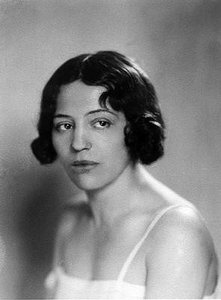
Zofia Stryjeńska
1891 - 1976 , Poland
Quick Facts
- Artistic Movement Or Style: Art Deco, Folklore
- Artists Or Movements Influenced By This Artist: ['Paul Iribe']
- Date Of Birth: May 13, 1891
- Date Of Death: February 28, 1976
- Full Name: Zofia Stryjeńska
- Nationality: Polish
- Notable Artworks:
- Watercolor Fables
- Batory/Pilsudski Design
- Łowy Bogów (God Hunt)
- Pascha (Passover)
- Place Of Birth: Krakow, Poland
![Men’s traditional costume, Vorokhta area, Hutsuls [now Ukraine]](/media/artworks/images-thumb/7f/71/7f71db93715f6025fb41001ad9bba4a8.jpg)
![Traditional women`s wedding costume, Volhynia [Volynia] area [now Ukraine]](/media/artworks/images-thumb/c0/84/c084fbf31ae5fb30822abbbd22354424.jpg)

