 Preview
 Send
Send Share
Share
 Details

 Download
 Similars
 X-Ray
X-Ray Diaporama
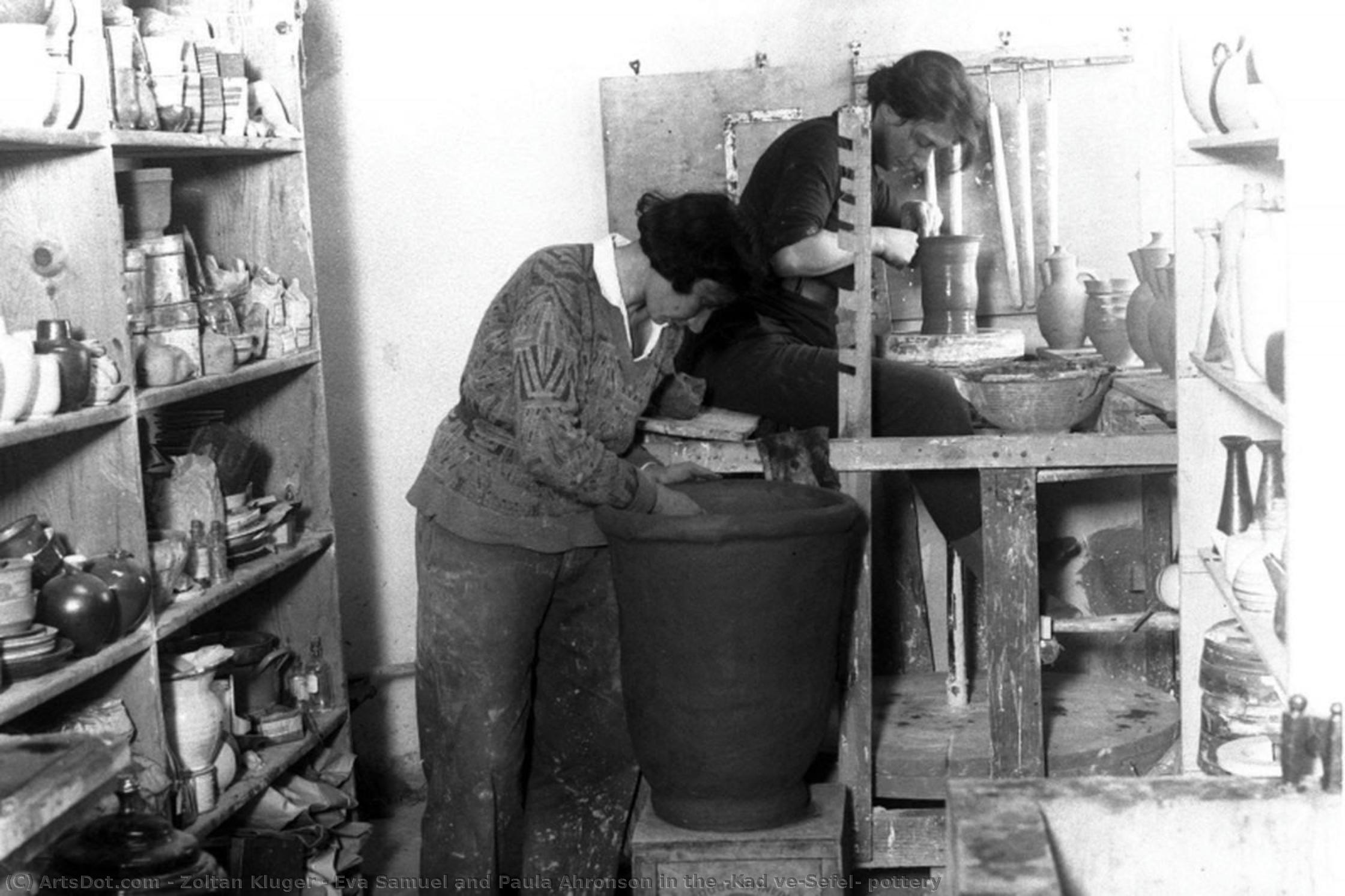
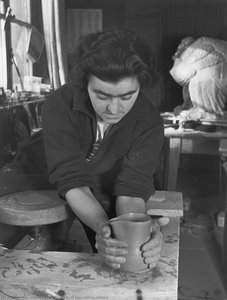
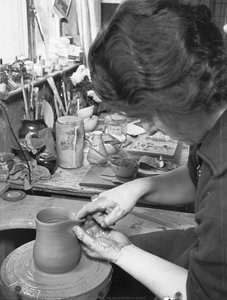
Eva Samuel and Paula Ahronson in the “Kad ve-Sefel” pottery

 Read More
Hand Made Oil Reproduction
Hand-painted oil on canvas in your size and frame, made to order by our artists. ( Buy Print Buy Image)




































Pick from our preset sizes that match the artwork's original proportions.

You may enter your own dimensions to fit a specific frame or space. If your selected size does not match the original image's proportions, we will either crop the artwork or extend the painting with additional hand-painted elements. A digital mockup will be sent for your approval before production begins.
Please note that the on-screen preview does not reflect the actual cropping or extension. Only the mockup will accurately show the final composition.
While custom sizes are available, we recommend selecting a dimension from the predefined list to preserve the original proportions.
After order, ArtsDot.com team will email client for instructions and provide a mockup preview
Worldwide Delivery () in 3/4 weeks instead of standard 5 weeks. (25 August). No compromise on quality.

Free Worldwide Express Shipping

High-Quality Linen Canvas

Full Shipping Insurance

Customs Tax Refund Guarantee

True Color Matching Guarantee

60-Day Return Policy (Defects Only)

100% Money-Back Guarantee

Bulk Discount Offer
 Glass option is only available in size under 110 CM

Eva Samuel and Paula Ahronson in the “Kad ve-Sefel” pottery
Reproduction Medium
Reproduction Size
-


Total Price
$ 288
Artwork Description
Related Artworks






Artist Biography
John Everett Millais: A Pre-Raphaelite Pioneer of Light and Nature
Born in Southampton, England, on June 8th, 1829, John Everett Millais was a figure of immense importance within the vibrant artistic landscape of Victorian Britain. His life, marked by both prodigious talent and personal complexities, profoundly shaped the trajectory of the Pre-Raphaelite Brotherhood – a movement that irrevocably altered the course of art history. From humble beginnings as a child prodigy to his eventual recognition as one of the era’s most celebrated painters, Millais's journey is a compelling narrative interwoven with artistic innovation, social commentary, and enduring beauty.
Millais’s early life was characterized by exceptional artistic ability. He displayed remarkable skill at an astonishingly young age, entering the Royal Academy Schools in 1840 at just eleven years old – a feat rarely achieved. This rapid progression underscored his innate talent and foreshadowed a career destined for both acclaim and controversy. His initial training focused on traditional academic techniques, but it was through his association with William Holman Hunt and Dante Gabriel Rossetti that he encountered the radical ideas of the Pre-Raphaelite Brotherhood, formed in 1848 at his family home in Gower Street, London.
The core tenets of the Pre-Raphaelites – a rejection of academic art conventions, an embrace of medieval and early Renaissance aesthetics, and a fervent interest in nature and contemporary life – provided the foundation for Millais’s artistic vision. Unlike many of his contemporaries who sought to emulate the polished style of established artists, Millais championed a return to direct observation and a celebration of the natural world. His paintings frequently depicted scenes from literature, mythology, and folklore, rendered with an unprecedented level of detail and luminous color. The Brotherhood's commitment to truthfulness in representation led them to meticulously study their subjects, often working outdoors – a revolutionary practice at the time – to capture the fleeting effects of light and atmosphere.
Ophelia and the Scandalous Beauty
Perhaps Millais’s most iconic work, *Ophelia* (1849-50), remains one of the most recognizable images in Western art. Commissioned for a series of illustrations for Tennyson's poem of the same name, the painting depicts Ophelia drowning in a stream, her face serene and melancholic. The scene was initially met with considerable outrage by critics and the public, who found the depiction of a young woman’s death to be excessively sensual and unsettling. Millais’s meticulous rendering of Ophelia's flowing gown, the vibrant colors of the wildflowers surrounding her, and the shimmering surface of the water were deemed shockingly realistic – even vulgar – for the time.
However, *Ophelia* is more than just a visually arresting image; it represents a pivotal moment in Millais’s artistic development. The painting marked a shift away from the idealized beauty favored by earlier generations of artists and towards a more honest and emotionally resonant portrayal of human experience. It demonstrated the Pre-Raphaelites' commitment to capturing not only the outward appearance of their subjects but also their inner lives and emotional states. Furthermore, the controversy surrounding *Ophelia* served as a catalyst for further experimentation and innovation within the Brotherhood.
Christ in the House of His Parents: A Masterpiece of Naturalism
Following the initial challenges posed by *Ophelia*, Millais continued to push the boundaries of artistic realism with *Christ in the House of His Parents* (1851-52), often referred to as “The Carpenter’s Shop.” This monumental painting, depicting the infant Jesus surrounded by his mother Mary and Joseph in a humble carpentry workshop, showcased Millais's remarkable ability to capture the textures and details of everyday life. He spent months observing carpenters at work, meticulously studying their tools, techniques, and the way light fell upon the rough-hewn wood.
The painting’s realism was so convincing that it sparked considerable debate about its authenticity. Some critics accused Millais of deliberately deceiving his audience by presenting a scene that could not realistically exist. However, *Christ in the House of His Parents* ultimately cemented Millais's reputation as a master of naturalism and demonstrated the Pre-Raphaelites’ commitment to portraying the world with unprecedented accuracy and detail. The painting is now housed at the Tate Gallery in London.
Later Years and Shifting Styles
As the 1860s progressed, Millais's artistic style underwent a gradual transformation. While he retained his fascination with nature and his meticulous attention to detail, he increasingly moved away from the overtly symbolic imagery of the Pre-Raphaelite Brotherhood. His later works, such as *Bubbles* (1886) – a charming depiction of children playing in a stream – reflected a more relaxed and accessible aesthetic.
Despite these stylistic shifts, Millais remained a highly successful artist throughout his career. He was elected an Associate of the Royal Academy in 1853 and a full member in 1863, and he continued to produce portraits for wealthy patrons until his death on August 13th, 1896, at the age of 67. His legacy endures as one of the most influential painters of the Victorian era, whose innovative techniques and unwavering commitment to naturalism continue to inspire artists today.
A Lasting Influence
John Everett Millais’s impact on art extends far beyond his individual masterpieces. He played a crucial role in shaping the Pre-Raphaelite Brotherhood, fostering a spirit of experimentation and challenging established artistic conventions. His emphasis on direct observation, meticulous detail, and luminous color profoundly influenced subsequent generations of artists, including Impressionists and Post-Impressionists. Millais’s work serves as a testament to the power of art to capture not only the beauty of the natural world but also the complexities of human emotion and experience.

zoltan kluger
1896 - 1977 , Hungary
Quick Facts
- Artistic Movement Or Style: Pre-Raphaelite Brotherhood
- Artists Or Movements Influenced By This Artist:
- William Morris
- Modernism
- Artists Who Influenced This Artist:
- William Holman Hunt
- Dante Gabriel Rossetti
- Date Of Birth: June 8, 1829
- Date Of Death: August 13, 1896
- Full Name: John Everett Millais
- Nationality: English
- Notable Artworks:
- Ophelia
- Christ in the House of His Parents
- Place Of Birth: Southampton, England