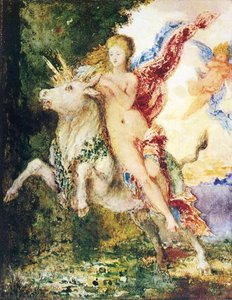
The Great Rebellion: Moving Beyond Realism into the Inner World
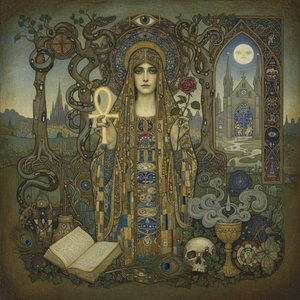 The Evocative Realm of Symbolism: Exploring Meaning & Mysticism in Late 19th-Century Art
The Rise of Symbolism: A Reaction Against Realism Wikipedia: Symbolism (movement) Symbolism was a late 19th-century art movement of French and Belgian origin in poetry and other arts seeking to represent absolute truths symbolically through language ...
To understand the profound shift that occurred in the late 19th century, one must first envision the world as it was perceived by the eyes of the Realists and Naturalists. For decades, the art world had been anchored by a relentless pursuit of objective truth—a quasi-scientific endeavor to capture the grit, the light, and the unvarnably honest details of everyday life. While this movement offered a commendable honesty, it often left the soul yearning for something more than mere documentation. As the Industrial Revolution accelerated, bringing with it rapid scientific advancement and a growing sense of societal disillusionment, a new generation of artists began to feel that the external world was only half the story.
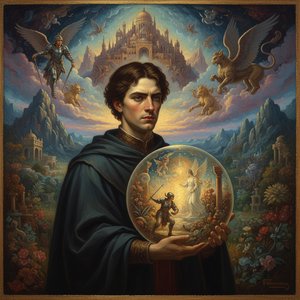
This era witnessed a powerful reaction against the perceived superficiality of capturing life as it was. Artists began to turn their gaze inward, seeking truths that lay far beneath the surface of skin and stone. They sought to represent absolute truths through language and metaphorical images, prioritizing the evocative power of suggestion over literal depiction. This was not merely a change in subject matter, but a fundamental revolution in the purpose of art itself. The goal shifted from mirroring the external landscape to exploring the internal psyche, transforming the canvas into a window through which we might glimpse the profound mysteries of human existence.
Dreamscapes and Decadence: The Literary Roots of Symbolist Vision
The Symbolist Movement in Literature, first published in 1899, and with additional material in 1919, is a work by Arthur Symons largely credited with bringing French Symbolism to the attention of Anglo-American literary circles. Its first two edition...
The seeds of this artistic rebellion were sown long before the first brushstroke touched a canvas; they were whispered in the verses of poets. The literary movement of Symbolism, emerging from France and Belgium, provided the essential vocabulary for what would become a visual revolution. We cannot discuss this era without honoring Charles Baudelaire, whose 1857 masterpiece, Les Fleurs du mal (The Flowers of Emptiness), dared to explore themes of decay, sensuality, and spiritual longing with startling frankness. Baudelaire’s fascination with the macabre and the mysterious—heavily influenced by his admiration for Edgar Allan Poe—introduced a new aesthetic of the psychologically unsettling.
This literary foundation was further refined by poets like Stéphane Mallarmé and Paul Verlaine, who championed an aesthetic where meaning was found in the nuance of sound and the weight of a metaphor. This movement sought to clothe reality in symbols, using imagery to hint at something beyond the tangible world. When painters began to adopt these poetic tenets, they moved away from the "what" of a scene toward the "feeling" of it. The art became an echo of the poem—a way to evoke beauty and terror through layers of meaning that required the viewer to participate in the act of interpretation.
Mastering the Unseen: Gustave Moreau and the Architecture of Myth
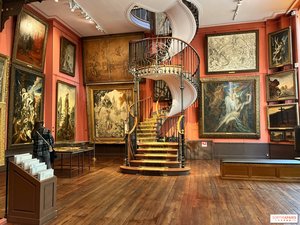 Musée national Gustave Moreau
A Sanctuary of Symbolism: The Visionary World of Gustave Moreau To step across the threshold of the Musée national Gustave Moreau is to leave the bustling streets of Paris behind and enter a realm where the boundaries between reality and dream dissol...
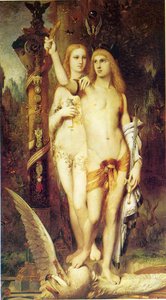
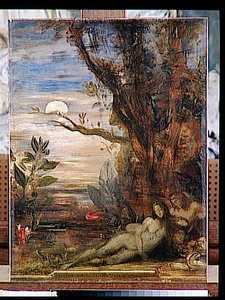
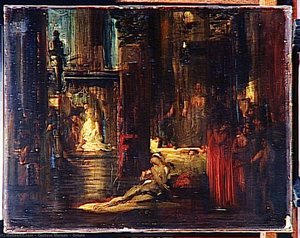
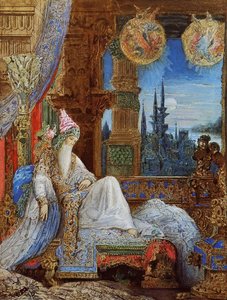
If there is a single sanctuary where the boundaries between reality and dream dissolve, it is found within the works of Gustave Moreau. To step into his world is to enter a realm of mythic grandeur and intricate, jewel-like detail. Moreau was a master who did not merely paint legends; he constructed intensely personal narratives imbued with immense symbolic weight. His canvases serve as windows into a world where classical mythology and biblical narratives are transformed into mesmerizing allegories, often bathed in a supernatural, luminous light.
Consider his captivating tableau, The Unicorns. In this work, Moreau eschews objective realism in favor of a vibrant, almost hallucinatory scene. The presence of the majestic unicorns alongside enigmatic figures creates a sense of mythic ecstasy that transcends time. Similarly, in works like The Apparition, the artist uses dense layering of color and iridescent pigments to create an otherworldly quality, where figures appear as if emerging from a dream. Moreau’s technique—characterized by meticulous precision and a heavy, ornamental texture—allows him to clothe the profound mysteries of human existence in layers of opulence, making the invisible visible through the sheer power of imagination.
Ethereal Landscapes and Psychological Depth: The Art of Osbert and Aman-Jean
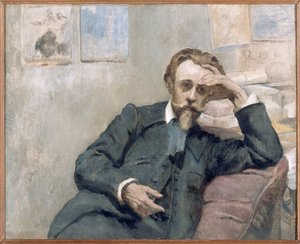 Alphonse Osbert
Alphonse Osbert: The Poet Painter of Symbolism Alphonse Osbert (1857–1939) stands as a singular figure in the annals of French Symbolist art, an artist whose ethereal landscapes and haunting portraits captured the spirit of his time—a period marked b...
While Moreau explored the monumental, other Symbolist artists found their voice in the more subtle, ethereal reaches of the human spirit. Alphonse Osbert, often referred to as the "Poet Painter of Symbolism," represents a fascinating evolution within the movement. Originally trained in the rigorous traditions of realism and influenced by the dramatic Spanish masters, Osbert underwent a transformative shift toward the avant-garde. His encounter with the Pointillist techniques of Georges Seurat led him to abandon traditional brushstrokes for tiny, luminous dots of color, creating landscapes that feel as though they are composed of light and memory itself.
In a similar vein, Edmond Aman-Jean offered a more muted, psychological exploration of the era. His work is characterized by a dreamlike atmosphere and a palette that favors soft, evocative tones to explore deep psychological states. These artists moved away from the "event" of a painting toward its "mood." Their landscapes are not merely depictions of geography but are emotional territories—spaces where the air feels heavy with contemplation and the horizon suggests an infinite, spiritual depth. Through their work, the landscape becomes a mirror for the soul's most private reflections.
The Language of Metaphor: Decoding Symbols, Colors, and Mysticism
--- title: Symbolism - The Metropolitan Museum of Art author: Nicole Myers url: https://www.metmuseum.org/essays/symbolism hostname: metmuseum.org description: Symbolist painters believed that art should reflect an emotion or idea rather than represe...
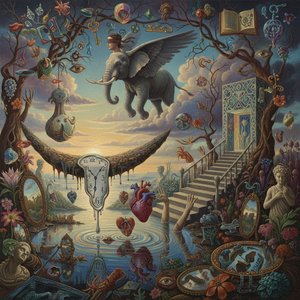
To engage with Symbolist art is to learn a new language—one where a color is never just a color, and an object is rarely just an object. The movement relied heavily on the power of suggestion; the artist provides the clue, and the viewer completes the thought. This reliance on metaphor allowed for a profound level of spiritual and intellectual engagement. A single wilting flower might represent the decay of beauty, while a specific shade of twilight blue could evoke the onset of melancholy or the threshold of the subconscious.
Modern Echoes: Bringing Symbolist Emotion into Contemporary Interiors
Though the height of the Symbolist movement passed over a century ago, its influence continues to resonate within our modern aesthetic sensibilities. In an age often dominated by the starkness of minimalism and the literalism of digital imagery, there is a growing desire to bring depth, mystery, and "soul" back into our living spaces. The Symbolist tradition offers a way to decorate not just with color and pattern, but with meaning and mood.
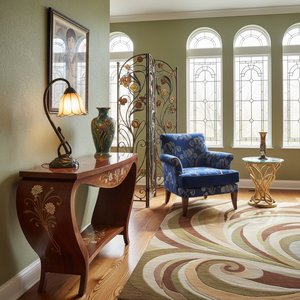
Integrating elements of this era into a contemporary home allows for the creation of much more than a mere room; it allows for the curation of an atmosphere. Whether through a large-scale reproduction of a mythic landscape that serves as a focal point in a study, or a subtle, ethereal print that adds a layer of quiet contemplation to a bedroom, the essence of Symbolism remains timeless. By embracing the power of suggestion and the beauty of the dreamlike, we can transform our personal environments into sanctuaries of emotion, much like the visionary artists of the 19th century intended.
At ArtsDot.com, we believe that fine art should be an accessible part of every meaningful home. Whether you are drawn to the mythic grandeur of Gustave Moreau or the ethereal landscapes of the Symbolists, our mission is to bring these extraordinary visions to life on your walls. We specialize in high-quality, hand-painted oil reproductions on 100% cotton canvas, ensuring that the visible brushstrokes and deep tonal ranges of the masters are preserved for your enjoyment. From custom commissions that turn your personal memories into masterpieces to large-format murals that transform entire rooms, we provide the tools and expertise to help you build a collection that speaks to your soul.