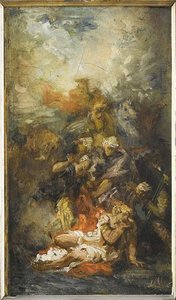
The Rise of Symbolism: A Reaction Against Realism
 Wikipedia: Symbolism (movement)
Symbolism was a late 19th-century art movement of French and Belgian origin in poetry and other arts seeking to represent absolute truths symbolically through language and metaphorical images, mainly as a reaction against naturalism and realism. In l...
The late 19th century was a period of profound societal shifts, marked by rapid industrialization, scientific advancements, and a growing sense of disillusionment with traditional values. In the art world, this era witnessed a powerful reaction against the dominant currents of Realism and Naturalism – movements that sought to depict life as it *was*, often focusing on gritty details and everyday subjects. While commendable in their honesty, these approaches left many artists feeling unfulfilled, yearning for something more than mere representation. This desire for deeper meaning, for an exploration of inner experience rather than external reality, gave rise to Symbolism, a movement that prioritized the evocative power of suggestion over literal depiction.
The seeds of Symbolism were sown in the literary works of poets like Charles Baudelaire, whose 1857 collection, *Les Fleurs du Mal* (The Flowers of Evil), dared to explore themes of decay, sensuality, and spiritual longing with a startling frankness. Baudelaire’s fascination with Edgar Allan Poe – whom he championed through translations – introduced a new vocabulary of the macabre, the mysterious, and the psychologically unsettling. He wasn't interested in simply *describing* beauty; he sought to evoke it, to hint at something beyond the tangible world. This emphasis on subjective experience, on the power of dreams and emotions, became a cornerstone of the Symbolist aesthetic.
The prevailing scientific positivism of the time also fueled this artistic rebellion. As science attempted to explain away the mysteries of existence, artists turned inward, seeking truths that lay beyond the reach of empirical observation. They looked to mythology, religion, and the subconscious as sources of inspiration, believing that these realms held keys to understanding the human condition.
Key Figures & Defining Characteristics of the Movement
Aestheticism (also known as the aesthetic movement) was an art movement in the late 19th century that valued the appearance of literature, music, fonts, and the arts over their functions. According to Aestheticism, art should be produced to be beauti...
While Baudelaire laid the groundwork, it was poets Stéphane Mallarmé and Paul Verlaine who truly articulated the principles of Symbolism in the 1860s and 70s. Mallarmé’s poetry is notoriously ambiguous, relying on subtle nuances of language and evocative imagery to create a sense of atmosphere and suggestion. Verlaine, known for his musicality and emotional intensity, explored themes of melancholy, spirituality, and the fleeting nature of beauty. Their work rejected traditional narrative structures and embraced free verse, prioritizing rhythm and sound over strict form.
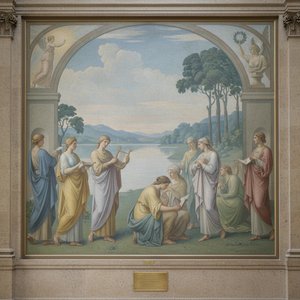
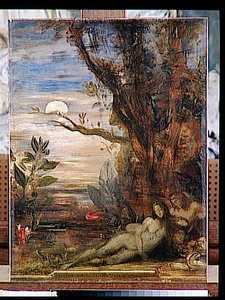
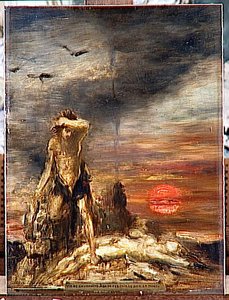
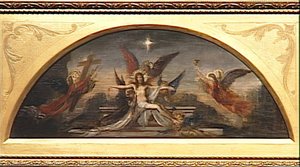
The transition from literature to visual art occurred in the 1880s with artists like Gustave Moreau, Odilon Redon, and Pierre Puvis de Chavannes. Moreau’s paintings are characterized by their opulent detail, mythological subject matter, and dreamlike quality. He sought to create a world of pure imagination, free from the constraints of reality. Redon, initially working in monochrome lithography, explored themes of isolation, fantasy, and the subconscious with hauntingly beautiful imagery. Puvis de Chavannes, though distinct in style, shared the Symbolists’ interest in spirituality and allegory, creating large-scale murals that evoked a sense of timeless serenity.
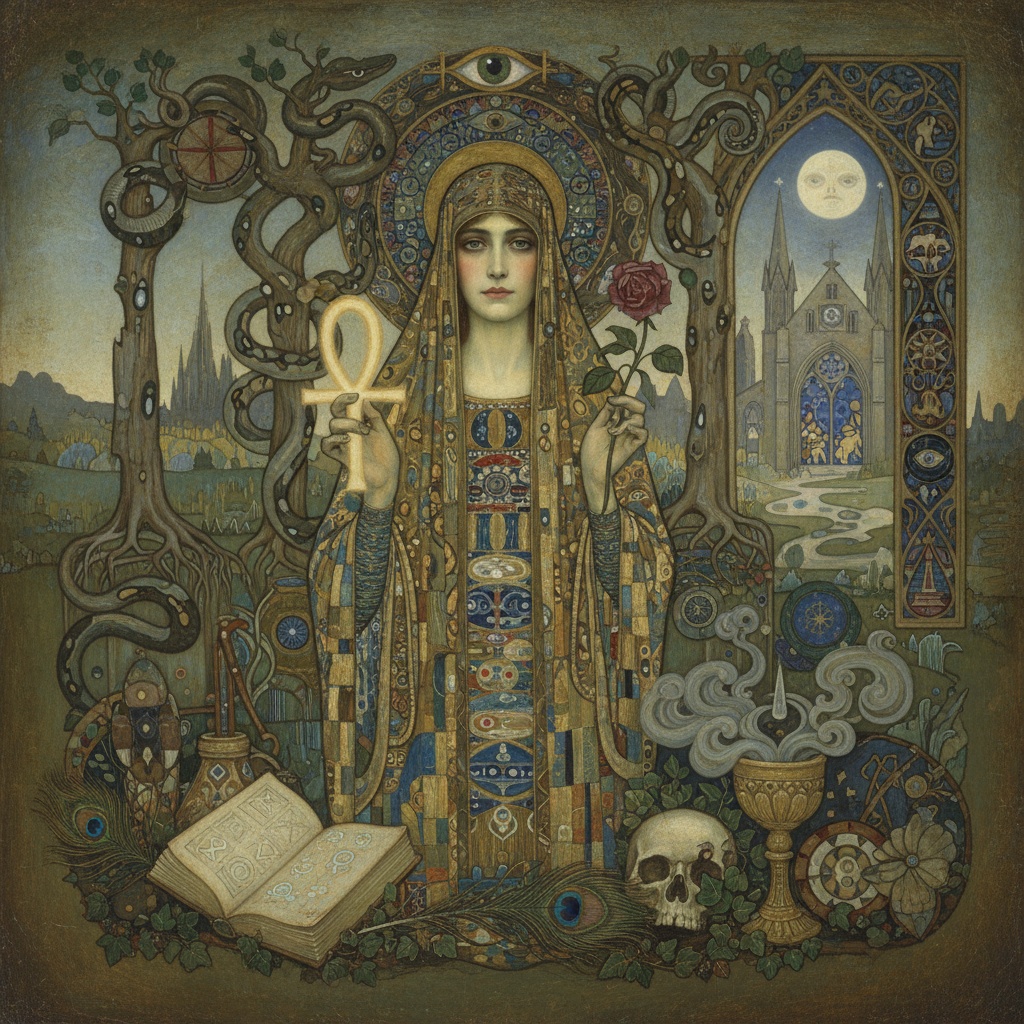
Several defining characteristics unite these diverse artists: a rejection of realism's objective representation; an emphasis on subjective experience and emotional resonance; the use of symbols and metaphors to convey meaning; and a fascination with themes of death, spirituality, and the subconscious. They weren’t interested in *what* they painted, but rather *how* they painted it – the mood, the atmosphere, the underlying ideas that the artwork evoked.
Themes in Symbolist Art: Dreams, Mythology, and Spirituality
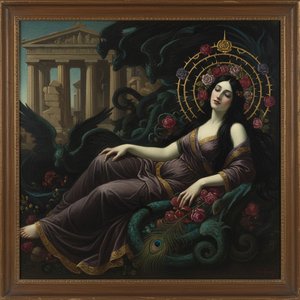
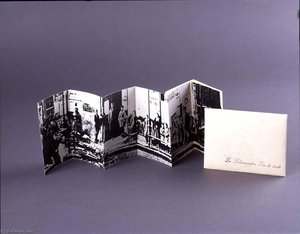 La Salamandre Fin de Siecle
The exploration of dreams was central to the Symbolist project. Artists believed that dreams offered a glimpse into the hidden depths of the psyche, revealing truths that were inaccessible through conscious thought. Odilon Redon’s works, for example, are often populated by strange, ethereal creatures and fantastical landscapes that seem to emerge from the subconscious mind. These images weren't simply random; they were carefully constructed symbols intended to evoke specific emotions and ideas.
Mythology provided another rich source of inspiration. Symbolist artists drew upon ancient myths and legends, reinterpreting them through a modern lens. Gustave Moreau’s paintings frequently depict scenes from Greek mythology, but his interpretations are often highly personal and psychologically charged. He wasn't interested in simply retelling the stories; he sought to explore their underlying symbolism and emotional resonance.
Spirituality was also a recurring theme. As traditional religious beliefs waned, artists turned inward, seeking alternative forms of transcendence. Many Symbolist works evoke a sense of mystery, longing, and spiritual yearning. This wasn’t necessarily tied to any specific religion; rather, it represented a broader search for meaning and purpose in a rapidly changing world.
Symbolism Beyond Painting: Literature, Music, and Decadence
The influence of Symbolism extended far beyond the realm of painting. In literature, writers like Joris-Karl Huysmans – who famously transformed his own life into an aesthetic experience in *À rebours* (Against Nature) – embraced a decadent lifestyle characterized by refined sensuality and artistic indulgence. This fascination with beauty for its own sake, often coupled with themes of decay and moral ambiguity, became known as the Decadent movement.
Music also played an important role in the Symbolist aesthetic. Composers like Claude Debussy and Maurice Ravel sought to evoke emotions and atmospheres through subtle harmonies and evocative melodies. They shared the Symbolists’ interest in suggestion over literal representation, creating works that were often dreamlike and ambiguous.
The interconnectedness of these various art forms – painting, literature, music – is a defining characteristic of the Symbolist movement. Artists sought to create a total aesthetic experience, engaging all of the senses and appealing to the viewer’s emotions and imagination.
Lasting Legacy: The Influence of Symbolism on Modern Art
Though relatively short-lived as a formal movement, Symbolism had a profound and lasting impact on the development of modern art. Its emphasis on subjective experience, emotional resonance, and the power of suggestion paved the way for movements like Surrealism and Expressionism. Artists such as Edvard Munch – whose iconic painting *The Scream* embodies the anxieties and alienation of the modern age – were deeply influenced by Symbolist principles.
Symbolism’s rejection of realism also challenged traditional artistic norms, opening up new possibilities for experimentation and innovation. Its focus on abstraction and metaphor laid the groundwork for many of the major developments in 20th-century art. The movement's enduring appeal lies in its ability to tap into universal human emotions and explore themes that remain relevant today.
At ArtsDot.com, we celebrate the rich legacy of Symbolism, offering high-quality reproductions of masterpieces by artists like Moreau, Redon, and Munch. Explore our collection and discover the captivating world of this influential movement – a world where dreams, mythology, and spirituality come to life on canvas. From custom paintings from photos in the style of your favorite Symbolist master to detailed art appraisals, we provide resources for both seasoned collectors and those new to exploring the depths of artistic expression. Begin your journey into the evocative realm of Symbolism today.