
Beyond the Horizon: Discovering the Soul of Cubist Landscapes
--- title: All about cubism | Tate url: https://www.tate.org.uk/art/art-terms/c/cubism/all-about-cubism hostname: tate.org.uk description: This resource introduces cubist artists, ideas and techniques and provides discussion and activities, perfect f...
To step into the world of a Cubist landscape is to abandon the comfort of the familiar. For the modern collector, there is a profound, almost meditative thrill in looking at a vista not as a static photograph, but as a living, breathing puzzle of light and structure. While traditional landscapes invite us to rest our eyes upon a serene horizon, Cubism invites us to participate in the creation of that horizon. It asks us to look deeper, past the surface of the leaves and the flow of the water, to find the underlying rhythm of the universe.
This movement was never about a lack of beauty; rather, it was an pursuit of a more profound truth. When we gaze upon these works, we are not merely observing nature; we are witnessing the deconstruction of perception itself. It is an invitation to see the world through a lens of intellectual curiosity, where every angle and every plane offers a new way to understand the essence of the earth beneath our feet. For those looking to bring meaning into their living spaces, these landscapes offer a window into a reality that is both complex and harmoniously ordered.
The Geometry of Nature: How Picasso and Braque Reimagined Reality
 Cubism's Revolution: 10 Masterpieces That Redefined Modern Art | ArtsDot
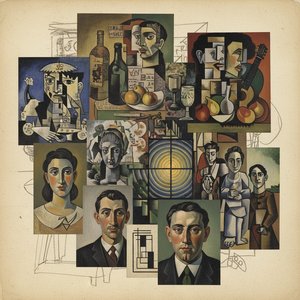
Introduction To gaze upon these ten masterpieces is to enter a realm where perception itself is fractured and reassembled, a world born from the audacious vision of Pablo Picasso and Georges Braque. The Cubist style wasn’t merely an artistic shift; i...
At the dawn of the twentieth century, the art world stood on the precipice of a seismic shift. Two names emerged from the vibrant, restless energy of Paris to lead this revolution: Pablo Picasso and Georges Braque. Their collaboration was nothing short of a quiet revolution, a shared mission to dismantle the inherited concept that art should simply copy nature. They looked at the works of Paul Cézanne—with his focus on the cylinder, the sphere, and the cone—and saw a path toward a new visual language. This was not an abandonment of reality, but a courageous reimagining of it.
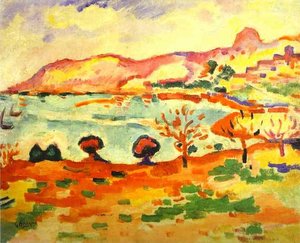
Through their eyes, the landscape became a playground of geometric forms. They moved away from the single-point perspective that had dominated Western art since the Renaissance, opting instead for simultaneity—the ability to present multiple viewpoints at once. In doing so, they captured the way our minds actually experience space: not as a frozen moment, and certainly not as a flat image, but as a collection of successive views, memories, and angles. This radical departure challenged the very definition of art, transforming the canvas from a window into a construction site where reality is perpetually rebuilt.
A Visual Journey Through Form: From Fragmented Trees to Geometric Rivers
 Cubist Landscape
Cubist Landscape, also referred to as Tree and River and Paysage cubiste or Arbre et fleuve, is a Cubist painting created in 1914 by the French artist Albert Gleizes. Tree and River is one of Gleizes' last pre-World War I landscapes. A comparison wit...
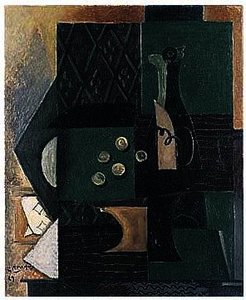
As we wander through the textures of a Cubist landscape, our eyes begin to dance across intersecting planes and overlapping shadows. Consider the way a tree is no longer just a trunk and branches, but a series of vertical rhythms and fractured light. In works such as Albert Gleizes’ Tree and River, we see a breathtaking fusion of foreground and background. The distinction between the solid earth and the flowing water begins to dissolve, replaced by a rhythmic interplay of dark lines and arcs that delineate color planes with surgical precision.
This fragmentation creates a sense of movement that is entirely unique to the genre. A river does not simply flow; it zig-zags through geometric facets, reflecting the sky in broken shards of blue and silver. Even the most organic elements—the soft curve of a hill or the delicate petal of a flower—are reimagined as structural components of a larger, more complex whole. For the discerning eye, this provides an endless journey of discovery. Each time you revisit the canvas, a new edge reveals itself, a new layer of depth emerges, and the landscape feels as fresh and startling as the first time it was encountered.
Curating Modernity: Integrating Cubist Masterpieces into Sophisticated Interiors
 Geometric Abstraction's 10 Defining Masterpieces | Art for Your Home - ArtsDot
Introduction Imagine a world stripped bare to its essential forms – lines, colors, and shapes resonating with an almost mathematical purity. This is the realm of Geometric Abstraction, a movement that dared to abandon representational art in favor of...
For the contemporary collector, integrating Cubist-inspired art into a home is an exercise in sophisticated curation. These pieces act as powerful anchors for a room, providing a focal point that is both intellectually stimulating and visually striking. Because Cubism relies so heavily on structure and form, it pairs exquisitely with modern architectural elements. Imagine a large-scale, multi-panel Cubist landscape spanning a minimalist hallway, or a textured oil reproduction of a fragmented forest serving as the centerpiece of a sun-drenched study.
The beauty of these works lies in their versatility. A palette dominated by muted ochres, grays, and deep blues can ground a room with a sense of quiet authority, while more vibrant, proto-Cubist works can inject energy into a contemporary living space. When selecting pieces, consider the texture and depth that only a hand-painted oil reproduction can provide. The visible brushstrokes and the tactile richness of the paint add a layer of soul to the geometric precision, preventing the room from feeling too clinical and instead creating an atmosphere of curated warmth and historical depth.
From Canvas to Concept: Bringing the Cubist Revolution into Your Home
 Pablo Picasso's Masterpieces: Explore 25 Iconic Artworks for Your Home | ArtsDot
Introduction To embark on a journey through Pablo Picasso’s top 25 artworks is to traverse the very landscape of modern art itself. It's an encounter with not merely paintings, but with revolutions—shifts in perception, challenges to convention, and ...
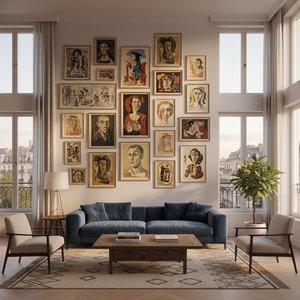
Bringing this revolutionary spirit into your personal sanctuary is more accessible than ever. Whether you are drawn to the bold, angular lines of a Picasso-inspired portrait or the serene, structured vistas of a Braque-style landscape, the goal is to create a space that reflects your own journey of discovery. You might even choose to remix history, using modern technology to transform a personal photograph into a Cubist masterpiece, blending your own memories with the legendary techniques of the masters.
At ArtsDot.com, we believe that fine art should be an accessible luxury for every home. We specialize in creating breathtaking, hand-painted oil reproductions that capture the very essence of these historical movements. Our master artists use traditional techniques on 100% cotton canvas to ensure that every brushstroke and every geometric plane possesses the depth and character of the original works. From custom multi-panel sets that transform wide walls into architectural statements, to personalized commissions that turn your milestones into art, we invite you to explore, discover, and ultimately, redefine the nature of your own world.