Introduction
Imagine standing before a piece of art where every line feels carved from the very soul of the medium itself. There is a raw, rhythmic pulse to a woodcut—a dance between the steady hand of the artist and the stubborn resistance of the grain. Unlike the fluid, sweeping strokes of an oil painting, a woodcut demands a certain bravery; it is an art of subtraction, where beauty is found in what is taken away, leaving behind bold silhouettes and striking contrasts that command the eye to linger.
For centuries, this technique has served as one of humanity's most powerful voices. From the ancient, meditative traditions of East Asian printmaking to the dramatic, high-contrast expressions of the European masters, woodcuts have historically bridged the gap between fine art and the public. They were the original messengers of culture, capable of spreading stories, religious devotion, and political revolutions across borders through the power of the multiple.
Today, these legendary works remain deeply resonant. In our era of hyper-polished digital imagery, there is a profound, tactile magic in seeing the physical imprint of a carved block on paper. We find ourselves drawn to that unmistakable texture—the way light seems to catch on the edges of a heavy black ink stroke or how a delicate white line emerges from the shadows. These prints do more than just decorate a wall; they carry an emotional weight and a historical heartbeat that modern technology struggles to replicate.
As we wander through this curated selection, we will explore ten transformative masterpieces that redefined the boundaries of printmaking. We will journey through eras of profound change, discovering how these bold, carved visions didn't just capture the world as it was, but fundamentally altered the way we perceive light, shadow, and the very essence of artistic expression.
Meeting in Space - Edvard Munch
 Meeting in Space - Edvard Munch
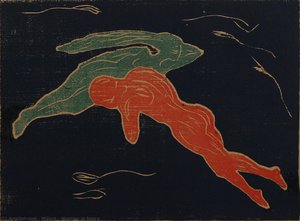
In Edvard Munch’s Meeting in Space , we are not merely observers of a scene, but participants in a profound psychological encounter. The artwork captures an overwhelming sense of vulnerability, as two elongated, ethereal figures drift through a vast, obsidian void. One figure, rendered in a hauntingly vibrant green, seems to collide with a more human-like form in striking red, creating a visual tension that vibrates with the raw energy of Expressionism.
Munch masterfully utilizes the lithographic medium to create a grainy, dreamlike texture, where colors seem to glow from within against the deep navy backdrop. This piece stands as a cornerstone of our list because it serves as a universal mirror for the human condition—capturing those quiet, unsettling moments of isolation and the intense, often turbulent, connections we form with others. Bringing such a powerful work into your home can transform a personal sanctuary into a space for profound reflection. Whether hung in a quiet study or a modern living area, its moody palette and symbolic depth invite a contemplative calm, turning any room into a gallery of deep emotional resonance.
Man and Woman I - Edvard Munch
 Man and Woman I - Edvard Munch
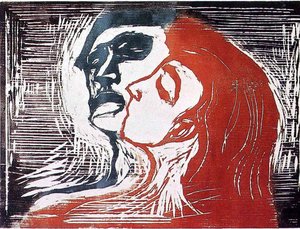
There is a gaze in Man and Woman I by Edvard Munch that follows you—not with judgment, but with understanding . This isn't merely a depiction of two figures; it is a mirror reflecting the raw, visceral depths of human connection and anxiety. As one of the most profound examples of Expressionist intensity, this work uses bold, simplified forms to make the invisible visible, capturing a moment where love and unease collide.
Munch masterfully employs a striking, arresting red background that pulses with emotional energy, pulling you into the shadowed intimacy of the pair. The stark, angular lines and heavy textures characteristic of his style create a rhythmic tension that feels almost tactile. Now, imagine that profound gaze in your own space. Not watching you, but reminding you : you are seen. You are part of the story. Bringing such a legendary masterpiece into your home transforms a wall into a window of deep psychological reflection, inviting a sense of soulful discovery every time you pass by.
Orientalisches (Oriental) - Wassily Wassilyevich Kandinsky
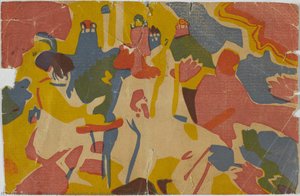 Orientalisches (Oriental) - Wassily Wassilyevich Kandinsky
Close your eyes for a moment. Can you feel the pulsating rhythm within Wassily Kandinsky’s Orientalisches (Oriental) ? It is not merely a woodcut; it is a visual sonata where light and color are composed like musical notes. In this 1911 masterpiece, Kandinsky doesn't just depict figures; he invents a new language of spirit. The artwork vibrates with bold swathes of crimson and ochre , balanced by delicate whispers of turquoise that dance across the textured surface.
As you gaze upon this legendary print, you realize it doesn't just reflect light—it creates its own internal glow, turning a simple wall into a portal of inspiration. Drawing from the rhythmic grace of Japanese Ukiyo-e traditions, Kandinsky uses flat planes and intense pigments to evoke a sense of sacred movement. For anyone looking to infuse their home with soulful energy, this piece offers a breathtaking intersection of Eastern tradition and Western abstraction. It is a transformative treasure that brings the raw, spiritual vitality of the early twentieth century directly into your living space.
Small Passion: 6. Christ's Entry into Jerusalem - Albrecht Dürer
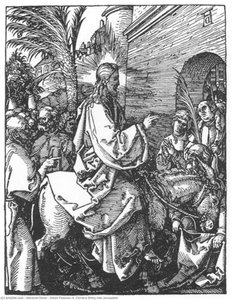 Small Passion: 6. Christ's Entry into Jerusalem - Albrecht Dürer
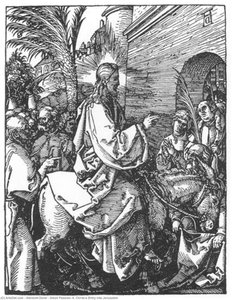
In Small Passion: 6. Christ's Entry into Jerusalem by Albrecht Dürer, we witness a masterclass in structural harmony and rhythmic movement. The composition is built upon a sophisticated interplay of geometric architectural lines and the organic, flowing shapes of the gathered crowd. Dürer utilizes a brilliant sense of balance, where the verticality of the palm tree and arched gateways anchors the bustling energy of the onlookers, creating a focal point that feels both monumental and deeply intimate.
Through his legendary use of cross-hatching , Dürer sculpts light and shadow directly into the paper, achieving a tonal depth that breathes life into every fold of fabric and stone texture. This meticulous arrangement of black and white creates a visual rhythm that feels remarkably modern; much like the principles of modern minimalist design , the work relies on strong silhouettes and purposeful negative space to ground the viewer. For those looking to infuse a contemporary room with historical soul, this woodcut offers a timeless aesthetic that bridges the gap between Renaissance complexity and clean, sophisticated simplicity.
Watched by the Spirit of the Dead (Manao Tupapau) - Eugène Henri Paul Gauguin
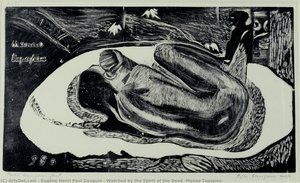 Watched by the Spirit of the Dead (Manao Tupapau) - Eugène Henri Paul Gauguin
In the quiet, shadowed corners of Tahitian mythology, Paul Gauguin’s Watched by the Spirit of the Dead (Manao Tupapau) serves as a haunting bridge between the living and the departed. This woodcut is not merely a print; it is a profound encounter with the unseen. The composition draws us into a dreamscape where a figure curled in a fetal position rests within an ethereal oval, surrounded by the watchful, rhythmic presence of ancestors. Through his mastery of the Synthetist technique, Gauguin utilizes stark, graphic contours and deliberate hatching to create a sense of spiritual tension that feels both primal and decorative.
Owning a piece of this magnitude isn’t just a purchase; it is an inheritance . Its presence in our collection of legendary woodcut masterpieces represents a lineage of taste that connects your modern sanctuary to the soul of Post-Impressionism. Whether you are drawn to its monochromatic depth or the symbolic weight of its simplified forms, bringing this legacy to your walls allows you to curate a space where every glance is a nod to the masters.
The Day of Gods (Mahana Atua) - Eugène Henri Paul Gauguin
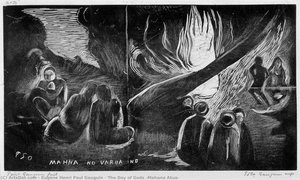 The Day of Gods (Mahana Atua) - Eugène Henri Paul Gauguin
In The Day of Gods (Mahana Atua) by Paul Gauguin, the raw power of the woodcut medium is harnessed to create a composition of profound structural harmony. The artwork is anchored by a striking geometric tension: the vertical surge of flickering flames on the right acts as a dynamic counterweight to the rhythmic, semi-circular arrangement of seated figures on the left. This balance between the upward energy of the fire and the grounded, quiet stillness of the observers creates a sense of timeless perfection that has captivated collectors for generations.
Gauguin utilizes heavy hatching and bold, simplified contours—hallmarks of Synthetism —to strip away the unnecessary, leaving only the essential spirit of the ritual. This mastery of negative space and stark contrast mirrors the principles of modern minimalist design, making this legendary masterpiece an incredible anchor for a contemporary, clean aesthetic. Whether you are drawn to its monochromatic mystery or its symbolic depth, this piece brings a sophisticated, soulful gravity to any curated space.
Pattern from the Series of Six Knots 3 - Albrecht Dürer
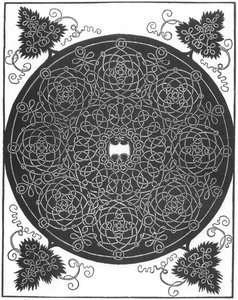 Pattern from the Series of Six Knots 3 - Albrecht Dürer
In Pattern from the Series of Six Knots 3 , Albrecht Dürer invites us into a mesmerizing world where mathematics meets mysticism. This 1505 masterpiece is far more than a mere decorative print; it is a rhythmic dance of black ink and pale paper that captures the very heartbeat of the German Renaissance. Dürer’s ability to weave continuous, interlocking lines into a monumental central circle creates a sense of infinite movement, drawing the viewer into a meditative state of discovery.
As one of the most significant woodcut innovations in history, this work redefined what was possible with a single block of wood. The sheer precision of his linework—achieved through grueling, tactile labor—sets a standard for craftsmanship that still inspires awe. Today, Dürer’s geometric mastery finds a beautiful echo in modern minimalist interiors. The stark, monochromatic contrast and the hypnotic, symmetrical flow of the knots offer a sophisticated way to introduce architectural depth and intellectual elegance to a contemporary space, proving that true structural beauty is timeless.
Offerings of Gratitude (Maruru) - Eugène Henri Paul Gauguin
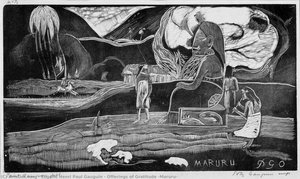 Offerings of Gratitude (Maruru) - Eugène Henri Paul Gauguin
What if I told you that "Offerings of Gratitude (Maruru)" by Paul Gauguin was born from a moment of profound spiritual rebellion? In this striking woodcut, the vibrant tropical palette we often associate with Tahiti is stripped away, leaving us with a raw, monochromatic soul. This piece earns its place among the top legendary woodcut masterpieces because it redefined beauty through Synthetism —using bold, carved lines and flattened planes to capture emotional truth rather than mere visual reality.
As you gaze into the stark contrast of black and white, you feel the rhythmic pulse of a ritualistic ceremony, where every heavy contour speaks of reverence and ancestral connection. It is a masterclass in graphic power, reminiscent of the delicate ukiyo-e tradition but infused with a much darker, more mysterious energy. At ArtsDot.com, we believe such transformative works shouldn't be confined to museum archives. Imagine this powerful, symbolic scene anchoring your study or living space, turning a simple wall into a profound statement of depth and mystery. It is more than decor; it is an invitation to encounter the primitive and the eternal every single day.
Death and the Pedlar - Hans Holbein the Younger
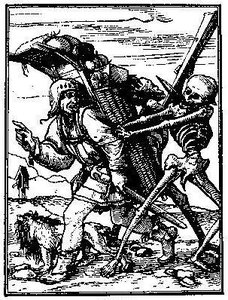 Death and the Pedlar - Hans Holbein the Younger
In the striking geometry of “Death and the Pedlar” by Hans Holbein the Younger , we find a masterclass in structural tension and balance. The composition is anchored by a powerful verticality, where the angular, skeletal form of Death intersects with the more organic, weighted silhouette of the traveling merchant. This interplay of sharp, decisive lines and deep, shadowed voids creates a rhythmic harmony that feels both monumental and incredibly intimate. Holbein utilizes meticulous hatching to carve light out of darkness, guiding our eyes through a landscape that feels as vast as it is profound.
This stark, monochrome precision offers a surprising bridge to modern aesthetics; the artwork’s reliance on high-contrast shapes and clean, graphic silhouettes mirrors the principles of modern minimalist design . Much like a well-placed black-and-white print in a contemporary gallery, this woodcut provides a grounding, soulful focal point that brings a sense of quiet prestige and historical depth to a clean, sophisticated interior. It is a timeless encounter with mortality, rendered with a structural elegance that continues to captivate the modern eye.
Headpiece for _Le Sourire_ - Eugène Henri Paul Gauguin
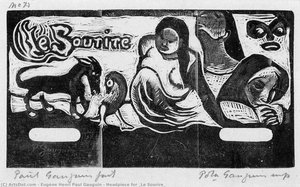 Headpiece for _Le Sourire_ - Eugène Henri Paul Gauguin
In the vast, vibrant tapestry of Paul Gauguin’s career, where tropical hues often take center stage, Headpiece for Le Sourire offers a profound and hauntingly beautiful departure. Here, the artist strips away the distractions of color to reveal a raw, symbolic essence found only in the interplay of shadow and light. It is not merely a print; it is an exploration of a dreamlike, primordial realm where every carved line carries the weight of unspoken emotion.
Gauguin utilizes Synthetism to compose a world of bold, clear-cut contours and flattened planes, drawing inspiration from the elegant simplicity of Japanese ukiyo-e . The eye is drawn to the calligraphic text that anchors the piece, leading you toward enigmatic figures and symbolic animals that exist in a timeless, graphic landscape. For those looking to bring intellectual depth to a modern space, this monochromatic masterpiece acts as a portal of inspiration, turning a simple wall into a window of historical gravity and soulful mystery.
Conclusion
As the museum lights dim and the evening shadows stretch across the gallery floor, we are left with more than just the memory of ink on paper or the stark contrast of carved lines. These legendary woodcuts remind us that art is never truly a relic of a bygone era; it is a living, breathing pulse that continues to beat within our modern world. The raw emotion captured in a single carved stroke and the profound stories etched into every block do not belong solely to history—they belong to us, echoing through our homes, our quiet moments of reflection, and our deepest human connections.
To walk through this collection is to realize that the strength of these masterpieces lies in their ability to transcend time, offering a sense of permanence and soul in an ever-changing landscape. Whether it is the bold movement of a Renaissance print or the delicate tension of an Eastern carving, these works invite us to bring a piece of that timelessness into our own lives, transforming our personal spaces into sanctuaries of meaning and wonder. We invite you to continue your journey of discovery and find your own connection to this enduring legacy by exploring our full collection .