Early Influences & Parisian Beginnings: The Formation of an American Modernist
Alfred Henry Maurer (April 21, 1868 – August 4, 1932) was an American modernist painter. He exhibited his work in avant-garde circles internationally and in New York City during the early twentieth century. Highly respected today, his work met with ...
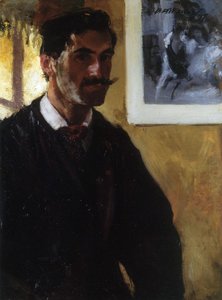
Alfred Henry Maurer’s story is one of quiet rebellion, a determined pursuit of artistic innovation against the backdrop of a rapidly changing world. Born in New York City in 1868, he entered a creative lineage through his father, Louis Maurer, a successful lithographer known for his work with Currier & Ives. However, where Louis found success in representational art—depicting scenes of idyllic American life—Alfred harbored an increasingly restless spirit, one drawn to the burgeoning possibilities beyond established norms. His early training at the National Academy of Design provided a solid foundation in traditional techniques, yet even then, a subtle individuality shone through, hinting at the radical path he would eventually forge. The pivotal moment arrived in 1897 when Maurer embarked for Paris, a city that held an almost mythical allure for American artists seeking to break free from academic constraints and immerse themselves in the heart of European modernism.
Paris was not merely a geographical relocation; it was an intellectual awakening. Initially, Maurer found himself navigating the established art institutions, but he quickly realized their limitations. He gravitated towards independent study, spending countless hours copying masterpieces in the Louvre—not as an exercise in imitation, but as a means of dissecting form and color. This period saw the development of his early style, characterized by a refined realism reminiscent of James McNeill Whistler’s delicate harmonies. His 1901 painting, “An Arrangement,” garnered critical acclaim, winning a gold medal at the Carnegie International Exhibition and briefly securing his reputation within the American art world. Yet, this success proved to be a double-edged sword, solidifying expectations that would soon clash with his evolving artistic vision.
Breaking with Tradition: Maurer's Embrace of Fauvism and Cubism
 alfred henry maurer
Alfred Henry Maurer: Explore the art of this American Modernist pioneer! Discover his Fauvist & Cubist paintings, a bridge between European avant-garde & US art.
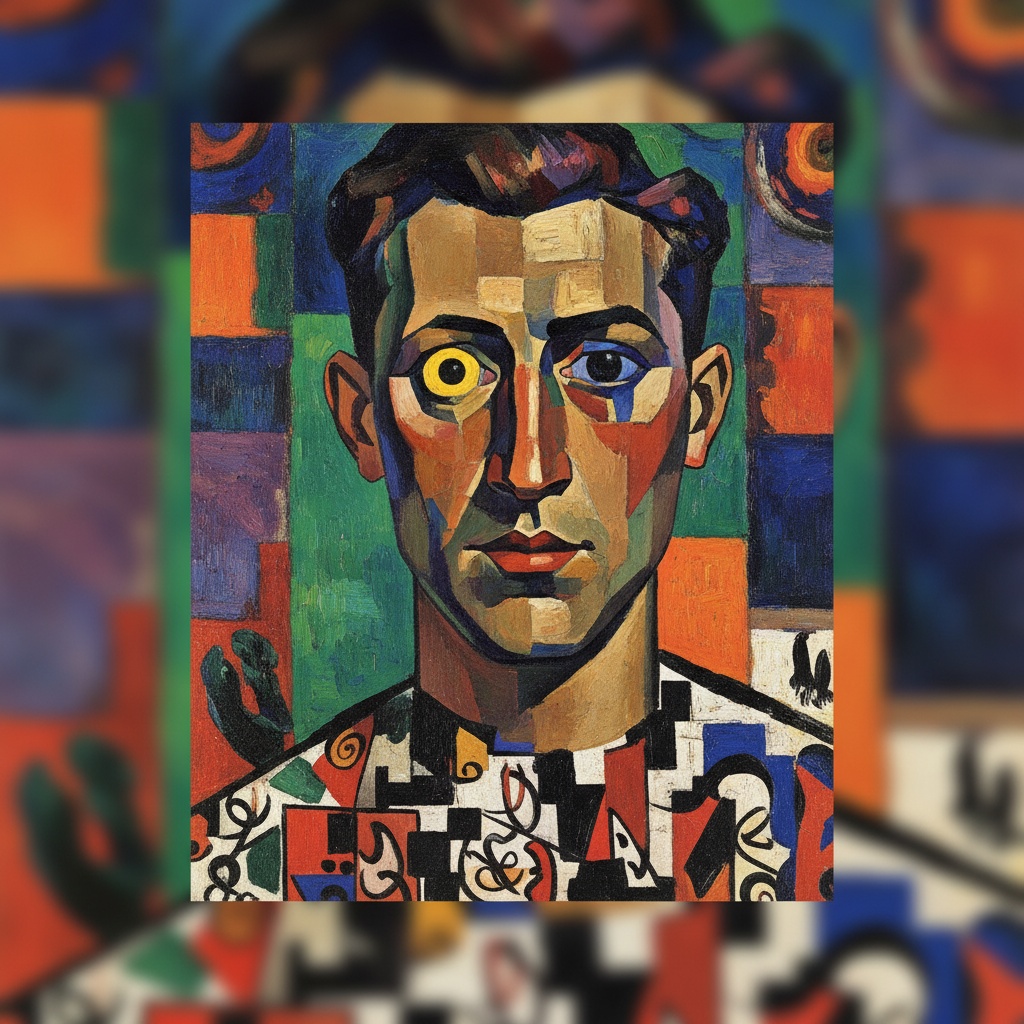
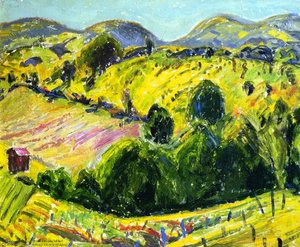
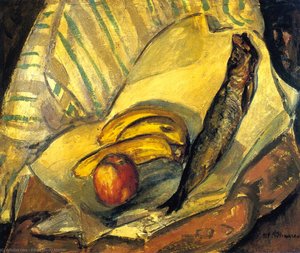
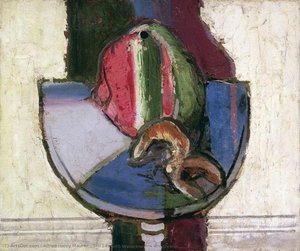
The turn of the century witnessed an explosion of avant-garde movements in Paris—Fauvism, Cubism, and other radical styles challenging centuries of artistic convention. For Maurer, this was not a passive observation but an active embrace. Around 1906, he underwent a profound stylistic shift, abandoning the subtleties of his earlier work for a bold, unrestrained palette inspired by artists like Henri Matisse. This decision marked a decisive break with tradition and signaled his commitment to exploring the expressive potential of color itself. His canvases began to pulsate with vibrant hues—intense reds, yellows, and blues—applied in loose, gestural brushstrokes that prioritized emotional impact over precise representation.
This embrace wasn’t isolated; Maurer actively engaged with the intellectual currents shaping the Parisian art scene. He frequented salons hosted by Gertrude and Leo Stein, where he encountered groundbreaking works of Picasso and Cézanne, further fueling his experimentation. The influence of Proto-Cubism also became apparent in his compositions, as he began to deconstruct forms and explore multiple perspectives. This period represents a crucial turning point—Maurer wasn’t simply adopting new styles; he was synthesizing them, forging a unique artistic language that blended Fauvist intensity with Cubist fragmentation.
A Bridge Between Worlds: Connecting European Avant-Garde to the American Art Scene
Maurer's significance extends beyond his own artistic production. He served as a vital conduit between the European avant-garde and the emerging American art scene, playing a crucial role in introducing new ideas and fostering dialogue across the Atlantic. His connections within Parisian circles allowed him to act as an agent for Dr. Albert Barnes, assisting in the formation of the legendary collection that would later become the Barnes Foundation—a testament to his discerning eye and understanding of modernism’s potential. He also facilitated communication between American artists and their European counterparts, sharing information about new developments and encouraging cross-cultural exchange.
The 1913 Armory Show stands as a watershed moment in American art history, and Maurer was instrumental in its success. Four of his paintings were included in this groundbreaking exhibition, exposing American audiences to the radical innovations of European modernism for the first time. His participation wasn’t merely symbolic; it demonstrated a commitment to challenging established norms and pushing the boundaries of artistic expression. He also exhibited regularly at Alfred Stieglitz's Gallery 291, further solidifying his position within the avant-garde circles of New York City.
The Struggle for Recognition: Critical Reception and Personal Challenges
Despite his pivotal role in introducing modernism to America and the respect he garnered from fellow artists, Maurer’s work met with limited critical or commercial success during his lifetime. The American public remained largely resistant to abstraction, preferring more traditional forms of representation. His “howlers in color,” as they were sometimes dismissively termed, clashed with prevailing tastes and failed to find a widespread audience. This lack of recognition took a heavy toll on Maurer’s personal life.
His relationship with his father remained strained throughout his career, Louis Maurer consistently disapproving of his son's artistic choices. Returning to New York after World War I, he found himself living in his father’s house, denied financial support and facing constant criticism. This “banishment to a hell of Oedipal conflict,” as described by art critic Robert Hughes, contributed to a growing sense of isolation and despair. Despite participating in prestigious exhibitions like the 1916 Forum Exhibition of Modern American Painters and serving as director of the Society of Independent Artists, Maurer struggled to make a living and gain the recognition he deserved.
Maurer’s Late Style & Legacy: Paving the Way for Abstract Expressionism
Abstract expressionism in the United States emerged as a distinct art movement in the aftermath of World War II and gained mainstream acceptance in the 1950s, a shift from the American social realism of the 1930s influenced by the Great Depression an...
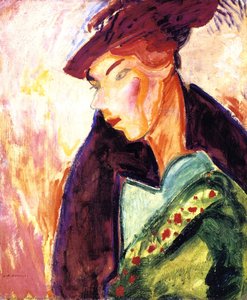
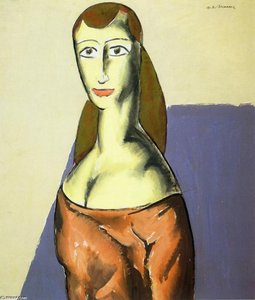
Even in the face of adversity, Maurer continued to explore his artistic vision. His postwar work saw a return to figuration, but it was a figuration infused with the lessons of modernism—simplified forms, bold brushwork, and an emphasis on emotional expression. These late paintings, often depicting women in icon-like compositions, represent a unique synthesis of tradition and innovation. While they didn’t achieve widespread acclaim during his lifetime, they foreshadowed the emergence of Abstract Expressionism in the following decades.
Maurer's influence can be seen in the work of artists like Arshile Gorky, Jackson Pollock, and Mark Rothko—pioneers who embraced abstraction as a means of conveying subjective experience. His experiments with color, form, and gesture laid the groundwork for this groundbreaking movement, establishing him as a crucial precursor to American abstract art. Today, Alfred Henry Maurer is increasingly recognized as a pivotal figure in American Modernism, his work celebrated for its originality, courage, and lasting impact on the course of art history.
Rediscovering Maurer: A Contemporary Reassessment of His Artistic Contributions
For decades, Alfred Henry Maurer remained an overlooked figure, overshadowed by more commercially successful contemporaries. However, recent scholarship and exhibitions have begun to redress this imbalance, revealing the depth and complexity of his artistic vision. The 2015 exhibition “Alfred Maurer: At the Vanguard of Modernism,” which traveled from the Addison Gallery of American Art to the Crystal Bridges Museum of American Art, was a watershed moment in reassessing his legacy.
Maurer’s story serves as a powerful reminder that artistic innovation often comes at a personal cost. His unwavering commitment to exploring new forms of expression, despite facing criticism and hardship, is an inspiration to artists today. As we continue to re-evaluate the canon of American Modernism, Alfred Henry Maurer deserves his place among the pioneers who dared to challenge convention and forge a new path for art. ArtsDot.com offers high-quality reproductions of Maurer’s captivating works, allowing you to experience firsthand the brilliance of this often-overlooked master and appreciate his enduring contribution to the world of art.