Early Life & Influences: Forging a Unique Style
 Camillo Boccaccino
Discover Camillo Boccaccino (1505-1546), a Renaissance Italian painter from Cremona. Explore his intricate paintings, Mannerist style influenced by Correggio & Parmigianino, and notable works like the Four Evangelists. Learn about his legacy & impact
Antonio Allegri da Correggio, born around 1489 in the small town of Correggio near Reggio Emilia, emerged from relative obscurity to become one of the most influential painters of the High Renaissance. While details surrounding his early training remain somewhat elusive – largely attributed to a lack of extensive documentation – it’s generally accepted that his initial artistic education came at the hands of his uncle, Lorenzo Allegri, a painter of modest renown. This familial grounding likely instilled in him a foundational understanding of technique, but it was Correggio's subsequent apprenticeship with Francesco Bianchi Ferrara in Modena between 1503 and 1505 that truly began to shape his artistic trajectory. Here, he encountered the classicism of artists like Lorenzo Costa and Francesco Francia, absorbing their refined sensibilities and meticulous approach to form. A brief sojourn to Mantua in 1506 further broadened his horizons, exposing him to the legacy of Andrea Mantegna and laying the groundwork for the dynamic compositions that would later define his style.
However, Correggio wasn’t merely a passive recipient of these influences; he possessed an innate ability to synthesize disparate elements into something wholly original. Even in his early works, such as the Madonna and Child with Saint Francis (1514), one can discern a burgeoning talent for *sfumato* – that subtle blurring of outlines pioneered by Leonardo da Vinci – and a growing mastery of linear perspective. These weren’t simply imitations; Correggio imbued these techniques with a uniquely lyrical quality, foreshadowing the emotional intensity and dramatic flair that would characterize his mature works.
The Parma School & Correggio’s Fresco Innovations
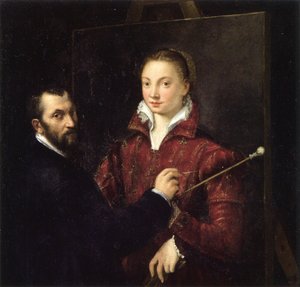 Bernardino Campi
Explore Bernardino Campi (1522-1591), a Renaissance painter from Cremona known for portraits, religious scenes & frescoes. Discover his influence on Anguissola and vibrant Lombard style.
By 1516, Correggio had firmly established himself in Parma, a city that would become synonymous with his name. It was here, amidst a vibrant artistic community, that he founded what is now known as the Parma School of painting. Unlike the more formal and structured approaches prevalent in Florence and Rome, the Parma School emphasized a sensuous naturalism, characterized by soft modeling, rich colors, and an almost ethereal quality of light. Correggio quickly became its leading figure, attracting numerous followers and establishing a distinctive aesthetic that set him apart from his contemporaries.
His most groundbreaking contributions came in the form of fresco decoration – particularly within the private chambers of the convent of San Paolo (1519) and the domes of the church of San Giovanni Evangelista (1520-23) and the Parma Cathedral (1524-30). The Camera di San Paolo, with its playful cherubs seemingly suspended in mid-air and intricate illusionistic details, represents a radical departure from traditional fresco painting. He created an arbor pierced by oculi opening to glimpses of playful cherubs. Below the oculi are lunettes with images of statues in feigned monochromic marble. The fireplace is frescoed with an image of Diana. This wasn’t merely decorative; it was a carefully constructed illusion, designed to transport the viewer into another realm. The frescoes at San Giovanni Evangelista and the Cathedral pushed these boundaries even further, employing *di sotto in su* perspective – viewing from below upwards – to create breathtakingly dynamic compositions that seemed to dissolve the very architecture of the domes.
Mastering Chiaroscuro & Illusionistic Perspective
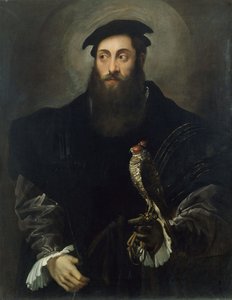 nicolò dell'abate
Explore the Mannerist paintings of Niccolò dell'Abate! Known for landscapes & mythological scenes, he bridged Italian Renaissance to France. Discover his works at Louvre & more.
Central to Correggio’s artistic genius was his unparalleled mastery of chiaroscuro, the dramatic interplay of light and shadow. He didn't simply use light to illuminate forms; he used it as a means of creating atmosphere, evoking emotion, and enhancing the sense of depth and volume. His figures emerge from darkness with an almost sculptural presence, their contours softened by subtle gradations of tone. This technique wasn’t merely aesthetic; it was integral to his ability to create convincing illusions.
The Vision of St. John on Patmos, for example, is a tour de force of chiaroscuro, with the saint bathed in an otherworldly glow while figures swirl around him in a vortex of light and shadow. Coupled with his innovative use of perspective – particularly foreshortening – Correggio created a sense of spatial depth that was unprecedented for his time. He wasn’t simply representing space; he was manipulating it, creating illusions that challenged the viewer's perception and drew them into the scene. This ability to blur the boundaries between reality and representation would have a profound impact on subsequent generations of artists.
Mythological Narratives: Sensuality and Poetic Grace
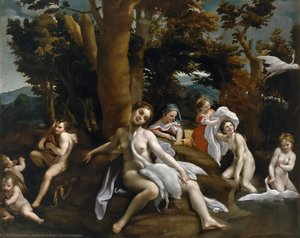
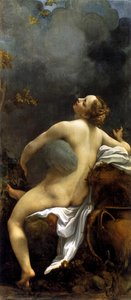
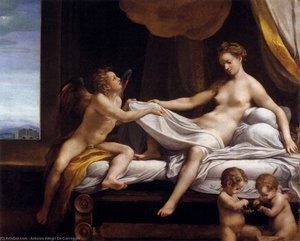
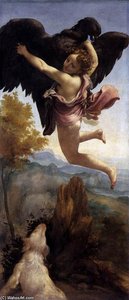
While Correggio is perhaps best known for his religious works, his mythological paintings are equally compelling – and often more controversial. Works like Leda and the Swan (1531-32) showcase a remarkable sensuality and poetic grace that set him apart from many of his contemporaries. These weren’t simply depictions of classical myths; they were explorations of human emotion, desire, and vulnerability.
Correggio's treatment of these subjects was often characterized by a delicate touch and an exquisite attention to detail. His figures are rendered with a soft, luminous quality, their skin seemingly translucent. While some critics have accused him of excessive eroticism, it’s important to remember that these paintings were created within the context of Renaissance humanism – a philosophical movement that celebrated the beauty and potential of the human form. He employed soft and delicate color contours as a means of counterbalancing his lines and of effecting a delicate balance between naturalism and poetics.
Correggio's Legacy: A Precursor to Baroque Art
Antonio da Correggio’s influence on subsequent generations of artists is undeniable. His innovative use of chiaroscuro, illusionistic perspective, and dynamic composition paved the way for the emergence of the Baroque style in the 17th century. Artists like Carlo Cignani, Gaudenzio Ferrari, and Lanfranco directly emulated his techniques, transforming dome interiors into spectacular displays of light and shadow. Even later artists, such as Pompeo Batoni – whose “Thetis Gives Achilles in Charge of Chiron” exemplifies the classical myth scene’s drama and detail – owe a debt to Correggio's pioneering work.
Beyond specific stylistic influences, Correggio left behind a legacy of artistic experimentation and innovation. He challenged conventional norms, pushed the boundaries of technique, and created works that continue to captivate and inspire audiences today. His ability to infuse religious and mythological narratives with emotion, sensuality, and poetic grace cemented his place as one of the most important painters of the Renaissance – a true master whose influence continues to resonate centuries later.
Exploring Key Works: From the Camera di San Paolo to The Assumption of the Virgin
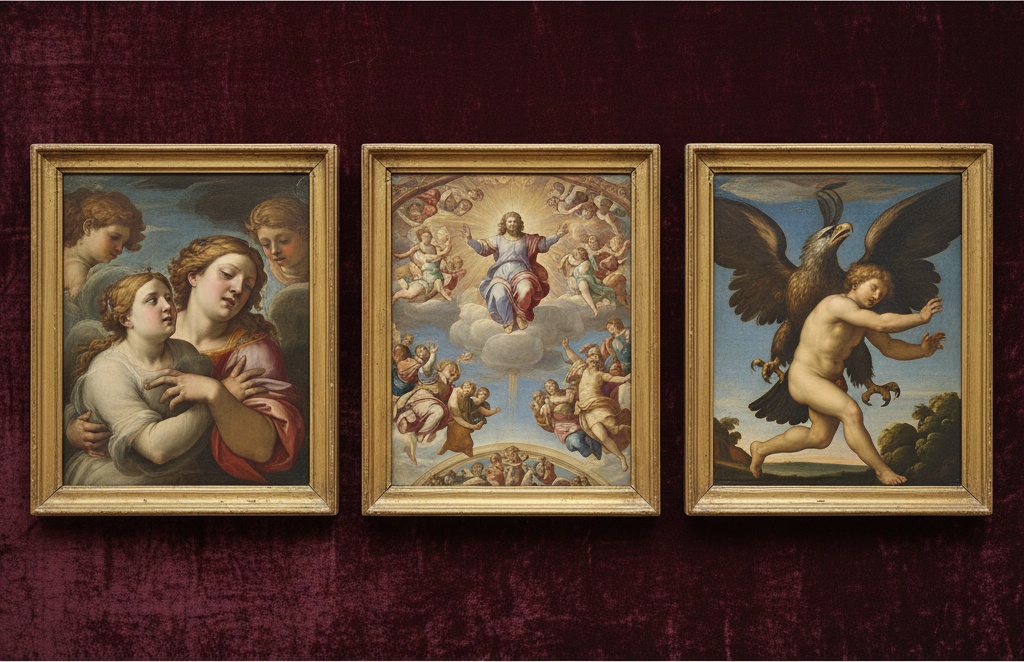
To truly appreciate Correggio’s genius, it is essential to explore some of his key works. The frescoes in the Camera di San Paolo, with their playful cherubs and intricate illusionistic details, offer a glimpse into his early experimentation with perspective and *trompe l'oeil* effects. The Vision of St. John on Patmos, housed in the church of San Giovanni Evangelista, showcases his mastery of chiaroscuro and dynamic composition. And finally, The Assumption of the Virgin, adorning the dome of the Parma Cathedral, represents the culmination of his artistic vision – a breathtaking display of spatial depth, dramatic lighting, and emotional intensity.
These works, along with others like Leda and the Swan and The Lamentation, demonstrate Correggio’s unparalleled ability to create convincing illusions, evoke emotion, and transform religious and mythological narratives into captivating visual experiences. At ArtsDot.com, you can explore high-quality reproductions of these masterpieces, allowing you to bring the beauty and artistry of Antonio da Correggio into your own home.