The Impressionist Legacy: A Prelude to Revolution
To understand the seismic shift brought about by Post-Impressionism, one must first appreciate the luminous revolution that preceded it. The Impressionists, led by visionaries like Claude Monet and Pierre-Auguste Renoir, had fundamentally altered the course of art history by breaking away from the rigid, somber dictates of the French Academy. Their mission was nothing less than the capture of the ephemeral: the fleeting dance of light upon water, the hazy atmosphere of a Parisian afternoon, and the transient effects of sunbeams through autumn leaves. Through short, broken brushstrokes and a focus on optical truth, they taught the world to see color as a living, breathing entity.
However, while the Impressionists succeeded in capturing the external reality of light, a new generation of artists began to feel that this approach lacked a certain structural and emotional permanence. The beauty of an Impressionist landscape was undeniable, yet it often felt as though the subject might dissolve into mist at any moment. This growing desire for more substance, more structure, and more profound psychological depth would eventually lead artists to push beyond the boundaries of mere perception, setting the stage for a movement that would prioritize the artist's internal vision over the external world.
Breaking the Surface: The Shift from Light to Emotion
As the late 19th century progressed, the focus of the avant-garde began to migrate from the retina to the soul. This transition marked the birth of Post-Impressionism, a term that describes not a single unified style, but rather a shared rebellion against the perceived limitations of Impressionism. Where the earlier movement sought to document how light hit an object, the Post-Impressionists sought to document how that object felt within the human psyche. They moved beyond the surface of things, utilizing color and form not as tools for mimicry, but as instruments of expression.
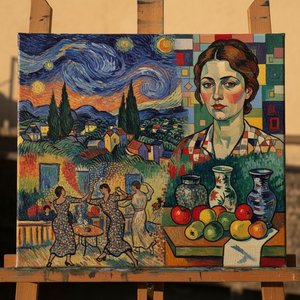
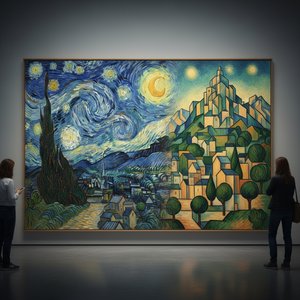
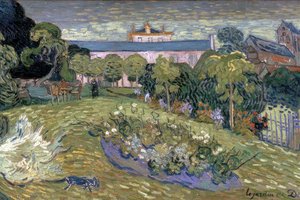
This era was characterized by a profound exploration of subjectivity. The canvas became a site of emotional projection, where the boundaries between reality and imagination began to blur. Artists were no longer content with the objective recording of a landscape; they sought to imbue their works with symbolic meaning and personal intensity. This shift allowed for a much broader range of aesthetic experimentation, ranging from the structured, geometric explorations of Paul Cézanne to the swirling, turbulent emotional landscapes of Vincent van Gogh. It was a period where art ceased to be a window looking out onto the world and became instead a mirror reflecting the complexities of human existence.
Masters of Color and Form: Van Gogh, Cézanne, and Gauguin
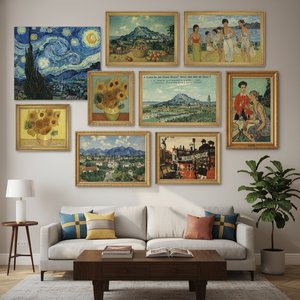
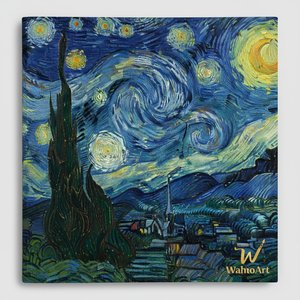
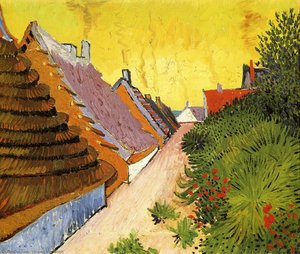
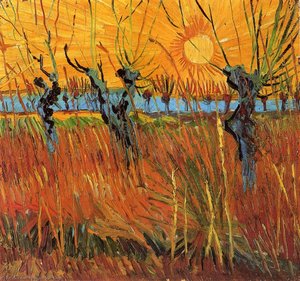
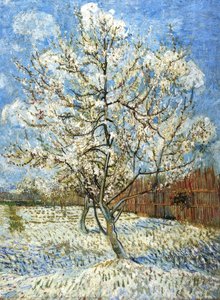
Within this transformative movement, several titans emerged, each carving out a distinct path that would influence modern art for centuries. Vincent van Gogh stands perhaps as the most iconic figure, a man whose very brushstrokes seemed to pulse with the rhythm of his own turbulent spirit. In works such as Green Wheat Fields, one can witness his ability to infuse the natural world with a luminous, almost divine energy. His use of color was never merely decorative; it was a language of passion and sorrow, where vibrant yellows and deep blues served to heighten the emotional resonance of the rural landscapes he so loved.
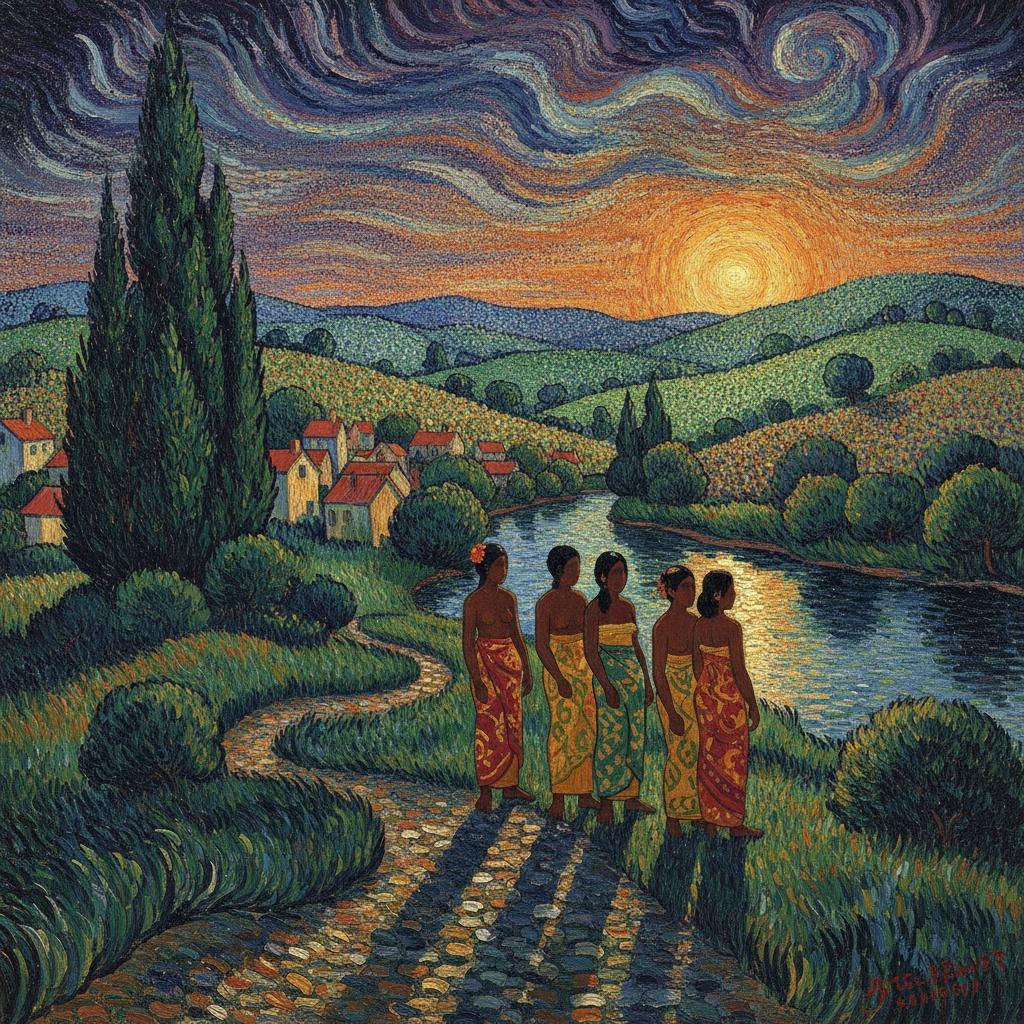
In stark contrast to Van Gogh's expressive fluidity stood Paul Cézanne, the "architect" of modern art. Cézanne sought to bring a sense of permanence and structural integrity back to the canvas. He approached nature through the lens of the cylinder, the sphere, and the cone, treating every landscape and still life as a complex arrangement of geometric forms. His work provided the essential bridge to Cubism, proving that an artist could honor the essence of nature while simultaneously imposing a rigorous, intellectual order upon it. Meanwhile, Paul Gauguin took a different route entirely, retreating to the South Pacific to find a primitive, symbolic purity. Through his use of flat planes of color and exotic subject matter, Gauguin explored the intersection of myth, spirituality, and the human condition, leaving an indelible mark on the development of Symbolism.
Technique Reimagined: Impasto, Pointillism, and Symbolic Color
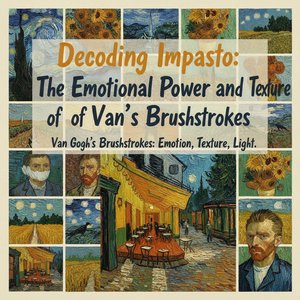
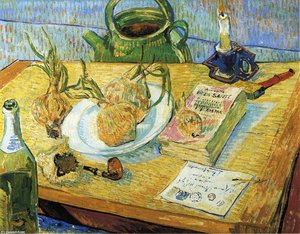
The revolution of Post-Impressionism was as much about technical innovation as it was about philosophical change. The artists of this era developed a repertoire of techniques that fundamentally altered the texture and perception of the painted surface. One of the most striking developments was the mastery of impasto, a technique famously utilized by Van Gogh, where paint is applied in thick, heavy layers. This creates a three-dimensional quality on the canvas, where the physical ridges of the dried oil catch the light, adding a tactile, sculptural dimension to the work that mirrors the intensity of the subject matter.
Simultaneously, Georges Seurat and the Neo-Impressionists introduced the scientific precision of Pointillism. Rather than blending colors on a palette, they applied tiny, distinct dots of pure pigment directly to the canvas, relying on the viewer's eye to optically mix them from a distance. This method brought a shimmering, luminous quality to the work, a controlled version of the Impressionist light effect. Furthermore, the concept of symbolic color became a cornerstone of the movement. Color was liberated from its descriptive duties; a sky could be blood-red to signify passion or anger, and a face could be rendered in unnatural greens to evoke sickness or melancholy. This liberation allowed for an unprecedented level of psychological depth, turning every hue into a vessel for meaning.
The Enduring Influence of Post-Impressionism on Modern Aesthetics
The legacy of the Post-Impressionists is woven into the very fabric of modern and contemporary art. By breaking the requirement for literal representation, they paved the way for the radical abstractions of the 20th century. The Fauvist movement, with its wild and "primitive" use of color, owes everything to Gauguin and Matisse; the structural breakthroughs of Cubism are direct descendants of Cézanne’s investigations; and the raw, emotional power of Expressionism finds its roots in the tortured beauty of Van Gogh.
Even today, the aesthetic principles established during this era continue to resonate within our visual culture. We see their influence in the bold graphic design of modern advertising, the emotive use of color in cinema, and the textured depth of contemporary fine art. The Post-Impressionists taught us that art is not merely a record of what we see, but an interpretation of what we feel. They transformed the canvas into a profound space for human connection, ensuring that the vibrant, emotional world they created would continue to inspire awe and introspection in generations to come.
At ArtsDot.com, we celebrate this enduring legacy by bringing these masterpieces back to life. Our mission is to make fine art accessible to everyone through museum-quality, hand-painted oil reproductions. Whether you are drawn to the thick, emotive impasto of Van Gogh or the structured elegance of Cézanne, our master artists specialize in capturing the true soul of these historical movements on 100% cotton canvas. We invite you to explore our vast library and discover how the vibrant world of Post-Impressionism can transform your own living space.