The Evolution of Observation: From Ancient Herbals to Scientific Realism
 The Art of Precision: A Definitive Guide to Scientific Illustration and Botanical Mastery
The Roots of Observation: From Ancient Herbals to Scientific Realism The Flourishing Canvas: A Historical & Artistic Exploration of Botanical Illustration The Roots of Observation: Early Botanical Depictions & Medicinal Herbals Wikipedia: Botanical i...
To wander through the annals of art history is to witness a profound, ancient dialogue between humanity and the verdant world. Long before the advent of sophisticated scientific tools or the clarity of the camera lens, our understanding of the plant kingdom was inextricably linked to the skill and patience of the artist. The earliest glimpses into this relationship are not found in modern textbooks but are etched into the walls of ancient tombs and temples, where stylized depictions of flora served as symbolic elements within a broader cosmological framework. As centuries progressed, this impulse evolved from pure symbolism toward a burgeoning need for utility and survival. During the medieval period, monasteries became vital centers for preserving botanical knowledge. Within these cloistered gardens, monks cultivated plants not merely for sustenance but for their medicinal properties. Their herbals—illustrated compendiums detailing plant uses—became essential resources for healing. While early works often relied on artistic conventions that prioritized symbolic meaning over strict realism, they laid the groundwork for a more disciplined approach to observation. This era marked the transition from art as myth to art as a tool for human advancement, setting the stage for a revolution in naturalism where the artist's eye became a primary instrument of scientific discovery.
Masters of Precision: The Legacy of Kerner, Havell, and the Golden Age of Illustration
 johann simon von kerner
Johann Simon von Kerner: A Pioneer of Botanical Illustration Born in Kirchheim bei Teck, Germany, in 1755, Johann Simon von Kerner’s life was inextricably linked to the burgeoning world of botany and scientific illustration. His legacy rests primaril...
The golden age of botanical illustration emerged when the desire to accurately document the natural world reached its zenith, driven by an era of significant scientific advancement. This period saw the rise of artists who were as much scholars as they were painters. Johann Simon von Kerner, a pioneer born in Germany, left an indelible mark through his monumental twelve-volume work,
Hortus Sempervirens. His dedication to capturing the essence of plant life through meticulous observation transformed botanical art into a definitive scientific record. Similarly, the 19th century brought forth the exquisite precision of Robert Havell Jr., whose study of
Lilium candidum offers a captivating glimpse into the world of scientific artistry. In his work, one finds a harmonious blend of scientific accuracy and understated beauty, where fine lines define delicate petals and expert hatching suggests subtle textures. The era also produced towering figures like Walter Hood Fitch, whose background in fabric printing instilled in him a keen eye for color and detail that he applied to the world of botany with extraordinary precision. These masters did not merely paint flowers; they documented the structural complexity of life, creating works that remain equally suitable for scientific study and high-end art collections today.
The Intersection of Science and Aesthetics: Anatomy, Morphology, and Artistic Skill
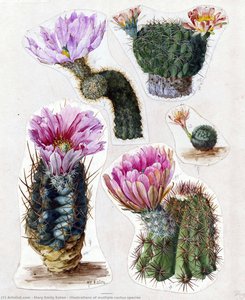 Illustrations of multiple cactus species
A Botanical Symphony in Watercolor In the delicate intersection of scientific precision and pure aesthetic grace lies Mary Emily Eaton’s Illustrations of multiple cactus species . This exquisite watercolor composite serves as a window into a world wh...
At its core, botanical illustration exists at the delicate intersection of scientific precision and pure aesthetic grace. The creation of these works requires more than just a steady hand; it demands an intimate understanding of plant morphology. A successful illustrator must be able to render the form, color, and intricate details of a species so accurately that the work can serve as a visual reference for taxonomists. This is evident in the works of Mary Emily Eaton, whose watercolor compositions of cactus species capture the rugged, resilient textures of the desert alongside the soft, ethereal touch of a master's brush. In her renderings, one can almost feel the prickly spines and velvety petals, achieved through a masterful use of light and shadow. This technical mastery often involves complex techniques such as using ink for outlining and layering watercolors or gouache to create depth. The goal is to achieve a level of realism where the structural complexity—the veins in a leaf, the arrangement of seeds, or the delicate curve of a stem—is presented with absolute clarity. It is this rigorous adherence to anatomical truth, combined with an artist's ability to breathe life into the subject, that elevates botanical illustration from mere documentation to a profound form of fine art.
Botanical Art in Modern Spaces: Integrating Natural Detail into Architectural Design
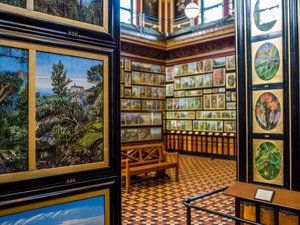 Marianne North Gallery
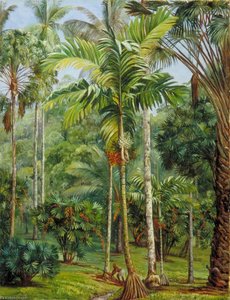
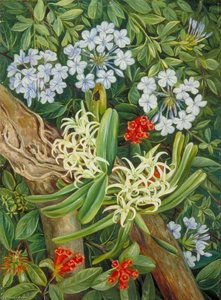
A Victorian World Captured in Bloom: The Marianne North Gallery Stepping into the Marianne North Gallery at Kew Gardens is akin to entering a forgotten world—a vibrant, immersive cabinet of curiosities brought to life through the meticulous brushstro...
In the contemporary landscape of interior design and architecture, the timeless appeal of botanical realism offers a sophisticated way to anchor large-scale spaces. For professionals managing the aesthetics of hotels, restaurants, or corporate environments, botanical works provide a sense of organic geometry and tranquility. The trend of multi-panel group sets allows for the expansion of these natural narratives across wide walls or grand staircases, where colors and brushstrokes flow seamlessly across three, four, or five panels to create a cohesive, modern architectural look. Beyond traditional paintings, the concept extends to large-format murals and ceiling frescoes, which can recreate the grandeur of historical botanical gardens within a modern structure. Whether it is the soft, romantic tones of a watercolor cactus study or the deep, textured impasto of an oil reproduction of a lily, these works introduce a layer of intellectual interest and visual serenity. By integrating the precise details of nature into built environments, designers can create spaces that feel both grounded in history and connected to the enduring majesty of the natural world.
Preserving the Verdant Record: The Role of Botanical Gardens and Museums in Art History
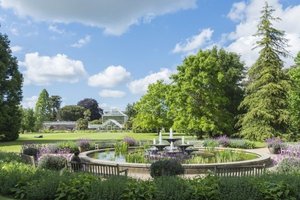 Cambridge University Botanic Garden
A Living Chronicle of Botanical Artistry Nestled within the historic heart of Cambridge, the Cambridge University Botanic Garden serves as much more than a mere horticultural display; it is a living, breathing masterpiece where scientific inquiry mee...
The legacy of botanical artistry is preserved not only in galleries but within living chronicles such as the Cambridge University Botanic Garden and the Museo Botanico of Florence. These institutions serve as sanctuaries where scientific inquiry meets profound aesthetic grace. The Cambridge garden, established in 1762, acts as a sprawling canvas of natural history, where species are arranged to showcase evolutionary relationships, much like a carefully orchestrated landscape painting. Similarly, the Museo Botanico in Florence stands as a testament to the intersection of scientific curiosity and artistic patronage, reflecting the Medici family's profound interest in beauty and knowledge. These gardens and museums provide the essential context for understanding botanical art, offering a physical connection to the specimens that inspired the masters. They remind us that botanical illustration is part of a larger, ongoing story of discovery—a story where every leaf and bloom acts as a brushstroke in a centuries-old portrait of the earth's enduring majesty. Through the preservation of both living plants and their artistic representations, we maintain a vital link to our shared history of observing and celebrating the natural world.
For those seeking to bring this level of historical precision into their own collections or professional projects, ArtsDot.com offers an extensive catalog of hand-painted reproductions and museum-quality prints. Whether you require a single bespoke oil painting or large-scale multi-panel sets for a hospitality project, our studio ensures every piece meets the highest academic standards of craftsmanship.