



Defining Academicism: The Principles of Precision and Technical Mastery
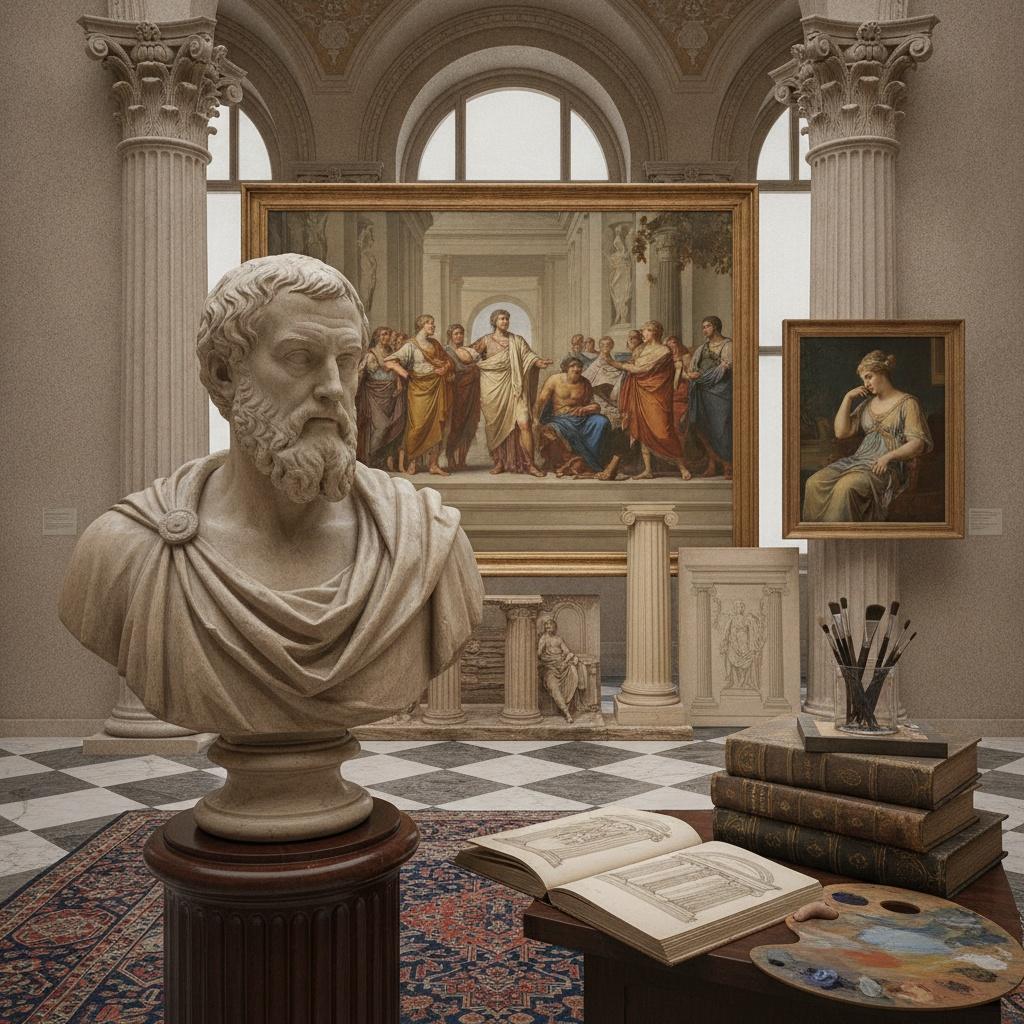
To understand the profound impact of Academicism, one must first look beyond the surface of a canvas and into the rigorous discipline that governs its creation. Academicism is not merely a style; it is a commitment to a standardized excellence rooted in the prestigious fine arts academies of Europe. At its core, this movement celebrates the triumph of technique over spontaneous impulse. It demands an unwavering devotion to anatomical accuracy, the subtle gradation of light, and a profound respect for the established canons of beauty. For the discerning collector or the professional decorator, recognizing these principles is essential, as they represent a foundation of stability and prestige in the art world.
The hallmark of this approach lies in the invisible hand of the master. In an Academic work, one rarely sees the frantic, unrefined marks of a struggling artist; instead, there is a seamlessness that suggests perfection. This precision is achieved through years of studying the masters, mastering the chemistry of pigments, and understanding how light interacts with various textures. When we observe the meticulous rendering of skin or the heavy drape of velvet in an Academic piece, we are witnessing a disciplined pursuit of truth through idealized form. It is this very technical rigor that allows these works to transcend their era, offering a sense of permanence and authority that modern, more transient styles often lack.
The Neoclassical Influence: Idealized Beauty and Historical Grandeur
Flowing naturally from the strictures of Academic training is the Neoclassical movement, an era that sought to revive the dignity and clarity of Greek and Roman antiquity. This period moved away from the ornate excesses of the Rococo, favoring instead a sense of monumental calm and structural integrity. The influence of Neoclassicism on Academicism cannot be overstated; it provided the thematic soul for much of the technical mastery developed in the academies. Artists sought to capture an idealized version of reality, where every figure possessed a sculptural grace and every composition adhered to a balanced, harmonious geometry.
In works such as those by John William Godward, we see this Neoclassical elegance embodied through figures that seem plucked from a mythic past, draped in fine fabrics that catch the light with a soft, ethereal glow. This era of art does not merely depict history; it elevates it. By focusing on themes of heroism, virtue, and timeless beauty, Neoclassical-inspired Academicism creates an atmosphere of grandeur that is particularly effective in large-scale architectural settings. For those furnishing luxury hotels or corporate lobbies, these pieces provide a sense of established heritage and cultural depth, anchoring a modern space within the long lineage of human civilization.
Key Techniques of the Masters: From Hatching to Anatomical Accuracy
The true magic of Academicism resides in the specific, learned techniques that allow an artist to manipulate oil paint into something resembling flesh, stone, or silk. One of the most fundamental tools in the academic repertoire is the mastery of hatching and cross-hatching—techniques often seen in preparatory sketches, such as those by Vincenzo Camuccini. These fine, controlled lines create depth and volume, providing a structural blueprint for the final oil painting. This disciplined approach to shadow and light ensures that every subject possesses a three-scale presence, making them feel tangible and lifelike within their painted environment.
Furthermore, the pursuit of anatomical accuracy requires an intimate knowledge of musculature and skeletal structure. An Academic painter does not simply draw a limb; they understand the tension of the tendon and the swell of the muscle beneath the skin. This level of detail is what separates a mere representation from a masterpiece. When combined with the use of glazes—thin, transparent layers of oil that build up color and luminosity—the result is a depth of tone that cannot be replicated by digital printing. It is this tactile, multi-layered process that gives Academic reproductions their unmistakable "soul," offering a richness of texture and a range of light that commands attention in any professional interior.
Academicism in Modern Interiors: Implementing Timeless Art in Professional Spaces
In the contemporary landscape of interior design, particularly within the hospitality and corporate sectors, there is a growing movement toward "New Classicism." Designers are increasingly looking to the stability of Academic art to provide a sense of luxury and permanence in spaces that might otherwise feel transient or overly modern. The challenge for procurement managers and decorators lies in integrating these heavy, historical themes into sleek, contemporary environments without creating a visual clash. The secret is found in scale and placement.
Large-format Academic works, such as multi-panel sets or expansive landscapes, can serve as the definitive focal point of a grand hallway or a dining room. By utilizing the "multi-panel" trend, one can break up a massive wall with a cohesive, flowing narrative that guides the eye through a space. Furthermore, the ability to customize these works—perhaps by adjusting the color palette to match a specific brand identity or requesting an aged, craquelure finish to enhance a sense of antiquity—allows for a bespoke integration of history into modern architecture. When executed correctly, Academic art does not feel like a relic of the past; it feels like a sophisticated anchor for the present.
Sourcing Excellence: Selecting High-Quality Reproductions for Large-Scale Projects
For the professional buyer, the acquisition of fine art is often a matter of logistics as much as aesthetics. When managing large-scale projects, such as furnishing an entire hotel wing or a corporate headquarters, the requirements are specific: reliability, scalability, and consistent quality. The market for reproductions has evolved to meet these needs, offering museum-quality oil paintings that provide the prestige of the Old Masters with the efficiency required by modern business workflows. The key is to distinguish between mere prints and true hand-painted reproductions.
A high-quality reproduction, painted on 100% cotton canvas with visible brushstrokes and a deep tonal range, offers an investment in durability and visual impact. For procurement professionals, the ability to order multiple pieces in standard or custom sizes, backed by transparent shipping timelines and clear documentation like VAT invoices, is paramount. Whether it is a single commissioned portrait or a series of coordinated landscapes for a long corridor, sourcing from a reliable provider ensures that the art arrives ready to transform the space. By focusing on artists who hold academic credentials and utilizing services that offer digital mockups, professionals can mitigate risk and ensure that every piece contributes to a cohesive, prestigious, and enduring environment.