Early Life & Artistic Formation: From Lithography to Social Commentary
Ben Shahn (September 12, 1898 – March 14, 1969) was an American artist. He is best known for his works of social realism, his left-wing political views, and his series of lectures published as The Shape of Content. Born Benjamin Shahn in what was the...
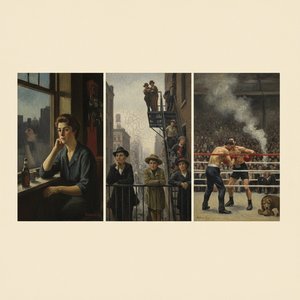
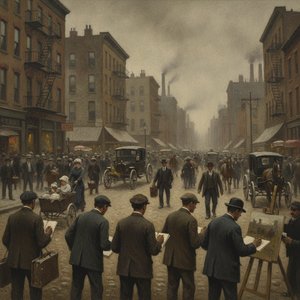
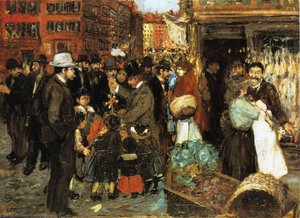
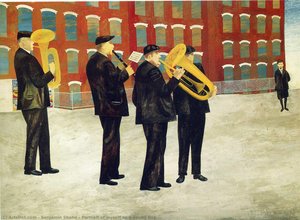
Benjamin Shahn’s artistic journey was not one of immediate, precocious talent, but rather a gradual unfolding shaped by displacement, hardship, and a deeply ingrained sense of social justice. Born in 1898 in Kovno, Lithuania – then part of the Russian Empire – his early life was steeped in the traditions of an Orthodox Jewish family. This formative period, marked by the pervasive anti-Semitism of Tsarist Russia, would later profoundly influence his artistic vision. The family’s emigration to the United States in 1906, following his father’s exile for suspected revolutionary activities, transplanted young Benjamin into the bustling immigrant communities of Brooklyn, New York. Initially apprenticed as a lithographer, Shahn honed a technical skill that would become foundational to his later work, imbuing his paintings and prints with a distinctive clarity and precision. However, it was not merely technical proficiency that defined his early development; rather, it was the exposure to the realities of working-class life – the struggles, the resilience, and the quiet dignity of those around him – that began to ignite a nascent social consciousness.
His brief foray into studying biology at New York University proved unfulfilling, quickly replaced by formal training at the National Academy of Design. A period of travel through Europe followed, exposing him to the currents of modern art. Yet, unlike many of his contemporaries who embraced abstraction and formal experimentation, Shahn found himself increasingly drawn back to a representational style—a deliberate rejection of stylistic trends in favor of a visual language that could directly address the pressing social issues of his time. This nascent commitment was further solidified by his growing awareness of political radicalism and the burgeoning American Scene movement.
The Dust Bowl Series: Witnessing Hardship with 'Years of Dust' and Beyond
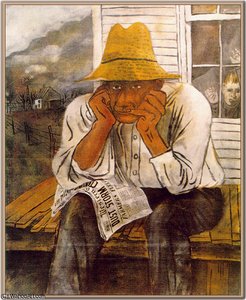 Years of Dust
Explore 'Years of Dust' by Benjamin Shahn – a poignant realist painting depicting rural hardship during the Dust Bowl era. Discover social commentary & textured brushwork.
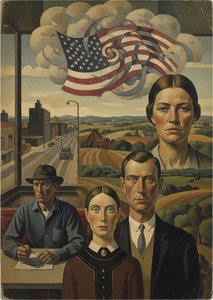
The 1930s proved to be a pivotal decade for Shahn, marked by an intense engagement with the plight of rural America during the Great Depression. The devastating ecological disaster known as the Dust Bowl – coupled with widespread economic hardship – provided fertile ground for his burgeoning social realism. Works like 'Years of Dust' (1935-1940) stand as powerful testaments to this period, depicting the gaunt faces and weathered hands of farmers displaced by drought and economic collapse. These were not merely depictions of suffering; they were acts of witness, imbued with a profound empathy for those marginalized and forgotten.
Shahn’s approach differed from purely documentary photography in its deliberate artistic choices. He wasn't simply recording reality; he was interpreting it through a lens of emotional resonance and symbolic weight. The textured brushwork, the muted color palettes, and the often-fragmented compositions all contributed to a sense of unease and disorientation, mirroring the psychological toll of the Dust Bowl on those who endured it. His paintings weren’t just about *what* happened; they were about *how* it felt – the despair, the resilience, and the quiet dignity in the face of overwhelming adversity.
Murals for the New Deal: Art as Advocacy and Collective Memory
Yet since 1931, when he suddenly reached maturity as an artist, he has been unmistakably an. American painter, as American as nineteenth century genre artists ...
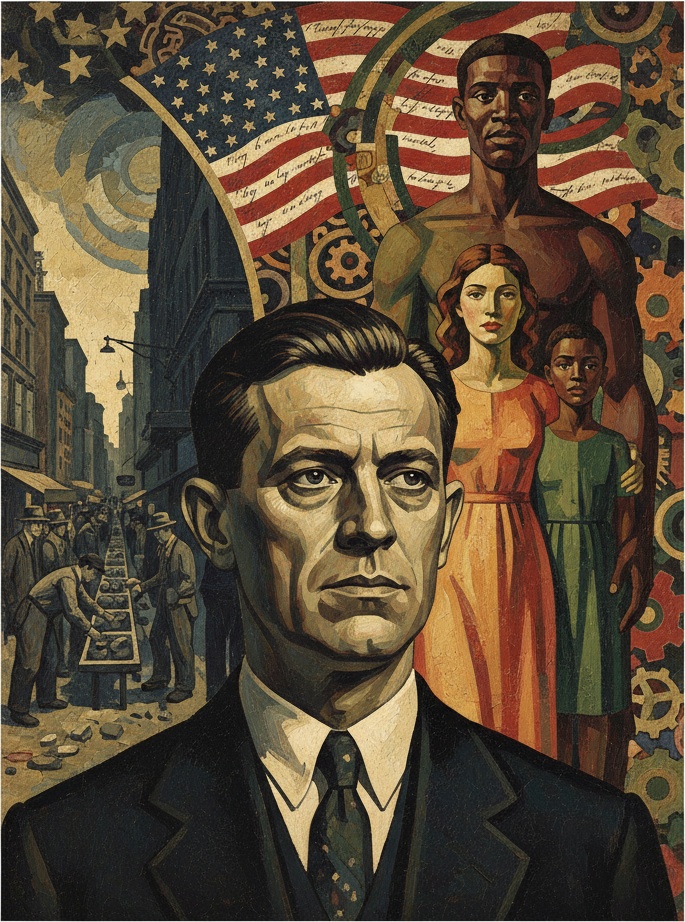
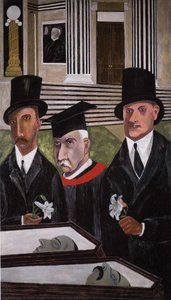
The advent of the New Deal provided Shahn with unprecedented opportunities to translate his social concerns into large-scale public art. Through programs like the Public Works of Art Project (PWAP), the Resettlement Administration (RA), and the Farm Security Administration (FSA), he collaborated with artists such as Diego Rivera and Walker Evans, creating murals that served as powerful visual narratives of American life during this tumultuous era. These weren’t simply decorative embellishments; they were deliberate interventions into the public sphere, intended to raise awareness about labor conditions, immigration struggles, and the need for collective reform.
The Jersey Homesteads Mural (1938-1940), commissioned for a cooperative community in New Jersey, exemplifies this approach. The mural depicted scenes of immigrant hardship, communal solidarity, and aspirations for a more just future, grounding its compositions in visual references to Jewish tradition and American political history. Similarly, his murals for the Bronx Post Office celebrated the diversity and resilience of working-class communities. These projects weren’t without their challenges; Shahn often navigated complex bureaucratic constraints and ideological pressures, but he remained steadfast in his commitment to using art as a tool for social advocacy.
Jewish Identity & American Modernism: A Synthesis of Tradition and Progress
While firmly rooted in the principles of Social Realism, Shahn’s work also reveals a complex and nuanced engagement with Jewish identity. His upbringing within a traditional Orthodox family instilled in him a deep respect for religious texts and symbolism, which he subtly incorporated into his art throughout his career. This wasn't a matter of overt religious expression; rather, it was a more subtle weaving of ethical principles and historical narratives into his broader social commentary.
Shahn’s exploration of Jewish identity intersected with the currents of American Modernism in unexpected ways. He rejected the stylistic conventions of European abstraction, but he embraced a modernist sensibility in his use of asymmetry, dynamic spatial arrangements, and expressive distortions. His work sought to reconcile tradition and progress, faith and reason, individual experience and collective responsibility—a synthesis that resonated deeply with the complexities of the American immigrant experience.
Shahn’s Evolving Style: From Realism to Allegory and Poetic Expression
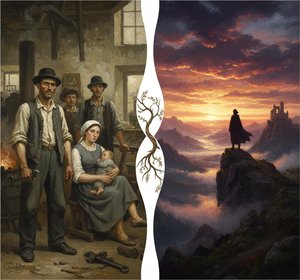
As Shahn matured as an artist, his style underwent a significant evolution. While he remained committed to realism throughout his career, he increasingly moved away from purely documentary representation towards allegory and poetic expression. His later works often featured symbolic figures, fragmented narratives, and a heightened sense of emotional intensity.
This shift wasn’t a rejection of his earlier social concerns; rather, it was an attempt to find new ways of engaging with them. He sought to create images that were not merely descriptive but also evocative—images that could tap into deeper psychological and spiritual truths. This evolution is evident in works like 'Circus Poster, Smithland, Kentucky' (1935), which utilizes folk-art style imagery and Noah’s Ark symbolism to comment on the plight of marginalized communities. His later series of lectures, published as *The Shape of Content*, further articulated his belief that art should be both aesthetically compelling and intellectually rigorous—a synthesis of form and meaning.
Legacy and Influence: The Enduring Relevance of Shahn's Social Vision
Benjamin Shahn’s legacy extends far beyond the confines of the 20th century. His work continues to resonate with contemporary audiences, offering a powerful reminder of the importance of social justice, empathy, and artistic integrity. He demonstrated that art could be both beautiful and politically engaged—a potent force for change.
His influence can be seen in the work of countless artists who followed, particularly those committed to using their craft as a means of challenging power structures and advocating for marginalized communities. Today, as we grapple with issues of inequality, displacement, and social unrest, Shahn’s art serves as a timely and urgent call to action—a testament to the enduring power of visual storytelling.
Explore the breadth of Benjamin Shahn's work and discover his profound impact on American art history at ArtsDot.com, where you can find high-quality reproductions of his iconic paintings, murals, and prints.