 Preview
 Send
Send Share
Share
 Details

 Download
 Similars
 X-Ray
X-Ray Diaporama
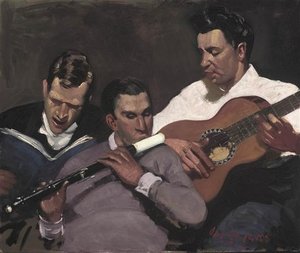
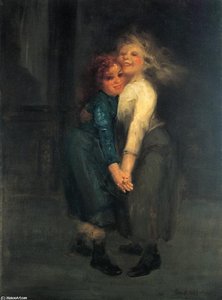
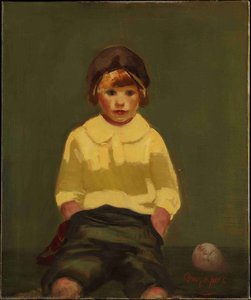
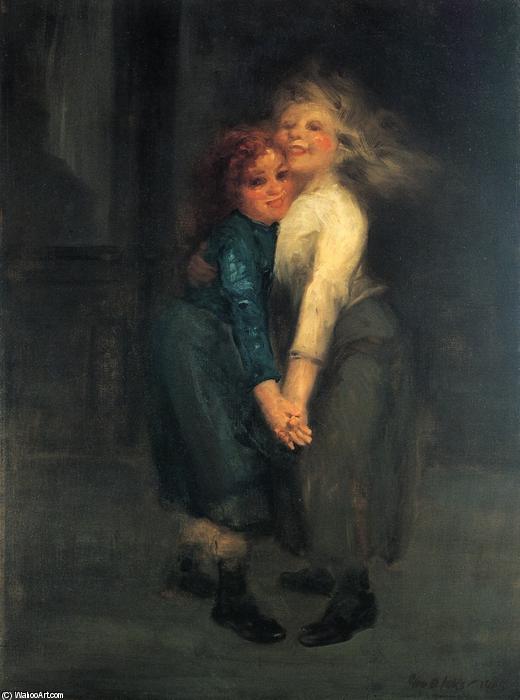
The Spielers


 Read More
Hand Made Oil Reproduction
Hand-painted oil on canvas in your size and frame, made to order by our artists. ( Buy Print Buy Image)




P118B $10

P118H $10

P118W $10

P438Z $10

P508JH $12

P508YH $12

P805H $10

P805Z $10

P919BZ $10

P919G $10

P919XJ $10

P959ZH $10

P968JZ $12

W106C $8

W218G $10

W218JH $8

W218Y $10

W307PJ $10

W316G $10

W316PJ $8

W316Y $10

W398PJ $8

W4111J $10

W500HY $15

W500JH $15

W692G $12

W849H $8

W940BG $15

W953PJ $8




Pick from our preset sizes that match the artwork's original proportions.

You may enter your own dimensions to fit a specific frame or space. If your selected size does not match the original image's proportions, we will either crop the artwork or extend the painting with additional hand-painted elements. A digital mockup will be sent for your approval before production begins.
Please note that the on-screen preview does not reflect the actual cropping or extension. Only the mockup will accurately show the final composition.
While custom sizes are available, we recommend selecting a dimension from the predefined list to preserve the original proportions.
After order, ArtsDot.com team will email client for instructions and provide a mockup preview
Worldwide Delivery () in 3/4 weeks instead of standard 5 weeks. (17 August). No compromise on quality.

Free Worldwide Express Shipping

High-Quality Linen Canvas

Full Shipping Insurance

Customs Tax Refund Guarantee

True Color Matching Guarantee

60-Day Return Policy (Defects Only)

100% Money-Back Guarantee

Bulk Discount Offer
 Glass option is only available in size under 110 CM

The Spielers
Reproduction Medium
Reproduction Size
-


Total Price
$ 263
Artwork Description
A Portrait of Resilience: Exploring George Benjamin Luks’s “The Spielers”
George Benjamin Luks (1867-1933), a titan amongst the Ashcan School artists, didn't merely paint; he wrestled with the soul of America—its grit, its compassion, and its unwavering spirit. His masterpiece, "The Spielers," transcends mere visual representation, offering a profound glimpse into the complexities of human connection amidst the harsh realities of urban life in 1905 New York City. This striking black and white portrait captures two women standing shoulder to shoulder, their gaze fixed on an unseen point beyond the canvas—a moment frozen in time that speaks volumes about shared experience and unspoken understanding.The Ashcan School Aesthetic: Raw Emotion and Urban Realism
Luks’s artistic vision firmly rooted him within the Ashcan School movement, a rebellion against academic conventions championed by artists like Robert Henri and John Sloan. Rejecting idealized beauty, these painters sought to depict life as it truly was—the sweat-soaked faces of laborers, the crowded tenements of immigrant communities, and the everyday dramas unfolding on city streets. “The Spielers” embodies this ethos perfectly; its muted palette emphasizes texture and form, prioritizing observation over embellishment. The artist eschewed polished surfaces for a deliberately rough brushstroke, mirroring the weathered facades of New York’s Lower East Side and conveying an immediacy that distinguishes it from more formally posed portraits of the era.Technical Mastery: Composition and Light
Luks's meticulous attention to detail is evident in every aspect of “The Spielers.” The composition guides the viewer’s eye, subtly directing attention towards the central figures while incorporating supporting elements—a glimpse of a doorway and indistinct faces in the background—that contribute to the overall atmosphere. Notably, Luks skillfully utilizes chiaroscuro – the dramatic interplay between light and shadow – to sculpt the forms of his subjects and imbue them with emotional depth. The diffused light illuminates their faces, highlighting expressions of quiet contemplation and hinting at unspoken narratives. This masterful technique elevates the painting beyond a simple depiction of two women; it transforms it into an embodiment of psychological realism.Historical Context: Capturing the Spirit of Immigrant America
Painted during a period of significant social upheaval—the burgeoning industrial revolution, rapid urbanization, and waves of immigration reshaping American society— “The Spielers” serves as a poignant reminder of the human cost of progress. The women depicted represent a segment of New York’s population grappling with hardship and striving for dignity amidst challenging circumstances. Their posture conveys resilience and solidarity – a quiet defiance against adversity. Luks's work reflects the broader Ashcan School preoccupation with portraying marginalized communities, offering an unflinching portrayal of their daily lives and fostering empathy for those often overlooked by mainstream artistic discourse.Symbolism Beyond Appearance: Connection and Shared Humanity
Beyond its technical brilliance and historical significance, “The Spielers” resonates on a deeper symbolic level. The hand clasp between the two women symbolizes connection—a bond forged through shared experience and mutual support. It speaks to the universal desire for companionship and understanding, transcending social boundaries. Furthermore, their gaze outward suggests an awareness of something larger than themselves – perhaps a yearning for hope amidst despair or a recognition of the enduring power of human relationships. Luks’s subtle gestures invite contemplation on themes of vulnerability, empathy, and the importance of preserving human dignity in the face of societal pressures.Emotional Impact: A Moment Preserved
Ultimately, “The Spielers” succeeds in capturing a fleeting moment of profound emotional resonance. It's not merely a portrait; it’s an invitation to consider what unites us as humans—the shared struggles and triumphs that define our existence. The painting lingers in the mind long after viewing, prompting reflection on themes of compassion, resilience, and the enduring beauty found within ordinary human connections. Its timeless appeal lies precisely in its ability to convey a powerful message of empathy and understanding – a testament to Luks’s artistic genius and his unwavering commitment to portraying the complexities of American life with honesty and grace.Related Artworks


Artist Biography
A Life Forged in the Crucible of American Realism
George Benjamin Luks, a name synonymous with the gritty energy and unvarnished truth of early 20th-century America, was more than just a painter; he was a chronicler of an era. Born in Williamsport, Pennsylvania, in 1867 to immigrant parents – his father a Polish physician, his mother a German musician – Luks’s upbringing instilled within him a deep empathy for the struggles and triumphs of everyday people. This sensitivity would become the defining characteristic of his artistic vision. His early life was anything but conventional; before dedicating himself to canvas and brush, he and his brother trod the boards as vaudeville performers, honing an observational skill and understanding of human character that would later prove invaluable. It was a world of fleeting moments, exaggerated gestures, and raw emotion – a training ground for capturing the essence of life itself. This period instilled in him a love for performance and spectacle, elements subtly woven into the dynamic compositions of his paintings.From European Studies to the Ashcan School
Luks’s formal artistic education began at the Pennsylvania Academy of the Fine Arts, but it was his subsequent travels to Europe that truly shaped his aesthetic sensibilities. He immersed himself in the works of the Old Masters – Velázquez and Hals particularly resonated with him – absorbing their mastery of light, shadow, and characterization. However, he wasn’t merely imitating; he was synthesizing these influences into something uniquely his own. Upon returning to America, Luks found work as a newspaper illustrator, first in Philadelphia and then in New York City. This experience proved pivotal. It exposed him to the bustling streets, diverse populations, and stark realities of urban life – subjects that would dominate his artistic output for years to come. He connected with a circle of like-minded artists—Robert Henri, John Sloan, William Glackens—who shared a rejection of academic conventions and a desire to depict the world as they saw it, honestly and without pretense. This collective spirit gave rise to what became known as the Ashcan School, a movement that challenged the prevailing artistic norms and celebrated the beauty in the mundane.Capturing the Pulse of Urban Life
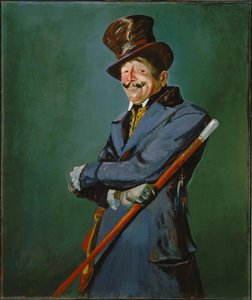
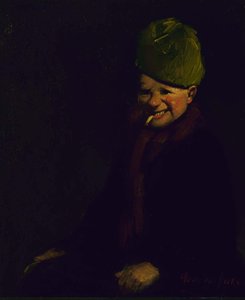
Luks’s paintings are characterized by their vigorous brushwork, bold compositions, and unflinching portrayal of urban life. He didn't shy away from depicting the poverty, hardship, and social inequalities that plagued early 20th-century America. His subjects were often drawn from the streets of New York City – cab drivers, street performers, laborers, and ordinary people going about their daily lives. The Cabby, for example, is a powerful depiction of a working man, his face etched with weariness but radiating a quiet dignity. Similarly, Sulky Boy captures the vulnerability and introspection of youth with remarkable sensitivity. Luks’s technique was as distinctive as his subject matter. He employed a thick impasto style, applying paint liberally to the canvas, creating a textured surface that seemed to vibrate with energy. His use of color was often muted, reflecting the grimy realities of urban life, but punctuated by flashes of brilliance that drew the viewer's eye.A Voice for the Underrepresented and Lasting Legacy
As a member of “The Eight,” Luks played a crucial role in challenging the established art world and paving the way for American modernism. The group’s independent exhibition in 1908 was a watershed moment, sparking controversy but also garnering attention for their innovative approach to painting. Luks wasn't simply interested in documenting reality; he sought to convey its emotional weight, its inherent drama. He wanted his paintings to be felt as much as seen. Beyond his artistic achievements, Luks was also a passionate advocate for American art and artists. He taught at the Art Students League, inspiring generations of young painters to embrace their own unique voices and perspectives. His influence can be seen in the work of countless subsequent artists who sought to capture the spirit of the urban experience. George Benjamin Luks died in 1933, leaving behind a body of work that continues to resonate with viewers today. His paintings are not merely historical documents; they are powerful testaments to the human condition, reminders of the struggles and triumphs of those whose stories might otherwise have been forgotten. He remains a vital figure in American art history, a champion of realism, and a voice for the underrepresented.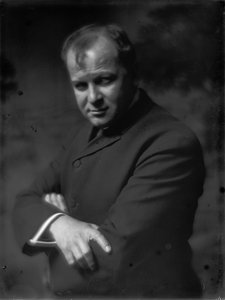
George Benjamin Luks
1867 - 1933 , United States of America
Quick Facts
- Artistic Movement Or Style: Ashcan School, Realism
- Artists Or Movements Influenced By This Artist: ['American Modernism']
- Artists Who Influenced This Artist:
- Velázquez
- Hals
- Manet
- Date Of Birth: 1867
- Date Of Death: 1933
- Full Name: George Benjamin Luks
- Nationality: American
- Notable Artworks:
- The Cabby
- Sulky Boy
- Coal Mining Town
- Place Of Birth: Williamsport, USA
Related Articles

White on Canvas: 10 Masterpieces & Timeless Elegance for Your Home Decor
Explore 10 iconic white paintings by Monet, Whistler & Rothko! Discover the stories behind these serene masterpieces and their impact on art history. Find museum-quality reproductions for your home decor at .
Giclée Prints: Archival Quality & Aesthetic Nuances for the Discerning Collector
Explore the world of giclée prints with ArtsDot. Learn about archival quality, aesthetic nuances & investment potential. Expert guidance for discerning art collectors seeking museum-quality reproductions and lasting value.

Dark Masterpieces: 10 Iconic Paintings Dominated by Black Tones |
Explore 10 iconic paintings dominated by black tones, from Rembrandt’s chiaroscuro to Goya's dark expressions. Discover the stories behind these masterpieces & find museum-quality art reproductions for your home at .

Monochrome Visions: Exploring the Aesthetic & Historical Significance of Black & White Photography
Explore the rich history & artistic power of black and white photography. From early techniques to iconic masters like Ansel Adams, discover why monochrome continues to captivate art lovers today. Expert insights for collectors.

The Enduring Legacy of Fine Art Prints: Technique, History & Aesthetic Impact
Explore the rich history & techniques of fine art prints. Discover investment potential, assess authenticity, and learn how to preserve your collection with expert guidance. Trusted insights for discerning collectors.