 Preview
 Send
Send Share
Share
 Details

 Download
 Similars
 X-Ray
X-Ray Diaporama
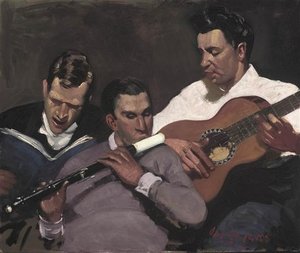
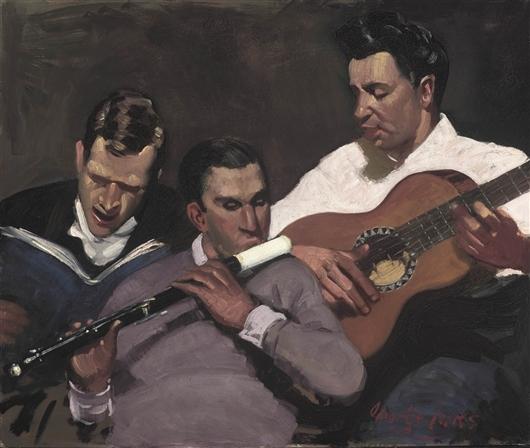
Three Top Sergeants


 Read More
Hand Made Oil Reproduction
Hand-painted oil on canvas in your size and frame, made to order by our artists. ( Buy Print Buy Image)




P118B $10

P118H $10

P118W $10

P438Z $10

P508JH $12

P508YH $12

P805H $10

P805Z $10

P919BZ $10

P919G $10

P919XJ $10

P959ZH $10

P968JZ $12

W106C $8

W218G $10

W218JH $8

W218Y $10

W307PJ $10

W316G $10

W316PJ $8

W316Y $10

W398PJ $8

W4111J $10

W500HY $15

W500JH $15

W692G $12

W849H $8

W940BG $15

W953PJ $8




Pick from our preset sizes that match the artwork's original proportions.

You may enter your own dimensions to fit a specific frame or space. If your selected size does not match the original image's proportions, we will either crop the artwork or extend the painting with additional hand-painted elements. A digital mockup will be sent for your approval before production begins.
Please note that the on-screen preview does not reflect the actual cropping or extension. Only the mockup will accurately show the final composition.
While custom sizes are available, we recommend selecting a dimension from the predefined list to preserve the original proportions.
After order, ArtsDot.com team will email client for instructions and provide a mockup preview
Worldwide Delivery () in 3/4 weeks instead of standard 5 weeks. (17 August). No compromise on quality.

Free Worldwide Express Shipping

High-Quality Linen Canvas

Full Shipping Insurance

Customs Tax Refund Guarantee

True Color Matching Guarantee

60-Day Return Policy (Defects Only)

100% Money-Back Guarantee

Bulk Discount Offer
 Glass option is only available in size under 110 CM

Three Top Sergeants
Reproduction Medium
Reproduction Size
-


Total Price
$ 263
Artwork Description
A Snapshot of Urban Grit: George Benjamin Luks’s “Three Top Sergeants”
George Benjamin Luks's "Three Top Sergeants," painted in 1925, isn’t merely a depiction of three men playing musical instruments; it’s a vibrant distillation of early 20th-century American life—a raw, honest portrayal of camaraderie and the shared pursuit of joy amidst the often-grim realities of urban existence. The painting immediately draws the eye with its dynamic composition and bold use of color, a hallmark of Luks's distinctive style within the Ashcan School movement. It’s a scene brimming with energy, capturing a fleeting moment of connection against a backdrop of shadowed intimacy.
Luks, born in Williamsport, Pennsylvania, to Polish and German immigrant parents, brought a deeply rooted empathy for the working class to his art. His early life, shaped by witnessing poverty and hardship, instilled within him an acute awareness of human resilience and the importance of community. This background profoundly influenced his artistic vision, leading him to eschew idealized representations in favor of gritty realism that exposed the complexities and struggles of everyday people. His time as a vaudeville performer further honed his observational skills and understanding of human behavior – elements he expertly translated onto canvas.
The Ashcan School and Luks’s Distinctive Style
“Three Top Sergeants” firmly places itself within the context of the Ashcan School, an American art movement that emerged in New York City around the turn of the 20th century. Rejecting the academic traditions of the time, Ashcan artists sought to depict contemporary urban life with unflinching honesty and a rejection of romanticized notions. Luks’s work is characterized by its loose brushwork, vibrant color palette, and focus on ordinary subjects—street musicians, dockworkers, and immigrants—often rendered in dynamic poses and engaging compositions. He deliberately avoided polished surfaces, opting for a more immediate and visceral impact.
Notice the artist's masterful use of light and shadow. The scene is bathed in a muted, almost theatrical darkness, drawing attention to the figures illuminated by the warm glow emanating from their instruments. This strategic lighting not only creates visual interest but also subtly suggests a sense of intimacy and shared experience—a private moment of connection within the bustling city.
A Symphony of Instruments and Human Connection
The composition itself is meticulously crafted to convey a feeling of lively interaction. The three men – one playing a pipe organ, another a guitar, and the third a violin – are clustered closely together, their faces animated with concentration and enjoyment. Each instrument contributes to the overall musical narrative, while simultaneously symbolizing different facets of human expression. The pipe organ represents authority and tradition, the guitar embodies spontaneity and passion, and the violin evokes elegance and refinement.
The painting’s title, “Three Top Sergeants,” hints at a deeper layer of meaning. Sergeants were often associated with military precision and order, yet here they are relaxed, unbuttoned, and engaged in a shared activity—a deliberate subversion of expectations that underscores Luks's broader critique of societal norms. It’s a subtle commentary on the potential for harmony and connection to exist even within seemingly rigid structures.
Symbolism and Emotional Resonance
Beyond its immediate depiction, “Three Top Sergeants” resonates with themes of community, shared passion, and the enduring power of human connection. The act of playing music together transcends social barriers and creates a space for mutual understanding and appreciation. The painting’s raw energy and emotional intensity invite viewers to contemplate their own experiences of belonging and the importance of finding joy amidst adversity.
Reproductions of this powerful work offer a remarkable opportunity to bring Luks's evocative vision into any setting, adding a touch of urban grit and soulful warmth. It’s a testament to the artist’s ability to capture the essence of human experience with both honesty and grace—a timeless reminder that even in the midst of chaos, moments of connection can illuminate our lives.
Related Artworks
Artist Biography
A Life Forged in the Crucible of American Realism
George Benjamin Luks, a name synonymous with the gritty energy and unvarnished truth of early 20th-century America, was more than just a painter; he was a chronicler of an era. Born in Williamsport, Pennsylvania, in 1867 to immigrant parents – his father a Polish physician, his mother a German musician – Luks’s upbringing instilled within him a deep empathy for the struggles and triumphs of everyday people. This sensitivity would become the defining characteristic of his artistic vision. His early life was anything but conventional; before dedicating himself to canvas and brush, he and his brother trod the boards as vaudeville performers, honing an observational skill and understanding of human character that would later prove invaluable. It was a world of fleeting moments, exaggerated gestures, and raw emotion – a training ground for capturing the essence of life itself. This period instilled in him a love for performance and spectacle, elements subtly woven into the dynamic compositions of his paintings.From European Studies to the Ashcan School
Luks’s formal artistic education began at the Pennsylvania Academy of the Fine Arts, but it was his subsequent travels to Europe that truly shaped his aesthetic sensibilities. He immersed himself in the works of the Old Masters – Velázquez and Hals particularly resonated with him – absorbing their mastery of light, shadow, and characterization. However, he wasn’t merely imitating; he was synthesizing these influences into something uniquely his own. Upon returning to America, Luks found work as a newspaper illustrator, first in Philadelphia and then in New York City. This experience proved pivotal. It exposed him to the bustling streets, diverse populations, and stark realities of urban life – subjects that would dominate his artistic output for years to come. He connected with a circle of like-minded artists—Robert Henri, John Sloan, William Glackens—who shared a rejection of academic conventions and a desire to depict the world as they saw it, honestly and without pretense. This collective spirit gave rise to what became known as the Ashcan School, a movement that challenged the prevailing artistic norms and celebrated the beauty in the mundane.Capturing the Pulse of Urban Life
Luks’s paintings are characterized by their vigorous brushwork, bold compositions, and unflinching portrayal of urban life. He didn't shy away from depicting the poverty, hardship, and social inequalities that plagued early 20th-century America. His subjects were often drawn from the streets of New York City – cab drivers, street performers, laborers, and ordinary people going about their daily lives. The Cabby, for example, is a powerful depiction of a working man, his face etched with weariness but radiating a quiet dignity. Similarly, Sulky Boy captures the vulnerability and introspection of youth with remarkable sensitivity. Luks’s technique was as distinctive as his subject matter. He employed a thick impasto style, applying paint liberally to the canvas, creating a textured surface that seemed to vibrate with energy. His use of color was often muted, reflecting the grimy realities of urban life, but punctuated by flashes of brilliance that drew the viewer's eye.A Voice for the Underrepresented and Lasting Legacy
As a member of “The Eight,” Luks played a crucial role in challenging the established art world and paving the way for American modernism. The group’s independent exhibition in 1908 was a watershed moment, sparking controversy but also garnering attention for their innovative approach to painting. Luks wasn't simply interested in documenting reality; he sought to convey its emotional weight, its inherent drama. He wanted his paintings to be felt as much as seen. Beyond his artistic achievements, Luks was also a passionate advocate for American art and artists. He taught at the Art Students League, inspiring generations of young painters to embrace their own unique voices and perspectives. His influence can be seen in the work of countless subsequent artists who sought to capture the spirit of the urban experience. George Benjamin Luks died in 1933, leaving behind a body of work that continues to resonate with viewers today. His paintings are not merely historical documents; they are powerful testaments to the human condition, reminders of the struggles and triumphs of those whose stories might otherwise have been forgotten. He remains a vital figure in American art history, a champion of realism, and a voice for the underrepresented.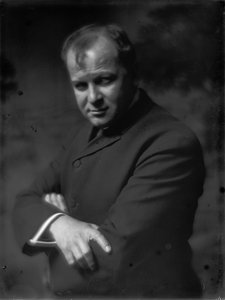
George Benjamin Luks
1867 - 1933 , United States of America
Quick Facts
- Artistic Movement Or Style: Ashcan School, Realism
- Artists Or Movements Influenced By This Artist: ['American Modernism']
- Artists Who Influenced This Artist:
- Velázquez
- Hals
- Manet
- Date Of Birth: 1867
- Date Of Death: 1933
- Full Name: George Benjamin Luks
- Nationality: American
- Notable Artworks:
- The Cabby
- Sulky Boy
- Coal Mining Town
- Place Of Birth: Williamsport, USA
Related Articles

Georges Braque's Masterpieces: 25 Paintings That Defined Cubism & Modern Art | ArtsDot
Explore 25 iconic Georges Braque paintings that revolutionized Cubism & modern art. Discover the stories behind his masterpieces, from Fauvism to Analytical Cubism. Find museum-quality reproductions & elevate your home decor with ArtsDot.com.

Georges Seurat's Masterpieces: 25 Paintings That Defined Pointillism | ArtsDot
Explore 25 iconic Georges Seurat paintings & discover the brilliance of Pointillism. From 'La Grande Jatte' to his harbor scenes, delve into art history with ArtsDot.com. Find museum-quality reproductions for your home decor. Explore the full collection online!
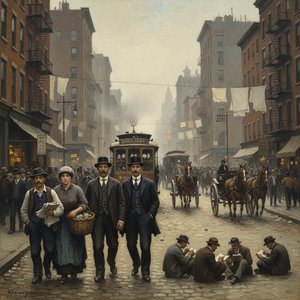
The Ashcan School: Realism, Urban Life & the Democratization of American Art
Explore the revolutionary Ashcan School! Discover how artists like Henri & Sloan challenged tradition with gritty realism, capturing urban life in early 20th-century America. Learn about their impact on American art history.
Staatliche Museen Berlin: 25 Masterpieces for Your Home | ArtsDot
Journey through 25 iconic artworks at Staatliche Museen Berlin! Explore Nefertiti, Pergamon Altar & masterpieces of German art history. Find museum-quality reproductions & curated decor ideas to bring timeless beauty home. Discover all masterpieces on ArtsDot.com.
Marianne North's Masterpieces: 25 Botanical Paintings That Bloom With Adventure | ArtsDot
Journey through the vibrant world of Marianne North’s botanical paintings! Explore 25 iconic artworks from this Victorian artist, celebrating exotic flora & travel. Find museum-quality reproductions and curated decor ideas at ArtsDot.com.