Early Life & Academic Foundations: Shaping a Russian Vision
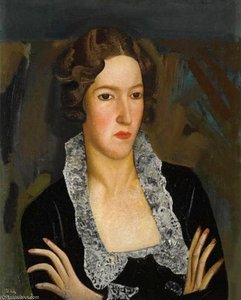
Boris Grigoriev (Russian: Бори́с Дми́триевич Григо́рьев; 11 July 1886 – 7 February 1939) was a painter, graphic artist, and writer. == Biography == Grigoriev was born in Rybinsk and studied at the Stroganov Art School from 1903 to 1907 with Dmitry ...
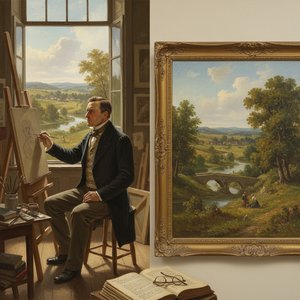
Boris Dmitrievich Grigoriev, born in the provincial town of Rybinsk in 1886, emerged as a powerful voice within the tumultuous landscape of early 20th-century Russian art. His artistic journey began not amidst grand estates or aristocratic patronage, but rooted in the everyday realities of Volga River life. Initial studies at the Stroganov Art School in Moscow (1903-1907) provided a foundational technical grounding, yet it was his subsequent enrollment at the Imperial Academy of Arts in Saint Petersburg (1907-1912) that truly shaped his aesthetic trajectory. Here, under the tutelage of masters like Alexander Kiselyov, Dmitry Kardovsky, and Abram Arkhipov, Grigoriev absorbed the traditions of Russian realism while simultaneously absorbing the burgeoning currents of modernism sweeping across Europe. This period wasn’t merely about mastering technique; it was a crucial phase of intellectual ferment, where he began to question conventional artistic approaches and forge his own distinct path. His early exhibitions as a member of the Union of Impressionists signaled an initial embrace of contemporary styles, but even then, a unique sensibility—a preoccupation with psychological depth and social observation—was beginning to emerge.
The 'Raseja' Series: A Stark Depiction of Peasant Life Before Revolution
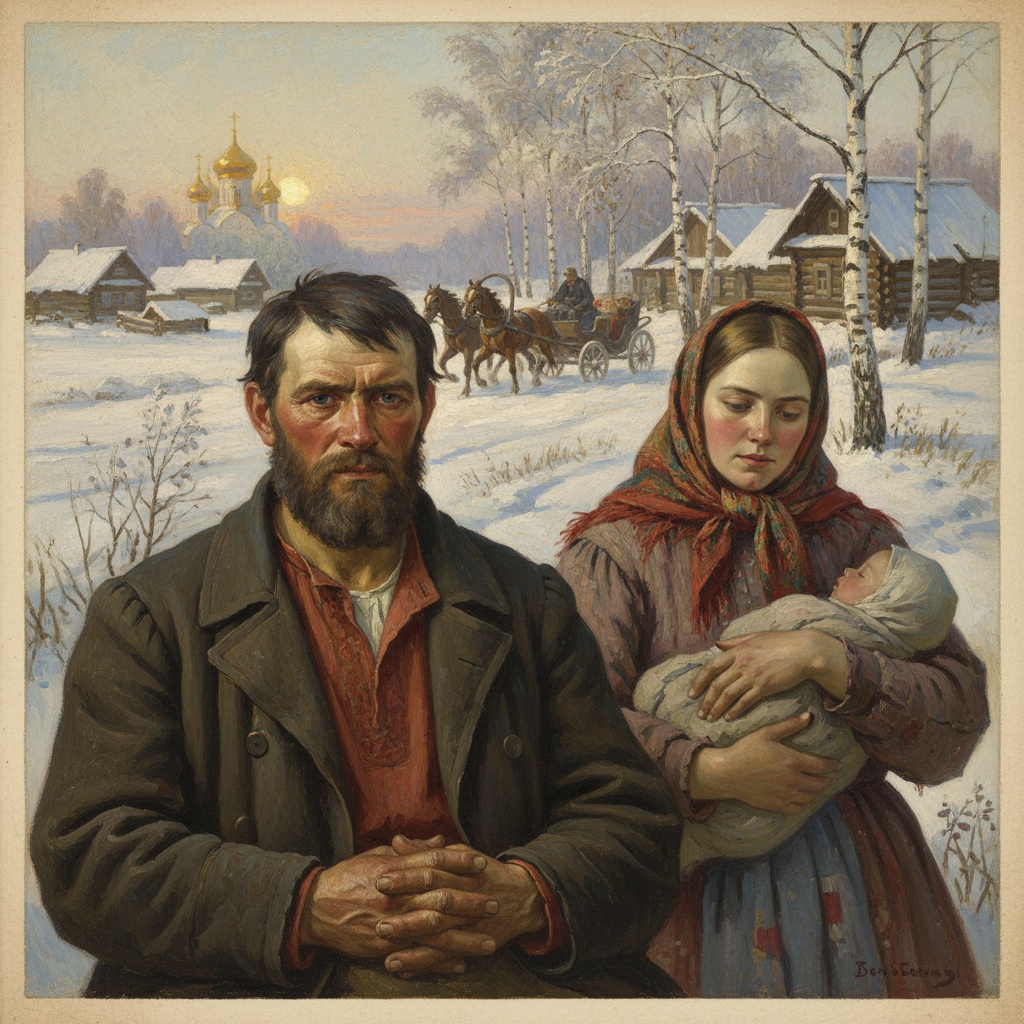
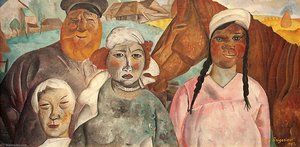 Peasant Family
Explore 'Peasant Family' by Boris Grigoriev – a poignant early 20th-century realist oil painting. Muted tones, expressive brushwork & social commentary evoke Russian life. A captivating piece for art collectors.
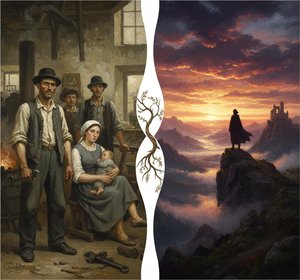
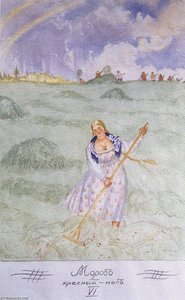
Grigoriev’s most groundbreaking work, the series known as ‘Raseja’ (roughly translated as “Peasant Russia”), stands as a visceral and often unsettling portrayal of rural life in the years preceding the 1917 revolution. Unlike idealized depictions common at the time, Grigoriev presented his subjects—peasants, laborers, and marginalized figures—with unflinching honesty. These weren't romanticized visions; they were raw, unvarnished glimpses into a world marked by poverty, hardship, and resilience. The stylistic choices were equally radical for their time: Cubist-inspired distortions and expressive brushwork conveyed not merely physical likeness but also the psychological weight of existence. The initial album, published in Petrograd in 1918, was met with mixed reactions; its stark realism clashed with both traditional expectations and the emerging Bolshevik aesthetic. Alexandre Benois, a prominent art critic, recognized the series’ power, praising Grigoriev for capturing “the very essence of Russia” on the cusp of upheaval. The album's initial poem, 'To her stepsons', set the tone for this unflinching look at a nation’s underbelly.
Grigoriev’s Portraiture: Intimacy, Psychology, and the Unsettling Gaze
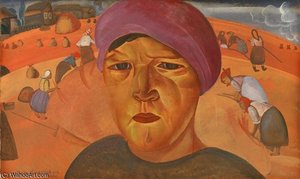 Russian Peasant Woman
Boris Grigoriev’s ‘Russian Peasant Woman’ – a haunting portrait from 1930s Russia. Explore this evocative work featuring a pink scarf & unsettling gaze. A unique piece by a significant Russian artist.
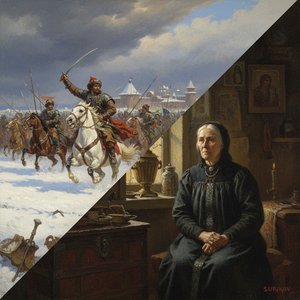
While ‘Raseja’ established Grigoriev's reputation, his portraits reveal an equally compelling mastery of psychological insight. He wasn’t interested in mere physical representation; he sought to capture the inner lives of his sitters—their anxieties, their hopes, and their quiet dignity. Works like “Russian Peasant Woman” (1930) exemplify this approach. The unsettling gaze of the subject, coupled with the subtle use of color and light, creates a profound sense of intimacy and vulnerability. A pink scarf provides a fleeting touch of warmth against a backdrop of muted tones, yet it cannot fully mask the hardship etched onto her face. His portraits often feature expressive brushwork that seems to animate the canvas, imbuing each figure with a unique personality. This wasn’t simply about painting faces; it was about revealing souls. The artist's ability to convey age and introspection in pieces like “Portrait of a Peasant Woman” demonstrates his skill in capturing the complexities of human experience.
Exile and Artistic Evolution: Influences & Themes in Grigoriev’s Later Work
The political turmoil following the Russian Revolution forced Grigoriev into exile, leading him on a peripatetic journey through Finland, Germany, France, and eventually the Americas. This period of displacement profoundly impacted his artistic development. Living abroad allowed him to reassess his relationship with Russia from a distance, fueling a renewed sense of nostalgia and longing. His time in Paris, particularly his exposure to Paul Cézanne’s work, led to a softening of his Cubist tendencies and a greater emphasis on color and form. However, he never abandoned his commitment to realism or his fascination with the human condition. His encounters with the Moscow Art Theatre during their European tours proved particularly influential, inspiring him to create portraits of actors in character—capturing not just their physical likeness but also the transformative power of performance. This period saw a blending of styles and themes, reflecting both his personal experiences and his evolving artistic vision.
Faces of Russia: A Comprehensive Project Reflecting a Nation's Identity
Genre painting (or petit genre) is the painting of genre art, which depicts aspects of everyday life by portraying ordinary people engaged in common activities. One common definition of a genre scene is that it shows figures to whom no identity can b...
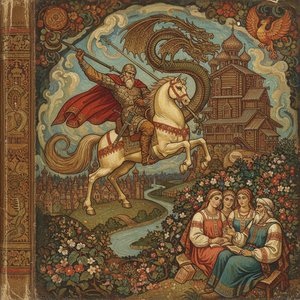
‘Faces of Russia’ (Liki Rossii), published in various editions throughout the 1920s, represents Grigoriev’s most ambitious undertaking—a comprehensive attempt to capture the multifaceted identity of his homeland. This wasn’t merely a collection of portraits; it was a carefully curated assemblage of images encompassing landscapes, interiors, actors, and studies of children. The project built upon the foundation laid by ‘Raseja’, expanding its scope to include a wider range of subjects and perspectives. The inclusion of essays by prominent intellectuals—Louis Reau, Andre Levinson, Claude Farrere, and Andre Antoine—underscores the work’s intellectual ambition and its attempt to engage with broader cultural debates about Russia's past, present, and future. Limited to 500 copies, each edition was a testament to Grigoriev’s dedication to preserving and celebrating his nation’s artistic heritage. The book offered a poignant reflection on Russian grandeur and suffering, resonating deeply with those who had been displaced by the revolution.
Grigoriev’s Legacy: Realism, Narrative, and Enduring Impact on Russian Art
Boris Grigoriev's life was marked by both artistic brilliance and personal upheaval. Though his career was cut short by his death in 1939, his legacy continues to resonate within the annals of Russian art history. He stands as a pivotal figure—a bridge between the traditions of realism and the innovations of modernism. His unflinching depictions of peasant life challenged conventional artistic norms and paved the way for future generations of socially conscious artists. His portraits remain particularly compelling for their psychological depth and emotional resonance, offering intimate glimpses into the lives of ordinary people. ArtsDot proudly offers a selection of Grigoriev’s most iconic works, allowing art enthusiasts to experience the power and beauty of his vision firsthand. Through our high-quality reproductions, you can bring the soul of Russia into your home—a testament to an artist who dared to look beyond appearances and capture the essence of a nation in transition. Explore Boris Grigoriev’s collection today and discover the enduring power of narrative realism.