The Vyatka Roots: Vasnetsov’s Early Life and Formation
 Wikipedia: Viktor Vasnetsov
Viktor Mikhaylovich Vasnetsov (Russian: Ви́ктор Миха́йлович Васнецо́в; 15 May [O.S. 3 May] 1848 – 23 July 1926) was a Russian painter and draughtsman who specialised in mythological and historical subjects. He is considered a co-founder of Russian fo...
Viktor Mikhaylovich Vasnetsov, a name synonymous with the vibrant reimagining of Russian folklore, wasn't born into the glittering world of imperial art academies but in the remote village of Lopyal, nestled within the Vyatka Governorate. This seemingly isolated upbringing proved to be the fertile ground from which his artistic vision would spring. Born in 1848, Vasnetsov’s childhood was steeped in the oral traditions and visual culture of rural Russia – a world brimming with ancient bylinas (epic poems), peasant artistry, and a deep connection to the land. His father, Mikhail Vasilievich, a priest and scholar fascinated by natural sciences, instilled in young Viktor a reverence for both knowledge and the spiritual undercurrents of Russian life. This early exposure wasn’t merely observational; Vasnetsov actively participated in this world, absorbing its stories and aesthetics. The family's relocation to Ryabovo during summers further cemented his connection to peasant life, fostering a genuine affection for the people whose narratives would later dominate his canvases.
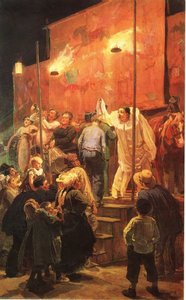
While initially drawn to formal study at the Saint Petersburg Academy of Arts, Vasnetsov’s path wasn’t immediate. He faced initial rejection and ultimately succeeded in 1868, but even within the rigid structure of academic training, a nascent desire for something beyond conventional historical painting began to emerge. His early works, though technically proficient – engravings depicting contemporary life like “Provincial Bookseller” (1870) – hinted at a growing dissatisfaction with simply mirroring reality. He sought a deeper resonance, a way to express the soul of Russia itself.
From Realism to Revival: The Shift in Artistic Focus
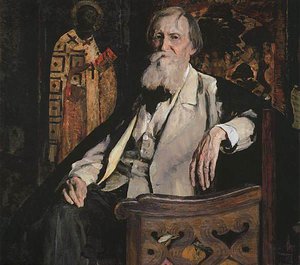 Portrait of Mikhail Nesterov
Explore Victor Vasnetsov’s ‘Portrait of Mikhail Nesterov,’ a 1926 Russian realist masterpiece. Admire its dramatic lighting, textured impasto & symbolic details – a captivating glimpse into early 20th-century art.
The 1870s marked a pivotal period for Vasnetsov. His time in Paris alongside Ilya Repin exposed him to both the established academic traditions and the burgeoning Impressionist movement. However, neither fully captured his imagination. While appreciating the technical mastery of French art, Vasnetsov felt an increasing pull towards subjects rooted in Russian history and mythology. This wasn’t a rejection of realism entirely; rather, it was a broadening of its scope. He began to explore the rich tapestry of fairy tales and epic poems, recognizing within them a powerful means of expressing national identity.
This shift wasn't without its challenges. The Peredvizhniki movement, championing social realism, initially viewed Vasnetsov’s foray into folklore with skepticism. They questioned whether these fantastical subjects were sufficiently “serious” or relevant to the pressing social issues of the time. Yet, Vasnetsov persevered, driven by a conviction that these stories held profound cultural significance. He wasn't simply illustrating tales; he was attempting to visually reconstruct a lost world, to breathe life into the heroes and creatures of Russian legend.
Bogatyrs and Fairytales: Constructing a National Identity Through Art
He is considered the co-founder of Russian folklorist and romantic nationalistic painting (see also neo-romanticism), and a key figure in the Russian revivalist ...Missing: Folk Revival , Revival
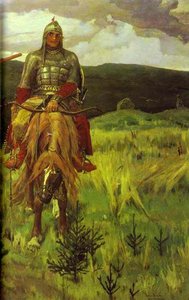
Vasnetsov’s most enduring legacy lies in his depictions of bogatyrs – the legendary heroes of Russian bylinas. “The Bogatyrs” (1898), perhaps his most famous work, is not merely a heroic tableau but a powerful statement about national character. The three warriors—Dobrynya Nikitich, Ilya Muromets, and Alyosha Popovich—represent different facets of the ideal Russian hero: strength, wisdom, and courage. Their imposing figures, rendered with meticulous detail and a sense of monumental grandeur, stand as guardians of the land, embodying the spirit of resilience and patriotism.
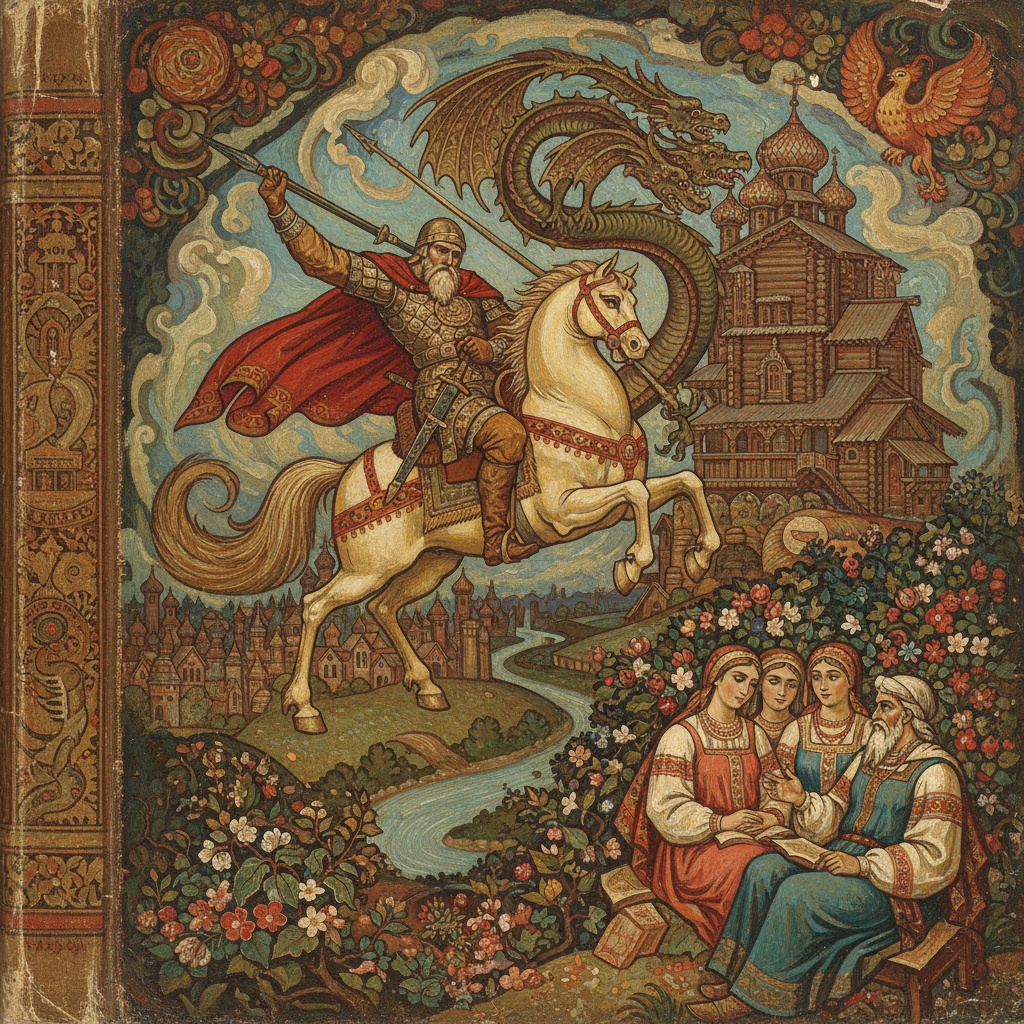
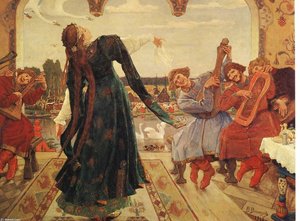
Alongside his bogatyr paintings, Vasnetsov’s fairytale illustrations captivated audiences. Works like “Alionushka” (1881) and “Ivan Tsarevich Riding a Grey Wolf” are imbued with a haunting beauty and psychological depth that transcends simple narrative illustration. He didn't merely depict the surface of these stories; he delved into their underlying symbolism, exploring themes of good versus evil, sacrifice, and the enduring power of hope. These paintings weren’t just for children; they were intended to awaken a sense of national pride and cultural awareness in viewers of all ages.
Symbolism and Spirituality: Deeper Layers of Meaning in Vasnetsov's Work
 Wikipedia: Russian symbolism
Russian symbolism was an intellectual, literary and artistic movement predominant at the end of the 19th and beginning of the 20th century. It arose separately from West European symbolism, and emphasized defamiliarization and the mysticism of Sophio...
While often categorized as a folklorist painter, Vasnetsov’s work is deeply intertwined with the broader currents of Russian Symbolism. His paintings are not simply representations of mythical events; they are laden with symbolic meaning, reflecting a search for spiritual truth and national identity. The landscapes in his works, for example, are rarely mere backdrops but often serve as metaphors for the Russian soul – vast, mysterious, and imbued with ancient power.
His “Crucifixion” (1904) demonstrates this depth most powerfully. Departing from traditional depictions of the scene, Vasnetsov’s version is set against a starkly realistic backdrop of Gothic architecture, emphasizing the human suffering and spiritual weight of Christ's sacrifice. This work reveals a profound religious sensibility underlying his entire oeuvre, suggesting that his exploration of folklore was ultimately driven by a desire to understand the deeper mysteries of faith and existence.
Vasnetsov’s Legacy: Influence on Subsequent Generations of Russian Artists
Victor Vasnetsov's impact on subsequent generations of Russian artists is undeniable. He co-founded a national-romantic style, inspiring countless painters to explore their own cultural heritage and reject the slavish imitation of Western models. His influence can be seen in the works of Mikhail Nesterov, whose religious paintings share a similar spiritual intensity, and Apollinary Vasnetsov, his brother, who focused on historical reconstructions of Old Moscow.
Even during the Soviet era, when official artistic doctrine favored socialist realism, Vasnetsov’s work retained its power. His images became synonymous with Russian history and culture, providing a visual link to a pre-revolutionary past. Today, his paintings continue to resonate with audiences worldwide, offering a glimpse into the soul of Russia and reminding us of the enduring power of myth, legend, and artistic vision.
Explore the captivating world of Victor Vasnetsov’s art at ArtsDot.com, where you can discover high-quality reproductions of his iconic masterpieces and bring the magic of Russian folklore into your home.