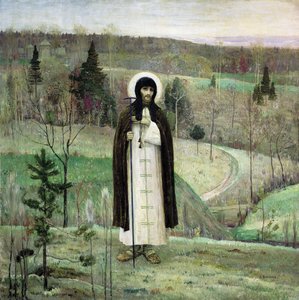
The Genesis of a Spiritual Vision: Nesterov’s Early Life & Influences
 Wikipedia: Mikhail Nesterov
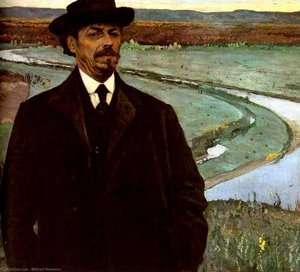
Mikhail Vasilyevich Nesterov (Russian: Михаил Васильевич Нестеров; 31 May [O.S. 19 May] 1862 – 18 October 1942) was a Russian and Soviet painter; associated with the Peredvizhniki and Mir iskusstva. He was one of the first exponents of Symbolist art ...
Mikhail Vasilyevich Nesterov, born in 1862 to a prosperous merchant family in Ufa, Russia, embarked on an artistic journey deeply intertwined with the burgeoning spiritual and intellectual currents of his time. While his father initially envisioned a practical career for his son, a nascent passion for art took root, nurtured by a household steeped in history and literature. This early exposure proved pivotal, shaping Nesterov’s later preoccupation with narrative depth and symbolic resonance. His formal training began at the Moscow School of Painting, Sculpture and Architecture, followed by studies at the Imperial Academy of Fine Arts – an experience he found somewhat stifling, preferring instead the guidance of Alexei Savrasov, a master of lyrical landscape painting. However, it was the profound influence of Vasily Perov, with his commitment to social realism and psychological insight, that truly resonated with the young artist, laying the groundwork for Nesterov’s distinctive style.
The loss of his wife in 1886 proved a watershed moment, prompting a period of intense introspection and a deepening exploration of faith. This personal tragedy catalyzed a shift away from purely historical subjects towards themes of spiritual longing and inner experience. Nesterov wasn’t merely depicting scenes; he was attempting to capture the very essence of belief, the quiet struggles and transcendent moments that define the human condition. His early works already hinted at this direction, but it would be his embrace of Symbolism that fully unlocked his artistic potential.
From Realism to Symbolism: A Turning Point in Artistic Expression
 Wikipedia: Russian symbolism
Russian symbolism was an intellectual, literary and artistic movement predominant at the end of the 19th and beginning of the 20th century. It arose separately from West European symbolism, and emphasized defamiliarization and the mysticism of Sophio...
The late 19th century witnessed a growing dissatisfaction with the perceived limitations of realism. Artists increasingly sought ways to express inner states, emotions, and spiritual truths beyond the confines of objective representation. This yearning found fertile ground in the Symbolist movement, which emphasized suggestion, allegory, and the power of evocative imagery. Nesterov’s transition wasn't abrupt; rather, it was a gradual evolution fueled by his own artistic temperament and the intellectual climate of Russia. He began to move away from detailed depictions of everyday life towards more ethereal compositions imbued with symbolic meaning.
While initially associated with the *Peredvizhniki* (Wanderers), a realist movement dedicated to portraying Russian life, Nesterov found himself increasingly drawn to the ideas of Vladimir Solovyov, a prominent religious philosopher whose writings explored themes of divine Sophia and the search for wholeness. This philosophical influence is palpable in his work, particularly in his use of color and light to create an atmosphere of mystery and spiritual depth. He wasn’t simply rejecting realism; he was *transcending* it, using its techniques as a foundation for something far more profound – a visual language capable of expressing the intangible realms of faith and intuition.
Iconography of the Soul: Exploring Key Themes in Nesterov's Paintings
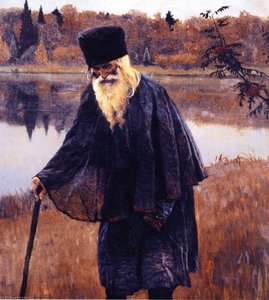 The Hermit
Discover Mikhail Nesterov’s ‘The Hermit,’ a captivating 1888 Russian realist painting of an elderly monk in serene nature. Explore its symbolism & unique brushwork.
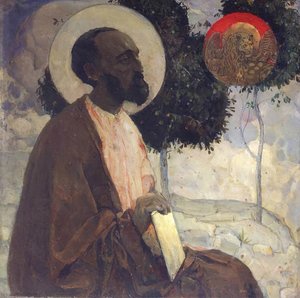
Nesterov’s paintings are characterized by a recurring set of themes—spiritual awakening, monastic life, the search for truth, and the beauty of the Russian landscape. He possessed an extraordinary ability to imbue ordinary scenes with symbolic weight, transforming them into powerful meditations on the human condition. His use of color is particularly noteworthy; muted tones of blues, greens, and violets create a sense of serenity and introspection, while carefully placed highlights draw the viewer’s eye to focal points of spiritual significance.
“The Hermit” (1888), arguably his breakthrough work, exemplifies this approach. The solitary monk, enveloped in the stillness of nature, embodies a profound sense of inner peace and detachment from the material world. Similarly, paintings like “Christ Blesses Bartholomew” demonstrate Nesterov’s skill in blending realism with impressionistic techniques to depict biblical scenes with remarkable emotional depth. He wasn't interested in literal representation; he sought to convey the *feeling* of faith, the transformative power of divine grace.
Saint Sergius and the Quest for Russian Identity
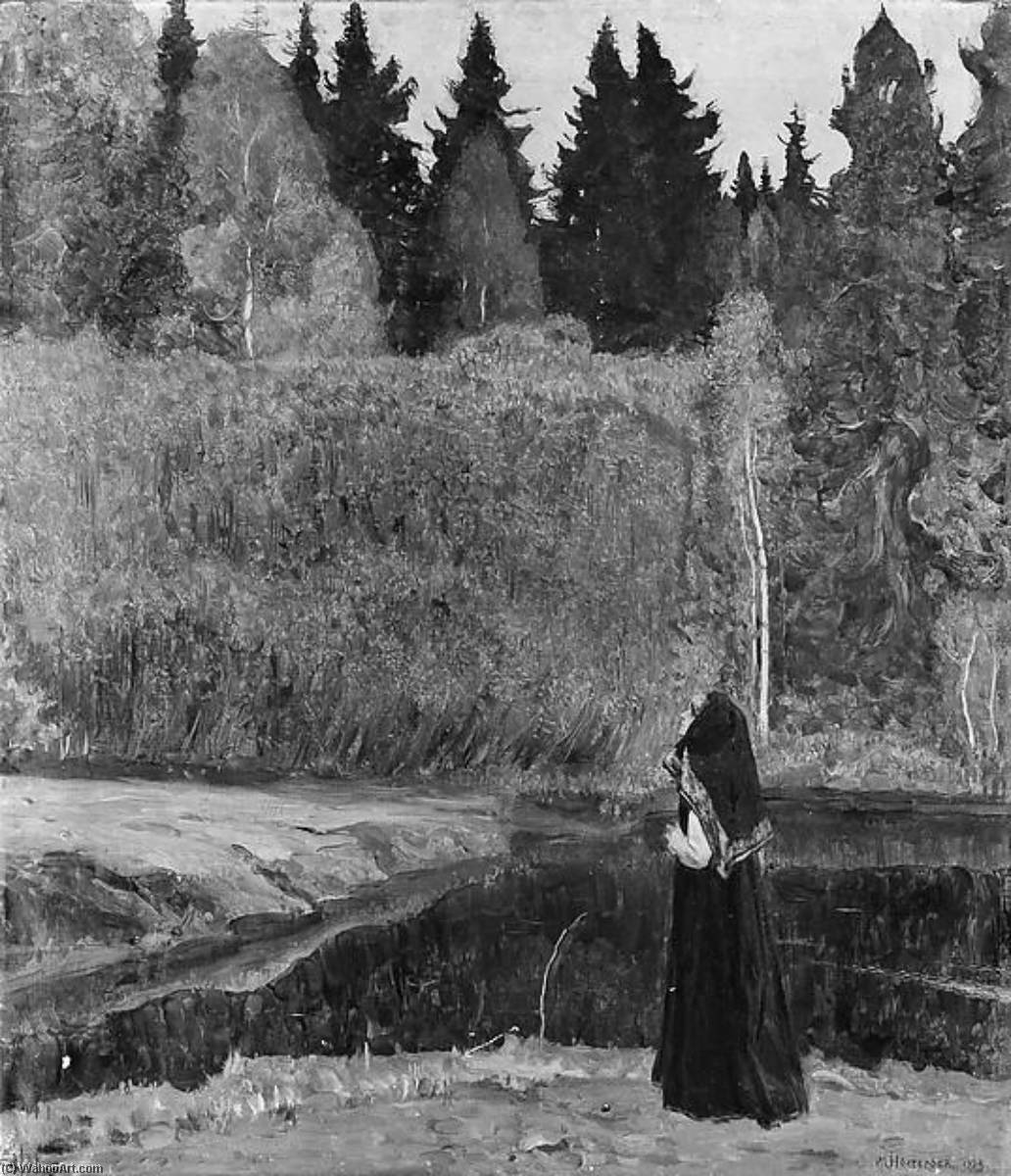 mikhail vasilievich nesterov
Discover Mikhail Nesterov's captivating Symbolist paintings! Explore his religious art, lyrical style & legacy of Russian masters – a true icon of the era.
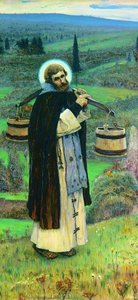
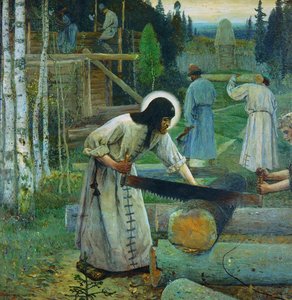
Perhaps no subject captivated Nesterov more than Saint Sergius of Radonezh, a 14th-century monk revered as one of Russia’s most important spiritual figures. Nesterov embarked on an ambitious series of paintings dedicated to the life of Saint Sergius, spanning decades and encompassing numerous canvases. This wasn't merely a religious commission; it was a deeply personal quest to understand the essence of Russian spirituality and national identity.
Saint Sergius represented for Nesterov the ideal of selfless devotion, unwavering faith, and profound connection with the divine. Through his depictions of Saint Sergius, he explored themes of humility, sacrifice, and the transformative power of prayer. The series became a visual chronicle of Russian spiritual history, reflecting not only the life of the saint but also the evolving cultural and political landscape of Russia itself. The paintings are imbued with a sense of national pride and a longing for moral renewal.
The Philosophers: A Portrait of an Era & Spiritual Dialogue
“The Philosophers” (1917), a double portrait of Pavel Florensky and Sergei Bulgakov, stands as one of Nesterov’s most iconic works. Painted in the tumultuous year of the October Revolution, it captures a pivotal moment in Russian intellectual history—a gathering of two brilliant minds grappling with profound questions of faith, philosophy, and the fate of Russia. The painting is remarkable for its psychological depth and symbolic resonance.
Florensky, depicted as serene and contemplative, embodies a quiet acceptance of his destiny, while Bulgakov’s more troubled expression reflects the anxieties and uncertainties of the era. The composition itself—two figures almost merging into one—suggests a shared spiritual quest, a dialogue between two souls seeking meaning in a world on the brink of upheaval. The rosy twilight background evokes images of Sophia, Divine Wisdom, further emphasizing the painting’s profound philosophical undercurrents.
Nesterov’s Legacy: Impact on Russian Art & Enduring Appeal
Mikhail Nesterov left an indelible mark on Russian art, bridging the gap between realism and Symbolism and paving the way for a new generation of artists. His paintings continue to resonate with audiences today, captivating viewers with their spiritual depth, emotional power, and exquisite beauty. He wasn’t merely a painter; he was a visionary—a seeker who dedicated his life to exploring the mysteries of faith, the beauty of nature, and the enduring quest for meaning.
His influence can be seen in the works of numerous subsequent artists, and his paintings remain highly sought after by collectors and museums worldwide. At ArtsDot, we are proud to offer high-quality reproductions of Nesterov’s masterpieces, allowing you to experience the beauty and spiritual power of his art in your own home. Explore our collection today and discover the enduring legacy of this remarkable Russian painter.