 Preview
 Send
Send Share
Share
 Details

 Download
 Similars
 X-Ray
X-Ray Diaporama
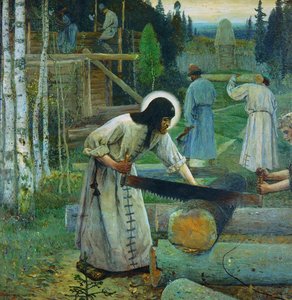
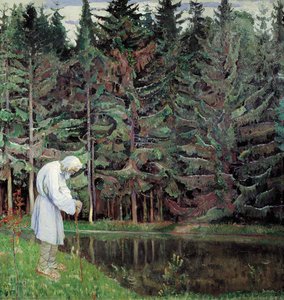
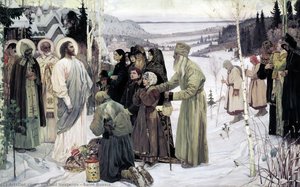
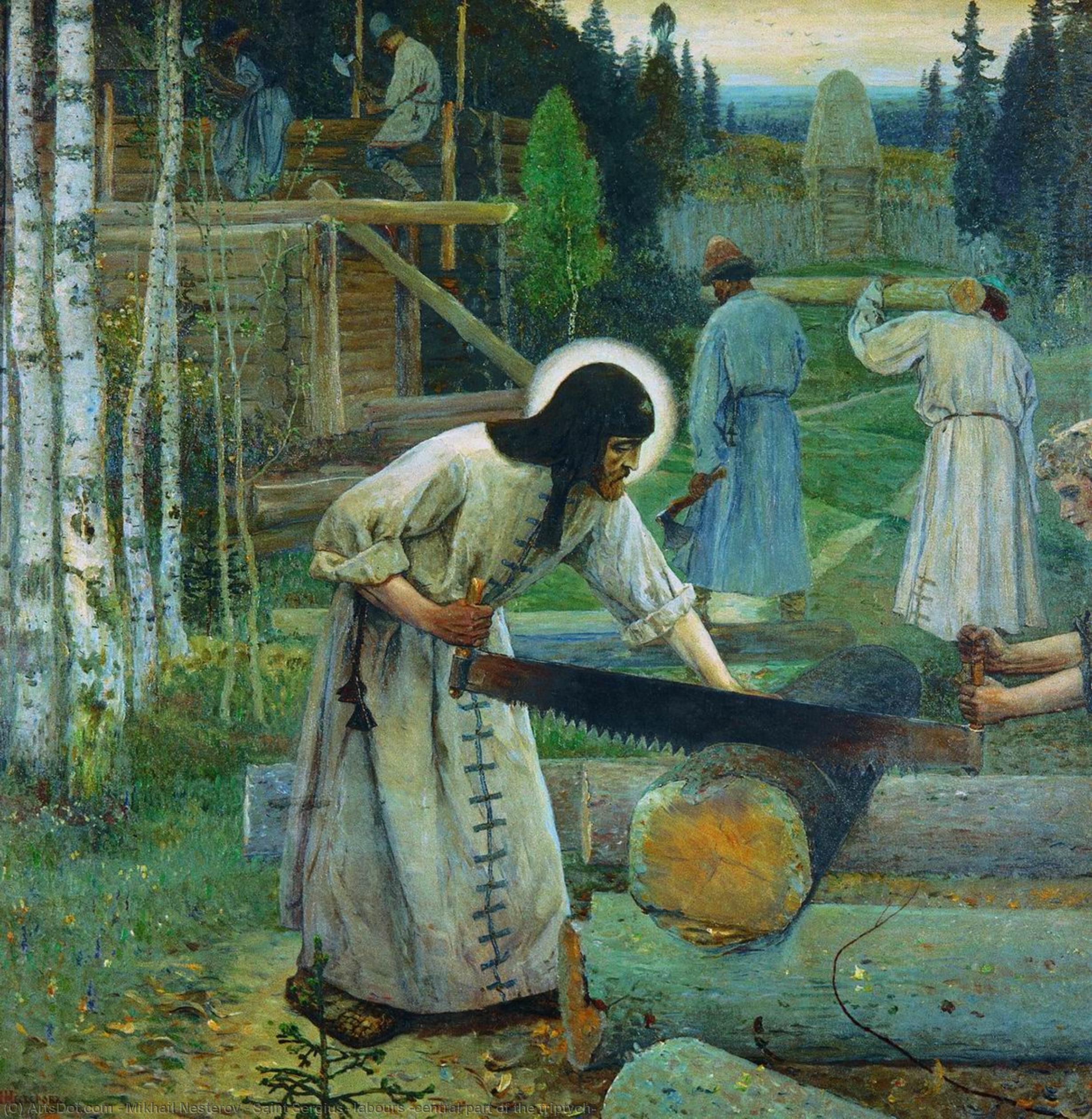
Saint Sergius' labours (central part of the triptych)


 Read More
Hand Made Oil Reproduction
Hand-painted oil on canvas in your size and frame, made to order by our artists. ( Buy Print Buy Image)




P118B $10

P118H $10

P118W $10

P438Z $10

P508JH $12

P508YH $12

P805H $10

P805Z $10

P919BZ $10

P919G $10

P919XJ $10

P959ZH $10

P968JZ $12

W106C $8

W218G $10

W218JH $8

W218Y $10

W307PJ $10

W316G $10

W316PJ $8

W316Y $10

W398PJ $8

W4111J $10

W500HY $15

W500JH $15

W692G $12

W849H $8

W940BG $15

W953PJ $8




Pick from our preset sizes that match the artwork's original proportions.

You may enter your own dimensions to fit a specific frame or space. If your selected size does not match the original image's proportions, we will either crop the artwork or extend the painting with additional hand-painted elements. A digital mockup will be sent for your approval before production begins.
Please note that the on-screen preview does not reflect the actual cropping or extension. Only the mockup will accurately show the final composition.
While custom sizes are available, we recommend selecting a dimension from the predefined list to preserve the original proportions.
After order, ArtsDot.com team will email client for instructions and provide a mockup preview
Worldwide Delivery () in 3/4 weeks instead of standard 5 weeks. (16 August). No compromise on quality.

Free Worldwide Express Shipping

High-Quality Linen Canvas

Full Shipping Insurance

Customs Tax Refund Guarantee

True Color Matching Guarantee

60-Day Return Policy (Defects Only)

100% Money-Back Guarantee

Bulk Discount Offer
 Glass option is only available in size under 110 CM

Saint Sergius' labours (central part of the triptych)
Reproduction Medium
Reproduction Size
-


Total Price
$ 263
Artwork Description
A Symphony of Spiritual Labor
In the heart of Mikhail Nesterov’s profound triptych, Saint Sergius' labours emerges not merely as a depiction of physical toil, but as a poetic meditation on the sanctity of work and the quiet strength of communal devotion. Created in 1896, this central panel captures a moment where the earthly and the divine intersect through the rhythmic motion of manual labor. The scene unfolds within a lush, verdant landscape, where a group of figures is gathered around the monumental task of felling a large tree trunk. At the focal point, a figure grips a heavy saw, his movements synchronized with those of his companions. There is an undeniable sense of unity and cooperation that radiates from the canvas; every limb and tool serves the collective purpose, transforming a mundane chore into a ritualistic dance of shared destiny.
Nesterov, a master of Russian Symbolism, breathes life into this scene through a technique that balances meticulous detail with an evocative, atmospheric softness. The surrounding forest acts as more than just a backdrop; it is a living, breathing participant in the narrative, its shadows and light playing across the backs of the workers to emphasize the physical weight of their task. The artist utilizes a palette that feels deeply rooted in the Russian landscape—earthy tones, deep greens, and the muted light of a forest clearing—to ground the spiritual themes in a tangible, tactile reality. For the discerning collector or interior designer, this piece offers a profound sense of tranquility and stability, making it an ideal centerpiece for spaces designed to inspire reflection and peace.
The Symbolism of the Sacred Mundane
To gaze upon this work is to understand Nesterov’s unique ability to find the miraculous within the ordinary. As a painter deeply immersed in the spiritual soul of Russia, Nesterov uses the act of cutting wood as a powerful metaphor for the cultivation of the spirit. The tree, massive and ancient, represents the challenges and the raw materials of life, while the collective effort of the men symbolizes the necessity of community and faith in overcoming monumental obstacles. There is no grand, flashy divinity present here; instead, the sacred is found in the sweat, the grip on the saw, and the silent communication between laborers.
This masterpiece serves as a timeless reminder of the beauty found in diligence and the quiet dignity of service. For those seeking to adorn a home or gallery with art that possesses both historical weight and emotional depth, this reproduction offers an unparalleled opportunity. It brings into a room not just a beautiful image of 19th-century Russian life, but a profound atmosphere of resilience and harmony. Whether placed in a study filled with books or a grand living space, the painting invites viewers to pause, breathe, and reconnect with the rhythmic, purposeful beauty of a life lived in service to a greater good.
Related Artworks
Artist Biography
A Life Immersed in Spirit and Symbolism
Mikhail Vasilyevich Nesterov, born on May 31st, 1862, in Ufa, Russia, was not merely a painter but a visual poet of the Russian soul. He emerged from a strongly patriarchal and merchant-based family where artistic inclinations were surprisingly nurtured; his father’s love for history and literature ignited within him a desire to translate stories and emotions onto canvas. This early encouragement led him to Moscow in 1874, enrolling at the Voskresensky Realschule—a pivotal step that set him on the path toward becoming one of Russia's most significant Symbolist painters. Formal artistic education began at the Moscow School of Painting, Sculpture and Architecture in 1877, where he studied under esteemed artists like Pavel Sorokin, Illarion Pryanishnikov, and Vasily Perov—the latter proving a particularly influential figure. Even during these formative years, Nesterov’s talent was evident as he began exhibiting his work with the school as early as 1879. A brief, unsatisfying period at the Imperial Academy of Fine Arts prompted a return to Moscow and further tutelage under Alexei Savrasov, solidifying his artistic foundation. These early experiences instilled in him a blend of realism and an emerging sensitivity to atmosphere and emotional depth that would characterize his mature style.
The Dawn of a Unique Vision
Nesterov’s breakthrough arrived with The Hermit (1889), a painting that immediately resonated with the public and critics alike. Its acquisition by Pavel Tretyakov, the renowned collector and founder of the Tretyakov Gallery, was not merely a financial transaction but a validation of Nesterov’s burgeoning artistic voice. This purchase afforded him the opportunity to travel extensively throughout Europe—Austria, Germany, France, and Italy—broadening his horizons and exposing him to diverse artistic traditions. However, it was upon his return to Russia that his true calling began to take shape. He became deeply engrossed in a monumental project: a series of works dedicated to the life of Saint Sergius of Radonezh, a spiritual figure who would dominate his creative energies for nearly half a century. This commitment wasn’t simply artistic; it was a profound exploration of Russian spirituality and asceticism—a yearning for meaning that permeated Russian culture at the time. Simultaneously, Nesterov navigated the complex currents of Russia's art scene, aligning himself with both the Peredvizhniki (The Wanderers), known for their realist depictions of social issues, and Mir Iskusstva (World of Art), a group championing aestheticism and symbolism. This dual affiliation reflects the inherent tension within his work—a blend of realism grounded in Russian life and an ethereal quality that hinted at deeper spiritual truths.
A Master of Religious and Portraiture
The commission to decorate St. Volodymyr’s Cathedral in Kiev in 1890 marked another turning point, immersing Nesterov in the world of Byzantine art and religious iconography. While he fulfilled his obligations, he often subtly infused his contributions with personal artistic expression—a testament to his independent spirit. This period saw him grapple with the constraints of commissioned work versus his own creative vision, a struggle that would continue throughout his career. Beyond religious themes, Nesterov excelled in portraiture, capturing the likenesses of prominent figures like Ivan Ilyin, Ivan Pavlov, and Sergei Yudin. His portrait of Ivan Pavlov (1935), for which he received the Stalin Prize in 1941, stands as a powerful testament to his ability to convey not just physical appearance but also intellectual depth and character. Throughout his career, Nesterov’s style evolved, moving from early realism towards a more lyrical and symbolic approach characterized by muted colors, soft brushstrokes, and an atmosphere of quiet contemplation. His landscapes often served as backdrops for spiritual narratives, blurring the lines between the earthly and the divine. He sought to capture not just what he saw but what lay beneath the surface—the inner lives and spiritual struggles of his subjects.
Legacy and Enduring Influence
Mikhail Nesterov passed away in Moscow on October 18th, 1942, leaving behind a rich artistic legacy that continues to inspire awe and reflection. His work represents a unique synthesis of Russian realism, Symbolism, and religious fervor. He wasn’t merely depicting scenes; he was attempting to capture the essence of the Russian soul—its yearning for spiritual meaning and its connection to the land. His paintings are not simply images to be admired but windows into a world of faith, contemplation, and profound emotional depth. Nesterov's influence can be seen in the works of subsequent generations of Russian artists who sought to explore similar themes of spirituality and national identity. His ability to imbue everyday scenes with symbolic weight and his masterful use of color and light continue to resonate with audiences today.
Key Works & Influences
Here are some pivotal pieces that define Nesterov’s artistic journey:
- The Hermit (1889): A defining work that launched Nesterov’s career, embodying the theme of spiritual solitude.
- The Vision to the Youth Bartholomew (series, 1889-1939): A lifelong project dedicated to the life of Saint Sergius, representing a profound exploration of Russian spirituality.
- Pavlov (1935): A masterful portrait that captures the intellectual and psychological depth of the renowned scientist.
Nesterov’s artistic development was shaped by several key influences: Vasily Perov, whose realist approach to social themes resonated with Nesterov's early work; Alexei Savrasov, who guided him in refining his technique and understanding of landscape painting; and Pavel Tretyakov, whose patronage provided crucial support and recognition. Ultimately, Mikhail Vasilyevich Nesterov stands as a towering figure in Russian art history—a painter who dared to explore the depths of the human spirit and translate those explorations into images of enduring beauty and power.
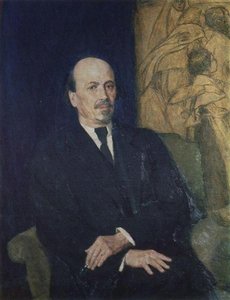
Mikhail Nesterov
1862 - 1942 , Russia
Quick Facts
- Artistic Movement Or Style: Symbolism, Religious art
- Artists Or Movements Influenced By This Artist: Russian Symbolists
- Artists Who Influenced This Artist:
- Vasily Perov
- Alexei Savrasov
- Date Of Birth: May 31, 1862
- Date Of Death: October 18, 1942
- Full Name: Mikhail Vasilyevich Nesterov
- Nationality: Russian
- Notable Artworks:
- The Hermit
- Pavlov
- Vision to Bartholomew
- Place Of Birth: Ufa, Russia
Related Articles
Mikhail Nesterov: Spiritual Quests & Symbolic Landscapes of Russian Symbolism
Explore the captivating world of Mikhail Nesterov, a pioneer of Russian Symbolism. Discover his spiritual themes, iconic paintings like 'The Hermit,' and lasting influence on Russian art history. Learn more at ArtsDot.
Ivan Bilibin: A Synthesis of Folklore, Modernism & National Identity in Russian Illustration
Explore the enchanting world of Ivan Bilibin, a master Russian illustrator who synthesized folklore, Art Nouveau & national identity. Discover his iconic fairy tale illustrations and legacy with ArtsDot.
Victor Vasnetsov: Myth, Nationalism & the Revival of Russian Fairy Tale Painting
Explore the captivating world of Victor Vasnetsov, a co-founder of Russian folklorist painting. Discover his iconic works, influence on national identity, and lasting legacy in this expert guide.

Fra Angelico's Masterpieces: 25 Renaissance Paintings for Your Home | ArtsDot
Explore 25 breathtaking masterpieces by Fra Angelico, a Renaissance master. Discover the stories behind his iconic frescoes, Annunciations & religious art. Find museum-quality reproductions and elevate your home decor with ArtsDot.com.

Spiritual Art: 10 Masterpieces to Inspire Your Soul |
Explore 10 spiritual art masterpieces – from Da Vinci to Van Gogh – that ignite inner peace & reflection. Discover their stories, techniques & emotional power. Find museum-quality reproductions & curated decor ideas at .