The Ancient Roots: Spirituality as Foundation of Early Art
From the ochre handprints pressed onto cave walls at Lascaux to the monumental architecture of ancient Egypt, art’s earliest expressions were inextricably linked with the spiritual realm. These weren't merely depictions of daily life; they were invocations, pleas, and attempts to understand a world perceived as governed by forces beyond human comprehension. The very act of creation—transforming raw materials into representations of animals, deities, or abstract concepts—was imbued with sacred power. Consider the Egyptians’ elaborate funerary art, designed not simply to commemorate the deceased but to ensure their safe passage into the afterlife. The precision and symbolism within these works – the jackal-headed Anubis guiding souls, the weighing of the heart against the feather of Ma'at – reveal a complex cosmology and a profound belief in continuity beyond death. Similarly, early Mesopotamian votive figures, small sculptures left as offerings to the gods, demonstrate a desire for divine favor and protection. These nascent forms of artistic expression weren’t about aesthetic beauty in the modern sense; they were functional objects deeply embedded within religious practice.
Symbolism & Iconography: Deciphering Sacred Languages in Visual Form
Symbolism or symbolist may refer to: Symbol, any object or sign that represents an idea == Arts == Artistic symbol, an element of a literary, visual, or other work of art that represents an idea Color symbolism, the use of colors within various cu...
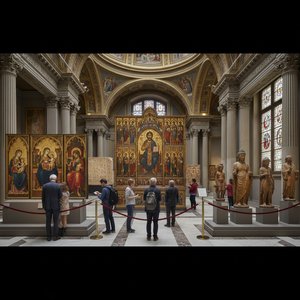
As civilizations evolved, so too did their methods of representing the spiritual. The development of symbolism and iconography provided a visual language capable of conveying complex theological ideas and narratives. The halo, originating in ancient Greek art but reaching its apex in Christian iconography, is perhaps one of the most recognizable symbols of sanctity. Initially depicted as simple circles, halos evolved into elaborate aureoles radiating light, signifying divine grace and holiness. But symbolism extends far beyond such readily identifiable motifs. Color itself became laden with meaning; gold representing divinity, blue symbolizing heaven, red embodying sacrifice or passion. The meticulous attention to detail in Byzantine mosaics wasn’t merely a display of artistic skill but a deliberate attempt to create an otherworldly experience for the viewer. Every element—the arrangement of figures, the choice of materials, the precise rendering of facial expressions—contributed to a larger theological message. Understanding these symbolic codes is crucial to unlocking the deeper meaning within religious art; it’s akin to learning a forgotten language that speaks directly to the soul.
Renaissance Devotion: Humanism, Faith, and the Pursuit of Spiritual Beauty
A halo (from Ancient Greek ἅλως, hálōs, 'threshing floor, disk'), also called a nimbus, aureole, glory or gloriole (Latin: gloriola, lit. 'little glory'), is a crown of light rays, circle or disk of light that surrounds a person in works of art. Th...
The Renaissance witnessed a remarkable confluence of humanism and faith. While rediscovering classical ideals of beauty and proportion, artists didn't abandon religious themes; rather, they infused them with a newfound sense of realism and emotional depth. Duccio di Buoninsegna’s *Maestà* back panel, depicting Pontius Pilate washing his hands, exemplifies this shift. The scene is rendered with meticulous detail, conveying not just the historical event but also the psychological turmoil of Pilate himself. This focus on human emotion—the guilt, doubt, and internal conflict—was a hallmark of Renaissance art. Similarly, artists like Michelangelo sought to portray biblical figures as idealized humans, imbued with both physical beauty and spiritual power. The frescoes in the Sistine Chapel aren’t simply illustrations of scripture; they are profound meditations on creation, sin, and redemption. This period saw a move towards representing the divine *through* humanity, rather than apart from it.
Beyond Representation: Abstract Expressionism and the Inner Landscape
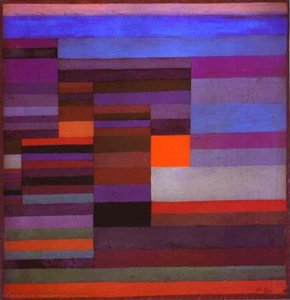
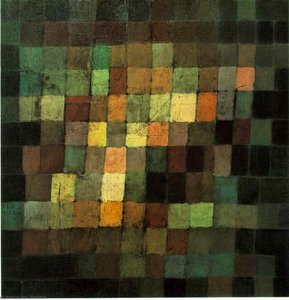
The 20th century brought radical shifts in artistic expression, challenging traditional notions of representation. Abstract Expressionism, emerging after World War II, sought to convey inner emotional states through non-figurative forms. While seemingly distant from religious iconography, artists like Mark Rothko explored spiritual themes through color and form. His large-scale canvases, often featuring layered blocks of saturated hues, aimed to evoke a sense of awe and transcendence. Paul Klee’s *Domestic Requiem* is another compelling example. Though abstract, the work is rich in symbolic imagery—warm colors suggesting comfort and loss, intricate line work hinting at hidden narratives. These artists weren't depicting specific religious figures or scenes; they were attempting to tap into a universal spiritual experience, exploring themes of mortality, longing, and the search for meaning. The canvas became a space for introspection and emotional release, a direct conduit to the artist’s inner world.
Eastern Traditions: Buddhism, Hinduism, and the Art of Enlightenment
Across Asia, art has long served as a powerful tool for spiritual practice and enlightenment. Buddhist art, in particular, emphasizes symbolism and meditation. The image of the Buddha, often depicted seated in lotus position, isn’t intended as a literal portrait but as a representation of inner peace and wisdom. The mudras—hand gestures—each convey specific meanings, guiding viewers towards understanding different aspects of Buddhist philosophy. Similarly, Hindu art is replete with complex iconography representing a vast pantheon of deities. The vibrant colors, intricate details, and dynamic compositions are designed to evoke devotion and connect the viewer with the divine. Gandhara Buddhas, blending Greek artistic influences with Buddhist themes, demonstrate the cross-cultural exchange of ideas and spiritual practices. These traditions emphasize the importance of visual aids in facilitating meditation and achieving enlightenment.
Contemporary Explorations: Spirituality in Modern & Surrealist Art
Today, artists continue to explore spirituality through a diverse range of mediums and styles. Ștefan Pelmuș, a contemporary Romanian painter, masterfully blends surreal symbolism with deep spiritual roots in folklore and Orthodox Christian faith. His works often feature enigmatic figures and dreamlike landscapes, inviting viewers to contemplate the mysteries of existence. Artists like Mikhail Nesterov, known for his iconic depictions of Russian hermits and religious scenes, continue to inspire through their exploration of inner contemplation and spiritual longing. Even artists working outside explicitly religious frameworks can be seen as engaging with spiritual themes—exploring concepts of identity, mortality, and the human condition. Mark Luyten’s evocative paintings and installations delve into biblical narratives and the search for meaning in a secular world. The spirit in art remains a potent force, reflecting our enduring need to connect with something larger than ourselves.