The Birth of an American Aesthetic: Defining the Hudson River School
Before the roar of industrialization reshaped the continent, there existed a profound, quiet reverence for the untamed wilderness of North America. This was the era that birthed the Hudson River School, the first truly indigenous art movement in the United and States. It wasn't merely about painting trees or rivers; it was an ambitious attempt to forge a national identity through the lens of the landscape. While Europe looked toward classical ruins and ancient myths for inspiration, American artists turned their gaze inward, finding a sense of grandeur and divinity in the sprawling forests, jagged mountains, and winding waterways of their own backyard.
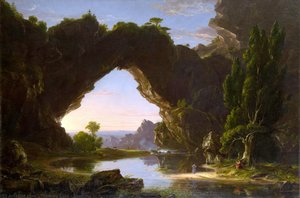
At the heart of this movement was the visionary Thomas Cole, often regarded as the founder of this prestigious school. His works were not just depictions of scenery but complex allegories that explored the tension between civilization and nature. Through his masterful use of oil on canvas, Cole established a visual language that could communicate the weight of history and the promise of a new world. This movement provided a way for a young nation to see itself—not as a colonial outpost, but as a land of epic proportions and spiritual significance.
Chasing the Sublime: Dramatic Landscapes and Spiritual Depth
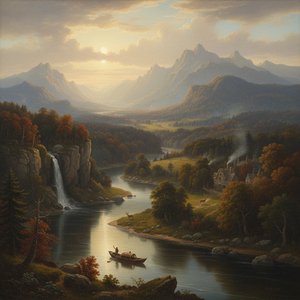
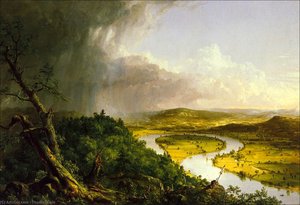
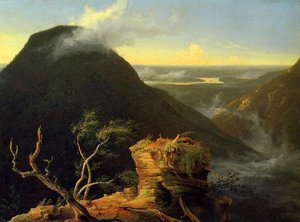
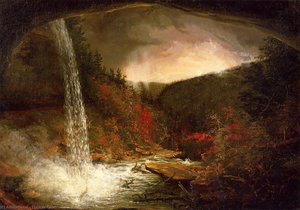
To understand the Hudson River School, one must grasp the concept of the sublime. In the lexicon of 19th-century Romanticism, the sublime refers to an experience of greatness that is so vast it borders on the terrifying. It is the feeling of standing on the edge of a precipice or witnessing a violent thunderstorm over a mountain range—a moment where the sheer scale of nature humbles the human soul. This emotional intensity is palpable in iconic works like Cole’s "The Oxbow," where the dramatic contrast between the cultivated landscape and the wild, untamed river serves as a powerful meditation on change and destiny.
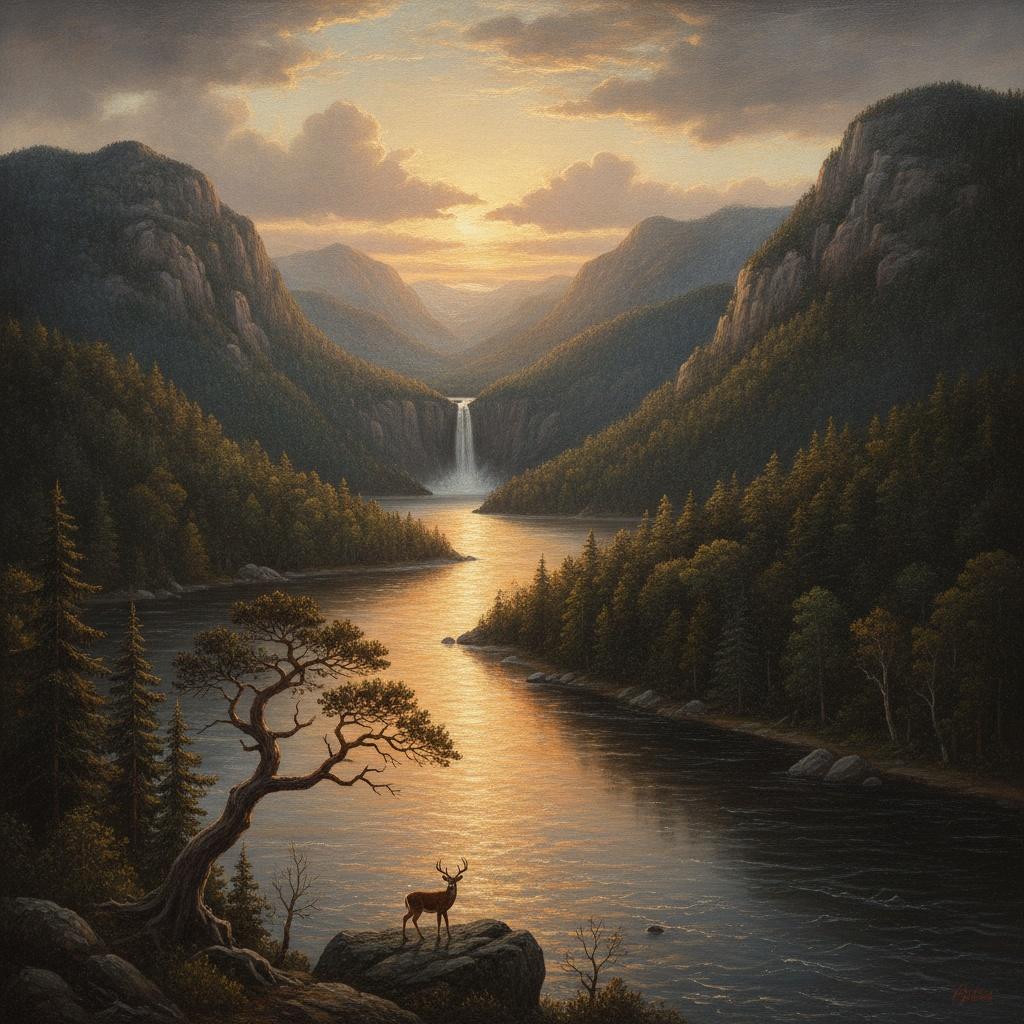
These artists sought to capture more than just topographical accuracy; they aimed for spiritual resonance. Every sweeping vista and dense thicket was imbued with a sense of the divine. The ruggedness of the terrain, seen in the works of artists like Jesse Talbot, often carried heavy atmospheric themes, suggesting that the American wilderness was a cathedral built by a higher power. By portraying nature in its most raw and powerful states, these painters invited viewers into a state of contemplation, bridging the gap between the physical world and the metaphysical realm.
Masters of Light: The Luminist Influence and Atmospheric Precision
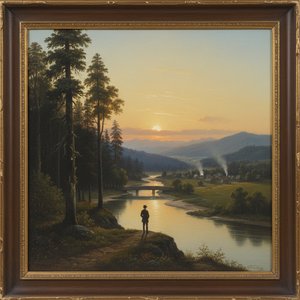
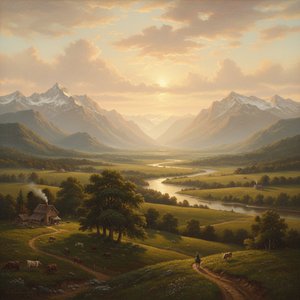
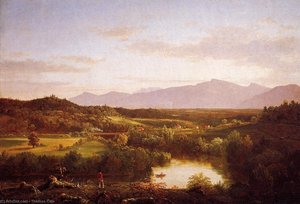
As the movement evolved, a specialized sub-style known as Luminism emerged, bringing a different kind of intensity to the canvas. If the earlier works focused on the dramatic and the turbulent, Luminists like Johann Hermann Carmiencke sought the serene and the transcendent. This style is characterized by an almost supernatural clarity of light, where the atmosphere seems to glow from within. The technique involves incredibly smooth brushwork—often so fine that the hand of the artist becomes invisible—creating a sense of stillness and eternal calm.
In paintings such as "Hudson River at Cold Spring," the water acts as a mirror, reflecting a sky so clear it feels tangible. This precision in capturing light, air, and moisture allowed artists to evoke a profound sense of peace. The focus shifted from the "terror" of the sublime to the "radiance" of the landscape. Through meticulous attention to tonal range and atmospheric perspective, these masters captured the fleeting moments of twilight and dawn, turning a simple river scene into a luminous, meditative experience that remains breathtaking even centuries later.
Beyond the Canvas: Historical Significance and the Romantic Legacy
The legacy of the Hudson River School extends far beyond the frames of their oil paintings. This movement played a crucial role in shaping the American consciousness, fostering an early appreciation for conservation and the intrinsic value of the natural world. The artists acted as visual chroniclers, documenting a landscape that was rapidly changing due to westward expansion and technological progress. Their work captured a sense of "lost Eden," creating a nostalgic archive of a wilderness that many feared was disappearing forever.
Bringing the Wild Indoors: Curating Timeless Nature for Modern Spaces
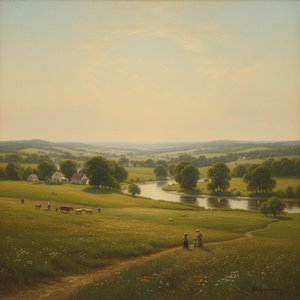
In our fast-paced, digital age, the quiet majesty of the Hudson River School offers a much-needed sanctuary. Integrating these epic landscapes into modern interiors provides more than just decoration; it introduces a sense of depth, history, and tranquility to a home. Whether it is the lush, summer greens found in William Mason Brown’s work or the moody, twilight hues of a New England scene, these paintings act as windows to another time and place.
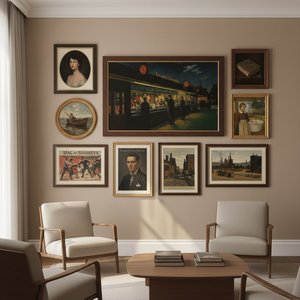
For the contemporary collector, the beauty of this era lies in its versatility. A large-scale reproduction of a sweeping vista can serve as a dramatic focal point in a minimalist room, while smaller, more intimate landscapes can add layers of texture and warmth to a study or library. By bringing these masterworks into our personal spaces, we continue the dialogue between humanity and nature, ensuring that the power of the wild remains a living, breathing part of our modern lives.
At ArtsDot.com, we are dedicated to preserving this incredible legacy. We specialize in creating museum-quality, hand-painted oil reproductions that capture the true soul of these masterpieces—from the visible, textured brushstrokes of the Romantic era to the smooth, light-drenched surfaces of Luminism. Whether you are looking to transform a personal photo into a classical masterpiece or seeking to adorn your walls with the breathtaking vistas of the Hudson River School, our master artists bring history to life on canvas.