



The Visual Revolution: Breaking the Rules of Academic Tradition
 Impressionist Realism: Mastering the Fusion of Vivid Light and Tactile Detail for Modern Collectors
The Visual Revolution: Breaking the Rules of Academic Tradition Impressionism: Art and Modernity - The Metropolitan Museum of Art --- title: Impressionism: Art and Modernity - The Metropolitan Museum of Art author: Margaret Samu url: https://www.metm...
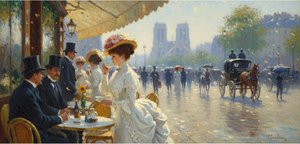
To truly appreciate the seismic shift of Impressionistic Realism, one must first envision the rigid, almost suffocating atmosphere of the 19th-century Parisian salons. For generations, the art world was governed by a disciplined pursuit of historical grandeur and mythological perfection. These academic codes demanded smooth, invisible finishes and somber, heavy palettes that prioritized the static dignity of history over the pulse of life. It was an era of polished perfection, where every brushstroke was hidden to maintain an illusion of untouchable, idealized reality.
However, as the world accelerated through the gears of industrialization and the birth of photography, a new breed of artist began to rebel against these suffocating constraints. They turned their backs on the epic battles of antiquity to find something far more radical: the beauty of the now. This movement was not merely a change in subject matter; it was a fundamental restructuring of how we perceive reality itself. By rejecting the sterile perfection of traditionalism, these artists paved the way for a style that prioritized the raw energy of life over the frozen monuments of the past.
This rebellion traded the heavy, dark shadows of the old masters for a vibrant, breathing canvas. It was a movement that allowed art to move from the pedestal of the museum into the very heart of human experience, making it accessible, emotional, and profoundly alive. For the modern collector, this era represents the birth of visual autonomy, where the artist's subjective experience became just as vital as the subject being painted.
Light as Protagonist: Capturing the Ephemeral Moment
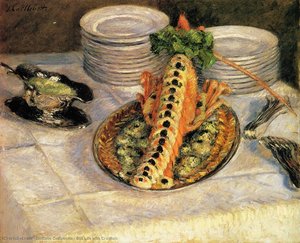 Still Life with Crayfish
A Sensory Feast on Canvas In the quiet intimacy of Still Life with Crayfish , created in 1882, Gustave Caillebotte invites us to a table that feels both timeless and profoundly immediate. At first glance, the eye is drawn to the vibrant, central figu...
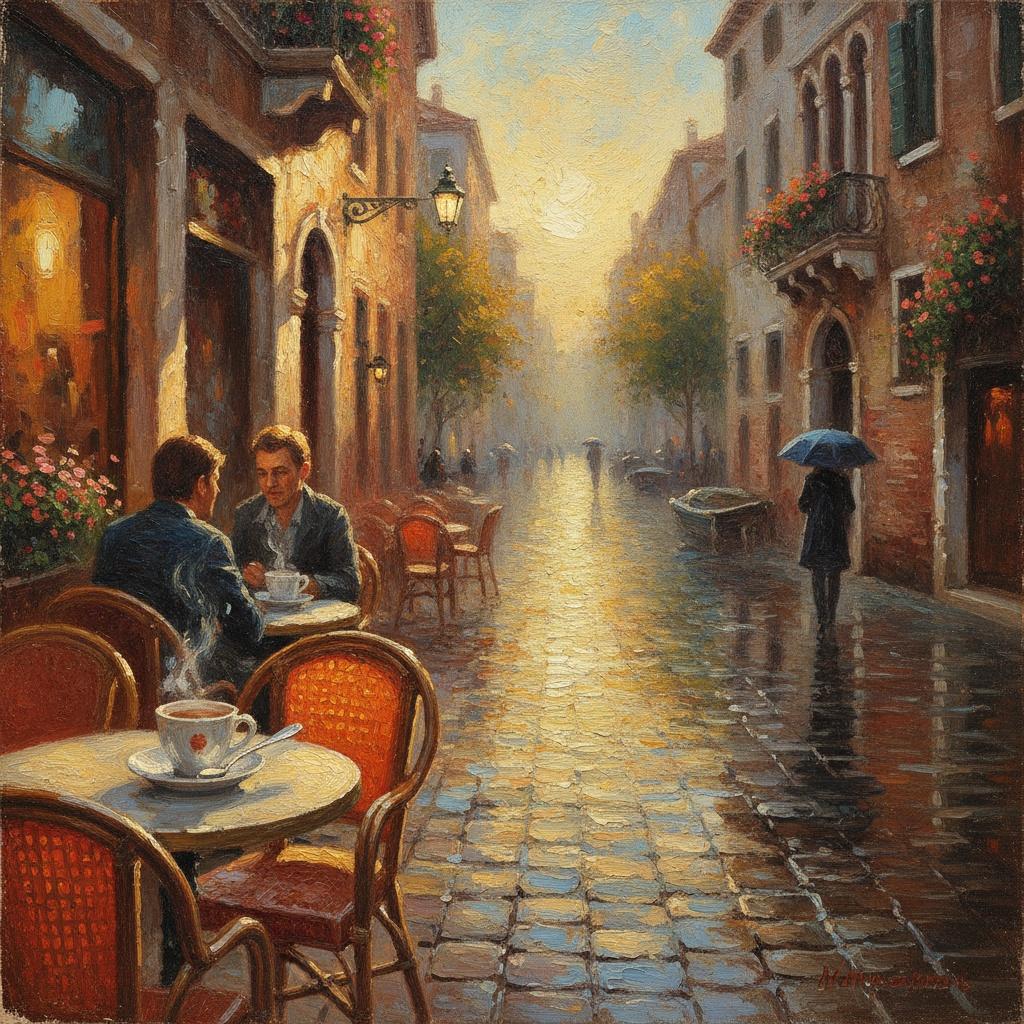
In the realm of Impressionistic Realism, light is no longer a mere tool for illumination; it becomes the protagonist of the narrative. The movement focuses on the way light interacts with different surfaces—the matte skin of a vegetable, the reflective sheen of a silver spoon, or the translucent quality of moisture on a shell. This fascination with the ephemeral allows a painting to capture a moment that feels both timeless and profoundly immediate.
Consider the masterful orchestration found in works like Gustave Caillebotte’s Still Life with Crayfish. Here, light is used to create a sensory feast, where the eye is drawn to the vibrant, central figure of the crayfish, its shell rendered with such precision that one can almost sense its cool, damp texture. The artist demonstrates a deep devotion to the nuances of light, capturing how it dances across organic forms and humble vegetables alike. This focus on the transient nature of light transforms a simple domestic scene into a study of atmosphere and mood.
This technique allows for a breathtakingly immersive experience. One might find themselves lost in the shimmering light of a summer afternoon or captivated by the way shadows shift across a landscape. By prioritizing atmosphere and fleeting emotion over meticulous, photographic detail, these artists invite the viewer to feel the warmth of the sun or the chill of a morning mist, bridging the gap between the canvas and the soul.
Tactile Depth: The Power of Texture and Impasto in Realism
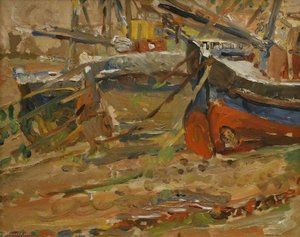 Orange and Blue Fishing Boat
Discover Peter Lanyon’s ‘Orange & Blue Fishing Boat’ (1936). An evocative oil painting of Cornish coastal life, showcasing Impressionistic realism & textured brushwork. Explore this unique artwork.
While Impressionism often focuses on the ethereal quality of light, Impressionistic Realism anchors that light with an incredible sense of physical presence. This is achieved through a masterful use of texture and the technique of impasto, where thick applications of paint create a three-dimensional surface. This tactile depth ensures that the artwork possesses a weight and volume that makes objects feel undeniably real.
The beauty of this style lies in the visible brushstroke. Unlike the smooth, almost invisible finishes of academic realism, the textured brushwork found in pieces like Mavis Blackburn’s Rooftops, Holmfirth or Peter Lanyon’s Orange and Blue Fishing Boat provides a rhythmic, energetic quality to the surface. These strokes do more than just define shape; they carry the energy of the artist's hand, adding a layer of human connection that a flat print simply cannot replicate.
For the discerning collector, this texture offers a deeper tonal range and a more profound engagement with the medium. The way light hits the raised ridges of paint creates micro-shadows on the canvas itself, constantly changing the painting's appearance depending on the viewer's perspective and the room's lighting. It is this interplay between the visual (light) and the tactile (texture) that defines the true mastery of the genre.
From Still Life to Landscape: Finding Beauty in the Everyday
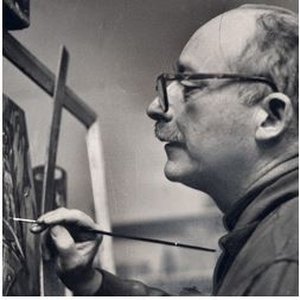 aaron bohrod
Aaron Bohrod: A Pioneer of Regionalism and Trompe-l'œil Illusion Aaron Bohrod (1907 – 1992) stands as a singular figure in American art, recognized primarily for his masterful execution of trompe-l’œil still lifes alongside an early commitment to soc...
One of the most enduring legacies of this movement is its elevation of the ordinary. Moving away from the exotic subject matter and exaggerated emotionalism of Romanticism, Impressionistic Realists sought to portray real and typical contemporary situations with truth and accuracy. They found profound dignity in the unidealized, finding magic in the mundane.
This can be seen in the intimate domesticity of still lifes, where a collection of humble vegetables or a simple meal being prepared becomes an evocative window into daily existence. There is a subtle symbolism at play in these arrangements—the bounty of the earth and sea presented on a simple table speaks to themes of abundance, nourishment, and the quiet dignity of life. Similarly, landscape works capture the rural charm of the countryside or the rugged beauty of coastal life, treating the landscape not as a backdrop, but as a living, breathing entity.
Even the urban landscapes of Chicago, through artists like Aaron Bohrod, utilized these principles to capture the grit and dignity of working-class neighborhoods. By focusing on the "real," these artists proved that art does not need grand historical themes to be significant; it only needs a keen eye for the beauty hidden within the everyday rhythm of human existence.
Curating the Fusion: Integrating Impressionistic Realism into Modern Interiors
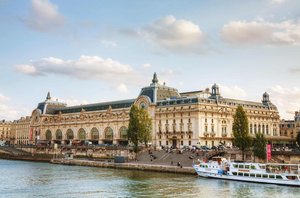 Musée d'Orsay
A Sanctuary of Light: Unveiling the Musée d'Orsay Nestled along the banks of the Seine in the heart of Paris, the Musée d’Orsay is far more than a mere repository for historical artifacts; it is an immersive journey through time and artistic revoluti...
For the modern collector and interior designer, Impressionistic Realism offers an unparalleled emotional anchor. These works possess a unique ability to provide both visual impact and a sense of historical depth, making them perfect for contemporary spaces that crave character. Because the style balances vivid, high-impact color with grounded, realistic forms, it integrates seamlessly into a variety of design aesthetics.
In a minimalist setting, a large-format textured landscape can serve as a powerful focal point, adding warmth and organic complexity to clean lines. In more eclectic or maximalist interiors, the vibrant energy of an Impressionistic still life can complement bold colors and diverse textures. The ability to "remix" this history—perhaps by requesting a modern photo be reimagined with the impasto style of Van Gogh—allows collectors to create truly bespoke environments that reflect their personal identity.
Ultimately, choosing art from this movement is about more than decoration; it is about bringing a piece of a visual revolution into your home. Whether through a multi-panel arrangement that spans a wide wall or a single, intimate portrait, these works invite a continuous dialogue between the viewer and the canvas, ensuring that your space remains as profoundly alive as the art that inhabits it.
About ArtsDot.com
Since 2004, ArtsDot.com has been dedicated to making fine art accessible to everyone. We specialize in high-quality, hand-painted reproductions on 100% cotton canvas, ensuring that the soul of the original—its brushstrokes, textures, and tonal depth—is preserved for modern collectors. From custom photo-to-oil transformations to large-scale architectural murals, our mission is to bring the beauty of the masters into the heart of your home. Explore our library of 465,000 works and start your own artistic journey today.