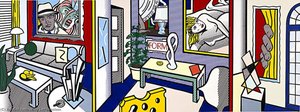
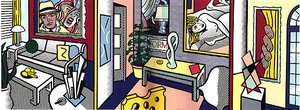
The First Impression: Why Pop Art is the Ultimate Lobby Power Move
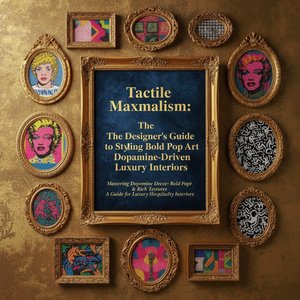
In the high-stakes arena of luxury hospitality, the lobby is not merely a transit point; it is a manifesto. It is the split second where a guest decides if your brand is a predictable standard or a cultural destination. For the modern hotel designer, the challenge lies in breaking through the noise of beige minimalism and generic luxury. This is where Pop Art enters the fray with unapologetic authority. Unlike the quiet, contemplative nature of classical landscapes that can fade into the background, Pop Art demands presence. It utilizes a visual language of high-contrast saturation and iconic imagery to create an immediate psychological anchor. When a guest walks into a space anchored by a vibrant Warhol-esque palette or a Lichtenstein-inspired graphic punch, they aren't just entering a room; they are stepping into a curated experience that feels alive, energetic, and profoundly contemporary.
The power of this movement lies in its ability to bridge the gap between high culture and street-level relatability. By utilizing recognizable motifs and bold, saturated hues, Pop Art triggers an instant dopamine response. It strips away the intimidation factor often associated with fine art galleries, replacing it with a sense of playfulness and cultural literacy. For a hotel brand looking to position itself as a leader in the urban lifestyle sector, integrating these high-impact pieces signals that the establishment is plugged into the pulse of the city, making it an essential destination for the design-conscious traveler.
Trend Forecast: High-Contrast Aesthetics for Modern Hospitality Design
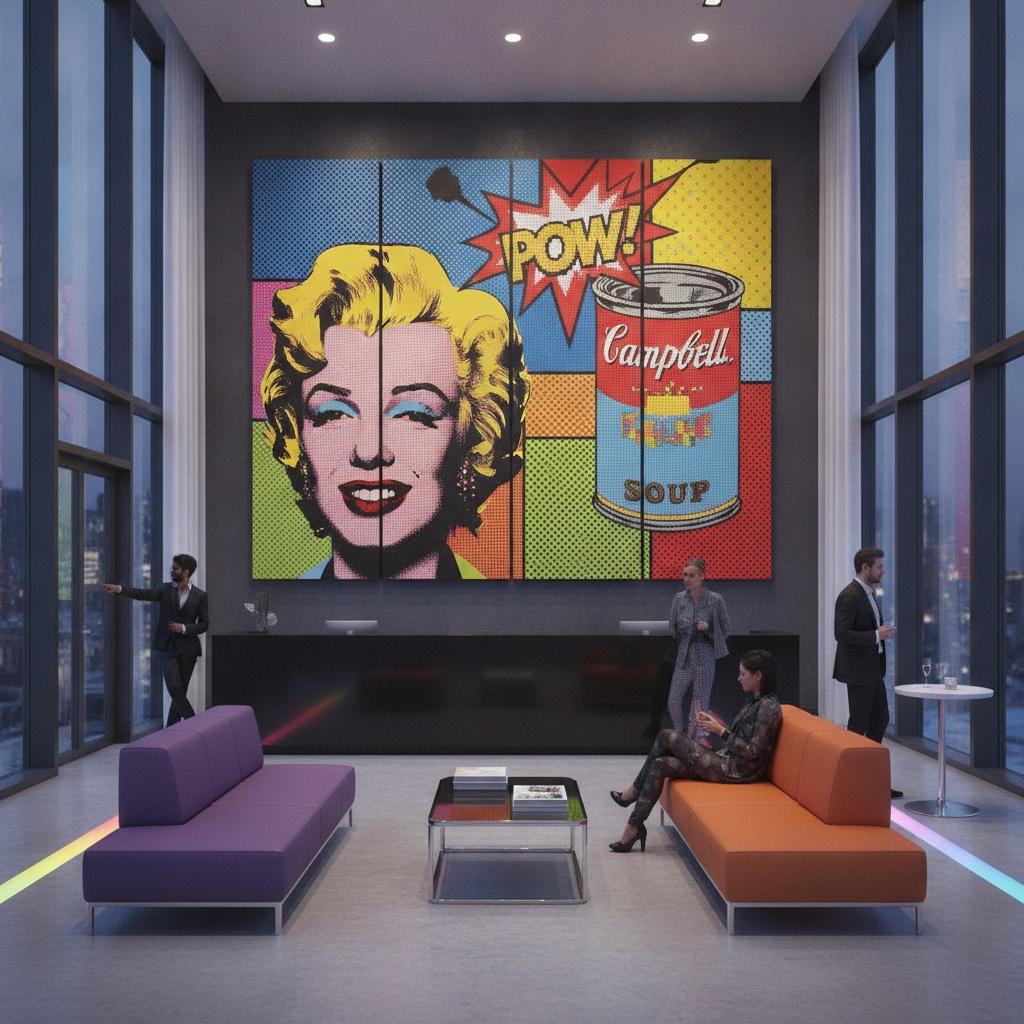
As we look toward the next era of interior architecture, the trend is moving decisively away from "safe" neutrals and toward a philosophy of visual friction. The most successful contemporary lobbies are those that master the art of the clash—pairing sleek, monochromatic architectural elements with the explosive energy of graphic art. We are seeing a surge in the use of deep, matte blacks and industrial grays as a canvas for hyper-saturated pigments. This isn't just about adding color; it is about using art to manipulate the perceived depth and temperature of a space. A single, large-scale reproduction featuring electric blues or neon pinks can act as a thermal center, warming up an otherwise sterile, glass-heavy atrium.
This trend forecast suggests that the future of hospitality lies in the "curated shock." Designers are increasingly looking for pieces that offer a sense of movement and rhythm. The use of dot patterns, heavy outlines, and flat color planes provides a structural rhythm that complements modern geometric furniture. By leaning into these high-contrast aesthetics, designers can create environments that feel both curated and spontaneous, much like the streets of London or New York. It is about creating a space that feels less like a hotel and more like a living, breathing piece of contemporary media.
From Statement Pieces to Immersive Environments: Scaling Art for Grand Atriums
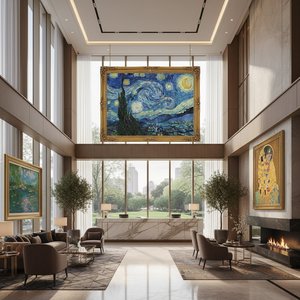
The scale of an artwork dictates the hierarchy of a room. In a grand hotel atrium, a standard-sized frame can easily be swallowed by the sheer volume of the architecture, becoming nothing more than a decorative afterthought. To truly command a space, the designer must think in terms of monumentalism. This involves moving beyond the single canvas and embracing the concept of the multi-panel installation. By splitting a singular, high-impact graphic across three, four, or even five large panels, you create a panoramic experience that guides the eye across the entire architectural expanse. This technique not only fills the vertical void of an atrium but also creates a sense of rhythm and continuity that mirrors the flow of foot traffic.
Scaling up is not merely about size; it is about the engineering of impact. When art is scaled to match the proportions of a soaring ceiling or a wide feature wall, it ceases to be an object in the room and becomes part of the room itself. This level of integration requires a sophisticated approach to composition, ensuring that the brushstrokes and color transitions flow seamlessly across the gaps between panels. When executed correctly, these large-scale works transform a lobby from a functional space into an immersive environment, where the architecture and the art exist in a state of permanent, breathtaking dialogue.
Curating the Vibe: Matching Bold Graphics with Luxury Furniture and Textures
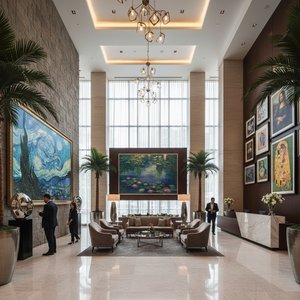
The true mastery of Pop Art integration lies in the delicate balance of textures. A common pitfall for designers is over-stimulating the senses, creating a space that feels chaotic rather than curated. The secret to a sophisticated lobby is the intentional pairing of "hard" graphics with "soft" luxury. Imagine a lounge area featuring deep, plush velvet armchairs in midnight navy, set against the backdrop of a vibrant, multi-colored Pop Art reproduction. The tactile softness of the velvet absorbs the visual intensity of the art, grounding the energy and providing a sense of comfort. Similarly, pairing sleek, polished marble floors with the flat, graphic planes of street-art-inspired works creates a sophisticated tension between organic luxury and man-made precision.
Designers should also consider the role of light in this curation. The way light interacts with different surfaces—the sheen of leather, the matte finish of a heavy oil painting, or the reflective surface of glass—can either unify or fragment the design concept. To achieve a cohesive vibe, use the art to pull colors from your furniture upholstery, creating a closed loop of visual information. When the color palette of a Bernardo Bernardi-style minimalist chair echoes a subtle tone within a larger Pop Art piece, the entire room feels intentional, expensive, and expertly composed.
Beyond the Frame: Custom Murals and Ceiling Frescoes for Architectural Impact
For those looking to push the boundaries of hospitality design, the ultimate frontier is the removal of the frame entirely. The transition from hanging art to architectural murals represents the pinnacle of immersive design. Large-format murals, painted on massive canvas rolls, allow designers to treat walls and even ceilings as continuous canvases. This approach allows for a level of customization that standard prints cannot match, enabling the creation of bespoke environments that are unique to a specific property. Imagine a ceiling fresco that reimagines a classic urban landscape in a contemporary, graphic style, effectively turning the entire lobby into a singular, breathtaking work of art.
This method of integration offers unparalleled opportunities for brand storytelling. A mural can incorporate subtle nods to the hotel's location, its history, or its specific design ethos, all while maintaining the high-energy aesthetic of the Pop Art movement. Because these works are applied similarly to high-end wallpaper but retain the depth and texture of hand-painted art, they provide a level of prestige that mass-produced decor can never achieve. It is the ultimate way to ensure that your lobby is not just seen, but remembered—a permanent, unshakeable landmark in the mind of every guest who enters.
For professionals seeking to execute these high-impact visions, ArtsDot.com provides the essential tools for bold contemporary design. Whether you are looking for a single statement piece or a complex, multi-panel installation, our collection is hard-filtered for maximum visual impact. We specialize in the vibrant, the graphic, and the unforgettable. From custom color matching to large-scale architectural solutions, we help designers transform empty spaces into cultural destinations. Elevate your next project with art that refuses to be ignored.