


The Edge of the Blade: Why Woodcut Art Hits Different
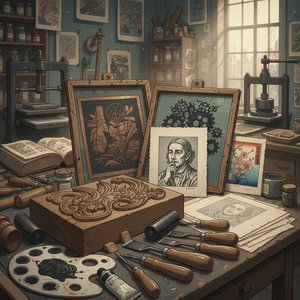
In a world saturated by the hyper-smooth, pixel-perfect precision of digital screens and AI-generated imagery, there is a profound, almost primal rebellion found in the grain of a woodcut. To look at a true relief print is to witness a physical struggle between the artist’s tool and the organic resistance of the medium. Unlike the effortless glide of a brush or the sterile click of a mouse, the woodcut demands a certain level of violence; it requires carving, gouging, and excavating. This process leaves behind an unmistakable energy—a high-impact tension that grabs you by the collar the moment you enter a room.
For the modern urban dweller, this isn't just about "old school" technique; it is about finding something with actual weight. There is a raw, unpolished truth in the way a carved line breaks against the wood grain. It possesses an edge that polished oil paintings sometimes lack, offering a gritty, street-ready aesthetic that feels more at home in a concrete loft or a design-heavy studio than a stuffy, gilded museum. When you choose art that celebrates this ruggedness, you aren't just decorating a wall; you are injecting a sense of authentic, tactile power into your environment.
Texture & Tension: The Visual Language of Relief Printing
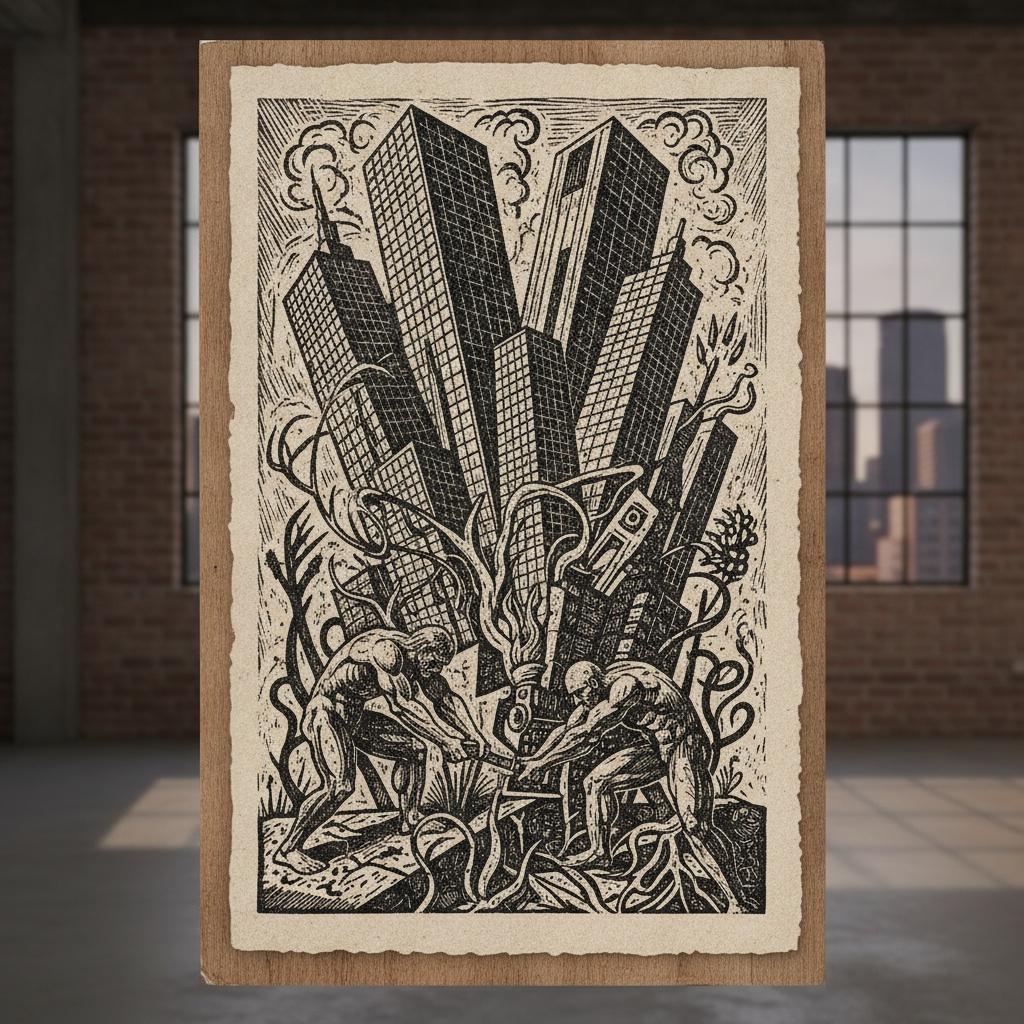
The magic of the woodcut lies in its binary nature—the dance between what is removed and what remains. Every white space on the paper represents a moment where the artist chose to strike away the material, leaving behind a void that defines the light. This creates a high-contrast visual language that is inherently dramatic. We see this tension most clearly in the way shadows are rendered; they aren't soft gradients or blended smudges, but sharp, decisive blocks of ink that command attention. It is a graphic punch that mirrors the bold aesthetics of pop culture and street art.
Beyond the contrast, there is the incredible depth of texture provided by the medium itself. Even in a flat print, the eye perceives the "memory" of the wood. You can almost feel the resistance of the fibers through the ink. This textured relief creates a rhythmic complexity that keeps the viewer engaged, pulling them into the intricate details of the carving. Whether it is the stylized blooms found in monochrome relief prints or the heavy, dark silhouettes of urban landscapes, the texture acts as a heartbeat for the artwork, providing a sense of movement and life that feels both ancient and incredibly contemporary.
From Street to Studio: The Ancestry of High-Impact Graphics
While we often associate woodcut techniques with historical masters like Hokusai or the intricate Japanese ukiyo-e tradition, the DNA of this medium is deeply woven into the fabric of modern visual rebellion. The same impulse that drove 19th-century printmakers to capture the essence of nature drives the street artists of today to claim the urban landscape. There is a direct lineage between the bold, carved lines of traditional woodblocks and the aggressive, stencil-heavy aesthetics of contemporary muralism. Both movements rely on the power of the silhouette and the impact of high-contrast imagery to communicate a message quickly and forcefully.
This connection is what makes woodcut art so culturally literate for today's generation. It bridges the gap between the fine art archives and the vibrant energy of the streets. When you look at the heavy, graphic weight of a modern street art mural, you are seeing the evolution of that same relief-printing logic—the ability to strip away the unnecessary until only the most potent, iconic form remains. This shared ancestry allows woodcut-style aesthetics to feel both prestigious and incredibly "now," making them the perfect choice for those who value art with a social edge and a design-conscious soul.
Curating the Chaos: Integrating Rugged Prints into Modern Interiors
Integrating such high-impact pieces into a modern interior requires a confident hand. Because woodcut-style art carries so much visual weight, it shouldn's be treated as mere background noise; it should be the protagonist of your space. In a minimalist setting, a single, large-scale graphic print can act as an anchor, providing a necessary point of friction against clean lines and neutral palettes. The ruggedness of the print breaks up the "perfection" of modern architecture, adding a layer of soul and grit that prevents a room from feeling sterile or unapproachable.
For those who prefer a more maximalist or "streetwear" inspired aesthetic, woodcut prints can be layered with other bold elements like neon accents, industrial textures, or even digital art. The key is to lean into the contrast. Pairing a monochrome relief print with vibrant, colorful pop art creates a dynamic tension that feels curated and intentional. You can also use multi-panel layouts—splitting a single powerful image across three or five canvases—to create a massive, architectural statement that transforms a wide wall into an immersive gallery experience.
Beyond the Surface: How to Collect and Commission Bold Graphic Works
Collecting art with this level of impact is about more than just finding something pretty; it is about investing in a visual identity. For the discerning collector, the choice often lies between the accessibility of high-quality prints and the prestige of custom commissions. If you are looking for a specific mood, exploring different color palettes or themes can help you find a piece that aligns with your personal brand. The beauty of modern art commerce is the ability to "remix" history—taking the raw, carved energy of a woodcut and applying it to contemporary subjects or even your own imagery.
For those who want something truly unique, commissioning a custom work allows for total control over the visual narrative. Imagine transforming a personal photograph into a high-contrast, graphic masterpiece that mimics the heavy ink and sharp edges of a relief print. This level of customization ensures that your collection is not just a set of decorations, but a bespoke reflection of your taste. Whether you are hunting for an existing gem or working with a professional to create a new icon, the goal remains the same: to find art that possesses the power to disrupt, the strength to endure, and the raw energy to leave a lasting impression.