Introduction
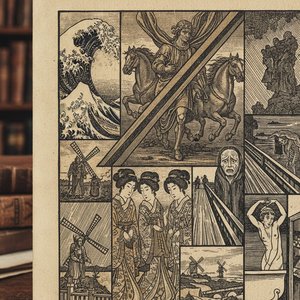
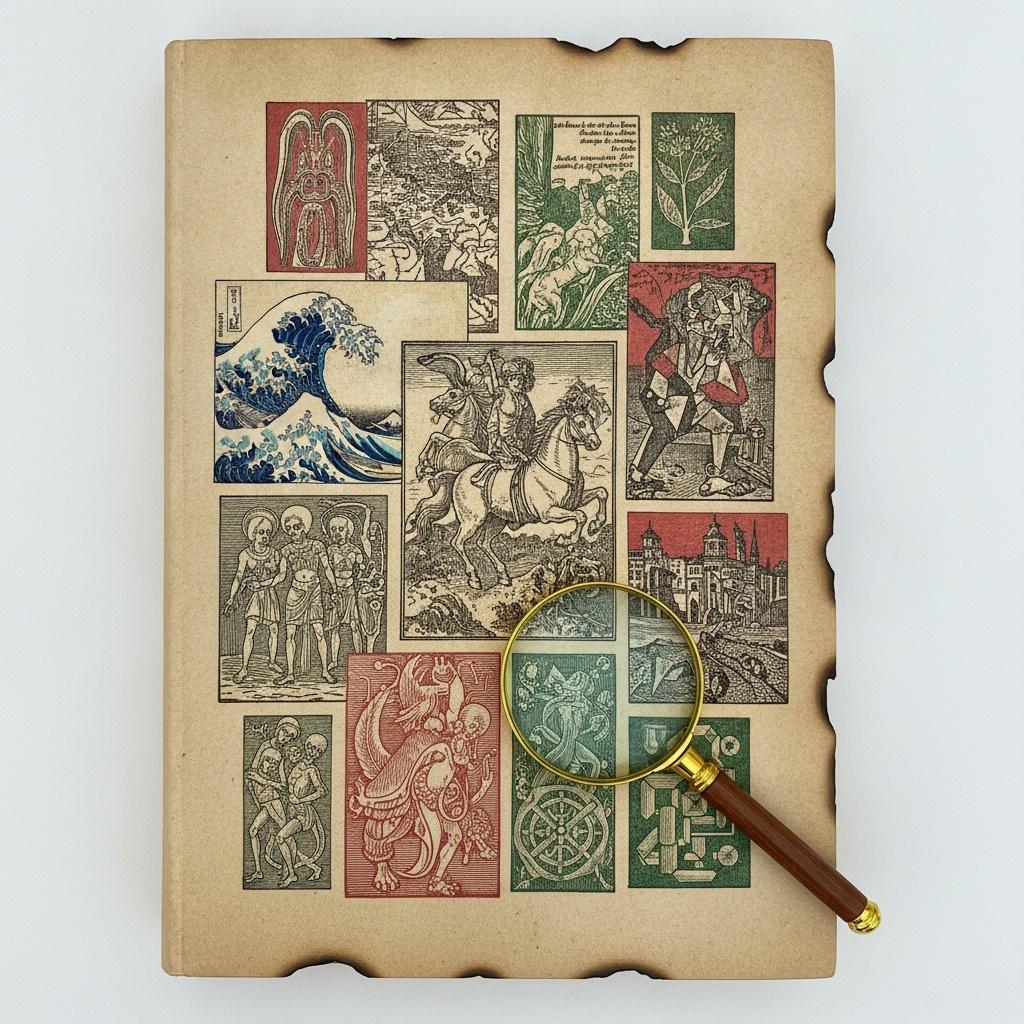
Imagine the raw, visceral energy of a heavy blade carving through stubborn grain, stripping away the excess to reveal a stark, high-contrast truth. Before the era of digital perfection and infinite gradients, there was the woodcut: a medium defined by grit, pressure, and the unapologetic power of black and white. It is an art form born from resistance, where every line is a deliberate strike and every void is a calculated silence.
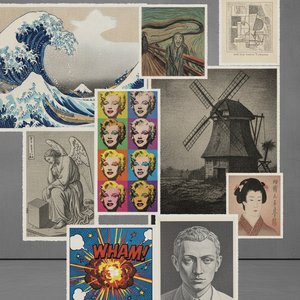
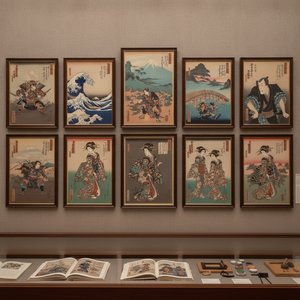
Historically, the woodcut acted as the original disruptor. From the early religious prints that traveled through medieval streets to the explosive, graphic revolutions of Japanese Ukiyo-e and the haunting psychological depths of German Expressionism, this medium democratized vision. It took art out of the gilded halls of the elite and slammed it onto the streets, making complex narratives and radical aesthetics accessible to the masses. It was the precursor to the street art movement—bold, reproducible, and impossible to ignore.
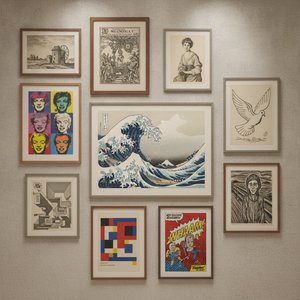
<Today, these legendary works remain strikingly modern. In a world saturated with hyper-realistic pixels, the jagged edges and heavy ink of a master woodcut offer a sensory reset. They remind us that impact doesn't require complexity; it requires soul. The tension between light and shadow in these prints continues to influence everything from contemporary graphic design to the high-contrast aesthetics of modern digital illustration.
As we walk through this curated selection, prepare to encounter more than just ink on paper. We are stepping into a timeline of visual rebellion. From the intricate storytelling of the East to the brooding intensity of the West, these are the ten definitive masterpieces that redefined what it means to leave a mark on the world.
Meeting in Space - Edvard Munch
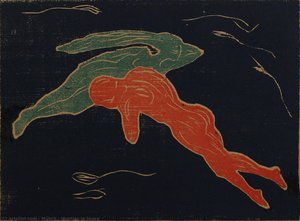 Meeting in Space - Edvard Munch
There’s a gaze in Meeting in Space by Edvard Munch that follows you—not with judgment, but with understanding . This isn't just a print; it’s a mirror reflecting the raw, unshielded depths of the human psyche. As one of the most striking entries in our lineup of legendary masterpieces, this work strips away the noise of reality to expose the pulse of pure emotion.
Munch plunges us into a cosmic void where vibrant, clashing hues of electric green and blood red drift against an infinite, ink-black expanse. The figures are weightless, caught in a diagonal descent that feels both dreamlike and deeply unsettling. Through the grainy, textured soul of lithography, Munch captures the friction between vitality and dread. His flattened perspective and sweeping, blurred lines erase the boundaries of the physical world, leaving only the tension of an encounter between internal shadows. To hang this piece is to invite a profound meditation on isolation and connection into your home—a constant, beautiful reminder that even in the vastness of the unknown, you are seen.
Man and Woman I - Edvard Munch
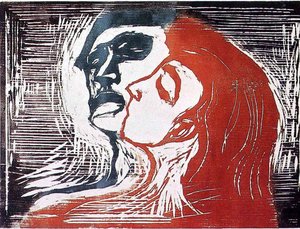 Man and Woman I - Edvard Munch
Owning a piece inspired by Man and Woman I by Edvard Munch is more than an aesthetic choice; it is a high-impact investment in the legacy of Expressionism and a bold statement of refined taste for the discerning collector. As a cornerstone of the movement, this 1905 masterpiece transcends mere portraiture, offering a visceral plunge into psychological intensity. The work’s market prestige is anchored by its ability to distill raw human anxiety and intimacy into a striking visual language of sharp, angular strokes and a commanding, blood-red backdrop that demands attention.
The composition vibrates with a restless energy, where the heavy textures of the wood panel meet Munch's signature somber tones, creating a sense of quiet prestige. For those curating modern luxury interiors , this piece provides an unmatched aesthetic authority. Whether through a museum-grade oil reproduction or a high-impact print, bringing the haunting depth and symbolic power of Munch into a contemporary space transforms a room into a curated gallery, asserting a status that is both culturally literate and visually unforgettable.
Orientalisches (Oriental) - Wassily Wassilyevich Kandinsky
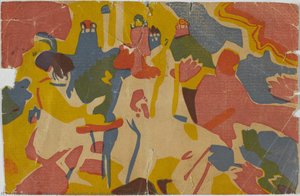 Orientalisches (Oriental) - Wassily Wassilyevich Kandinsky
Imagine stepping into a room where the walls don't just hold color, but vibrate with a rhythmic, musical pulse. Before your eyes even settle on the figures, you feel a surge of warmth, as if a sudden burst of sunlight has hit a crowded, joyful plaza. This is the sensory overload offered by Wassily Kandinsky’s “Orientalisches (Oriental).”
Part of his legendary Klänge (Sounds) series, this woodcut captures the precise moment art transitioned from representing the physical world to exploring pure, spiritual energy. It belongs in our top 10 because it redefined the woodcut medium, moving away from mere illustration toward a symphony of crimson, ochre, and turquoise . Kandinsky uses bold, flat planes of color—inspired by the Japanese Ukiyo-e style—to create a composition that feels both ancient and radically modern. For the contemporary collector, bringing this piece into a living space does more than decorate a wall; it introduces a dynamic, soulful frequency that transforms a static room into an immersive, high-impact experience of movement and light.
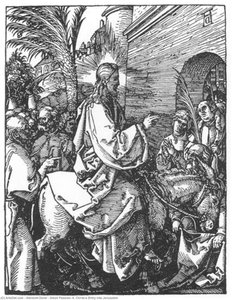
Small Passion: 6. Christ's Entry into Jerusalem - Albrecht Dürer
In Small Passion: 6. Christ's Entry into Jerusalem , Albrecht Dürer orchestrates a masterclass in high-contrast storytelling. The power of this woodcut lies in its dramatic interplay of light and shadow; Dürer uses aggressive cross-hatching to carve deep, velvety blacks that collide with brilliant, untouched whites. This isn't just printmaking—it is the manipulation of pure energy. By sculpting light directly into the woodblock, Dürer achieved a three-dimensional volume that was revolutionary for 1511, turning a flat medium into a cinematic experience of movement and divine presence.
This command of chiaroscuro is exactly why this piece stands as one of the top 10 legendary woodcut masterpieces . The way light hits the architectural arches and the textures of the crowd creates a rhythmic, pulsing atmosphere that feels incredibly modern. For the contemporary collector, bringing a faithful reproduction of this work into a space adds an instant layer of sophisticated grit and intellectual depth. It provides a striking visual anchor, where the sharp, graphic lines offer a bold, monochromatic punch that complements everything from minimalist lofts to high-end industrial interiors.
Watched by the Spirit of the Dead (Manao Tupapau) - Eugène Henri Paul Gauguin
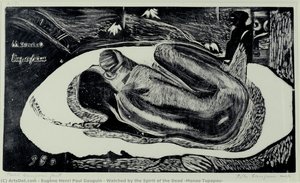 Watched by the Spirit of the Dead (Manao Tupapau) - Eugène Henri Paul Gauguin
In Gauguin’s Watched by the Spirit of the Dead (Manao Tupapau) , a heavy, obsidian black dominates the frame, setting a mood of profound, nocturnal tension. This isn't just shadow; it is a physical presence that anchors the spiritual weight of Tahitian mythology. As one of the Top 10 Legendary 'Woodcut' Masterpieces That Changed Art Forever , this work earns its status through a masterclass in Synthetist contrast. Gauguin strips away the fleeting light of Impressionism, using stark, rhythmic lines and flatly divided tones to create a graphic punch that feels incredibly modern. The interplay between the deep, inked voids and the pale paper creates a pulse of energy that is both haunting and hypnotic.
For the design-conscious collector, integrating this piece into a contemporary space offers an instant injection of high-impact drama. The monochromatic intensity works perfectly in a minimalist lounge or a moody dining room, where it can act as a focal point to anchor dark, sophisticated textures. It provides a soulful, avant-garde edge that transforms a standard wall into a curated gallery experience, pulling the viewer into its dreamlike, symbolic depths.
The Day of Gods (Mahana Atua) - Eugène Henri Paul Gauguin
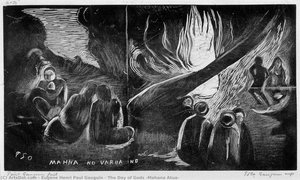 The Day of Gods (Mahana Atua) - Eugène Henri Paul Gauguin
What if I told you that The Day of Gods (Mahana Atua) by Paul Gauguin was born from a moment of rebellion—a stroke of defiance against the ordinary? This isn't just a print; it is a visceral, monochromatic manifesto. In this legendary woodcut, Gauguin strips away his signature tropical palette to reveal something much more primal: a ritualistic dance of shadow and flame. The heavy, rhythmic lines and stark contrasts create a hypnotic energy, pulling you into a Tahitian ceremony where the boundary between the human and the divine dissolves in the flickering light.
Its inclusion in our Top 10 is demanded by its sheer emotional impact; it redefined how printmaking could capture spiritual depth through raw, simplified forms. At ArtsDot.com , we believe art should pulse with this same intensity. Imagine this masterpiece reimagined as a high-impact centerpiece in your studio or lounge—turning a blank wall into a portal of mystery and strength. Your space is not just a room; it is a statement of soul.
Pattern from the Series of Six Knots 3 - Albrecht Dürer
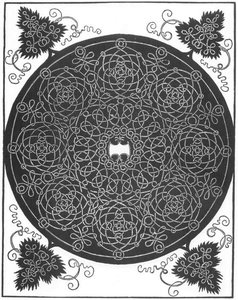 Pattern from the Series of Six Knots 3 - Albrecht Dürer
Before the era of digital precision, there was the raw, rhythmic pulse of the woodblock. Imagine a world where complexity was carved by hand, line by painstaking line, to capture the very geometry of the divine. This is the hypnotic energy found in Pattern from the Series of Six Knots 3 by Albrecht Dürer . Created in 1505, this masterpiece transcends mere decoration; it is a high-impact exploration of mathematical order and infinite connection.
Dürer’s mastery is visible in the stark, monochromatic drama of the ink against paper. A monumental central circle anchors the composition, housing an intricate web of interlocking knots that spiral with a life of their own. The varying thickness of his carved lines creates a tactile sense of depth and movement, pulling the viewer into a mesmerizing dance of black and white. This work earns its place among the top 10 legendary woodcut masterpieces by proving that graphic precision can evoke profound spiritual unity. Even today, Dürer’s ability to transform structural patterns into emotional experiences continues to inspire the bold, design-conscious aesthetic of modern spaces.
Offerings of Gratitude (Maruru) - Eugène Henri Paul Gauguin
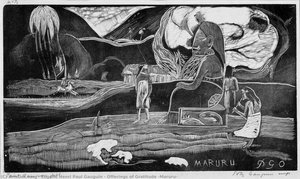 Offerings of Gratitude (Maruru) - Eugène Henri Paul Gauguin
Forget the tropical neon Gauguin is famous for; in Offerings of Gratitude (Maruru) , we strip everything back to the raw, graphic soul of the woodcut. This isn't just a print; it’s a high-contrast ritual captured in monochrome. Gauguin uses the physical resistance of the wood to carve out a world of Synthetism , where bold, heavy lines and flattened planes replace traditional depth with pure, symbolic impact. The scene is haunting—a central, deity-like figure sits enthroned amidst smaller figures engaged in a rhythmic, spiritual offering.
The texture of the grain and the stark interplay of black ink against paper create a visual pulse that feels both ancient and strikingly modern. It’s a masterclass in using negative space to command attention, reminiscent of the graphic punch found in ukiyo-e prints. Owning a piece like this isn't just about decor; it is an inheritance of a legendary lineage of taste. With ArtsDot.com, you can bring this heavy, atmospheric energy into your own space, turning a wall into a window to the primitive and the profound.
Death and the Pedlar - Hans Holbein the Younger
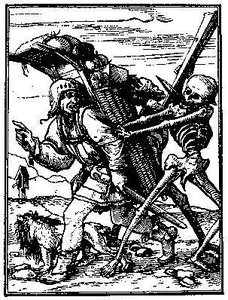 Death and the Pedlar - Hans Holbein the Younger
Imagine a sudden, chilling stillness where the bustle of trade is silenced by a skeletal shadow. In Hans Holbein the Younger’s 1538 masterpiece, “Death and the Pedlar,” the air feels heavy with the weight of the inevitable. This isn't just a print; it is a high-contrast confrontation between the transient hustle of human commerce and the eternal stillness of mortality. The stark, graphic energy of the woodcut medium captures a moment where a traveling merchant meets his ultimate end, turning a simple roadside encounter into a profound allegory for the fragility of life.
This work earns its place among the top legendary woodcut masterpieces through its cinematic use of light and shadow. Holbein’s virtuoso use of hatching creates a textured, visceral world that feels both haunting and deeply human. For the modern collector, bringing such a powerful piece into a space does more than decorate a wall; it introduces a layer of soulful contemplation. It serves as a striking visual anchor, reminding us to find meaning in the fleeting moments and to appreciate the enduring impact of true artistic legacy.
Headpiece for _Le Sourire_ - Eugène Henri Paul Gauguin
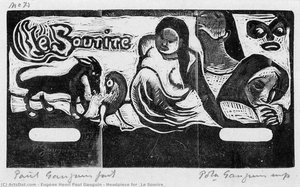 Headpiece for _Le Sourire_ - Eugène Henri Paul Gauguin
Forget the tropical heat of Gauguin’s Tahitian canvases; Headpiece for Le Sourire is where the artist strips everything back to the raw, rhythmic soul of the woodcut. This isn't just a print; it is a high-contrast masterclass in Synthetism , where every carved line vibrates with a heavy, symbolic energy. By ditching color, Gauguin forces us to confront the stark, beautiful tension between light and shadow, creating a dreamlike world that feels both ancient and strikingly modern.
As one of the most influential woodcuts in art history, this piece redefined how artists use flat planes and bold contours to trigger an emotional response rather than a literal one. The calligraphic "Le Sourire" text and the enigmatic, stylized figures draw direct inspiration from Japanese ukiyo-e , bringing a graphic punch that feels right at home in contemporary urban design. For those looking to anchor a minimalist space or a bold, monochrome interior, this work offers an unmatched sense of prestige and intellectual depth. It is a timeless fragment of the avant-garde, perfect for adding a layer of sophisticated mystery to any modern collection.
Conclusion
As the lights dim on this gallery of shadows and ink, we are left with more than just the memory of sharp lines and stark contrasts. These woodcut masterpieces do not belong solely to the archives of history or the quiet halls of museums; they are living, breathing pulses of human expression that continue to vibrate through our modern world. The raw energy carved into every block remains a testament to our eternal desire to leave a mark, to find beauty in the struggle between light and dark, and to communicate truths that words often fail to capture.
To look upon these works is to witness the ancestors of contemporary graphic design, street art, and digital illustration. They remind us that even the most primitive tools can evoke the deepest complexities of the human soul. As you step away from these legendary prints, carry that sense of wonder with you—the realization that every bold stroke and deliberate void is a bridge connecting our present moment to a timeless lineage of creators. Whether through the grit of an ancient print or the vibrant energy of a new canvas, the conversation between the artist and the observer never truly ends.
If these striking textures and powerful compositions have stirred your imagination, we invite you to continue your journey through our full collection and find the piece that speaks to your own story.