
Introduction
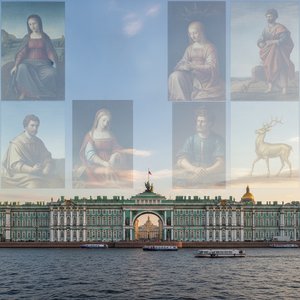
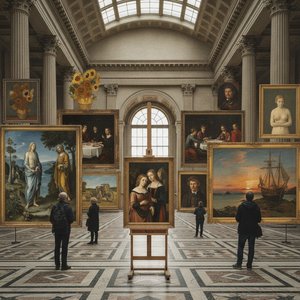
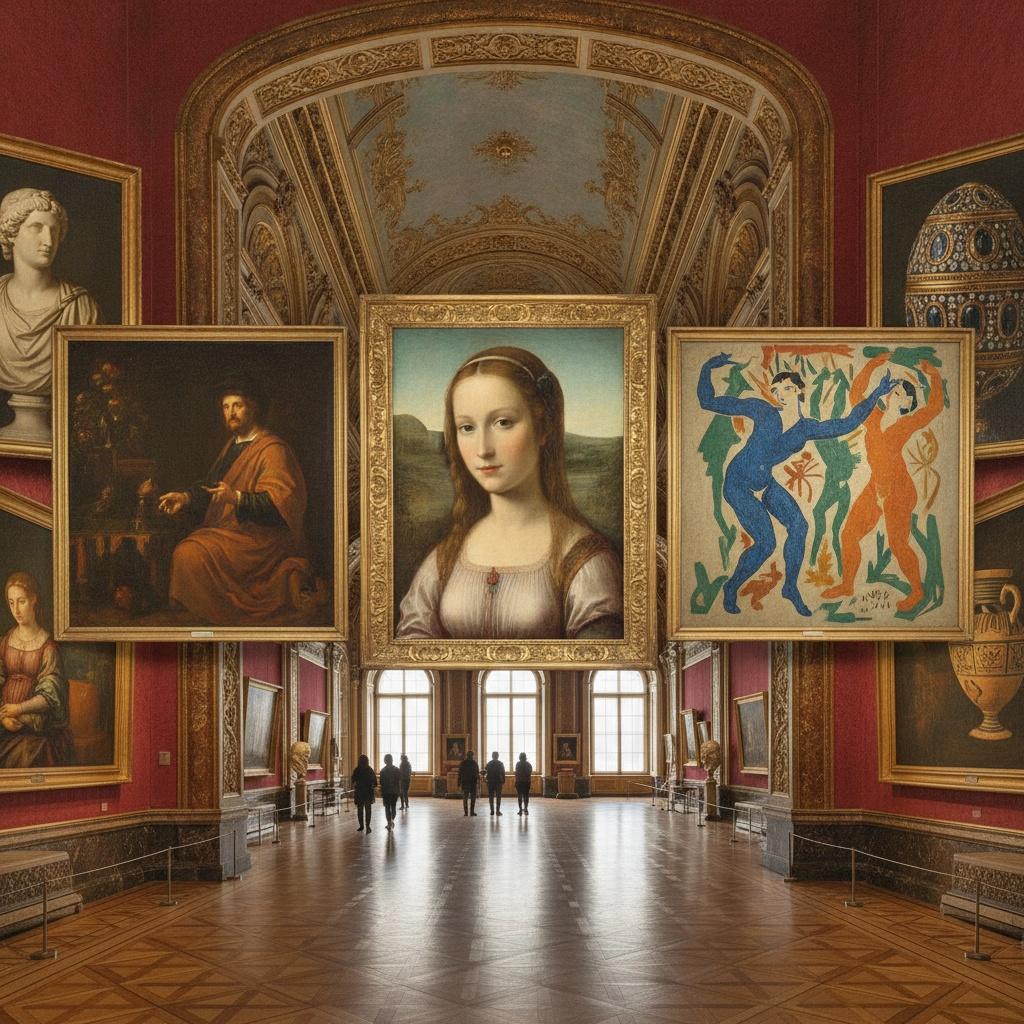
Imagine walking through the gilded halls of the Winter Palace, where every footstep echoes against a history of imperial grandeur and revolutionary change. The Hermitage Museum in Saint Petersburg is not just a gallery; it is a sprawling, cinematic journey through the soul of human creativity. From its humble beginnings in 1764, when Catherine the Great acquired her first modest collection of Western European paintings, to its current status as one of the most massive and prestigious repositories of culture on the planet, the Hermitage has served as a bridge between the East and the West, preserving the triumphs of the Renaissance, the drama of the Baroque, and the raw energy of modern movements.
To wander through these interconnected palaces is to witness the evolution of the human gaze. You move from the serene, structured divinity of classical masterpieces to the heavy, emotive brushstrokes of the masters who redefined what it means to feel. These walls have survived sieges, revolutions, and the shifting tides of empires, yet the art within remains untouched by time—vibrant, provocative, and deeply personal. The significance of these works lies in their ability to transcend their era; a canvas painted centuries ago can still trigger a visceral, modern reaction, sparking a dialogue between the artist’s hand and your own eyes.
In this guide, we are stripping away the dust of history to focus on the pure visual impact. We have curated a selection of the top 25 artworks that define the Hermitage experience—pieces that demand attention through their scale, their color, and their sheer audacity. Whether you are drawn to the intricate textures of Dutch masters or the sweeping narratives of Italian legends, prepare to encounter the icons that continue to shape our global visual language. Let us begin our tour through the heart of Saint Petersburg's greatest treasure.
Harmony in Red - Henri Matisse
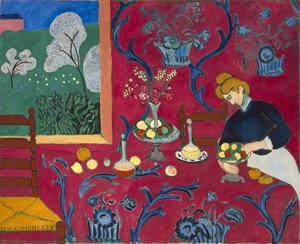 Harmony in Red - Henri Matisse
In Harmony in Red by Henri Matisse , the canvas explodes with a high-impact visual energy that redefines the domestic space. The composition is a masterclass in structural balance, utilizing a rhythmic interplay of organic curves and sharp, geometric zones to guide the eye across a saturated landscape of crimson and emerald. Matisse rejects traditional depth, opting instead for a flattened, layered perspective where the patterned wallpaper and the figure of the woman exist in a seamless, graphic tension.
This intentional arrangement creates a sense of timeless perfection, making it a standout among the top 25 artworks in Hermitage Museum, Saint Petersburg . There is a striking parallel here to modern minimalist design; the way Matisse strips away unnecessary detail to focus on pure color and essential form provides a blueprint for contemporary, clean aesthetics. The painting doesn't just depict a scene; it delivers a punch of pure, rhythmic emotion, proving that bold, simplified shapes can ground even the most vibrant interior with sophisticated, architectural grace.
The return of the prodigal son - Rembrandt van Rijn
 The return of the prodigal son - Rembrandt van Rijn
Imagine a heavy, silent tension that suddenly breaks into an overwhelming wave of warmth—that is the visceral energy radiating from Rembrandt’s 1662 masterpiece, The Return of the Prodigal Son . Within the hallowed halls of the Hermitage Museum, Saint Petersburg, this painting acts as an emotional anchor. It isn't just a biblical scene; it is a masterclass in human vulnerability. As you stand before it, the dramatic chiaroscuro pulls you into a dimly lit world where light doesn't just illuminate—it heals. The way the radiant glow falls upon the kneeling son and his father’s weathered hands captures the raw essence of redemption and unconditional grace.
This work earns its spot among the top 25 artworks in the Hermitage because it transcends time, speaking to anyone who has ever sought a second chance. Its profound psychological depth offers a moment of stillness in our high-speed digital age. Bringing such powerful imagery into your own space—perhaps through a custom oil reproduction—allows you to surround yourself with this same sense of peace, serenity, and timeless human connection.
Street in Saintes-Maries - vincent willem van gogh
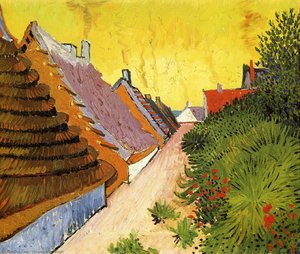 Street in Saintes-Maries - vincent willem van gogh
Look closer. The lines in Street in Saintes-Maries by Vincent van Gogh aren’t merely drawn; they are choreographed . This isn't just a depiction of a French village; it is a dance frozen in time, where leaning architecture and winding paths pulse with an electric, restless energy. As one of the most captivating highlights within the top 25 artworks in Hermitage Museum, Saint Petersburg, this piece captures the raw, sun-drenched soul of Provence through a lens of beautiful instability.
Van Gogh uses thick, rhythmic impasto to turn simple walls and rooftops into a textured landscape of emotion. The palette—a high-impact collision of warm golds, vibrant oranges, and deep purples—evokes that fleeting, glowing magic of the golden hour. There is a profound tension here: the chaotic, distorted perspective creates a sense of movement that makes the canvas feel alive. What if your own walls could breathe rhythm ? Bringing this Post-Impressionist masterpiece into your space allows you to capture that same balance, turning a quiet corner into a window of pure, vibrating light.
Le Retour De L Enfant Prodigue - Rembrandt van Rijn
 Le Retour De L Enfant Prodigue - Rembrandt van Rijn
In the quiet, shadowed corners of the Hermitage, Le Retour De L Enfant Prodigue by Rembrandt van Rijn hits differently. It isn’t just a painting; it is a masterclass in raw, human vulnerability. This 1660 powerhouse captures the exact second where guilt meets grace, using that legendary Dutch Baroque chiaroscuro to pull you into an intimate embrace between father and son. The way the light clings to the textures of their robes—rich golds and deep, somber reds—creates a visual tension that feels incredibly modern.
While we often look to high-contrast, graphic aesthetics in today's digital design, Rembrandt was doing it first with pure oil and soul. The dramatic interplay of light and dark doesn't just highlight the figures; it directs your emotional focus to the heavy weight of forgiveness. As one of the top 25 artworks in Hermitage Museum, Saint Petersburg , this piece remains a cultural heavyweight, reminding us that even in our most chaotic moments, there is a profound, luminous beauty in finding our way back home.
Dance (II) - Henri Matisse
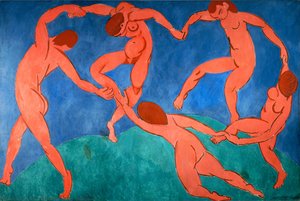 Dance (II) - Henri Matisse
If you are looking for the heartbeat of modernism within the Hermitage Museum, Saint Petersburg, look no further than Henri Matisse’s Dance (II) . This isn't just a painting; it is a high-voltage surge of Fauvist energy captured on canvas. Commissioned by the legendary Russian collector Sergei Shchukin, this 1910 masterpiece strips away the clutter of realism to reveal something primal: the raw, rhythmic pulse of life itself. Matisse uses a hyper-saturated palette—vibrant, sun-drenched reds clashing against deep, hypnotic blues and lush greens—to create a visual symphony that vibrates with motion.
The figures move in a simplified, almost graphic silhouette, their intertwined limbs suggesting an ancient, universal ritual. There is no unnecessary detail here, only the pure, uninhibited emotion of the dance. Owning a piece of this legacy isn't just about decor; it’s about inheriting a lineage of bold, disruptive taste. At ArtsDot.com, we bring that same high-impact, contemporary energy to your space, allowing you to celebrate this masterwork of movement and color on your own walls.
St - El Greco
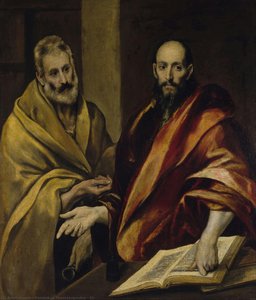 St - El Greco
Owning a piece inspired by St. by El Greco is more than an aesthetic choice; it is an investment in a legacy of profound spiritual intensity and unmatched taste for the discerning collector. As one of the top 25 artworks in the Hermitage Museum, Saint Petersburg, this 1592 masterpiece stands as a pillar of Mannerist brilliance. Its presence in the museum's permanent collection confirms its immense historical influence and enduring market prestige, bridging the gap between Renaissance tradition and the raw emotion of modern expressionism.
The painting vibrates with a dramatic, almost electric energy. El Greco’s signature use of chiaroscuro sculpts the figures through stark, cinematic light, while the saturated crimson cloak of Saint Paul pulls the viewer into a world of divine fire and conviction. The elongated forms and distorted perspectives create an ethereal atmosphere that feels strikingly contemporary. For those curating modern luxury interiors, a high-quality oil reproduction of this work brings an unmatched aesthetic authority and quiet prestige, serving as a bold, soulful anchor for any sophisticated space.
Flora - Rembrandt van Rijn
 Flora - Rembrandt van Rijn
Owning a piece of the legacy defined by Flora by Rembrandt van Rijn is an unparalleled investment in timeless taste for the discerning collector. As one of the crown jewels within the top 25 artworks in the Hermitage Museum, Saint Petersburg, this 1634 masterpiece transcends mere portraiture; it is a high-value intersection of personal devotion and Baroque brilliance. Rembrandt transforms his beloved wife, Saskia, into the goddess of spring, utilizing his legendary chiaroscuro technique to weave light through delicate floral arrangements and luminous fabrics.
The painting’s provenance and its status as a cornerstone of the Dutch Golden Age cement its immense cultural and market authority. The dramatic interplay of shadow and radiant skin tones creates a sensory experience that remains strikingly relevant today. For those curating modern luxury interiors, the aesthetic power of this work offers an instant infusion of prestige. Integrating a high-quality, hand-painted reproduction of Flora into a contemporary space allows you to command the same emotional depth and sophisticated status as the world's most elite galleries.
Holy Family - Rembrandt van Rijn
 Holy Family - Rembrandt van Rijn
In the amber-hued depths of Rembrandt van Rijn’s "Holy Family," light feels less like a visual tool and more like a divine whisper frozen in time. As one of the most profound highlights among the top 25 artworks in the Hermitage Museum, Saint Petersburg, this 1645 masterpiece transcends mere biblical illustration to offer an intimate window into the human soul. Rembrandt utilizes his legendary chiaroscuro —the dramatic tension between heavy shadows and radiant glows—to transform a humble carpenter’s workshop into a sanctuary of spiritual hope.
The texture of the piece is palpable; you can almost feel the rough grain of the workbench and the weight of Mary’s heavy robes. The subtle presence of ethereal angels hovering above the figures adds a layer of celestial mystery to the grounded, realistic setting. For the modern collector or design enthusiast, this painting brings an unparalleled sense of sophisticated calm and emotional depth. It is a masterclass in how light can shape thought, making it a cornerstone of the Hermitage’s legendary collection and a timeless inspiration for any curated space.
Apostles Peter and Paul - El Greco
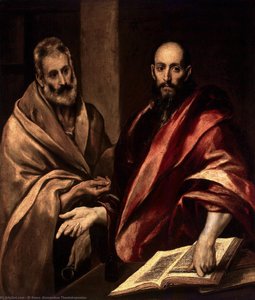 Apostles Peter and Paul - El Greco
Owning a piece of the legacy defined by Apostles Peter and Paul by El Greco is an ultimate investment in high-impact taste for any discerning collector. As one of the most striking entries in the top 25 artworks in 'Hermitage Museum, Saint Petersburg', this 1592 masterpiece transcends mere history; it is a masterclass in Mannerist drama. El Greco utilizes intense chiaroscuro to pull you into a world of elongated figures and spiritual tension, where the vibrant red robes of the apostles pop against a shadowy, contemplative backdrop.
The painting’s influence is undeniable, acting as a precursor to the raw emotion of Expressionism. Its presence in the Hermitage confirms its status as a high-value cultural titan, making it a cornerstone for those studying the evolution of light and form. For the modern design enthusiast, this work offers unparalleled aesthetic authority. Integrating a high-quality, hand-painted reproduction of this piece into a luxury interior brings a sophisticated, moody energy to any space, commanding attention with its profound depth and timeless, sculptural presence.
Madonna Litta - Leonardo da Vinci
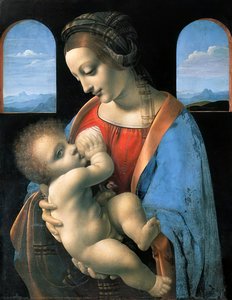 Madonna Litta - Leonardo da Vinci
Before he was the master of the Mona Lisa , Leonardo da Vinci was experimenting with the delicate boundaries of light and shadow in Milan, crafting a work so intimate it feels like a whispered secret. The Madonna Litta is not just another Renaissance portrait; it is a masterclass in sfumato , where the edges of the Virgin’s veil dissolve into the atmosphere like smoke. As you stand before this treasure among the top 25 artworks in the Hermitage Museum, Saint Petersburg, you see more than a mother and child; you witness the birth of psychological depth. The way the light catches the soft textures of the fabric and the subtle, hazy gradations of tone creates an ethereal, breathing presence that defies the flat surfaces of traditional icons.
The profound focus required to execute such precise, translucent glazes reflects a level of intellectual discipline that transcends centuries. Bringing the quiet, contemplative energy of this Leonardo masterpiece into your own space can transform a modern home office or study into a sanctuary of high-level thought and sophisticated creativity.
St Luke Drawing a Portrait of the Madonna - Rogier van der Weyden
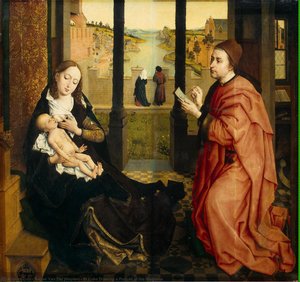 St Luke Drawing a Portrait of the Madonna - Rogier van der Weyden
There is a profound, quiet intimacy in witnessing St Luke Drawing a Portrait of the Madonna by Rogier van der Weyden. It captures that rare, sacred moment where human creativity meets divine inspiration. As you stand before this masterpiece in the Hermitage Museum, Saint Petersburg, you aren't just looking at a painting; you are eavesdropping on a silent dialogue between an artist and his muse. The way Van der Weyden renders the soft light hitting the Virgin’s face and the meticulous textures of the drapery creates a sense of presence that feels almost tangible.
This work earns its place among the top 25 artworks in the Hermitage because it defines the soul of Early Netherlandish art, blending hyper-realistic detail with deep, emotive mysticism. The subtle landscape visible through the window adds a layer of serene depth that has captivated collectors for centuries. At ArtsDot.com, we believe this level of emotional resonance shouldn't be confined to museum walls. Our handmade oil reproductions meticulously recreate Van der Weyden’s signature brushstrokes and luminous tones, allowing you to bring this timeless piece of spiritual history into your own contemporary space with all its original texture and grace.
The Holy Family with St. Elizabeth and John the Baptist - Nicolas Poussin
 The Holy Family with St. Elizabeth and John the Baptist - Nicolas Poussin
In The Holy Family with St. Elizabeth and John the Baptist , Nicolas Poussin captures a profound sense of quietude through the tender, protective gaze shared between the figures. There is an unmistakable emotional gravity here; the way Mary cradles the infant Jesus isn't just a religious icon, but a universal mirror of maternal devotion and human connection. As one of the top 25 artworks in Hermitage Museum, Saint Petersburg , this piece transcends its 1655 origins to offer a masterclass in classical calm.
Poussin avoids the aggressive shadows of his contemporaries, instead bathing the scene in a diffused, atmospheric light that softens the textures of drapery and stone. This subtle illumination creates a landscape of peace, where the figures exist in perfect, harmonious proportion. Bringing this level of serene composition into your own home can transform a modern living space into a personal sanctuary for profound reflection. Whether you are drawn to its balanced geometry or its soulful stillness, this masterpiece serves as a powerful anchor for any design-conscious collection seeking depth and tranquility.
Descent from the Cross - Nicolas Poussin
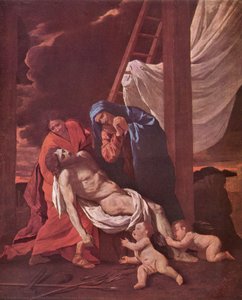 Descent from the Cross - Nicolas Poussin
Before he became the architect of French classicism, Nicolas Poussin spent his formative years in Rome, absorbing the raw, dramatic energy of the Baroque movement. This intense period of discovery is etched into the very fabric of Descent from the Cross (1630). As one of the top 25 artworks in the Hermitage Museum, Saint Petersburg, this piece captures a pivotal moment where technical precision meets profound human tragedy. Poussin moves away from mere spectacle, instead utilizing a bruised, stormy palette of purples and greys to mirror a world in mourning.
The genius lies in the composition: the limp, vulnerable body of Christ is balanced by the serene grace of angels, creating a tension between celestial peace and earthly grief. The subtle symbolism—from the ladders representing redemption to the birds hinting at resurrection—transforms the canvas into a complex visual narrative. For the modern professional, the disciplined structure and heavy emotional depth of this masterpiece serve as a powerful inspiration, perfect for anchoring a sophisticated home office or study with an atmosphere of focused, timeless intellect.
On the Sailing Boat - Caspar David Friedrich
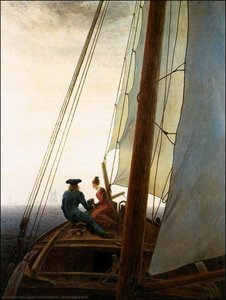 On the Sailing Boat - Caspar David Friedrich
Imagine the profound silence of a vast, breathing ocean, where the only sound is the rhythmic lap of water against wood. In Caspar David Friedrich’s 1819 masterpiece, On the Sailing Boat , we are pulled into this hypnotic stillness. This isn't just a landscape; it is a window into the soul of German Romanticism. As you stand before this work in the Hermitage Museum, Saint Petersburg , you feel the weight of the sublime—that breathtaking tension between human fragility and the infinite power of nature.
The painting captures a moment of deep contemplation, with figures adrift in a sea of tranquility, subtly reminding us of the passage of time. It earns its place among the top 25 artworks in the Hermitage because it transcends its era, offering a meditative escape from our modern chaos. Bringing the energy of such a serene, symbolic scene into your own space allows you to reclaim that sense of peace, transforming a room into a sanctuary of reflection and timeless beauty.
Peasant-Girls with Brushwood - Jean-François Millet
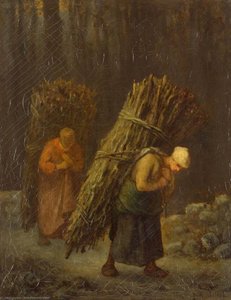 Peasant-Girls with Brushwood - Jean-François Millet
Deep, earthy umbers and muted forest greens dominate Peasant-Girls with Brushwood by Jean-François Millet , setting a mood of profound, grounded stillness. This palette doesn't just depict a landscape; it anchors the viewer in the raw, tactile reality of the Barbizon School. Millet’s mastery lies in using these heavy, organic tones to transform a scene of manual labor into a monumental study of human endurance. The way the fading dusk light interacts with the somber browns creates a rhythmic, almost sculptural weight that secures its status among the top 25 artworks in Hermitage Museum, Saint Petersburg .
For the modern designer or urban collector, this piece serves as a masterclass in atmospheric curation. Integrating such a work into a contemporary living space or dining room allows you to introduce a sense of 'quiet strength' and organic texture. The painting’s muted, naturalistic scheme is perfect for balancing high-contrast, graphic interiors, providing an emotional anchor that brings warmth, stability, and a timeless, soulful depth to any sophisticated architectural setting.
Lute Player (detail) - Caravaggio
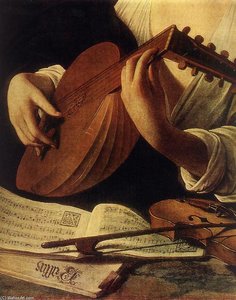 Lute Player (detail) - Caravaggio
When you encounter the Lute Player (detail) by Caravaggio within the halls of the Hermitage Museum, Saint Petersburg, you aren't just looking at a painting; you are witnessing the birth of cinematic drama. As one of the top 25 artworks in the Hermitage, this piece captures the raw, pulse-pounding energy of the Baroque era through the master of tenebrismo . Caravaggio uses light not as a mere tool, but as a protagonist, slicing through deep, velvety shadows to illuminate the musician’s hands and the delicate textures of the lute.
This detail serves as a profound meditation on the fleeting nature of beauty and sound. The presence of books and instruments suggests a symphony of knowledge and sensory experience that transcends time. For the modern collector or design enthusiast, Caravaggio’s mastery of high-contrast chiaroscuro offers endless inspiration, proving that bold, moody aesthetics can anchor a contemporary space with unparalleled psychological depth and soul. It is a timeless conversation between shadow and light that continues to redefine our perception of realism.
Moonrise by the Sea - Caspar David Friedrich
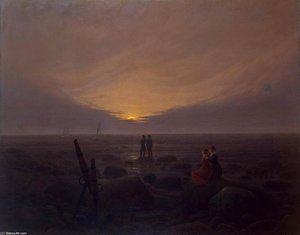 Moonrise by the Sea - Caspar David Friedrich
In the vast, storied halls of the Hermitage Museum, Saint Petersburg, few pieces command the quiet, heavy stillness of Caspar David Friedrich’s Moonrise by the Sea . This isn't just a landscape; it is a symphony of solitude. The lines in this masterpiece aren’t merely painted; they are choreographed , guiding your gaze from the jagged, dark silhouettes of rocky outcrops toward a luminous horizon where the moon begins its ascent.
Friedrich captures that precise, haunting moment between twilight and dawn, using dramatic chiaroscuro to make the sea spray feel cool against the skin and the night sky feel velvety and infinite. As you observe the small figures standing at the water's edge, you aren't just looking at a scene—you are witnessing a dance frozen in time , embodying the Romantic sublime. The interplay of light and shadow creates a rhythmic pulse that makes the canvas feel alive. What if your own space could hold this same profound balance? Imagine walls that don't just decorate, but breathe rhythm and existential wonder.
Crucifixion - Bernardino Luini
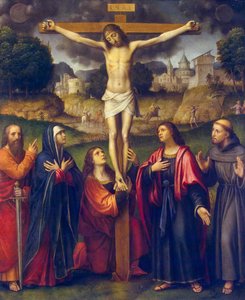 Crucifixion - Bernardino Luini
While many view the Renaissance through a lens of pure divinity, Bernardino Luini’s 1530 Crucifixion captures something far more visceral: the heavy, human weight of grief. Having apprenticed directly under Leonardo da Vinci, Luini didn't just copy the master; he infused Da Vinci’s soft sfumato technique with a raw, emotional grit that makes this piece a standout among the top 25 artworks in the Hermitage Museum, Saint Petersburg.
The painting is a masterclass in dramatic tension. At its center, Christ’s physical agony is balanced by an almost hauntingly serene expression, surrounded by mourners draped in vibrant reds and deep blues that pop against a muted, mountainous landscape. The meticulous rendering of textures—from the heavy folds of liturgical robes to the subtle light hitting the skin—creates a profound sense of presence. This level of focused, technical mastery is exactly what you want surrounding your creative space. Bringing the depth and contemplative energy of Luini’s work into a modern home office or study can transform a mere workspace into a sophisticated sanctuary of focus and inspiration.
Self-Portrait - Sir Anthony van Dyck
 Self-Portrait - Sir Anthony van Dyck
Owning a piece inspired by the Self-Portrait by Sir Anthony van Dyck isn’t just a purchase; it’s an inheritance of pure, aristocratic swagger. This 1622 masterpiece, a standout among the top 25 artworks in the Hermitage Museum, Saint Petersburg, captures a young Flemish master asserting his dominance. Van Dyck doesn't just pose; he commands the space with a direct, piercing gaze and an air of quiet, untouchable confidence.
The visual impact is immediate—the deep, velvety blacks of his attire and the subtle sheen of fine fabric create a high-contrast drama that feels incredibly modern. While you can feel the heavy influence of Rubens in the masterful use of light and shadow, Van Dyck introduces a refined, polished elegance that defines the Baroque aesthetic. It is a study in texture and status, where every brushstroke on the canvas whispers of courtly luxury. Bringing this level of prestige to your space means participating in a lineage of taste, turning your walls into a personal gallery of historical power and sophisticated design.
Slave Market in Rome - Jean-Léon Gérôme
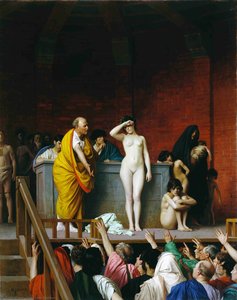 Slave Market in Rome - Jean-Léon Gérôme
Step into a moment of raw, cinematic tension where the grandeur of antiquity meets the chilling reality of human commerce. In Slave Market in Rome by Jean-Léon Gérôme , the viewer is not merely observing history; they are thrust into the sweltering, crowded heart of an imperial auction. This masterpiece earns its place among the top 25 artworks in the Hermitage Museum through its unflinching narrative power and technical precision.
Gérôme utilizes a masterful palette of sun-drenched yellows and earthy ochres to illuminate the central, vulnerable figure, whose regal yet tragic presence anchors the composition. The light catches the textures of rough brickwork and flowing robes, creating a hyper-realistic atmosphere that feels almost tactile. Every brushstroke serves the drama, from the calculating eyes of the merchants to the heavy shadows lurking in the background. It is a profound meditation on power and vulnerability, proving that great art does not just decorate a space—it haunts it, forcing us to confront the enduring complexities of the human condition long after we leave the gallery.
Portrait of Pope Paul III - Titian Ramsay Peale II
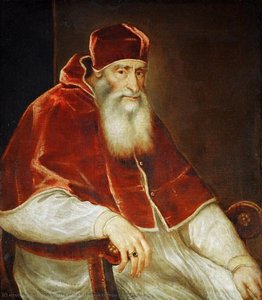 Portrait of Pope Paul III - Titian Ramsay Peale II
What if I told you that Portrait of Pope Paul III by Titian Ramsay Peale II was born from a moment of pure artistic rebellion—a stroke of defiance against the ordinary? This isn't just a historical record; it is a visual manifesto. As one of the top 25 artworks in the Hermitage Museum, Saint Petersburg, this piece demands attention through its high-impact collision of American vision and Venetian soul. Peale II channels the legendary energy of Titian, using luminous reds and deep, dramatic shadows to command the room.
The painting captures the weight of papal power, with the vibrant crimson robes of the Pope acting as a bold focal point against a moody, atmospheric backdrop. Its inclusion in the Hermitage’s elite collection is earned by its ability to redefine grandeur through texture and light. At ArtsDot.com, we believe art should do more than decorate; it should provoke. Imagine this masterpiece hanging in your studio or loft, turning a simple wall into a high-energy statement of prestige. Your space isn't just a room—with a piece this powerful, it becomes a curated sanctuary of bold, contemporary impact.
Penitent St Mary Magdalene - Titian
 Penitent St Mary Magdalene - Titian
Titian’s Penitent St Mary Magdalene is a masterclass in raw, cinematic emotion, standing as a heavy-hitting icon among the top 25 artworks in the Hermitage Museum, Saint Petersburg. This isn't just a religious portrait; it is a visceral exploration of vulnerability and redemption. Through his legendary command of chiaroscuro , Titian pulls the Saint from a somber, shadowy landscape into a brilliant, celestial light, mirroring a psychological journey from darkness to grace.
The painting’s visual language—defined by rich, textured impasto and a moody palette of deep reds and earthy browns—resonates powerfully with modern design aesthetics. The dramatic interplay of light and shadow offers a sophisticated blueprint for creating high-impact, atmospheric spaces that demand attention. For the contemporary collector, this work provides more than just historical depth; it brings a sense of theatrical stillness and soulful intensity to any curated interior. It is a breathtaking example of how Venetian color and texture can transform a space into a sanctuary of contemplation.
David and Jonathan - Rembrandt van Rijn
 David and Jonathan - Rembrandt van Rijn
Before you even process the scale of the Winter Palace, certain works hit you with a raw, emotional frequency that bypasses logic. David and Jonathan by Rembrandt van Rijn is exactly that kind of heavy hitter. This isn't just another biblical scene; it is a masterclass in the Dutch Baroque use of light and shadow, capturing a moment of profound, heartbreaking loyalty.
Rembrandt strips away the epic grandeur usually found in historical narratives, replacing it with an intimate, high-impact focus on human connection. You can almost feel the weight of the atmosphere through his signature chiaroscuro —the way light clings to the textures of the turban and the heavy fabrics, illuminating the grief etched into David’s face. The palette is deep and soulful, pulling you into a private moment of farewell between two friends caught in political turmoil. As one of the top 25 artworks in Hermitage Museum, Saint Petersburg, this piece stands as a testament to how masterfully rendered light can transform a canvas into a living, breathing emotion. It remains a definitive example of how art continues to command any space it inhabits.
Luncheon - Diego Velázquez
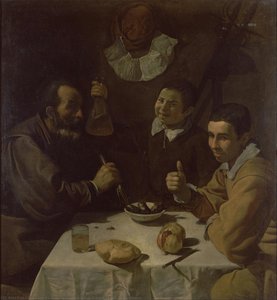 Luncheon - Diego Velázquez
A quiet moment of connection, frozen in time through a soft, atmospheric glow—this is the essence of Luncheon by Diego Velázquez. At ArtsDot.com, we believe in democratizing beauty, bringing the profound emotional depth of the world's greatest treasures directly to your walls. This masterpiece earns its place among the top 25 artworks in the Hermitage Museum because it breaks away from royal grandiosity to capture something far more rare: raw, human intimacy.
Velázquez utilizes a revolutionary approach to light and shadow, using dramatic chiaroscuro to pull the viewer into this private circle of camaraderie. The way the light pools around the figures, highlighting the simple textures of bread, fruit, and shared laughter, creates a sense of presence that feels incredibly modern. It is a masterclass in psychological depth and spontaneous brushwork. Just as this painting transforms a simple meal into a monumental event, you can bring this same transformative energy into your own space. Through our high-fidelity, hand-painted oil reproductions, the quiet prestige and soulful atmosphere of Velázquez’s genius can become a centerpiece in your home or personal gallery.
Reclining Woman - Gustave Courbet
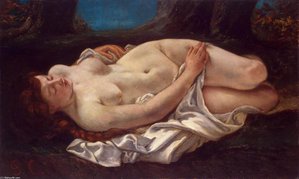 Reclining Woman - Gustave Courbet
Forget the polished, airbrushed perfection of the Academy; step into a moment of raw, unscripted truth. In Reclining Woman by Gustave Courbet, we encounter the heavy, tactile heartbeat of the Realism movement. This isn't a mythological goddess frozen in marble, but a profound exploration of human intimacy and vulnerability set beneath the shade of mature trees.
Courbet breaks every rule of his era, ditching romanticized fantasy for an unflinching look at life. You can almost feel the weight of the thick impasto brushstrokes as they sculpt the texture of skin and bark, using a muted, earthy palette that anchors the figures to the very soil they rest upon. The composition captures a private, fleeting repose—a quiet connection between souls that feels strikingly modern. As one of the top 25 artworks in Hermitage Museum, Saint Petersburg , this piece remains a powerhouse of visual impact. It reminds us that true beauty doesn't need filters; it lives in the honest, textured reality of our existence, capable of transforming any contemporary space with its soulful, grounded energy.
Conclusion
Walking through the halls of the Hermitage feels like witnessing a continuous conversation between centuries, where every brushstroke from the Renaissance to the modern era whispers a story of human passion, struggle, and triumph. These twenty-five masterpieces are far more than static relics preserved behind velvet ropes; they are living pulses of energy that refuse to be confined by time or geography. They possess a unique ability to shift the atmosphere of a room, bringing with them the golden light of a Dutch afternoon, the profound stillness of a spiritual devotion, or the electric tension of a revolutionary movement.
To truly honor these works is to move beyond mere observation and invite their spirit into your own daily life. There is a transformative power in surrounding yourself with such profound beauty—allowing the texture of an oil painting to ground you and its colors to inspire your most creative impulses. Whether it is the dramatic weight of a classical portrait or the vibrant energy of a more contemporary vision, these pieces serve as eternal reminders of the grace and resilience of the human spirit. We invite you to explore the full collection and find the piece that speaks to your soul, turning your personal space into a sanctuary of timeless art and enduring wonder.