Early Life and Artistic Foundations: A Buenos Aires Beginning
 Wikipedia: Pérez Celis
Celis Pérez (January 15, 1939 – August 2, 2008) was an Argentine artist usually referred to as Pérez Celis. He earned international recognition for his paintings, sculptures, murals and engravings. == Life and work == Pérez was born in San Telmo on...
Celis Pérez, born in the vibrant heart of Buenos Aires in 1939, embarked on a creative journey deeply rooted in the city’s dynamic cultural landscape. His early life, spent traversing the diverse neighborhoods of San Telmo and Liniers, instilled within him a keen observational sensibility – a sensitivity to the contrasting energies that would later define his artistic vision. Even as a young newsboy, Pérez demonstrated an innate aptitude for drawing, nurtured through correspondence classes that laid the groundwork for formal training. This self-directed beginning speaks volumes about his inherent drive and dedication. In 1954, he enrolled at the Belgrano School of Fine Arts, marking a pivotal moment in his development, yet even within the structured environment of academia, Pérez’s independent spirit remained palpable. His first exhibition at Galería La Fantasma at the tender age of seventeen signaled the emergence of a promising talent, one poised to challenge conventional artistic boundaries.
Geometric Abstraction & Vasarely's Influence: Defining Pérez Celis’ Style
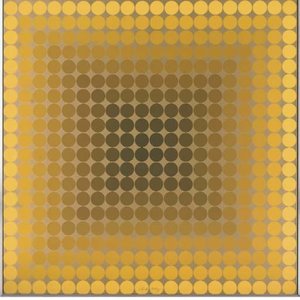
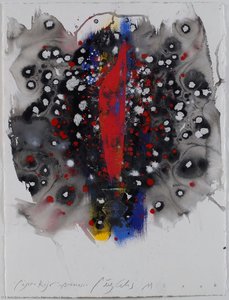 Red Bird
Celis Pérez (1939-2008) was a celebrated Argentine painter and sculptor known for his vibrant geometric murals and abstract compositions. Heavily influenced by the work of Victor Vasarely, Pérez’s art is characterized by its bold use of color, dynami
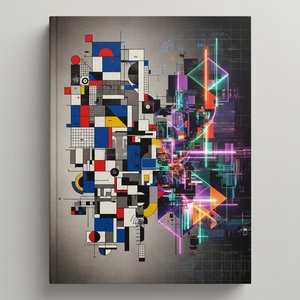
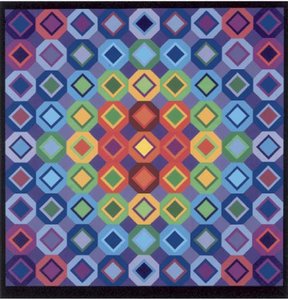
The trajectory of Pérez Celis’ art underwent a significant transformation following his encounter with the work of Victor Vasarely in a 1957 retrospective at the National Fine Arts Museum. Vasarely’s pioneering geometric abstraction resonated deeply with Pérez, providing a framework for exploring visual order and dynamic composition. However, Pérez didn't simply replicate Vasarely’s style; he absorbed its principles and infused them with his own unique sensibility. His canvases began to pulsate with bold colors and meticulously arranged forms, creating an illusion of movement and depth. This wasn’t merely a technical exercise; it was a deliberate attempt to capture the energy of modern life, translated into a language of pure abstraction. The influence is evident in works like “Red Bird,” where vibrant hues collide and intersect, forming a captivating interplay of shapes that draws the viewer into a mesmerizing visual experience. Pérez's early exploration of geometric forms wasn’t simply about aesthetics; it was a quest to distill emotion through structure.
The Murals of Argentina: Public Art and National Identity
Pérez Celis distinguished himself not only as a painter but also as a muralist, leaving an indelible mark on the urban fabric of Argentina. His large-scale public works transcended the confines of galleries, bringing art directly to the people. These murals weren’t simply decorative; they were statements – reflections on national identity, cultural heritage, and the collective spirit of the Argentine populace. He believed in the power of art to transform spaces and engage communities, a philosophy that guided his approach to public commissions. The scale of these projects demanded not only artistic skill but also logistical expertise and a deep understanding of architectural context. Pérez seamlessly integrated his abstract designs into existing structures, creating harmonious visual dialogues between art and environment. His murals became landmarks, points of pride for local communities, and enduring symbols of Argentina’s vibrant artistic legacy.
Pop Art Infusion & 'Fecundación Solar': Bridging Expressionism and Geometry
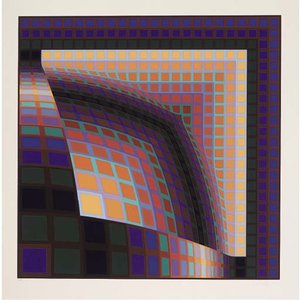
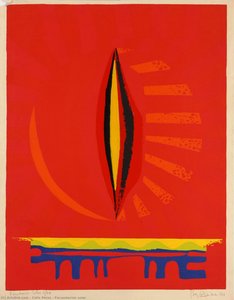 Fecundación solar
Explore 'Fecundación solar' by Celis Pérez (1966). A vibrant abstract work blending Pop & Expressionism, featuring bold reds and dynamic geometric forms. Discover Argentine modern art!
As Pérez Celis matured as an artist, his work began to incorporate elements of Pop Art, adding another layer of complexity to his already dynamic style. This wasn’t a wholesale adoption of Pop aesthetics; rather, it was a selective integration of its bold colors, graphic imagery, and playful energy. “Fecundación Solar” (1966) exemplifies this fusion, blending the dynamism of geometric abstraction with the vibrant palette and expressive forms characteristic of Pop Art. The painting’s striking reds and energetic composition evoke a sense of vitality and optimism, while its underlying structure maintains Pérez’s signature precision. This period marked a turning point in his career, demonstrating his ability to synthesize diverse influences into a cohesive and uniquely personal artistic language. He wasn't simply following trends; he was actively shaping them, forging a path that bridged the gap between Expressionism and the emerging Pop Art movement.
Self-Portraiture as Exploration: Fragmentation, Identity, and the Artistic Process
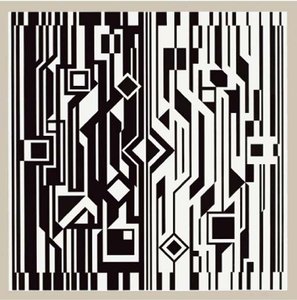
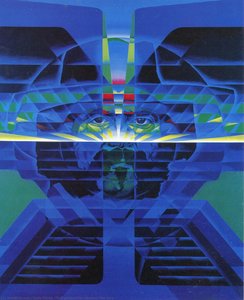 Self portrait to observe the Jury
Explore Celis Pérez’s ‘Self portrait to observe the Jury,’ a striking abstract work featuring fragmented faces & geometric patterns. Digital art meets Op Art – commission your own!
While renowned for his abstract compositions and murals, Pérez Celis also engaged in self-portraiture, offering a fascinating glimpse into his artistic process and evolving sense of identity. Works like “Self portrait to observe the Jury” are not traditional representations; they are fragmented explorations of form and perception. The distorted faces and geometric patterns reflect a deliberate deconstruction of the self, challenging conventional notions of representation. These portraits aren’t about capturing physical likeness; they're about exploring the complexities of consciousness, the subjective nature of reality, and the artist’s relationship to his audience. The use of abstraction in these works suggests a search for deeper truths beyond superficial appearances, a willingness to confront inner anxieties and uncertainties. They reveal an artist constantly questioning his own work, pushing boundaries, and seeking new ways to express the human condition.
Legacy and International Recognition: Pérez Celis' Enduring Impact
Throughout his prolific career, Pérez Celis earned international recognition for his innovative art, exhibiting in numerous galleries and museums worldwide, including a notable showing at the Musée d’Orsay. His work resonated with audiences across cultures, transcending linguistic and geographical boundaries. He participated in over 120 solo shows, solidifying his position as a leading figure in Latin American modern art. Beyond exhibitions, Pérez Celis's art found its way into prestigious private collections and museum holdings, ensuring its preservation for future generations. His influence extends beyond the realm of painting and sculpture; he also created literary illustrations, notably those accompanying Jorge Luis Borges’ Spanish translation of Walt Whitman’s “Leaves of Grass.” Pérez Celis passed away in 2008, leaving behind a rich artistic legacy that continues to inspire artists and captivate audiences. His unwavering commitment to innovation, his masterful use of color and form, and his profound exploration of the human condition ensure his enduring place in art history. Discover the captivating works of Celis Pérez at ArtsDot.com, where you can explore museum-quality reproductions and bring his vibrant vision into your own space.