The Genesis of Color Understanding: From Newton to Goethe
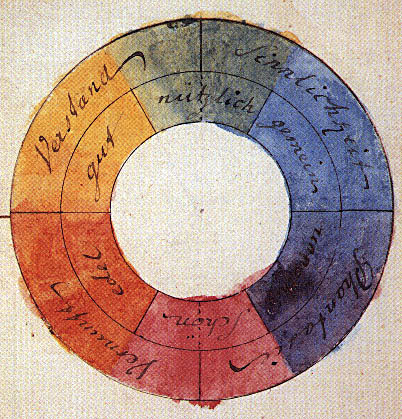 Wikipedia: Color theory
Color theory, or more specifically traditional color theory, is a historical body of knowledge describing the behavior of colors — namely in color mixing, color contrast effects, color harmony, color schemes and color symbolism. Modern color theory i...
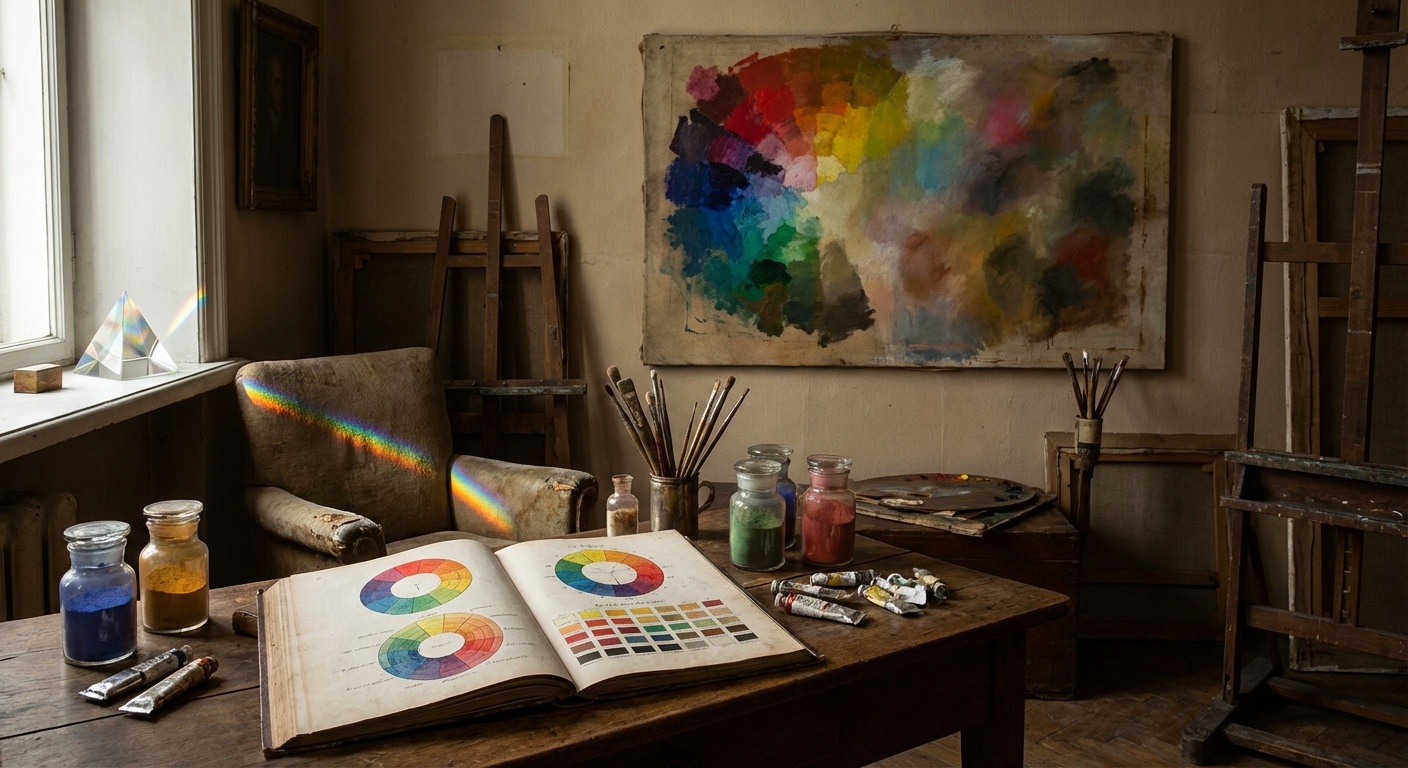
Before the vibrant canvases of Impressionism burst onto the scene, our understanding of color was a blend of practical experience and philosophical speculation. While artists had intuitively manipulated hues for millennia – think of the ochres and umbers of prehistoric cave paintings or the lapis lazuli blues of medieval icons – a systematic exploration of color’s nature remained elusive. Sir Isaac Newton's experiments with prisms in the 1660s provided the first scientific crack in this long-held mystery, revealing that white light wasn’t pure but comprised a spectrum of colors. This discovery laid the groundwork for understanding color as a quantifiable phenomenon, yet it was Johann Wolfgang von Goethe who truly revolutionized the discourse. Goethe's Theory of Colours (1810) challenged Newton’s purely physical approach, arguing that color wasn’t simply an objective property of light but deeply intertwined with human perception and emotion. He posited a subjective experience, linking colors to psychological effects – warm hues evoking feelings of activity and coolness suggesting tranquility. This shift from objectivity to subjectivity was pivotal, paving the way for artists to explore color not just as representation, but as a powerful language in itself.
Impressionism's Revolution: Capturing Fleeting Light & Color
Impressionism was a 19th-century art movement characterized by visible brush strokes, open composition, emphasis on accurate depiction of light in its changing qualities (often accentuating the effects of the passage of time), ordinary subject matter...
The late 19th century witnessed an artistic upheaval that fundamentally altered how we perceive and represent light and color. Impressionism, born from a desire to capture the ephemeral qualities of modern life, rejected the academic traditions of precise realism in favor of visible brushstrokes, open composition, and – most importantly – the accurate depiction of light’s changing effects. Claude Monet, arguably the movement's central figure, became obsessed with documenting these fleeting moments. His series paintings—haystacks, Rouen Cathedral, water lilies—weren’t studies of objects but investigations into how color transforms under varying atmospheric conditions. Monet didn’t mix colors on his palette; instead, he applied pure hues directly to the canvas, allowing the viewer's eye to optically blend them – a technique rooted in contemporary scientific understanding of retinal perception. This approach wasn’t merely about replicating visual reality but about conveying the *impression* of light and color as it was experienced at a specific moment in time. The initial reaction from critics was often harsh, dismissing these works as unfinished sketches, yet their radical departure from convention ultimately redefined painting.
Neo-Impressionism & Pointillism: A Scientific Approach to Harmony
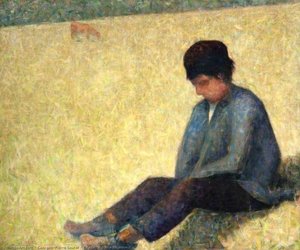
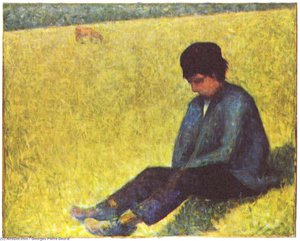 Peasant boy sitting in a meadow
Discover Georges Seurat (1859-1891), the pioneer of Pointillism & Neo-Impressionism! Explore 'A Sunday on La Grande Jatte' and his revolutionary color theory capturing modern life. Shop hand-painted reproductions!
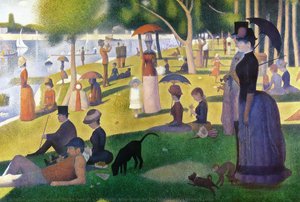
While Impressionism embraced spontaneity, Neo-Impressionism sought a more rigorous, scientific approach to color harmony. Georges Seurat, the movement’s pioneer, believed that optical mixing – the blending of colors in the viewer's eye – could be systematized and perfected. He meticulously studied the theories of Michel Eugène Chevreul, a chemist who explored simultaneous contrast, and Ogden Rood, an American physicist investigating color perception. Seurat developed Pointillism, a technique involving the application of tiny dots of pure color to create luminous effects. His masterpiece, A Sunday on La Grande Jatte, exemplifies this method; upon close inspection, it appears as a mosaic of individual points, yet from a distance, these coalesce into recognizable forms and vibrant scenes. This wasn’t simply about aesthetics; Seurat aimed to create paintings that were scientifically grounded in the principles of optics and human perception. His contemporaries, like Henri Edmond Cross, further refined Pointillism, exploring atmospheric landscapes with expressive use of color and light.
Beyond Observation: Color as Emotion in Post-Impressionist Works
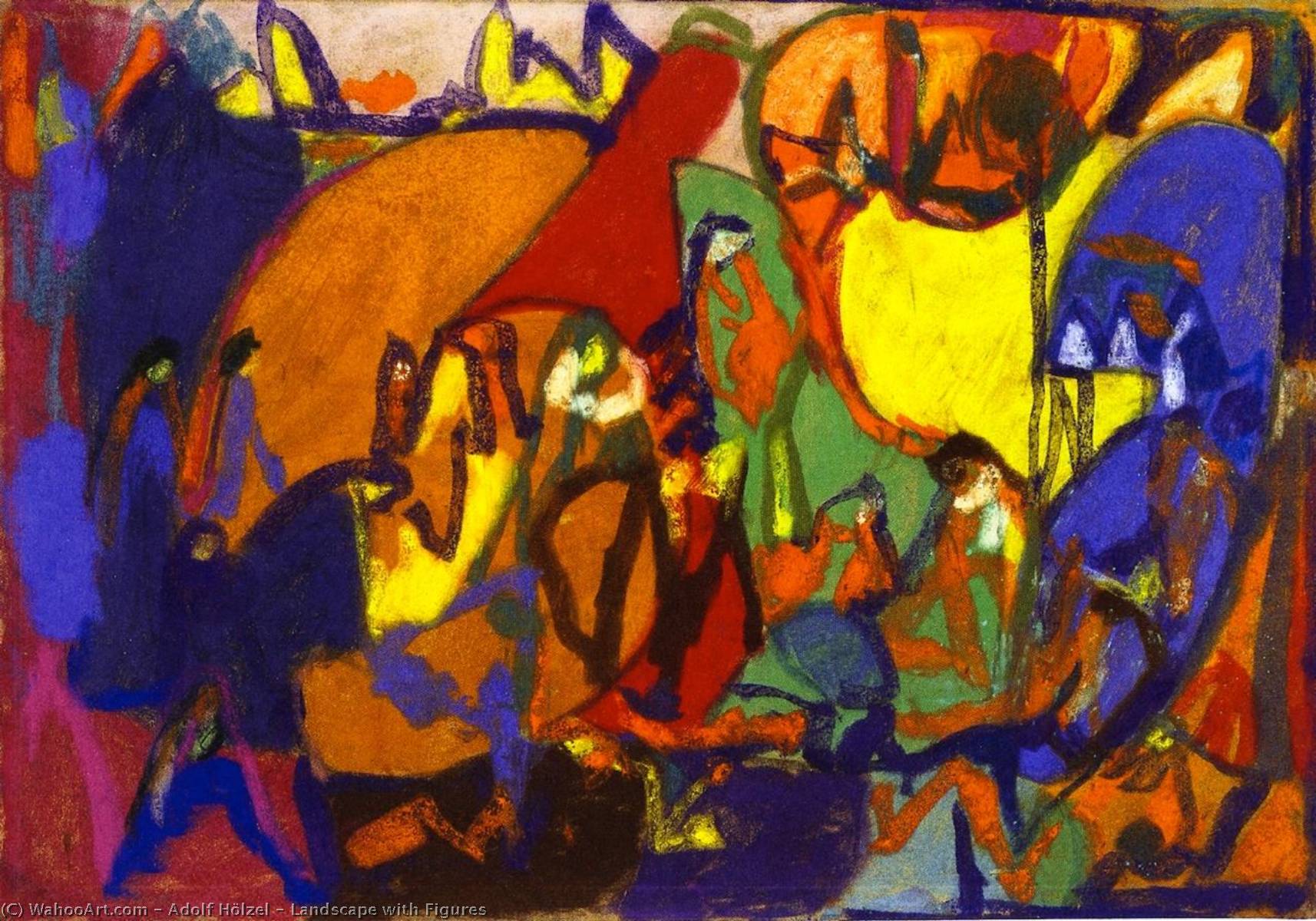 adolf hölzel
Explore Adolf Hölzel's pioneering abstract art & color theory! A key figure in German Expressionism, his work bridged realism & modernism, influencing artists like Baumeister. #arthistory
The Post-Impressionists built upon the foundations laid by Impressionism and Neo-Impressionism but moved beyond purely observational representation. Paul Cézanne, often hailed as the father of modern art, approached color with an almost architectural precision, using chromatic relationships to construct form and space. He believed that color could simultaneously describe light, form, and depth, rejecting traditional chiaroscuro techniques in favor of a more nuanced understanding of how warm and cool tones create three-dimensionality. Vincent van Gogh, however, took color in a radically different direction, transforming it into pure emotional expression. His bold use of complementary colors – those opposite each other on the color wheel – created vibrations and tensions that mirrored his internal psychological state. Works like The Starry Night aren’t depictions of landscapes but visceral expressions of feeling. Paul Gauguin similarly embraced arbitrary color choices, believing they could enhance artistic truth rather than diminish it, establishing a principle that color need not be descriptive to be meaningful.
The Psychological Dimensions of Color: Influence and Perception
 Chromatic Narratives: Exploring the Psychological & Aesthetic Dimensions of Color Theory in Art History
Explore the fascinating evolution of color theory in art history! Discover Impressionism, Neo-Impressionism & beyond with expert insights for collectors and enthusiasts. Learn about Seurat's techniques & the psychology of color.
Throughout these movements, the underlying question remained: how does color affect us? Goethe’s initial insights into the subjective experience of color were further explored by artists who recognized its power to evoke specific emotions and associations. Warm colors like red and orange often convey energy, passion, and excitement, while cool colors such as blue and green tend to be associated with tranquility, peace, and serenity. However, these associations aren’t universal; cultural context and individual experiences play a significant role in how we perceive color. Adolf Hölzel, a key figure in German Expressionism, delved deeply into the abstract qualities of color, bridging realism and modernism through his pioneering explorations of chromatic relationships. His work influenced artists like Baumeister, demonstrating the power of color to create non-representational forms and evoke complex emotional responses. Understanding these psychological dimensions allows us to appreciate not just *what* an artist depicts but *how* they make us feel.
Color Theory Today: Legacy, Applications, and Artistic Exploration
The legacy of Impressionism, Neo-Impressionism, and Post-Impressionism continues to resonate in contemporary art. While modern color science provides a more objective understanding of color’s physical properties, the artistic principles developed during these movements remain invaluable. From graphic design and marketing to interior decoration and fashion, color theory informs countless aspects of our visual world. Artists continue to explore the expressive potential of color, pushing boundaries and challenging conventional notions of representation. At ArtsDot.com, we celebrate this rich history by offering meticulously crafted reproductions of masterpieces from these pivotal periods, allowing you to experience the power of color firsthand. Whether you’re drawn to Monet’s shimmering landscapes or Seurat’s scientific precision, our handmade oil paintings and museum-quality prints bring the vibrancy and emotional depth of these iconic works into your home. Explore our collection today and discover the enduring beauty of chromatic harmony.