The Arcadian Ideal: Origins of Pastoral Landscape
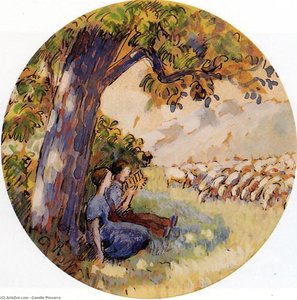
The pastoral genre of literature, art, or music depicts an idealised form of the shepherd's lifestyle – herding livestock around open areas of land according to the seasons and the changing availability of water and pasture. The target audience is t...
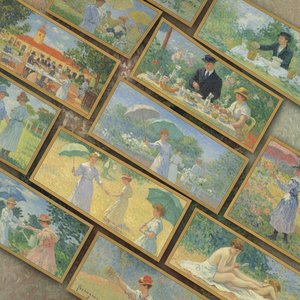
For centuries, the human spirit has sought refuge in visions of untamed nature, a yearning perhaps born from our increasingly complex relationship with the world around us. This desire finds its earliest expression in the pastoral landscape – not merely a depiction of rural life, but an idealized construct representing harmony, simplicity, and a profound connection to the land. The roots of this aesthetic lie deep within classical antiquity, specifically in the mythical realm of Arcadia, Greece. Though likely never a literal place, Arcadia became synonymous with a golden age, a locus amoenus where shepherds lived idyllic lives free from the burdens of civilization. Early Roman frescoes, discovered at Pompeii and Herculaneum, offer glimpses into this world – tranquil scenes populated by figures amidst lush vegetation, often serving as backdrops to more narrative elements. However, even within these early examples, we see a nascent appreciation for the landscape itself, a recognition of its inherent beauty and restorative power. This fascination wasn't simply about replicating reality; it was about constructing an emotional space, a retreat from the anxieties of urban life – a sentiment that resonates powerfully even today.
From Observation to Impressionism: The 19th-Century Transformation
 Evocations of Rural Life: A Historical Journey Through Landscape Painting
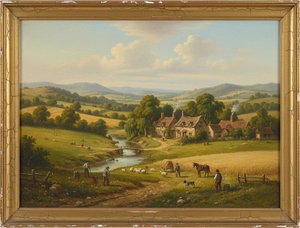
Explore the rich history of rural life in painting! Discover Impressionist masterpieces, Italian Macchiaioli scenes & the enduring appeal of pastoral landscapes. Find your perfect artwork at ArtsDot.
While the classical world laid the foundation for pastoral ideals, it wasn’t until the 19th century that landscape painting truly came into its own as an independent genre. Prior to this period, landscapes often served as supporting elements within larger compositions – religious scenes or portraits, for example. The rise of Romanticism fundamentally altered this dynamic. Artists like Caspar David Friedrich imbued their landscapes with a spiritual weight, depicting nature not merely as a beautiful vista but as a manifestation of the divine. This shift coincided with a growing interest in scientific observation and a desire to capture the fleeting effects of light and atmosphere. The Barbizon School, emerging in France during the 1830s, marked a crucial turning point. Artists like Charles-François Daubigny moved beyond studio conventions, embracing direct observation and painting *en plein air* – outdoors, directly from nature. This commitment to realism paved the way for Impressionism, where artists sought to capture the ephemeral qualities of light and color with unprecedented immediacy.
Barbizon School & En Plein Air: A Revolution in Light and Technique
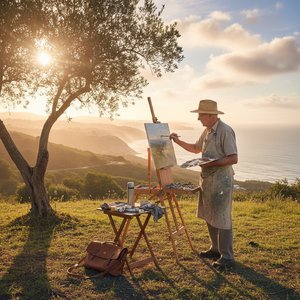
En plein air (pronounced [ɑ̃ plɛ.n‿ɛʁ]; French for 'outdoors'), or plein-air painting, is the act of painting outdoors. This method contrasts with studio painting or academic rules that might create a predetermined look. The theory of 'En plein air' ...
The Barbizon School wasn't a unified movement with a strict manifesto but rather a collective of artists sharing a common ethos. They rejected the academic constraints of Parisian studios, preferring to work directly from nature in the Forest of Fontainebleau. This practice – *en plein air* – was revolutionary for its time. Previously, paintings were largely conceived indoors and finished through meticulous layering and glazing. The Barbizon painters, however, prioritized capturing the immediate sensory experience of being within the landscape. They developed a looser brushstroke, focusing on tonal qualities and atmospheric effects rather than precise detail. This emphasis on light and color laid the groundwork for Impressionism. Artists like Théodore Rousseau captured the subtle nuances of rural life, depicting scenes that were both realistic and deeply evocative. The invention of portable paint tubes in 1841 by John G. Rand further facilitated this practice, allowing artists greater freedom to work outdoors and experiment with new techniques.
Capturing the Sublime: Romantic Visions of Nature's Power
 Evoking Nature's Sublime: A Comprehensive Exploration of 19th-Century Landscape Painting
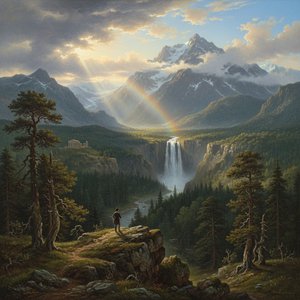
Explore the captivating world of 19th-century landscape painting! Discover renowned artists like Friedrich & Monet, key movements, and find the perfect artwork to bring nature's serenity into your home. Expert insights at ArtsDot.
The Romantic movement elevated nature from a source of aesthetic pleasure to a realm of profound spiritual significance. Artists sought not merely to depict landscapes but to evoke *the sublime* – that awe-inspiring combination of beauty and terror experienced in the face of overwhelming natural power. Caspar David Friedrich’s paintings, for example, often feature solitary figures dwarfed by vast mountain ranges or stormy seas, conveying a sense of human insignificance in the grand scheme of things. This wasn't simply about dramatic scenery; it was about exploring the emotional and psychological impact of nature on the individual. The concept of the sublime also influenced artists working outside of Germany. In England, painters like J.M.W. Turner captured the raw energy of storms and shipwrecks, conveying a sense of both beauty and destruction. These works weren’t simply representations of natural phenomena; they were explorations of human emotion – fear, awe, wonder, and ultimately, a recognition of nature's untamable power.
The Enduring Appeal: Rural Landscapes as Reflections of Identity
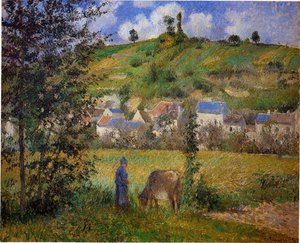
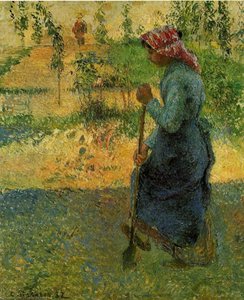
From the classical Arcadia to the Impressionist fields of France, the rural landscape has consistently served as more than just a subject for artistic representation. It’s a mirror reflecting our deepest desires and anxieties – a yearning for simplicity, a connection to nature, and a search for meaning in an increasingly complex world. The works of artists like Camille Pissarro, with his intimate depictions of French countryside life, or Pierre-Auguste Renoir, capturing the joyous energy of rural scenes, continue to resonate today because they tap into these fundamental human emotions. Even Sir Alfred Munnings’ evocative paintings of English landscapes, with their loose brushstrokes and tranquil atmosphere, offer a sense of escape and serenity. The enduring appeal of these works lies in their ability to transport us to another time and place, reminding us of the beauty and power of the natural world – and our own connection to it. At ArtsDot.com, we believe that art should be accessible to everyone, allowing you to bring these timeless visions into your home and experience the transformative power of rural landscapes firsthand.