


The Historical Precedent: From Private Collections to Public Galleries
 Wikipedia: Egyptian Museum
The Museum of Egyptian Antiquities, commonly known as the Egyptian Museum (Arabic: المتحف المصري, romanized: al-Matḥaf al-Miṣrī, Egyptian Arabic: el-Matḥaf el-Maṣri [elˈmætħæf elˈmɑsˤɾi]) (also called the Cairo Museum), located in Cairo, Egypt, house...
The impulse to curate, to select and arrange objects of beauty and significance, is as old as civilization itself. Before the advent of public museums, art existed primarily within the private realm – royal collections amassed as symbols of power, aristocratic cabinets overflowing with curiosities, and the intimate salons of discerning patrons. Consider the Egyptian Museum in Cairo, born not from a civic decree but from the passion of individuals accumulating pharaonic treasures. These early collectors weren’t merely acquiring; they were constructing narratives, establishing hierarchies of taste, and shaping perceptions of history through their choices. The very act of display – the arrangement of objects within a space – communicated meaning, reflecting the collector's worldview and social standing. The Renaissance saw the rise of the Kunstkammer, rooms dedicated to wonders both natural and man-made, foreshadowing modern exhibition practices with its emphasis on categorization and contextualization. This lineage informs our contemporary understanding of curation; we are inheritors of a tradition rooted in personal vision and the desire to create immersive environments that transcend mere aesthetic pleasure.
The transition from private holdings to public galleries—the Louvre emerging from royal collections, for example—didn’t erase this foundational principle. Early museum curators were often scholars tasked with preserving cultural heritage, but they also acted as interpreters, deciding which stories to tell and how best to present them. This power of selection remains central to the curatorial process, demanding a keen eye not only for artistic merit but also for historical context and potential resonance.
Establishing a Narrative: Thematic Cohesion in Your Art Display
Museum curators chose and exhibited the best-designed functional items; in the Good Design program (1950-55) the curators, in col laboration with the ...
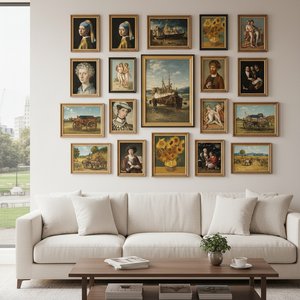
A truly compelling art display isn’t simply a collection of beautiful objects; it's a carefully constructed dialogue. The essence lies in establishing a thematic cohesion, a unifying principle that elevates the individual pieces and creates a richer, more meaningful experience for the viewer. This doesn’t necessarily require strict adherence to chronology or artistic style. Instead, consider exploring conceptual connections – shared color palettes, recurring motifs, emotional resonances, or even contrasting perspectives on a single subject. Johannes Vermeer's “Young Girl with a Flute,” for instance, might find unexpected harmony alongside Diego Rodriguez de Silva y Velázquez’s “Portrait of Don Luis de Gongora y Argote” if one focuses on the theme of contemplative introspection and the quiet dignity of portraiture. The power isn’t in similarity but in the conversation sparked by their juxtaposition.
Think of a curator assembling an exhibition; they begin with a central idea, then select works that build upon this theme, creating a visual and intellectual journey for the audience. This process requires careful consideration of each piece's individual story and its relationship to the overarching narrative. Avoid randomness; every element should contribute to the unfolding dialogue, enriching the viewer’s understanding and fostering a deeper connection with the art.
Spatial Considerations: Scale, Proportion, and the Architecture of Display
The physical space itself is an integral component of any successful art display. Scale and proportion are paramount; a monumental work will overwhelm a small room, while a delicate miniature might be lost in a vast expanse. Consider the architecture of your space – the height of the ceilings, the natural light sources, and the existing color scheme. A gallery’s walls aren't neutral canvases but active participants in the viewing experience. The arrangement should complement the artwork, not compete with it.
Think about sightlines and flow. How will visitors move through the space? Where will their eyes naturally be drawn? Grouping works by size or color can create visual rhythm, while strategic placement of focal points can guide the viewer’s attention. The Museum of Old and New Art (MONA) in Tasmania demonstrates a radical approach to spatial arrangement, utilizing underground chambers and labyrinthine corridors to heighten the sense of discovery and intrigue. While such dramatic interventions may not be feasible for every home, the principle remains: the space should enhance the artwork's impact.
Illumination & Presentation: Mastering Light, Framing, and Placement
Light is arguably the most crucial element in art display. Natural light is ideal, but often difficult to control. Artificial lighting should be carefully considered – avoiding harsh glare or shadows that distort colors and textures. Museum curators employ specialized lighting techniques to highlight specific details and create a sense of drama. Framing plays an equally important role; it not only protects the artwork but also defines its boundaries and influences our perception of it. A simple, understated frame can allow the art to speak for itself, while an ornate frame can add historical context or emphasize its importance.
Consider the height at which you hang your artwork. Eye-level is generally recommended, but this can be adjusted based on the size and subject matter of the piece. Placement should also reflect the artwork’s emotional tone; a serene landscape might find harmony in a quiet corner, while a dynamic abstract painting could benefit from a more prominent location. The subtle art of presentation—the choice of lighting, framing, and placement—can transform an ordinary space into a captivating gallery.
Beyond Aesthetics: Preservation, Security, and Long-Term Care
Digital curation is the selection, preservation, maintenance, collection, and archiving of digital assets. Digital curation establishes, maintains, and adds value to repositories of digital data for present and future use. This is often accomplished ...
A commitment to curation extends beyond mere aesthetics; it encompasses the responsible preservation and care of your collection. Protecting artwork from damage is paramount – controlling humidity levels, avoiding direct sunlight, and handling pieces with utmost care. Security is also a concern, particularly for valuable works. Consider investing in appropriate display cases or security systems to deter theft or vandalism.
Digital curation plays an increasingly important role in this process—maintaining high-resolution images of your collection, documenting provenance and condition reports, and creating a digital archive for future generations. This not only safeguards your investment but also facilitates research and appreciation. Remember that art is a legacy; responsible stewardship ensures its longevity and continued enjoyment.
The Curator's Eye: Developing a Personal Style and Avoiding Common Pitfalls
Ultimately, the most important aspect of curation is developing a personal style—a unique vision that reflects your taste and values. Don’t be afraid to experiment with different arrangements, explore unconventional pairings, and trust your instincts. Visit museums and galleries for inspiration, but avoid simply replicating what you see; strive to create something original and meaningful.
Common pitfalls include overcrowding a space, neglecting thematic cohesion, and failing to consider the architecture of the room. Resist the urge to display everything at once; sometimes less is more. Focus on quality over quantity, selecting pieces that truly resonate with you and contribute to the overall narrative. At ArtsDot.com, we offer a vast library of museum-quality reproductions, custom framing options, and expert art consultations to help you transform your home into a personal gallery—a space that reflects your unique style and passion for art.