Early Life & Formation: The Seeds of a Christian Aesthetic
Maurice Denis, born in the coastal town of Granville in 1870, emerged from a modest background – his father a railway employee, his mother a seamstress. This seemingly unremarkable beginning belied a deeply sensitive and intellectually curious spirit that would profoundly shape the course of French painting. From an early age, Denis demonstrated a fervent devotion to religion, meticulously journaling his experiences within the local church, captivated by the interplay of candlelight, incense, and sacred ritual. This nascent spiritual inclination wasn’t merely devotional; it was fundamentally aesthetic, recognizing in religious ceremony a powerful synthesis of visual beauty and emotional resonance. Simultaneously, he gravitated towards the Louvre, finding inspiration not in the prevailing Realism but in the luminous figures of Fra Angelico, Raphael, and Botticelli – artists who prioritized symbolic meaning and idealized form over strict representational accuracy. At fifteen, his journal entries reveal a clear ambition: to become a “Christian painter,” dedicated to celebrating the “miracles of Christianity.” This early commitment wasn’t simply about illustrating biblical narratives; it was about forging a new visual language capable of expressing spiritual truths.
The Nabis Circle: Positivism, Japonisme, and the Rejection of Naturalism
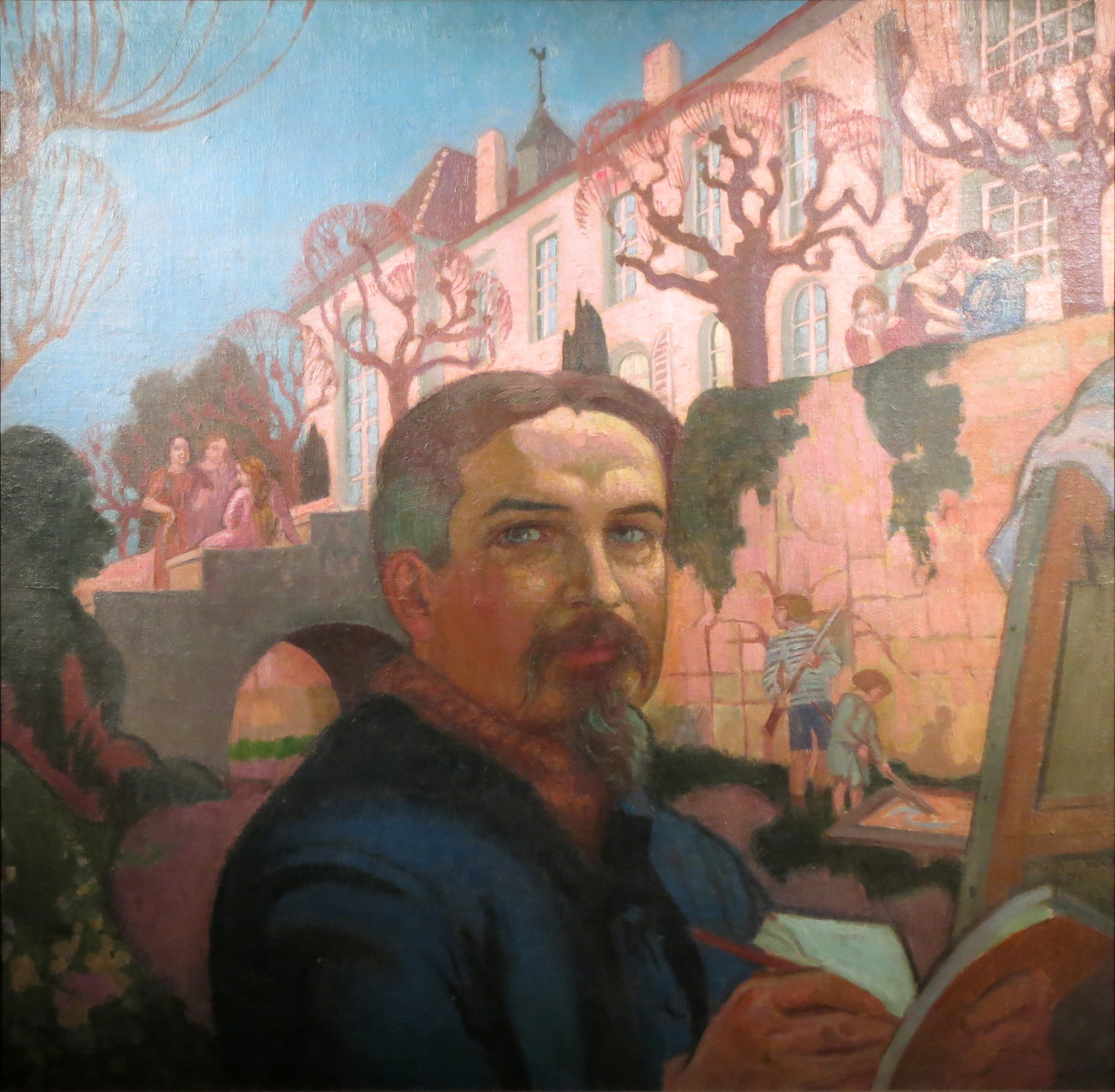 Wikipedia: Maurice Denis
Maurice Denis (French: [dəni]; 25 November 1870 – 13 November 1943) was a French painter, decorative artist, and writer. An important figure in the transitional period between impressionism and modern art, he is associated with Les Nabis, symbolism...
Denis's formal artistic education began at the Académie Julian in Paris, where he encountered kindred spirits – Paul Sérusier and Pierre Bonnard. These shared discussions about painting quickly coalesced into a more defined group, christened the Nabis (“Prophets” in Hebrew) in 1890. The Nabis weren’t simply seeking stylistic innovation; they were driven by a philosophical rejection of naturalism and materialism, influenced by the positivist writings of Auguste Comte and Hippolyte Taine. They believed art should not be a mere imitation of nature but rather a “creation of our spirit,” with nature serving only as an impetus for internal vision. This emphasis on subjective experience was further amplified by their fascination with Japonisme – the burgeoning interest in Japanese prints, which offered a radically different aesthetic sensibility characterized by flattened perspectives, bold colors, and decorative patterns. Denis himself famously articulated this shift in his dictum: “Art is no longer a visual sensation that we gather… but a creation of our spirit.” This rejection of optical realism paved the way for increasingly symbolic and abstract forms.
‘Taches de Soleil’ & Beyond: Denis's Evolving Style and Symbolic Language
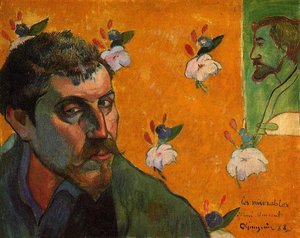
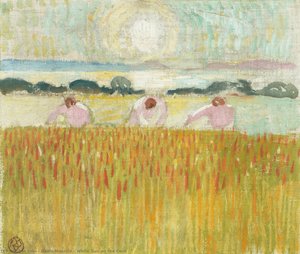
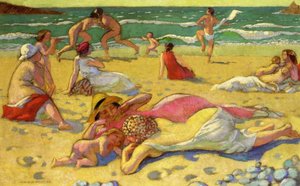
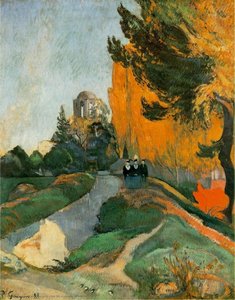
The pivotal moment in Denis’s stylistic evolution arrived with his encounter with Gauguin at the Café Volponi during the 1889 Universal Exposition. Gauguin’s vibrant, non-naturalistic colors and powerfully simplified forms were a revelation, prompting Denis to abandon the scientific precision of Neo-Impressionism. This influence is strikingly evident in works like “Taches de Soleil sur la terrace” (Sunspots on the Terrace) from 1890, where brightly colored forms begin to take precedence over accurate depiction. However, Denis wasn’t simply imitating Gauguin; he was internalizing his principles and adapting them to his own spiritual concerns. The work of Puvis de Chavannes also remained a constant source of inspiration, influencing Denis's preference for large-scale compositions, allegorical figures, and a sense of serene monumentality. His paintings increasingly became imbued with symbolic meaning, often referencing religious themes or exploring the relationship between the earthly and the divine. This wasn’t about literal representation but rather about evoking emotional and spiritual states through carefully chosen colors, forms, and compositions.
Theory into Practice: Art as ‘Ideation’ and the Decorative Emphasis
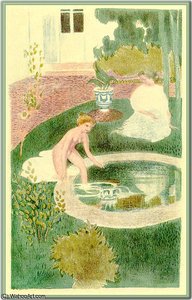
Denis's impact extended beyond his own paintings; he was also a prolific art theorist. His concept of “ideation” – the idea that painting should originate in the artist’s mind rather than from direct observation – became central to the Nabis aesthetic and profoundly influenced subsequent movements like Cubism and Fauvism. He argued against the purely optical experience of Impressionism, advocating for a more intellectual and symbolic approach. This emphasis on ideation naturally led to a greater focus on decorative elements. For Denis, the surface of the painting was as important as its subject matter; he sought to create harmonious compositions that were both visually pleasing and intellectually stimulating. This wasn’t merely about ornamentation but rather about integrating art into everyday life, transforming domestic spaces into environments imbued with beauty and meaning. His interiors often feature intimate scenes of family life, bathed in soft light and adorned with symbolic objects.
Sacred Art & Revival: Denis’s Post-War Commitment to Religious Expression
Following the First World War, Denis embarked on a new chapter in his artistic career – founding the Ateliers d'Art Sacré (Workshops of Sacred Art). This initiative was driven by a deep concern about the decline of religious art and a desire to revive traditional techniques and spiritual values. He believed that art could play a vital role in restoring faith and fostering a sense of community. The workshops brought together artists, craftsmen, and architects to create integrated works of art for churches – stained glass windows, mosaics, frescoes, and sculptures. Denis himself undertook numerous commissions, decorating the interiors of several Parisian churches with large-scale compositions that reflected his evolving spiritual beliefs. This work wasn’t about replicating historical styles but rather about creating a contemporary visual language capable of expressing the timeless truths of Christianity.
Legacy and Influence: Bridging Impressionism, Cubism, and Modern Spirituality
Maurice Denis occupies a unique position in art history – a bridge between Impressionism and modern art. His theories contributed to the foundations of Cubism, Fauvism, and abstract painting, while his own work embodies a profound spiritual sensibility that sets him apart from many of his contemporaries. He wasn’t simply an innovator; he was a synthesist, drawing inspiration from diverse sources – religious iconography, Japonisme, Puvis de Chavannes, and Gauguin – to create a uniquely personal artistic vision. The Musée Départemental du Prieure in Saint-Germain-en-Laye stands as a testament to his enduring legacy, housing an extensive collection of his works and offering a glimpse into the world he so meticulously crafted. Denis’s commitment to sacred art, his emphasis on ideation, and his belief in the transformative power of beauty continue to resonate with artists and audiences today. For those seeking to understand the evolution of modern painting and the enduring search for spiritual meaning in art, Maurice Denis remains an essential figure.