Introduction
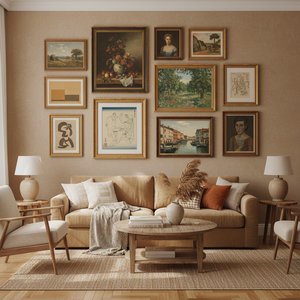
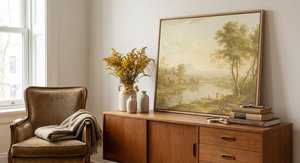
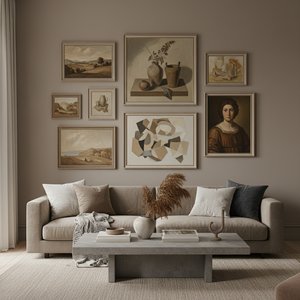
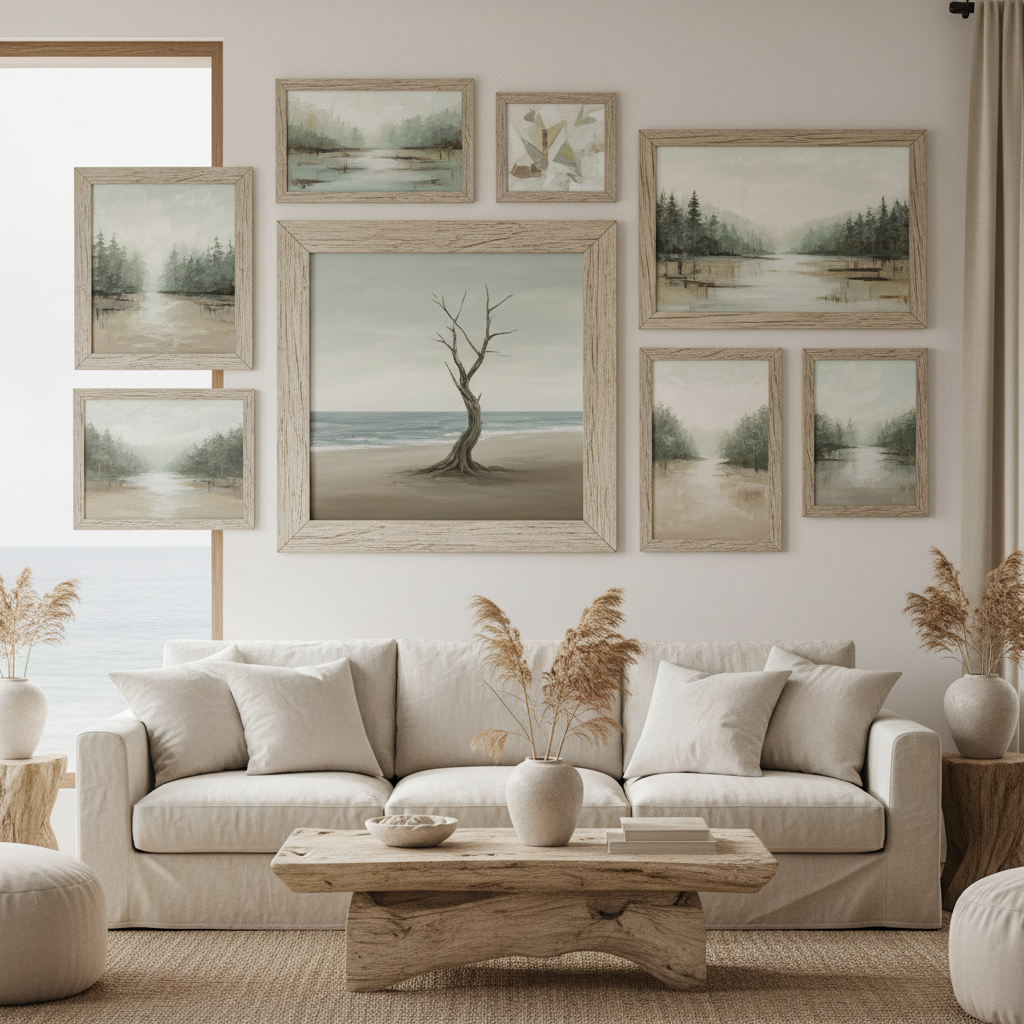
Imagine standing before a canvas where time itself seems to have washed ashore – colors muted like sun-bleached wood, textures hinting at journeys across vast oceans of history. This is the allure of 'driftwood tones' in art: a palette that speaks not just to aesthetics, but to resilience, memory, and the quiet beauty found in decay and transformation.
Throughout art history, artists have turned to these earthy, desaturated hues – ochres, umbers, grays, and faded blues – to evoke a range of emotions. From the somber realism of the Old Masters to the evocative landscapes of Romanticism and the introspective portraits of modern times, 'driftwood tones' have served as powerful tools for storytelling. They were born from readily available pigments in many eras—earth minerals, charcoal, and early natural dyes—but their enduring appeal transcends mere practicality.
These colors resonate deeply within us because they mirror the world around us: the weathered surfaces of ancient buildings, the shifting sands of time, the subtle gradations of light on water. They connect us to a sense of place, to the passage of generations, and to the inherent impermanence of all things. The works that masterfully employ this palette often feel less like representations and more like echoes—fragments of lives lived, stories whispered across centuries.
But beyond their historical significance, these paintings continue to captivate us today because they offer a sanctuary from the noise of modern life. They invite contemplation, encouraging us to slow down, observe, and find beauty in the understated. They remind us that even in stillness, there is depth; even in fading, there is power.
In this collection, we’ll explore ten famous paintings where 'driftwood tones' take center stage—each a testament to the enduring legacy of these captivating colors and the artists who wielded them with such profound effect. Prepare to be transported to worlds both familiar and dreamlike, where every brushstroke tells a story of time, texture, and the quiet poetry of existence.
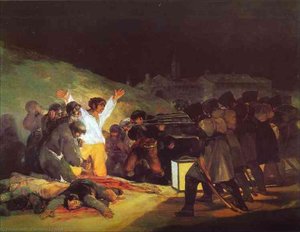
The Third of May, 1808 The Execution of the Defenders of Madrid - Francisco José de Goya y Lucientes
 The Third of May, 1808 The Execution of the Defenders of Madrid - Francisco José de Goya y Lucientes
Imagine a chill night air, the harsh glare of a single lantern cutting through darkness… and then, the stark white of a defiant shirt against a backdrop of impending doom. Francisco Goya’s “The Third of May 1808” isn't simply a painting; it’s a visceral cry against brutality, rendered in a palette dominated by somber earth tones – the very shades of loss and resistance.
Goya masterfully employs ochres, grays, and muted browns to depict the execution of Spanish insurgents, transforming a historical event into a universal symbol of human suffering. The loose brushwork and dramatic chiaroscuro amplify the scene’s emotional weight, drawing us into the heart of the tragedy with unsettling immediacy. The texture is palpable; you can almost feel the grit of the earth, the cold steel, the desperation in the eyes of those facing their fate.
What sets this work apart isn't just its technical brilliance but its revolutionary spirit. Goya rejected idealized forms, opting instead for raw realism that foreshadowed modern art’s embrace of emotional truth. The painting’s enduring power lies in its ability to transcend time and place, reminding us of the fragility of freedom and the importance of bearing witness.
Bringing a reproduction of “The Third of May 1808” into your home isn't merely an aesthetic choice; it’s an invitation for contemplation. Its somber tones can foster a sense of quiet reflection, prompting conversations about justice, courage, and the enduring legacy of conflict – making it a profoundly meaningful addition to any space seeking depth and emotional resonance. Explore other famous paintings with driftwood tones to create a harmonious atmosphere.
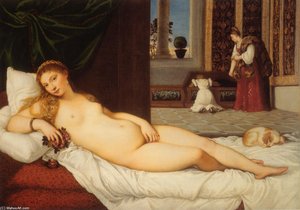
The Venus of Urbino - Titian
 The Venus of Urbino - Titian
Close your eyes and imagine a sun-drenched room, the scent of roses lingering in the air… then open them to Titian’s “The Venus of Urbino” (1538). This masterpiece isn't merely a depiction of beauty; it’s an invitation into a world of quiet sensuality and Renaissance refinement.
Titian, a master of Venetian color and light, employs a rich palette of ochres, umbers, and warm browns to create a luminous surface that seems to breathe. The loose brushwork and subtle *sfumato* technique lend an almost palpable texture to the scene – you can practically feel the silk of the fabrics and the warmth of her skin. Unlike earlier idealized Venuses, Titian’s subject possesses a striking realism, engaging us with a direct gaze that challenges convention.
This painting stands out for its groundbreaking approach to portraiture and symbolism. The reclining figure, while echoing classical motifs, feels distinctly human, imbued with confidence and self-awareness. The inclusion of domestic details – the sleeping dog, the open cassone – adds layers of narrative complexity, hinting at themes of fidelity and marriage.
Bringing a reproduction of “The Venus of Urbino” into your home is an act of embracing timeless elegance. Its warm tones create a sense of intimacy and sophistication, transforming any space into a sanctuary of beauty and contemplation. Explore other famous paintings with driftwood tones to curate a collection that speaks to your soul – and discover the enduring power of art to elevate our everyday lives.
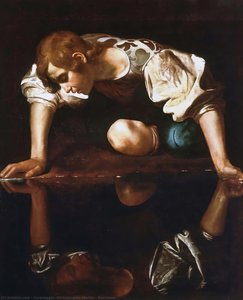
Narcissus - Caravaggio
 Narcissus - Caravaggio
A haunting stillness hangs over Caravaggio’s “Narcissus” (1599), a moment suspended between beauty and despair, reflection and isolation.
This masterpiece isn't simply a retelling of the myth; it’s a profound exploration of human psychology rendered in the dramatic language of Baroque tenebrism. Caravaggio’s masterful use of light and shadow plunges us into Narcissus’s inner world, highlighting his youthful beauty while simultaneously emphasizing his tragic self-obsession. The rich palette of ochres, umbers, and browns creates a sense of intimacy and melancholy that is both captivating and unsettling.
What sets this work apart is its raw realism – Caravaggio rejected idealized forms in favor of depicting the human condition with unflinching honesty. The painting’s influence on subsequent generations of artists is undeniable, forever altering the course of Western art. The dark, undefined space surrounding Narcissus amplifies his sense of loneliness and foreshadows his fate.
Bringing a reproduction of “Narcissus” into your home isn't merely an aesthetic choice; it’s an invitation for contemplation on themes of self-perception, desire, and the fleeting nature of beauty. Explore other famous paintings with driftwood tones to create a space that evokes a sense of quiet introspection – and discover the enduring power of art to illuminate the complexities of the human soul.
Where do we come from what are we where are we going - Eugène Henri Paul Gauguin
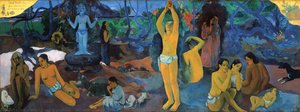 Where do we come from what are we where are we going - Eugène Henri Paul Gauguin
A profound question echoes across the canvas of Paul Gauguin’s “Where do we come from? What are we? Where are we going?” – a visual meditation on the very essence of human existence.
This monumental work, bathed in cool blues and greens reminiscent of Tahitian lagoons, isn't merely a painting; it’s a philosophical poem rendered in bold color and symbolic form. Gauguin rejected Western conventions, employing Synthetism to create an emotionally resonant image that prioritizes subjective experience over realistic representation. The rich palette, dominated by earthy tones contrasted with vibrant yellows and oranges, evokes a sense of both serenity and melancholy.
What sets this painting apart is its unconventional narrative structure – reading from right to left, it depicts the cyclical nature of life rather than a linear progression. The thirteen figures represent different stages of existence, inviting viewers to contemplate their own place within the grand scheme of things. This work represents a pivotal moment in Gauguin’s artistic journey, moving away from Impressionism towards a uniquely personal and symbolic style.
Bringing a reproduction of “Where do we come from? What are we? Where are we going?” into your home is an invitation for quiet reflection. Its calming blues and evocative imagery can foster a sense of introspection – creating a space that encourages contemplation on life’s biggest questions. Explore other famous paintings with driftwood tones to curate a collection that speaks to your soul, and discover the enduring power of art to inspire wonder and self-discovery.
Self Portrait - Vincent Willem van Gogh
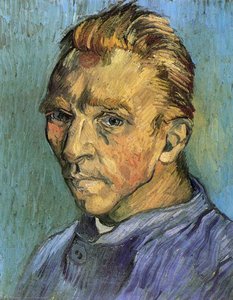 Self Portrait - Vincent Willem van Gogh
To gaze into Vincent van Gogh’s “Self Portrait” (1889) is to encounter a soul laid bare – a moment of raw honesty captured in swirling brushstrokes and intense color.
Painted during his time at Saint-Rémy, this artwork isn't simply a likeness; it’s a window into the artist’s inner world. The palette, dominated by earthy tones—ochres, yellows, and browns—is dramatically contrasted with cool blues, mirroring Van Gogh’s internal struggles. The thick impasto – the visibly textured application of paint – lends a tactile quality that draws you in, allowing you to almost feel the artist's emotional fervor.
What sets this self-portrait apart is its unflinching vulnerability and expressive power. The swirling strokes around his head echo the turbulence within, while his direct gaze compels connection, demanding attention from the viewer. It stands as a testament to Van Gogh’s unique ability to convey emotion through color and form.
Bringing a reproduction of “Self Portrait” into your home is an invitation for quiet contemplation. At , we faithfully preserve the texture and emotional depth of this masterpiece – allowing you to experience its power firsthand. Explore other famous paintings with driftwood tones to curate a collection that speaks to your soul, and discover how art can transform any space into a sanctuary of beauty and reflection.
Double Portrait of Jean de Dinteville and Georges de Selve (also known as The Ambassadors) - Hans Holbein the Younger
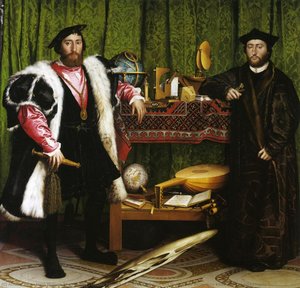 Double Portrait of Jean de Dinteville and Georges de Selve (also known as The Ambassadors) - Hans Holbein the Younger
Hans Holbein the Younger’s “The Ambassadors” (1533) isn't merely a portrait; it’s a meticulously crafted world brimming with power, knowledge, and a haunting reminder of mortality. The painting’s somber palette – rich browns, deep greens, and muted golds – creates an atmosphere of quiet dignity and intellectual gravitas.
This masterpiece exemplifies the Northern Renaissance style, showcasing Holbein’s unparalleled ability to capture texture and light with astonishing realism. The luxurious fabrics, gleaming instruments, and meticulously rendered details draw you in, inviting close examination. But beneath the surface lies a complex web of symbolism – globes representing worldly power, books alluding to learning, and a distorted skull hidden within the composition.
What sets this work apart is its enigmatic quality; it challenges viewers to actively engage with its deeper meaning. The anamorphic skull serves as a *memento mori*, reminding us of the fleeting nature of earthly glory. This painting’s enduring power lies in its ability to provoke contemplation on themes of life, death, and the pursuit of knowledge.
Bringing a reproduction of “The Ambassadors” into your home is an invitation for intellectual curiosity and refined elegance. Its rich tones and intricate details can transform any space into a sanctuary of sophistication – creating a timeless ambiance that speaks to both power and vulnerability. Explore other famous paintings with driftwood tones to curate a collection that reflects your own unique sense of style and appreciation for the finer things in life.
Portrait of Daniel-Henry Kahnweiler - Pablo Picasso
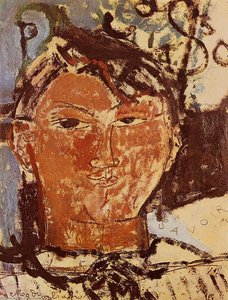 Portrait of Daniel-Henry Kahnweiler - Pablo Picasso
Pablo Picasso’s “Portrait of Daniel-Henry Kahnweiler” (1910) isn't simply a depiction of an art dealer; it’s a radical deconstruction of representation itself, a landmark achievement in the history of Analytical Cubism.
The painting’s palette – dominated by earthy ochres, browns, and grays – creates a somber yet intellectual atmosphere. These restrained tones emphasize tonal variations and textural contrasts created through visible brushstrokes, drawing attention to the fragmented form rather than purely aesthetic appeal. Picasso dissects Kahnweiler's features into geometric planes, challenging us to reconstruct the image in our minds.
What sets this work apart is its revolutionary approach to perspective and form. Rejecting traditional portraiture’s emphasis on realism, Picasso presents multiple viewpoints simultaneously, inviting active engagement from the viewer. This painting stands as a testament to his artistic genius and the power of Cubism to redefine our understanding of perception.
Bringing a reproduction of “Portrait of Daniel-Henry Kahnweiler” into your home is an invitation for intellectual curiosity and contemplation. Its fragmented form and muted tones can transform any space into a sanctuary of modern thought – creating a timeless conversation between art, culture, and decor. Explore other famous paintings with driftwood tones to curate a collection that reflects your own unique sense of style and appreciation for the avant-garde.
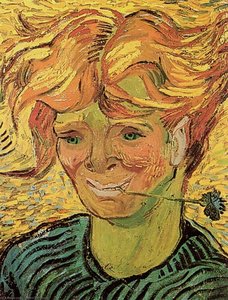
Young Man with Cornflower - Vincent Willem van Gogh
 Young Man with Cornflower - Vincent Willem van Gogh
Imagine a quiet moment bathed in golden sunlight, a youthful face turned inward with a hint of melancholy… This is the essence of Vincent van Gogh’s “Young Man with Cornflower” (1890).
Painted during his prolific final months, this portrait isn't merely a likeness; it’s an emotionally charged study of introspection and fleeting beauty. Van Gogh’s signature Post-Impressionistic style – bold color choices and dynamic brushwork – prioritizes conveying feeling over strict realism. The warm palette, dominated by yellows, oranges, and greens, creates a sense of intimacy and vulnerability.
What sets this work apart is its masterful use of impasto – the thick application of paint that seems to pulse with energy. The visible brushstrokes aren’t merely a technique; they are integral to the emotional narrative, inviting viewers to connect with the painting on a visceral level. The single cornflower held by the young man adds a layer of symbolic depth, hinting at life’s impermanence.
Bringing a reproduction of “Young Man with Cornflower” into your home is an invitation for quiet contemplation and serene reflection. Its warm tones and expressive brushwork can transform any space into a sanctuary – creating a timeless ambiance that speaks to the beauty and fragility of youth. Explore other famous paintings with driftwood tones to curate a collection that reflects your own unique sense of style and appreciation for the power of art.
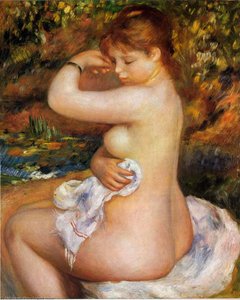
After the Bath - Pierre-Auguste Renoir
 After the Bath - Pierre-Auguste Renoir
Imagine a moment suspended in time – sunlight dappling through leaves, a gentle breeze rustling nearby… This is the world of Pierre-Auguste Renoir’s “After the Bath” (1888).
A quintessential example of Impressionism, this captivating work depicts a nude female figure radiating an aura of peaceful vulnerability. Renoir masterfully employs loose, broken brushstrokes to create a shimmering effect on skin and foliage, conveying the transient quality of light and atmosphere. The absence of harsh lines contributes to the overall softness and dreamlike quality.
What sets this painting apart is its ability to capture not just *what* Renoir saw, but *how* he felt. The warm palette – dominated by pinks, oranges, and yellows – creates an intimate atmosphere, inviting viewers into a private moment of contemplation. The delicate bracelet adorning her wrist hints at societal context without being overtly defining.
“After the Bath” evokes feelings of tranquility, vulnerability, and quiet beauty. It’s more than just a beautiful painting; it's a window into an era defined by artistic innovation and a celebration of feminine form. Explore other famous paintings with driftwood tones to curate a collection that reflects your own unique sense of style and appreciation for the power of art.
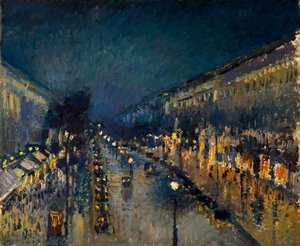
The Boulevard Montmartre at Night - Camille Pissarro
 The Boulevard Montmartre at Night - Camille Pissarro
Imagine a Parisian night alive with shimmering reflections and the gentle patter of rain… This is the world captured in Camille Pissarro’s “The Boulevard Montmartre at Night” (1897).
A masterclass in Impressionism, this captivating work invites viewers into a bustling cityscape where the interplay of light and shadow creates a dynamic and atmospheric scene. Pissarro employs his signature loose brushwork to convey the transient quality of light and atmosphere, drawing us into the heart of the city.
The painting’s palette – dominated by deep blues and blacks – establishes a moody ambiance, while warm yellows and oranges from streetlights provide contrast and highlight key areas. This dynamic interplay evokes feelings of both tranquility and energy. The reflections on the wet pavement symbolize the fleeting nature of urban life.
“The Boulevard Montmartre at Night” is more than just a beautiful painting; it’s a window into an era defined by artistic innovation and a celebration of Parisian charm. Explore other famous paintings with driftwood tones to curate a collection that reflects your own unique sense of style and appreciation for the power of art.
Conclusion
As the light fades on our journey through these ten masterpieces, we’re left with more than just a collection of beautiful images. We've encountered echoes of human emotion – quiet contemplation, bustling energy, and moments suspended in time – all rendered in the captivating hues of driftwood tones.
These paintings are not simply historic treasures; they are living presences that continue to shape our perception of beauty, color, and light. They remind us that art is not confined to museums or galleries, but exists within the very fabric of our lives – influencing the spaces we inhabit, the emotions we feel, and the stories we tell.
The subtle warmth of these palettes—the grays, browns, and muted blues—have an enduring power to create a sense of tranquility, sophistication, and connection. They invite us to pause, reflect, and find beauty in the everyday moments that often go unnoticed. And perhaps most importantly, they inspire us to seek out our own sources of inspiration, to embrace creativity, and to fill our lives with art that resonates deeply within.
If these explorations have stirred your imagination, we invite you to discover even more artworks bathed in the captivating tones of driftwood. Explore our full collection and find a piece that speaks to your soul – a timeless companion for years to come.