Introduction
In a world often defined by relentless motion and overwhelming stimuli, the pursuit of calm has become more than just a desire—it’s a necessity. Art, in its myriad forms, offers us a sanctuary, a space to pause, reflect, and reconnect with our inner selves. This collection, 'Top 10 Artworks That Evoke Deep “Calm” Emotions,' isn't simply about aesthetically pleasing images; it’s an exploration of how artists throughout history have captured the very essence of tranquility, serenity, and peaceful contemplation.
From the misty landscapes of East Asian scroll paintings to the ethereal light of Impressionist masterpieces, the quest for representing calm has been a recurring theme across cultures. Historically, these depictions often served spiritual purposes—Zen gardens designed to foster meditation, Renaissance altarpieces intended to inspire reverence, or Romantic scenes offering an escape from industrializing societies. The cultural context is crucial; understanding the societal pressures and philosophical underpinnings of each era reveals why artists prioritized moments of stillness and harmony.
But these artworks transcend their original contexts. They continue to resonate with us today because they tap into universal human experiences—the solace found in nature, the beauty of simplicity, the power of introspection. In an age of digital overload, these pieces offer a visual antidote, reminding us of the importance of slowing down and appreciating the present moment. The brushstrokes themselves can feel like gentle breaths, the colors like soothing balms.
Over the following pages, we’ll embark on a journey through ten exceptional artworks—each chosen for its unique ability to evoke feelings of calm. Prepare to be transported to worlds where time seems to stand still, and inner peace feels within reach. We invite you not just to look at these paintings, but to feel them, allowing their quiet power to wash over you.
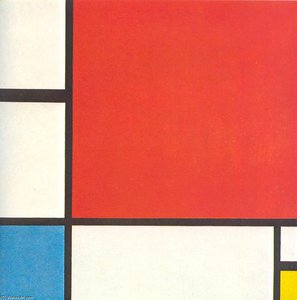
Composition with Red, Blue and Yellow - Piet Mondrian
 Composition with Red, Blue and Yellow - Piet Mondrian
Imagine a quiet room, sunlight filtering through sheer curtains, casting gentle shadows on pristine white walls. A sense of stillness descends—a feeling not of emptiness, but of spaciousness and clarity. This is the emotional landscape evoked by Piet Mondrian’s Composition with Red, Blue and Yellow (1930). More than just an arrangement of colored rectangles, this artwork represents a radical distillation of reality, a search for universal harmony through pure abstraction.
Mondrian, a pioneer of abstract art and co-founder of the De Stijl movement, believed that by stripping away representational imagery, he could reveal the underlying spiritual order of the universe. The bold primary colors—red, blue, and yellow—aren’t merely aesthetic choices; they are imbued with psychological weight, representing energy, intellect, and joy respectively. These vibrant hues, contained within a precise grid of black lines, create a dynamic balance that soothes rather than overwhelms.
Why does this seemingly simple composition resonate so deeply? Perhaps it’s the absence of narrative—allowing our minds to wander freely, unburdened by specific interpretations. Or perhaps it's the inherent order and clarity, offering a visual antidote to the chaos of modern life. Composition with Red, Blue and Yellow reminds us that beauty can be found in simplicity, and that true calm arises from within. It’s a testament to art’s power to transcend the material world and connect us to something deeper—a sense of peace, balance, and enduring serenity. Incorporating such principles into our own spaces – through color palettes or minimalist design – can cultivate a similar atmosphere of tranquility in our daily lives.
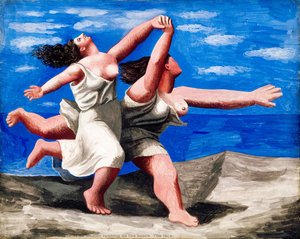
Two women running on the beach (The race) - Pablo Picasso
 Two women running on the beach (The race) - Pablo Picasso
A rush of wind, the scent of salt spray, and the boundless energy of two figures silhouetted against a cerulean sky—this is the feeling captured in Pablo Picasso’s Two Women Running on the Beach (The Race) (1922). While seemingly depicting a simple athletic contest, this artwork transcends mere representation; it's an embodiment of vitality and liberation.
Picasso’s dynamic brushstrokes and fluid lines convey a sense of unbridled joy and movement that is rare in modernist painting. The elongated forms and simplified shapes aren’t about anatomical accuracy but rather about capturing the essence of running—the stretch, the stride, the sheer exhilaration of physical freedom. This piece belongs in our Top 10 not for its technical perfection, but for its emotional resonance; it reminds us of the simple pleasures of life and the power of human connection.
The vibrant blues of the sky and sea offer a sense of spaciousness and calm, grounding the energetic figures. This interplay between dynamism and serenity is what makes this artwork so compelling. Imagine incorporating these principles into your own living space—a bold splash of blue paired with dynamic lines in textiles or furniture. Two Women Running on the Beach isn’t just a painting to be admired; it's an invitation to embrace joy, movement, and the beauty of the natural world, fostering a sense of calm through active energy.
Boating, Metropolitan Museum of Art, New York - Édouard Manet
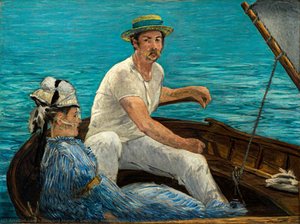 Boating, Metropolitan Museum of Art, New York - Édouard Manet
Sunlight dances on water, a gentle breeze whispers through the air—this is the quiet serenity that emanates from Édouard Manet’s Boating (1874). More than just a depiction of a leisurely afternoon on the Seine, this Impressionist masterpiece captures a fleeting moment of intimacy and observation, earning its place among our Top 10 artworks for evoking deep calm.
Manet wasn’t interested in photographic realism; instead, he sought to capture the *impression* of light and atmosphere. The visible brushstrokes, shimmering blues and greens, and subtle interplay of shadow create a sense of movement and life that is profoundly captivating. This isn't about precise detail but rather about conveying the feeling of being present—the warmth of the sun on your skin, the coolness of the water, the quiet companionship shared between two figures.
The artwork’s enduring appeal lies in its ability to transport us to a place of peace and tranquility. Imagine incorporating these principles into your own home—soft blues and greens paired with natural textures like wood and linen. Boating reminds us that calm isn't about grand gestures but rather about appreciating the simple pleasures of life, finding beauty in everyday moments, and creating spaces that nurture our souls. It’s a timeless invitation to slow down, breathe deeply, and embrace the serenity around us.
Portrait of Nikolaus Kratzer - Hans Holbein the Younger
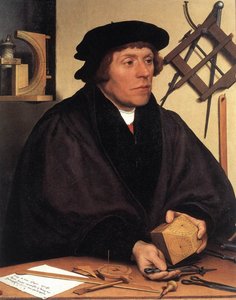 Portrait of Nikolaus Kratzer - Hans Holbein the Younger
Imagine a quiet workshop, filled with the scent of wood and ink, the soft scratch of quill on parchment. A sense of focused concentration hangs in the air—a stillness born not of emptiness, but of deep intellectual engagement. This is the atmosphere that surrounds Hans Holbein the Younger’s Portrait of Nikolaus Kratzer (1528).
More than a mere likeness, this painting offers an intimate glimpse into the world of Renaissance scholarship. Kratzer, an astronomer and mathematician serving King Henry VIII, isn't depicted as a figure of power but as a dedicated craftsman immersed in his work. The meticulously rendered tools of his trade—quadrants, dials, architectural drawings—speak to a life devoted to precision and understanding.
Holbein’s mastery lies not just in technical skill but in capturing the very essence of his sitter. The subdued color palette and subtle lighting create a sense of gravitas, drawing our attention to Kratzer's thoughtful expression. This artwork earns its place among our Top 10 for its ability to evoke a profound sense of calm—a quiet dignity born from intellectual pursuit. It reminds us that true serenity can be found in dedication, curiosity, and the beauty of focused work. Incorporating elements of this aesthetic into our own spaces – through rich textures, muted colors, and objects representing personal passions – can cultivate a similar atmosphere of tranquility and meaning.
Proun 19D - El Lissitzky
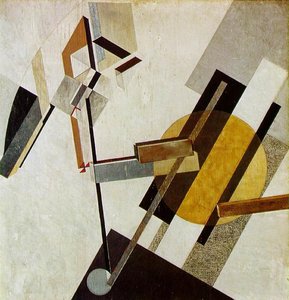 Proun 19D - El Lissitzky
To gaze upon El Lissitzky’s Proun 19D (1922) is to encounter a fragment of a utopian dream—a vision of a new world order rendered in dynamic geometric forms. Born from the revolutionary fervor of post-revolutionary Russia, this artwork isn't simply an abstract composition; it’s a spatial investigation, a blueprint for a future built on pure feeling and Constructivist ideals.
What sets Proun 19D apart is its deliberate rejection of traditional artistic conventions. Lissitzky eschewed conventional materials—incorporating metal foil and sandpaper to disrupt the flatness of the canvas—and sought to bridge the gap between painting and architecture. The intersecting planes, suspended within a field of ochre yellow, suggest multiple perspectives, inviting us to question our own perception of space and reality.
This artwork earns its place among our Top 10 for its profound philosophical depth and enduring influence. It reminds us that art isn’t merely about representation but about actively constructing new possibilities—a testament to the power of human imagination. Imagine incorporating these principles into your own environment—bold geometric shapes, contrasting textures, and a sense of dynamic energy. Proun 19D invites us to embrace innovation, challenge conventions, and cultivate a space that reflects our own unique vision for a more harmonious future.
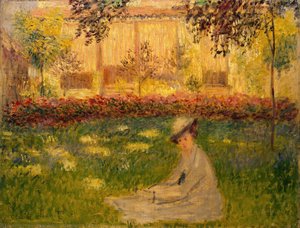
Park Monceau 2 - Claude Monet
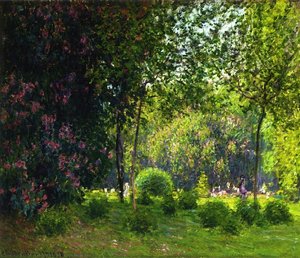 Park Monceau 2 - Claude Monet
Imagine a warm afternoon breeze rustling through leaves, sunlight dappling across green grass, and the gentle murmur of conversation—this is the feeling that envelops you when encountering Claude Monet’s Park Monceau 2 (1878). More than just a depiction of a Parisian park, this artwork captures the very essence of leisure and light, offering a rare glimpse into the burgeoning Impressionist movement.
Monet masterfully utilizes loose brushstrokes and vibrant color to evoke the atmosphere of Parc Monceau, transforming a public space into a haven of relaxed contemplation. The composition isn’t about grand narratives or posed figures; it's about capturing fleeting moments—the subtle interactions between friends enjoying a sun-drenched afternoon.
This artwork earns its place among our Top 10 for its ability to evoke a profound sense of calm and serenity. The shimmering effect of light dancing through the foliage, the soft hues of distant figures, and the overall feeling of peaceful connection create an atmosphere that is both inviting and restorative. Imagine incorporating these principles into your own living space—soft greens and blues paired with natural textures—to cultivate a similar sense of tranquility and well-being. Park Monceau 2 reminds us that true calm can be found in the simple pleasures of life, shared moments, and the beauty of the natural world.
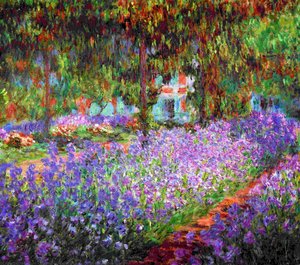
The Valley of Sasso, Bordighera - Claude Monet
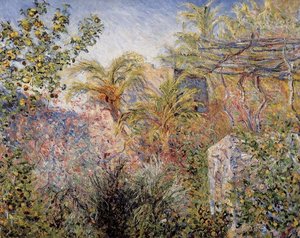 The Valley of Sasso, Bordighera - Claude Monet
To stand before Claude Monet’s The Valley of Sasso, Bordighera (1884) is to be transported to a sun-drenched Italian hillside—a place where time seems to slow and the air hums with tranquility. Painted during a period of personal respite for the artist, this artwork isn't merely a depiction of a landscape; it’s an embodiment of Impressionist ideals and a testament to Monet’s lifelong pursuit of capturing fleeting moments of light and color.
The loose brushstrokes and vibrant hues transform the valley into a dreamlike panorama, evoking a sense of warmth and serenity. The composition isn't about precise detail but rather about conveying the *feeling* of being present—the gentle breeze rustling through leaves, the scent of citrus blossoms in the air, the golden light bathing the hillsides.
This artwork earns its place among our Top 10 for its ability to evoke a profound sense of calm and well-being. Imagine incorporating these principles into your own environment—soft greens and yellows paired with natural textures—to cultivate a similar atmosphere of tranquility and peace. The Valley of Sasso, Bordighera reminds us that true beauty can be found in the simple pleasures of life, the power of nature, and the transformative magic of light.
Forest - Paul Cézanne
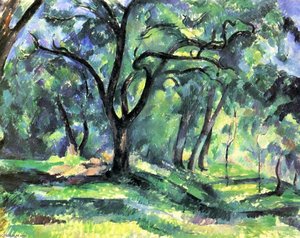 Forest - Paul Cézanne
To enter Paul Cézanne’s Forest (1890) is to step into a world where perception itself is reimagined—a place of quiet contemplation and profound structural beauty. This artwork isn't simply a depiction of trees; it’s an exploration of how we *see* the natural world, a bridge between the fleeting impressions of Impressionism and the geometric foundations of Cubism.
Cézanne deliberately breaks down the landscape into its fundamental shapes—triangles, rectangles, cylinders—reconstructing them on canvas with meticulous order. This isn’t about photographic realism but rather about conveying his subjective experience of space and form. The two figures nestled amongst the trees aren't central to the composition; they are seamlessly integrated into the environment, almost as if they were part of the forest itself.
This artwork earns its place among our Top 10 for its ability to evoke a sense of calm and intellectual curiosity. At , we believe that great art should enrich our daily lives—transforming spaces into sanctuaries of beauty and reflection. Imagine bringing this timeless masterpiece into your home, allowing its harmonious composition and subtle colors to cultivate a similar atmosphere of tranquility and well-being. Forest reminds us that true calm can be found in the simple pleasures of nature, the power of perception, and the enduring legacy of artistic innovation.
The Pave de Chailly - Claude Monet
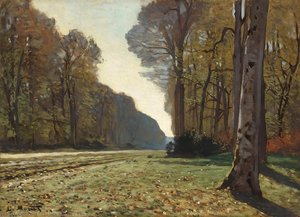 The Pave de Chailly - Claude Monet
Imagine a warm summer afternoon, sunlight filtering through leaves, the gentle rumble of a distant train—a sense of peaceful anticipation hangs in the air. This is the feeling that envelops you when encountering Claude Monet’s The Pave de Chailly (1865). More than just a depiction of a railway journey, this artwork captures the ephemeral beauty of a single moment in time, embodying the core philosophy of Impressionism.
Monet masterfully translates the fleeting effects of light and atmosphere onto canvas, prioritizing sensation over precise detail. The composition—a train winding through a verdant landscape—isn’t about grand narratives but rather about capturing the *feeling* of being present, sharing in that transient experience.
This artwork earns its place among our Top 10 for its ability to evoke a profound sense of calm and serenity. Imagine incorporating these principles into your own environment—soft greens and blues paired with natural textures—to cultivate a similar atmosphere of tranquility and well-being. The Pave de Chailly reminds us that true beauty can be found in the simple pleasures of life, the power of nature, and the transformative magic of light.
Large Bather with Crossed Legs - Pierre-Auguste Renoir
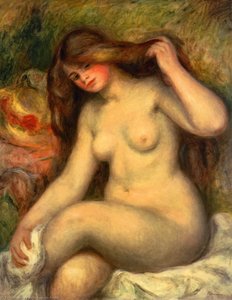 Large Bather with Crossed Legs - Pierre-Auguste Renoir
Imagine a sun-drenched afternoon, soft fabrics against skin, and a quiet moment of self-reflection—this is the feeling that envelops you when encountering Pierre-Auguste Renoir’s Large Bather with Crossed Legs (1904). More than just a depiction of a woman at rest, this artwork is an immersion into a world of sensual beauty and peaceful solitude.
Renoir masterfully manipulates light and color to create an atmosphere of shimmering vibrancy. The broken brushstrokes and subtle gradations of pink, peach, and gold dance across the woman’s skin, evoking warmth, comfort, and gentle indulgence. Her posture—legs gracefully crossed, one hand resting gently on her thigh—speaks to a moment of quiet contemplation.
This artwork earns its place among our Top 10 for its ability to evoke a profound sense of calm and well-being. At , we believe that great art should transform spaces into sanctuaries of beauty and reflection. Imagine bringing this timeless masterpiece into your home, allowing its luminous composition and serene expression to cultivate a similar atmosphere of tranquility in your own life.
Conclusion
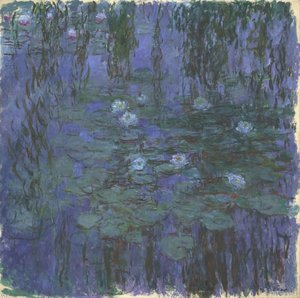
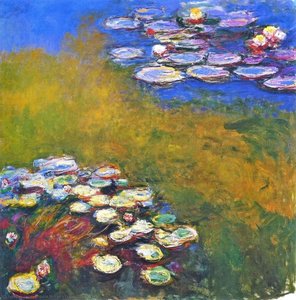
As the light fades on these ten masterpieces, we’re reminded that their power doesn't reside solely within museum walls or art history books. These paintings—from Monet’s shimmering water lilies to Cézanne’s structured landscapes—are living presences, continuing to move hearts and shape our interiors centuries after their creation.
They offer us a sanctuary from the everyday, a space for quiet contemplation, and a gentle invitation to connect with something deeper within ourselves. Each brushstroke holds a story, each color evokes an emotion—a testament to the enduring human need for beauty, peace, and self-expression.
At , we believe that everyone deserves to experience this transformative power firsthand. That’s why we meticulously recreate these iconic artworks by hand, employing skilled artists who honor the original's soul and detail. We don’t simply offer reproductions; we offer a chance to bring a piece of history—a moment of calm—into your own home.
Explore our full collection and discover the artwork that speaks to *your* heart. Let these timeless masterpieces inspire creativity, foster connection, and transform your space into a haven of beauty and tranquility.