Introduction: The Enduring Appeal of Tranquility in Art
From the earliest cave paintings to the masterpieces of the Renaissance and beyond, humanity has sought to capture moments of peace and serenity on canvas. This enduring fascination speaks to a fundamental human need – a longing for respite from the chaos of life, a desire to connect with something larger than ourselves, and an appreciation for the quiet beauty that surrounds us. But what defines tranquility in art? It’s not merely the depiction of idyllic scenes; it's the skillful evocation of emotion, the subtle interplay of light and shadow, and the artist’s ability to translate a feeling – a state of mind – onto a two-dimensional surface. Throughout art history, diverse movements have offered unique interpretations of this elusive quality, reflecting the cultural values and philosophical currents of their time.
Romantic Visions of Serenity: Cole, Marshall & the Hudson River School
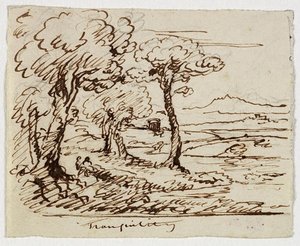 Tranquility
Explore 'Tranquility' by Thomas Cole – a serene pen & ink landscape capturing Romanticism’s beauty. Discover this Hudson River School masterpiece’s evocative style and timeless appeal.
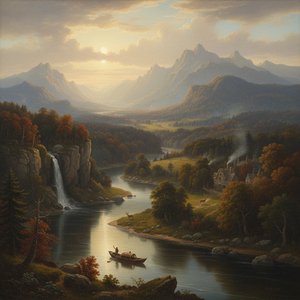
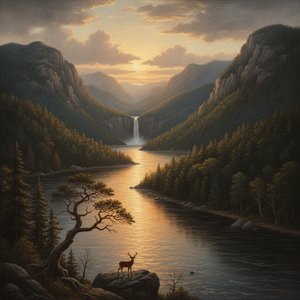
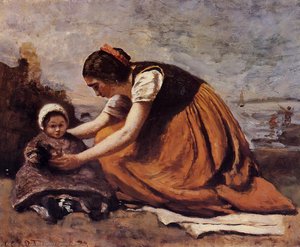
The Romantic era, particularly as manifested in the American landscape tradition exemplified by the Hudson River School, placed a profound emphasis on the sublime power of nature. Artists like Thomas Cole didn’t simply paint what they saw; they imbued their scenes with spiritual significance. His “Tranquility,” a delicate pen and ink work, is a testament to this approach. The composition isn't grand or imposing; instead, it offers an intimate glimpse into a peaceful river valley, the meticulous detail suggesting reverence for every leaf and stone. Cole’s landscapes weren’t just representations of the American wilderness—they were moral allegories, urging viewers to find solace and spiritual renewal in the natural world. Herbert Menzies Marshall continued this tradition, his “Mother and Child in Landscape” capturing a serene dusk scene filled with evocative beauty. The soft light and gentle brushstrokes create an atmosphere of quiet contemplation, emphasizing the bond between mother and child within the embrace of nature. These artists understood that tranquility wasn’t about the absence of drama, but rather about finding harmony amidst it.
Corot and Watts: Atmospheric Landscapes and Pastoral Peace
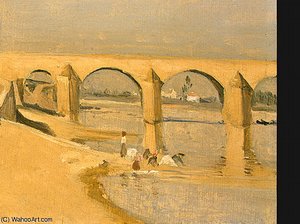
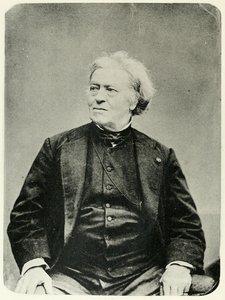 Jean-Baptiste-Camille Corot
Discover Jean-Baptiste-Camille Corot (1796-1875), the master of atmospheric landscapes bridging Neoclassicism & Impressionism. Explore his serene paintings and lasting influence on art history.
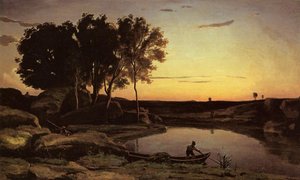
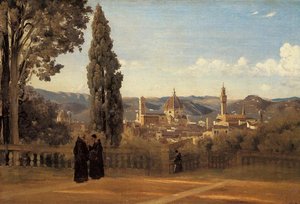
Moving across the Atlantic to Europe, we encounter Jean-Baptiste-Camille Corot, a master of atmospheric landscapes who bridged the gap between Neoclassicism and Impressionism. Corot’s paintings are characterized by their soft, diffused light and subtle color palettes, creating an almost dreamlike quality. He wasn't interested in precise detail but rather in capturing the *feeling* of a place – the gentle breeze rustling through the trees, the warmth of the sun on skin. His works often depict rural scenes, evoking a sense of pastoral peace and timeless beauty. Frederick Waters Watts, influenced by Constable, similarly focused on idyllic riverside scenes and bucolic views. Watts’ landscapes are imbued with a quiet dignity, celebrating the simple pleasures of country life and offering a refuge from the growing industrialization of 19th-century England. Both artists demonstrate how tranquility can be achieved through masterful handling of light, color, and composition, creating works that invite viewers to pause and reflect.
Van Gogh's Melancholic Calm: Finding Quietude in Charcoal
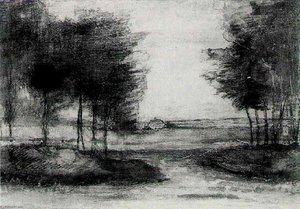 Landscape
A serene monochrome charcoal landscape by Vincent van Gogh. Explore this evocative depiction of a river & trees, showcasing his signature impressionistic style & melancholic mood.
While often associated with intense emotion and vibrant colors, Vincent van Gogh also possessed a remarkable ability to convey tranquility. His monochrome charcoal landscape, depicting a river winding through trees, reveals a different side of the artist’s genius. The stark simplicity of the medium forces a focus on form and texture, creating an evocative depiction of nature stripped down to its essentials. This work isn't joyful or exuberant; it’s melancholic and introspective, yet undeniably peaceful. The swirling lines and expressive brushstrokes suggest a deep connection with the natural world, even in moments of personal turmoil. Van Gogh demonstrates that tranquility doesn’t necessarily require bright colors or idyllic scenes—it can be found in quiet contemplation and honest expression.
The Psychology of Peaceful Palettes: Color and Emotion in Landscape Art
The choice of color plays a crucial role in evoking feelings of serenity within landscape art. Cool tones – blues, greens, and violets – are often associated with calmness and relaxation, while warm tones – yellows, oranges, and reds – can create a sense of energy and vitality. However, the most effective use of color is rarely straightforward. Artists often employ subtle gradations and harmonious combinations to achieve a desired emotional effect. For example, the soft pastels used by Marshall in “Mother and Child in Landscape” contribute to the painting’s overall sense of peace and tranquility. Similarly, Corot's muted palettes create an atmosphere of quiet contemplation. Understanding the psychology of color allows artists to manipulate viewers’ emotions and create works that resonate on a deeper level.
Cultivating Serenity at Home: Bringing Tranquility into Your Space
The desire for serenity extends beyond the realm of art appreciation; it's a fundamental human need that we seek to fulfill in our daily lives. Bringing artwork that evokes peace and tranquility into your home can be a powerful way to create a calming atmosphere. Whether you prefer the grand landscapes of Cole, the atmospheric scenes of Corot, or the introspective works of Van Gogh, choosing pieces that resonate with your personal sensibilities is key. At ArtsDot.com, we offer high-quality reproductions of masterpieces from across art history, allowing you to transform your living space into a sanctuary of peace and beauty. From handmade oil paintings meticulously crafted by skilled artists to museum-quality prints, we provide a range of options to suit every taste and budget. Explore our curated collections today and discover the artwork that speaks to your soul – because ultimately, the most beautiful art is that which brings you joy and tranquility.