Early Life & Artistic Foundations: From India to Paris
Duncan James Corrowr Grant, born in 1885 amidst the vast landscapes of Rothiemurchus, Scotland, embarked on a journey that would irrevocably alter the course of British art. His early years, however, were far removed from the artistic circles he would later dominate. A childhood spent largely in India and Burma, shaped by the vibrant colours and exotic textures of the East, instilled within him a sensitivity to pattern and form that would become hallmarks of his distinctive style. These formative experiences, though geographically distant from the European art world, laid the groundwork for his eventual embrace of Post-Impressionism – a movement then largely unknown in England. The intermittent returns to Scotland, punctuated by education at Hillbrow School and later St Paul’s, provided glimpses into a more conventional artistic training, yet it was during these periods spent with his grandmother, Lady Grant, that he first encountered the world of art through visits to studios and galleries. This nascent interest blossomed further when, in 1902, his aunt secured him enrollment at Westminster School of Art, marking a pivotal step towards formal study.
The subsequent years saw Grant immerse himself in European artistic currents. A sojourn in Italy exposed him to the Renaissance masters – Masaccio and Piero della Francesca – whose compositions and use of light profoundly influenced his developing technique. However, it was Paris that truly ignited his passion. From 1906, studying at the Académie de La Palette, he encountered the groundbreaking work of Matisse and other avant-garde artists, absorbing their bold colours and flattened perspectives. This exposure proved transformative, setting him on a path towards rejecting traditional academic constraints in favour of a more expressive and decorative aesthetic.
The Bloomsbury Circle: Collaboration, Innovation & Scandal
The Bloomsbury Group was a group of associated British writers, intellectuals, philosophers and artists in the early 20th century. Among the people involved in the group were Virginia Woolf, John Maynard Keynes, E. M. Forster, Vanessa Bell, and Lytto...
Grant’s introduction to Vanessa Bell in 1905 marked the beginning of a lifelong artistic partnership – and a complex personal relationship – that would define much of his creative output. Together with Roger Fry, they formed the core of the Bloomsbury Group, a collective of writers, intellectuals, and artists who challenged Victorian conventions and championed a new vision of art and life. The group’s ethos was one of radical experimentation, intellectual freedom, and a rejection of societal norms. They sought to create an environment where artistic expression could flourish unburdened by the constraints of academic tradition or commercial pressures.
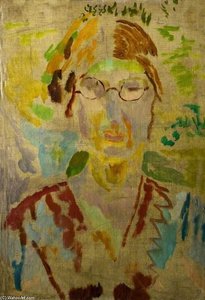
The shared studio space at Fitzroy Square became a crucible for innovation. Grant, Bell, and Fry often painted side-by-side, exploring similar subjects – portraits of friends like Lytton Strachey and Iris Tree, still lifes, and interiors – yet each artist brought their unique sensibility to the canvas. This collaborative spirit fostered a dynamic exchange of ideas and techniques, pushing the boundaries of British painting. However, this close proximity also led to tensions, particularly as Grant and Bell’s personal relationship deepened, causing friction with Fry who felt increasingly excluded from their artistic intimacy. The Bloomsbury Group wasn't without its share of scandal; their open relationships and unconventional lifestyles often drew criticism from a conservative society.
Aesthetic Principles: Post-Impressionism, Design & the Omega Workshops
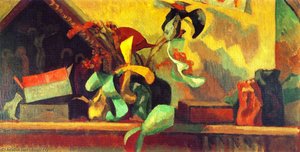
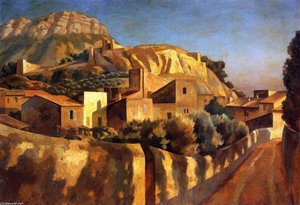
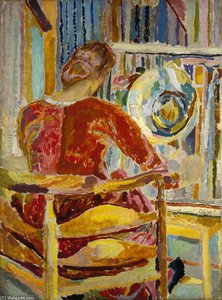
Central to Grant’s aesthetic was his embrace of Post-Impressionism. He admired the expressive use of colour and form in the work of artists like Matisse, Braque, and Picasso, rejecting the naturalistic representation favoured by earlier generations. His paintings are characterized by vibrant palettes, flattened perspectives, and a decorative quality that owes much to his early exposure to Eastern art. However, Grant wasn’t simply a follower; he adapted these influences to create a distinctly British style, infused with a sense of lightness and humour.
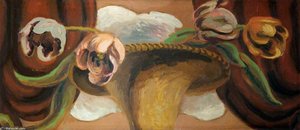
This desire to integrate art into everyday life led to the founding of the Omega Workshops in 1913. Conceived as an alternative to traditional commercial design, Omega aimed to blur the boundaries between fine art and applied arts. Grant played a pivotal role in this venture, designing textiles, ceramics, furniture, and even murals for private commissions. The designs were often radically abstract and audacious, challenging conventional notions of taste and decoration. While financially unstable, Omega Workshops had a profound impact on British design, paving the way for a more modern aesthetic.
Charleston Farmhouse: A Sanctuary of Creativity and Style
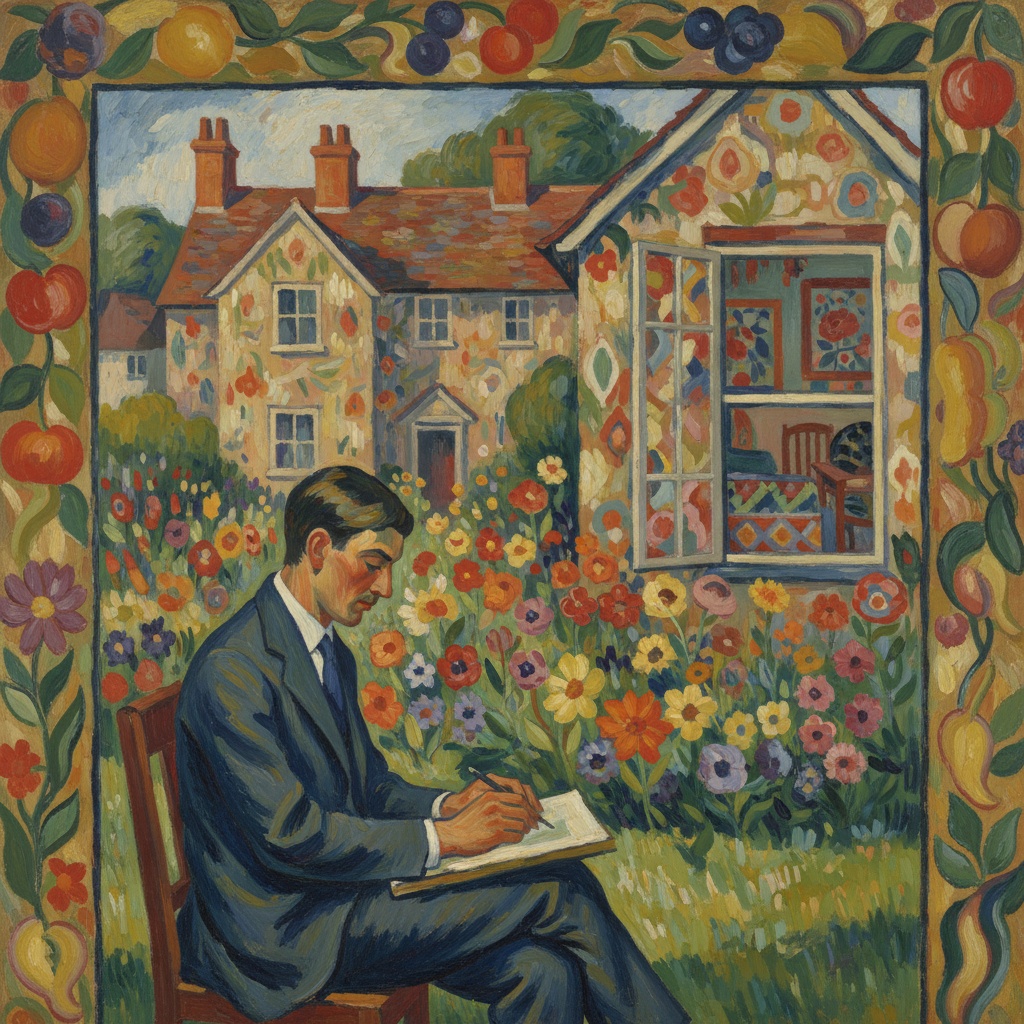
In 1916, Vanessa Bell and Duncan Grant established Charleston Farmhouse in Sussex as a rural retreat – and a vibrant hub for artistic collaboration. The house itself became a work of art, adorned with their paintings, murals, and decorative schemes. The interiors were deliberately unconventional, reflecting the Bloomsbury Group’s rejection of Victorian formality. Walls were painted with bold patterns, furniture was repurposed and reimagined, and objects from everyday life were elevated to the status of artistic artifacts.
Charleston served as a gathering place for many of the leading figures of the era – Virginia Woolf, E.M. Forster, John Maynard Keynes, and T.S. Eliot all spent time there. The atmosphere was one of intellectual stimulation and creative freedom, fostering a dynamic exchange of ideas that profoundly influenced their work. Grant’s paintings from this period often depict scenes of life at Charleston, capturing the idyllic beauty of the countryside and the intimate relationships between its inhabitants. The house remains today as a testament to the Bloomsbury Group's enduring legacy – a sanctuary where art and life were inextricably intertwined.
Grant’s Later Years & Enduring Legacy
Throughout his long career, Duncan Grant continued to experiment with different styles and mediums, embracing portraiture, landscape painting, and theatre design. Even in his later years, he retained his distinctive flair for colour and composition. His personal life remained as colourful as his canvases, marked by enduring relationships – most notably with Vanessa Bell and, later, Paul Roche – and a willingness to challenge societal norms.
Grant’s contribution to British art is often overshadowed by that of his more famous contemporaries, yet his influence is undeniable. He played a pivotal role in introducing Post-Impressionism to England, challenging academic conventions, and integrating art into everyday life through the Omega Workshops. His paintings, designs, and murals continue to captivate audiences with their vibrant colours, decorative quality, and sense of joy. Today, Grant’s work is celebrated as a testament to the power of artistic experimentation and the enduring legacy of the Bloomsbury Group. Discover more about Duncan Grant's masterpieces and explore similar works at ArtsDot, where art history comes alive.