The Belle Époque’s Shadow: Setting the Stage for Artistic Change
The Belle Époque (French pronunciation: [bɛlepɔk]) or La Belle Époque (French for 'The Beautiful Era') was a period of French and European history that began after the end of the Franco-Prussian War in 1871 and continued until the outbreak of World W...
The final decades of the 19th century, often romanticized as the *Belle Époque*, were a period of remarkable contradictions. While technological advancements and burgeoning economic prosperity fostered an atmosphere of optimism in France – think grand boulevards, glittering cafes, and the soaring ironwork of the Eiffel Tower – beneath this veneer of progress lay a simmering unrest. The Franco-Prussian War had left deep scars, social inequalities persisted, and a sense of moral uncertainty began to permeate society. This complex backdrop served as fertile ground for artistic innovation, a subtle rebellion against established norms that would ultimately give rise to movements like Impressionism and, crucially, Post-Impressionism. It was an era poised between the tangible world and the burgeoning realm of subjective experience, a tension artists keenly felt and sought to resolve on canvas.
The prevailing artistic climate prior to 1885 was largely dominated by Realism, championed by figures like Gustave Courbet. This school prioritized depicting life as it *was*, often focusing on the harsh realities faced by the working class. However, even within Realism, a desire for something more than mere documentation began to emerge. Artists started experimenting with light and color, seeking to capture fleeting moments and atmospheric effects. This nascent exploration would blossom into Impressionism, but its initial focus on optical sensations proved insufficient for those artists yearning to express deeper emotional truths and intellectual concepts.
From Realism's Grip: A Shifting Focus in Painting
Realism, Realistic, or Realists may refer to: == In the arts == Realism (arts), the general attempt to depict subjects truthfully in different forms of the arts Arts movements related to realism include: == In philosophy == Philosophical realism ...
The transition from Realism wasn’t abrupt; it was a gradual evolution driven by both technical advancements and philosophical shifts. The invention of portable paint tubes allowed artists to work *en plein air* – outdoors, directly observing nature – which fundamentally altered their relationship with the subject matter. This newfound freedom led to a fascination with capturing the ephemeral qualities of light and atmosphere. However, as Impressionism matured, some artists found its emphasis on fleeting impressions limiting. They questioned whether simply recording what the eye saw was enough; they sought to imbue their work with personal meaning, structure, and enduring form.
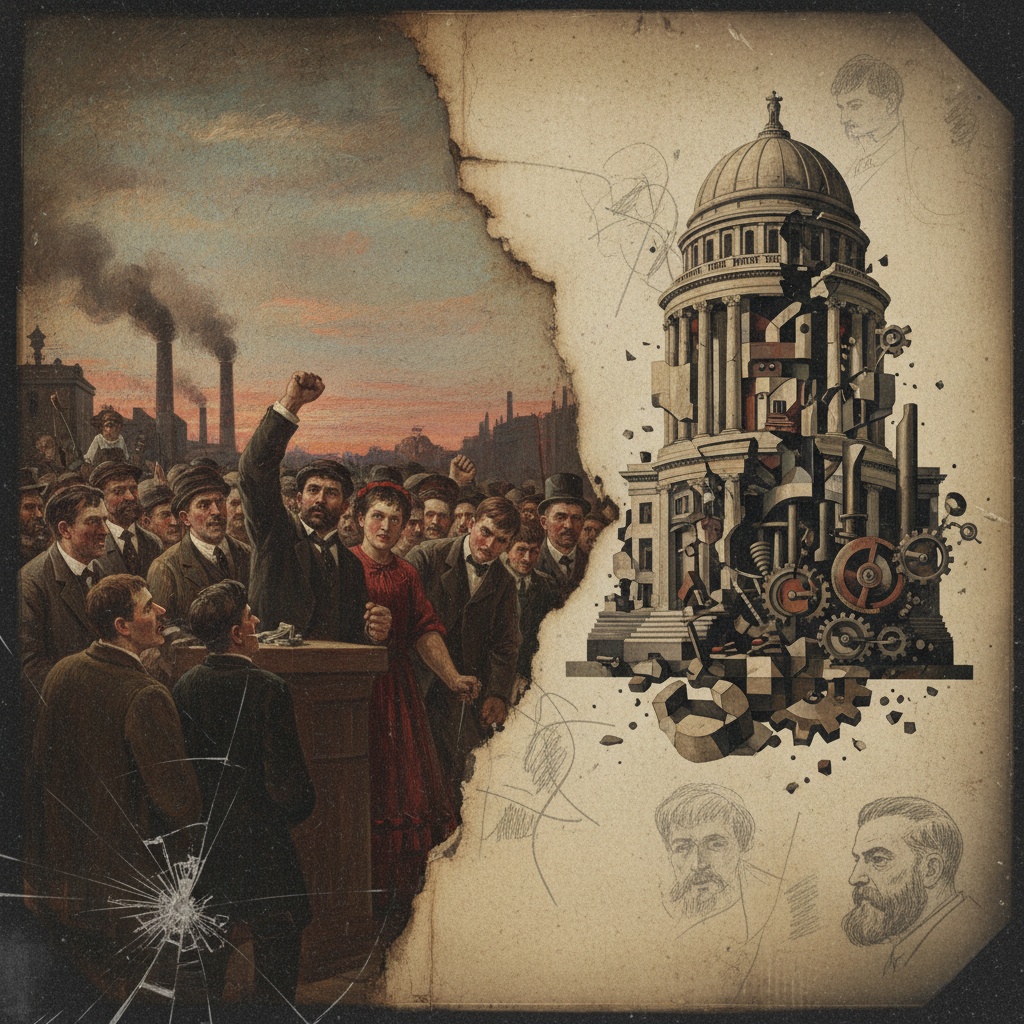
Consider the works of Alfred-Philippe Roll. While initially aligned with Realist principles, his paintings from around 1880, such as *The Strike of the Miners*, demonstrate a growing interest in conveying social commentary through symbolic imagery and carefully constructed compositions. This marked a departure from purely objective representation, hinting at the psychological depth that would characterize Post-Impressionism. The painting isn’t merely a depiction of a strike; it's an attempt to evoke empathy and understanding for the plight of the workers, achieved not just through realistic detail but also through deliberate arrangement and emotional coloring.
Impressionism's Zenith & The Seeds of Dissatisfaction
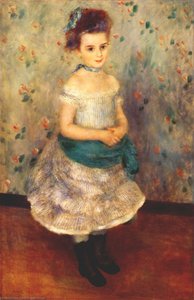 Jeanne Durand Ruel
Explore Pierre-Auguste Renoir’s (1841-1919) luminous Impressionist paintings! Discover portraits, Parisian life & feminine beauty in his iconic artworks. The Barnes Foundation in Philadelphia is home to one of the world's greatest collections of imp...
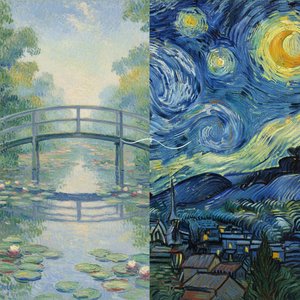
The 1870s witnessed the full flowering of Impressionism. Artists like Claude Monet, Edgar Degas, and Pierre-Auguste Renoir revolutionized painting with their vibrant palettes, broken brushstrokes, and focus on capturing momentary sensations. Renoir’s *Jeanne Durand Ruel*, for example, exemplifies the luminous quality and intimate portrayal of Parisian life that defined the movement. Yet, even within this celebrated group, cracks began to appear. Some artists felt constrained by Impressionism's lack of structure and its perceived superficiality.
Gustave Caillebotte’s work provides a fascinating example of this internal tension. His *Decorative Triptych* showcases both an appreciation for Impressionist techniques – the play of light, the depiction of modern life – but also a desire for greater order and compositional rigor. He wasn't content simply to record impressions; he sought to create harmonious and intellectually engaging arrangements. This pursuit of structure and meaning foreshadowed the direction Post-Impressionism would take.
Post-Impressionist Visions: Cézanne, Van Gogh, and Gauguin
Post-Impressionism (also spelled Postimpressionism) was a predominantly French art movement which developed roughly between 1886 and 1905, from the last Impressionist exhibition to the birth of Fauvism. Post-Impressionism emerged as a reaction agains...
The term “Post-Impressionism,” coined by Roger Fry in 1906, served as an umbrella for a diverse group of artists who reacted against the limitations of Impressionism. It wasn’t a unified style but rather a collection of individual approaches united by a common desire to explore subjective experience and personal expression. Paul Cézanne, often considered the “father of Post-Impressionism,” sought to restore solidity and structure to painting, famously declaring his intention to “make of Impressionism something solid and durable.” His methodical approach, reducing objects to their basic geometric forms while retaining vibrant color, laid the groundwork for Cubism.
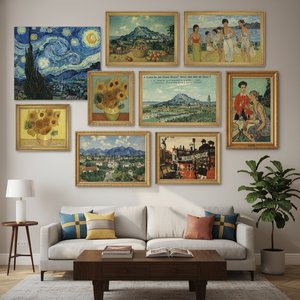
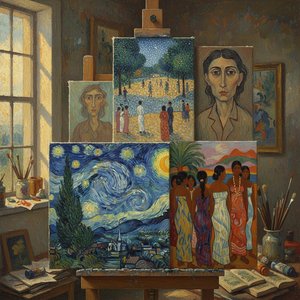
Vincent van Gogh, on the other hand, used color and brushstroke not to analyze form but to convey intense emotion. His paintings are characterized by a raw energy and psychological depth that transcends mere representation. Paul Gauguin similarly rejected naturalistic depiction in favor of symbolic imagery and flattened forms, seeking inspiration from primitive art and exploring themes of spirituality and exoticism. These artists weren’t simply painting what they *saw*; they were painting how they *felt*.
Beyond Representation: Symbolism and the Inner Life
The Post-Impressionist exploration of subjective experience led to a growing interest in Symbolism, an artistic movement that prioritized conveying ideas and emotions through suggestive imagery rather than literal representation. Artists like James Ensor, with his unsettling yet captivating work *Russian Music*, delved into the realm of dreams, anxieties, and social critique. The painting isn’t simply a depiction of a musical performance; it's a complex allegory filled with symbolic figures and unsettling details that invite multiple interpretations.
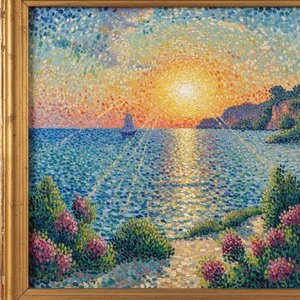
Theo van Rysselberghe’s paintings, such as *Madame Van de Velde and Her Children* and *The Promenade*, beautifully illustrate the Post-Impressionist embrace of vibrant color and pointillism while capturing a sense of familial warmth and serene beauty. These works demonstrate how artists could move beyond mere optical representation to create emotionally resonant images that reflected their personal vision.
Collecting Echoes: Investing in the Legacy of 1885
The legacy of these Post-Impressionist masters continues to resonate today, influencing generations of artists and captivating collectors worldwide. Investing in works – or high-quality reproductions from ArtsDot.com – isn’t merely acquiring beautiful objects; it's owning a piece of art history, a tangible connection to a pivotal moment of artistic transformation. The enduring appeal of these paintings lies in their ability to evoke emotion, stimulate thought, and offer a glimpse into the inner lives of artists who dared to challenge convention.
Whether you’re drawn to Cézanne's structural rigor, Van Gogh's emotional intensity, or Gauguin's symbolic depth, exploring the art of this period offers a profound and rewarding experience. At ArtsDot.com, we are dedicated to making these masterpieces accessible to all, offering handmade oil paintings and museum-quality prints that capture the essence of these iconic works. Discover the echoes of 1885 and enrich your world with the beauty and power of Post-Impressionism.